تحسين النتائح
ترتيب حسب
من
الى



الكليات في الجامعة العربية الدولية
الخدمات الطلابية والأكاديمية

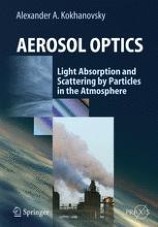
Provides a comprehensive review of available techniques for the remote sensing of aerosols. Although mostly satellite remote sensing is considered, ground-based techniques are also discussed.describes techniques for the determination of the column concentration of aerosol particles and their optical sizing using spaceborne optical instrumentation. The majority of the techniques described in this book use a so-called "library method". This method relies upon the precalculated top-of-atmosphere reflectances (TOAR) for vaious atmospheric aerosol types. The comparison of measured and calculated TOARS allows one to characterize the optically-equivalent aerosol state.

Environmental issues continued to loom large in the last decade of the twentieth century,especially environmental problems related to rising levels of CO emissions and 2 other greenhouse gases on the planet’s average temperatures and, subsequently, storm patterns. Floods and droughts, in combination with unseasonably high and low temperatures became the norm rather than the exception for large expanses of Africa,Asia and Oceania. Even large areas of Europe and NorthAmerica were s- jected to recurrent floods and droughts and experienced unseasonable extremes of hot and cold temperatures associated with man-made intrusions into the natural environment. And, still, a global plan of action to haltman-related patterns of def- estation, desertification, and over-fishing of the seas has yet to come into being. At the same time, the number of regional conflicts and civil wars increased and, with them, the lives of many women, children, old people and other n- combatants were lost in these conflicts.
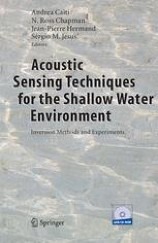
This volume contains the collection of papers from the second workshop on Experimental Acoustic Inversion Techniques for Exploration of the Shallow Water Environment. Acoustic techniques provide the most effective means for remote sensing of ocean and sea floor processes, and for probing the structure beneath the sea floor. No other energy propagates as efficiently in the ocean: radio waves and visible light are severely limited in range because the ocean is a highly conductive medium. However, sound from breaking waves and coastal shipping can be heard throughout the ocean, and marine mammals communicate acoustically over basin scale distances.
