


تحسين النتائح
ترتيب حسب
من
الى


This book shows the factors linking information flow, social intelligence, rights management and modelling with epistemic democracy, offering licensed linked data along with information about the rights involved. This model of democracy for the web of data brings new challenges for the social organisation of knowledge, collective innovation, and the coordination of actions. Licensed linked data, licensed linguistic linked data, right expression languages, semantic web regulatory models, electronic institutions, artificial socio-cognitive systems are examples of regulatory and institutional design (regulations by design). The web has been massively populated with both data and services, and semantically structured data, the linked data cloud, facilitates and fosters human-machine interaction. Linked data aims to create ecosystems to make it possible to browse, discover, exploit and reuse data sets for applications. Rights Expression Languages semi-automatically regulate the use and reuse of content.

Explores the relevance of global trade law for data, big data and cross-border data flows. Contributing authors from different disciplines including law, economics and political science analyze developments at the World Trade Organization and in preferential trade venues by asking what future-oriented models for data governance are available and viable in the area of trade law and policy. The collection paints the broad picture of the interaction between digital technologies and trade regulation as well as provides in-depth analyses of critical to the data-driven economy issues, such as privacy and AI, and different countries' perspectives.
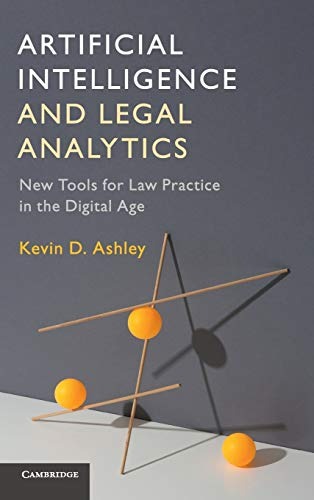
The field of artificial intelligence (AI) and the law is on the cusp of a revolution. This book - designed to explain computational processes to non-programmers - describes how text analytic programs will change the practice of law, specifically by connecting computational models of legal reasoning directly with legal text.
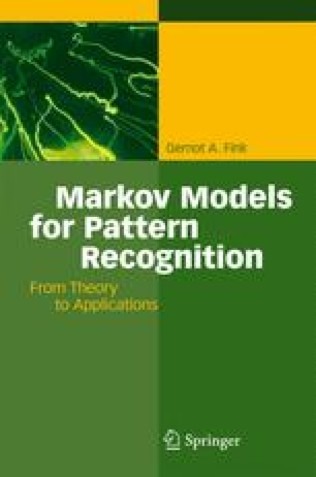
Describes the underlying theoretical concepts - covering Hidden Markov models and Markov chain models - and presents the techniques and algorithmic solutions essential to creating real world applications. The actual use of Markov models in their three main application areas - namely speech recognition, handwriting recognition, and biological sequence analysis - is presented with examples of successful systems.

Provides a timely and coherent account of the recent advances in many-core computing research. Starting with programming models, operating systems and their applications; it presents runtime management techniques, followed by system modelling, verification and testing methods, and architectures and systems. Computing has moved away from a focus on performance-centric serial computation, instead towards energy-efficient parallel computation. This provides continued performance increases without increasing clock frequencies, and overcomes the thermal and power limitations of the dark-silicon era. As the number of parallel cores increases, we transition into the many-core computing era. There is considerable interest in developing methods, tools, architectures and applications to support many-core computing.

The book provides a detailed introduction to maintenance policies, updates the reader on the current status of the field and indicates future directions. The reader will learn the theory of maintenance and how to apply models in practice.
The goal of this book is to address the use of several important machine learning techniques into computer vision applications. An innovative combination of computer vision and machine learning techniques has the promise of advancing the field of computer vision, which contributes to better understanding of complex real-world applications. The effective usage of machine learning technology in real-world computer vision problems requires understanding the domain of application, abstraction of a learning problem from a given computer vision task, and the selection of appropriate representations for the learnable (input) and learned (internal) entities of the system. In this book, we address all these important aspects from a new perspective: that the key element in the current computer revolution is the use of machine learning to capture the variations in visual appearance, rather than having the designer of the model accomplish this. As a bonus, models learned from large datasets are likely to be more robust and more realistic than the brittle all-design models.

Contains selected papers from the international conference ML4CPS – Machine Learning for Cyber-Physical Systems, which was held in Hamburg (Germany), from 29 to 31 March 2023. Cyber-physical systems are adaptive and learning: they analyze their environment and, based on observations, learn patterns, associations and predictive models. Typical applications are condition monitoring, predictive maintenance, image processing and diagnostics. Machine learning is the key technology for these developments.
Presents recent advancements in research, a review of new methods and techniques, and applications in decision support systems (DSS) with Machine Learning and Probabilistic Graphical Models, which are very effective techniques in gaining knowledge from Big Data and in interpreting decisions. It explores Bayesian network learning, Control Chart, Reinforcement Learning for multicriteria DSS, Anomaly Detection in Smart Manufacturing with Federated Learning, DSS in healthcare, DSS for supply chain management, etc. Researchers and practitioners alike will benefit from this book to enhance the understanding of machine learning, Probabilistic Graphical Models, and their uses in DSS in the context of decision making with uncertainty. The real-world case studies in various fields with guidance and recommendations for the practical applications of these studies are introduced in each chapter.
Approaches ML as the computational implementation of the scientific principle. This principle consists of continuously adapting a model of a given data-generating phenomenon by minimizing some form of loss incurred by its predictions. Trains readers to break down various ML applications and methods in terms of data, model, and loss, thus helping them to choose from the vast range of ready-made ML methods.
Machine Learning - Modeling Data Locally and Globally presents a novel and unified theory that tries to seamlessly integrate different algorithms. Specifically, the book distinguishes the inner nature of machine learning algorithms as either "local learning"or "global learning."This theory not only connects previous machine learning methods, or serves as roadmap in various models, but – more importantly – it also motivates a theory that can learn from data both locally and globally. This would help the researchers gain a deeper insight and comprehensive understanding of the techniques in this field. The book reviews current topics,new theories and applications.
This book covers two major classes of mixed effects models—linear mixed models and generalized linear mixed models—and it presents an up-to-date account of theory and methods in analysis of these models as well as their applications in various fields. It offers a systematic approach to inference about non-Gaussian linear mixed models. Furthermore, it discusses the latest developments and methods in the field, incorporating relevant updates since publication of the first edition. These include advances in high-dimensional linear mixed models in genome-wide association studies (GWAS), advances in inference about generalized linear mixed models with crossed random effects, new methods in mixed model prediction, mixed model selection, and mixed model diagnostics.

This book is structured around the main theories and models used by practitioners to engineer finance and investment tools. The methods developed and implemented in the text are organized as chapters which cover the core areas.

This book originate from a workshop held at the European University Institute of Florence, Italy, in December 2006. The workshop was devoted to the discussion of the different ways of understanding and explaining contemporary law, for the purpose of building computable models of it -- especially models enabling the development of computer applications for the legal domain.

Communications and Networking: An Introduction provides a clear and easy to follow treatment of the subject, written specifically for undergraduates who have no previous experience in the field. The author takes a step by step approach, with examples and exercises designed to give the reader increased confidence in using and understanding communications systems. Topics covered include communications technologies, networking models and standards, local area and wide area networks, network protocols, TCP/IP-based networks and network management.
Many approaches have already been proposed for classification and modeling in the literature. These approaches are usually based on mathematical mod els. Computer systems can easily handle mathematical models even when they are complicated and nonlinear (e.g., neural networks). On the other hand, it is not always easy for human users to intuitively understand mathe matical models even when they are simple and linear. This is because human information processing is based mainly on linguistic knowledge while com puter systems are designed to handle symbolic and numerical information. A large part of our daily communication is based on words. We learn from various media such as books, newspapers, magazines, TV, and the Inter net through words. We also communicate with others through words. While words play a central role in human information processing, linguistic models are not often used in the fields of classification and modeling. If there is no goal other than the maximization of accuracy in classification and modeling, mathematical models may always be preferred to linguistic models. On the other hand, linguistic models may be chosen if emphasis is placed on interpretability.

This book provides a gentle, software engineering oriented introduction to category theory. Assuming only a minimum of mathematical preparation, this book explores the use of categorical constructions from the point of view of the methods and techniques that have been proposed for the engineering of complex software systems: object-oriented development, software architectures, logical and algebraic specification techniques, models of concurrency, inter alia. After two parts in which basic and more advanced categorical concepts and techniques are introduced, the book illustrates their application to the semantics of CommUnity – a language for the architectural design of interactive systems. "For computer scientists, this unique book presents Category Theory in a manner tailored to their interests and with examples to which they can relate." Ira Forman, IBM "This book applies little-known yet quite powerful formal tools from category theory to software structures: designs, architectures, patterns, and styles. Rather than focus on issues at the level of computational models and semantics, it instead applies these tools to some of the problems facing the sophisticated software architect.
Case-based reasoning (CBR) has received a great deal of attention in recent years and has established itself as a core methodology in the field of artificial intelligence. The key idea of CBR is to tackle new problems by referring to similar problems that have already been solved in the past. More precisely, CBR proceeds from individual experiences in the form of cases. The generalization beyond these experiences typically relies on a kind of regularity assumption demanding that 'similar problems have similar solutions'. Making use of different frameworks of approximate reasoning and reasoning under uncertainty, notably probabilistic and fuzzy set-based techniques, this book develops formal models of the above inference principle, which is fundamental to CBR. The case-based approximate reasoning methods thus obtained especially emphasize the heuristic nature of case-based inference and aspects of uncertainty in CBR. This way, the book contributes to a solid foundation of CBR which is grounded on formal concepts and techniques from the aforementioned fields. Besides, it establishes interesting relationships between CBR and approximate reasoning, which not only cast new light on existing methods but also enhance the development of novel approaches and hybrid systems.
The book is organized as follows. In the beginning of this book (chapters 1 through 6), you learn how to build a data warehouse, for example, defining the architecture, understanding the methodology, gathering the requirements, designing the data models, and creating the databases. Then in chapters 7 through 10, you learn how to populate the data warehouse, for example, extracting from source systems, loading the data stores, maintaining data quality, and utilizing the metadata. After you populate the data warehouse, in chapters 11 through 15, you explore how to present data to users using reports and multidimensional databases and how to use the data in the data warehouse for business intelligence, customer relationship management, and other purposes. Chapters 16 and 17 wrap up the book: After you have built your data warehouse, before it can be released to production, you need to test it thoroughly. After your application is in production, you need to understand how to administer data warehouse operation.
This book describes modern applications of computational human modeling with specific emphasis in the areas of neurology and neuroelectromagnetics, depression and cancer treatments, radio-frequency studies and wireless communications. Special consideration is also given to the use of human modeling to the computational assessment of relevant regulatory and safety requirements. Readers working on applications that may expose human subjects to electromagnetic radiation will benefit from this book’s coverage of the latest developments in computational modelling and human phantom development to assess a given technology’s safety and efficacy in a timely manner.

سوريا - اتستراد درعا - غباغب
+963-15 2050 - 15 860 380 /1/2/3 - 11 662 3900