


تحسين النتائح
ترتيب حسب
من
الى

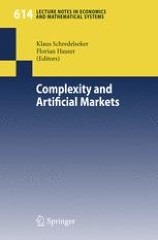
In recent years, agent-based simulation has become a widely accepted tool when dealing with complexity in economics and other social sciences. The contributions presented in this book apply agent-based methods to derive results from complex models related to market mechanisms, evolution, decision making, and information economics. In addition, the applicability of agent-based methods to complex problems in economics is discussed from a methodological perspective. The papers presented in this collection combine approaches from economics, finance, computer science, natural sciences, philosophy, and cognitive sciences.
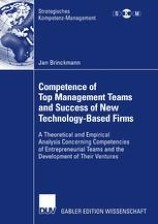
In his book, Jan Brinckmann develops a comprehensive competence concept for new technology-based firms. It is grounded in competence-related literature combining insights from entrepreneurship and management research. The competence concept comprises three domains: general entrepreneurial competencies, social competencies, and functional competencies in technology, marketing, and financial management. A measurement model is developed to specify the contents of each sub-domain and to facilitate self-assessment of these competencies. In an empirical study, 212 executives of German NTBFs assessed their team’s competencies. This data is analyzed using structural equation modelling to identify the most relevant competencies for new venture success.
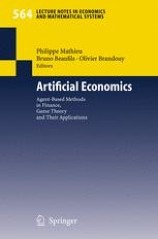
The purpose of this book is to give an up-to date view of the scientific production in the fields of Agent-based Computational Economics (mainly in Market Finance and Game Theory). Based on communications given at AE'2005 (Lille, USTL, France), this book offers a wide panorama of recent advances in ACE (both theoretical and methodological) that will interest academics as well as practitioners.

Containing tips, techniques and short cuts gained from practical experience, this book show how to use ARIS in an easy way, supporting smart methods and smart models, and displays how ARIS can be used as a powerful tool for BPM.
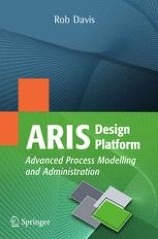
ARIS is ranked as the leading Business Process Modelling tool in the Gartner Quadrant for Business Process Analysis and Optimization. The ARIS Design Platform is being used as a business process management (BPM) tool for projects in BPM, quality management, business analysis and design, software development, implementation of service-oriented architectures and so forth. Following on from Rob Davis’ successful introductory text, ARIS Design Platform: Getting Started with BPM, this new book covers in detail some of the more advanced concepts of using ARIS Business Architect in the new ARIS 7 Design Platform. Written in a reader-friendly style, it contains detailed explanations of key concepts combined with numerous examples, hints and tips gained from many years of practical experience of using ARIS.
Shows for the first time how mental models and values influence this attribution in the life cycle inventory step of LCA. One of the key findings is that the different management rules for a sustainable use of materials must be taken into account for the attribution of material and energy flows to a product. Otherwise, improvement options recommended by an LCA might turn out to even worsen the environmental situation if reassessed from a meta-perspective. As a consequence of this book, the claim of unambiguitiy (‘objectivity’) of the life cycle inventory must be abandoned. A group-model building process for LCA is developed that allows one to grasp the decision makers' mental models and values in the inventory analysis on a case- and situation-specific basis. Only by this, LCA results will become relevant in a decision-making process. Two case studies on the modelling of recycling and other end-of-life options of aluminium windows and beech wood railway sleepers in LCA complement the methodological part.
The present book describes the methodology to set up agent-based models and to study emerging patterns in complex adaptive systems resulting from multi-agent interaction. It offers the application of agent-based models in demography, social and economic sciences and environmental sciences. It presents and combines different approaches how to implement agent-based computational models and tools in an integrative manner that can be extended to other cases.
Learning and adaption are key features of "real economies". Studying interesting real phenomena like innovation, industry evolution or the role of expectation formulation in financial markets thus necessitates novel methods of data analysis and modelling. This title covers statistical models of heterogeneity, artificial consumer markets, models of adaptive expectation formulation in financial markets and agent-based models of industry evolution, product diversification and energy markets. The joint findings are presented in a manner that is interesting both for readers with a background in economics/management and mathematics and statistics and also for non-expert readers because it allows them to grasp the ideas of modern management science. This book thus provides a unique integrated toolbox for building realistic agent-based models of learning and adaption in a variety of settings based on sound data analysis.
Presents recent advances in modelling, planning and evaluating city logistics for sustainable and liveable cities based on the application of ICT (Information and Communication Technology) and ITS (Intelligent Transport Systems). It highlights modelling the behaviour of stakeholders who are involved in city logistics as well as planning and managing policy measures of city logistics including cooperative freight transport systems in public-private partnerships. Case studies of implementing and evaluating city logistics measures in terms of economic, social and environmental benefits from major cities around the world are also given.
Presents recent advances in modelling, planning and evaluating city logistics for sustainable and liveable cities based on the application of ICT (Information and Communication Technology) and ITS (Intelligent Transport Systems). It highlights modelling the behaviour of stakeholders who are involved in city logistics as well as planning and managing policy measures of city logistics including cooperative freight transport systems in public-private partnerships. Case studies of implementing and evaluating city logistics measures in terms of economic, social and environmental benefits from major cities around the world are also given.
Presents recent advances in modelling, planning and evaluating city logistics for sustainable and liveable cities based on the application of ICT (Information and Communication Technology) and ITS (Intelligent Transport Systems). It highlights modelling the behaviour of stakeholders who are involved in city logistics as well as planning and managing policy measures of city logistics including cooperative freight transport systems in public-private partnerships. Case studies of implementing and evaluating city logistics measures in terms of economic, social and environmental benefits from major cities around the world are also given.
Image registration is an emerging topic in image processing with many applications in medical imaging, picture and movie processing. The classical problem of image registration is concerned with ?nding an appropriate transformation between two data sets. This fuzzy de?nition of registration requires a mathematical modeling and in particular a mathematical speci?cation of the terms appropriate transformations and correlation between data sets. Depending on the type of application, typically Euler, rigid, plastic, elastic deformations are considered. The variety of similarity p measures ranges from a simpleL distance between the pixel values of the data to mutual information or entropy distances. This goal of this book is to highlight by some experts in industry and medicine relevant and emerging image registration applications and to show new emerging mathematical technologies in these areas. Currently, many registration application are solved based on variational prin- ple requiring sophisticated analysis, such as calculus of variations and the theory of partial differential equations, to name but a few. Due to the numerical compl- ity of registration problems ef?cient numerical realization are required. Concepts like multi-level solver for partial differential equations, non-convex optimization, and so on play an important role. Mathematical and numerical issues in the area of registration are discussed by some of the experts in this volume.
This volume is an interdisciplinary book, which introduces, in a very readable way, state of the art research in the fundamental topics of mathematical modelling of Biosystems. These topics include: the study of Biological Growth and its mechanisms, the coupling of pattern to form via theorems of Differential Geometry, the human immunodeficiency virus dynamics, the inverse folding problem and the possibility of analysing true protein backbone flexibility, the Biclustering techniques for the organization of microarray data, the analytical approach to the modelling of biomolecular structure via Steiner trees, the action of biocides on resistance mechanisms of mutated and phenotypic bacteria strains, a description of the fundamental processes for the distribution and abundances of species towards a unified theory of Ecology, and a special introduction to Protein Physics aiming to explain the all-or-none first order phase transitions from native to denatured states.
Mathematics needs Sustainable Development. When science was gradually reinvented in European medieval societies, it was legitimised as contributing to the disclosure of God’s divine creation. The conflicts that emerged became well known as a result of the clash between Galileo and the Church. Science found a new legitimacy through recognition that it was a powerful force against superstition. In the Enlightenment the argument was pushed forward by attributing Progress to the advancement of science: science could produce a better world by promoting rationality. In our modern society, science has become intimately linked to technology. Science for its own sake unfortunately rarely has positive outcomes in terms of research grant applications. Meanwhile, science and technology, and the progress they are supposed to produce, meet with wide scale scepticism. We all know of the current global problems: climate change, resource depletion, a thinning ozone layer, space debris, declining biodiversity, malnutrition, dying ecosystems, global inequity, and the risk of unprecedented nuclear wars
This book introduces and explains classical and modern mathematical procedures as applied to the real problems confronting engineers and geoscientists. Written in a manner that is understandable for students across the breadth of their studies, it lays out the foundations for mastering difficult and sometimes confusing mathematical methods.

Hydrocarbon exploration and production incorporate great technology challenges for the oil and gas industry. In order to meet the world's future demand for oil and gas, further technological advance is needed, which in turn requires research across multiple disciplines, including mathematics, geophysics, geology, petroleum engineering, signal processing, and computer science. This book addresses important aspects and fundamental concepts in hydrocarbon exploration and production. Moreover, new developments and recent advances in the relevant research areas are discussed, whereby special emphasis is placed on mathematical methods and modelling. The book reflects the multi-disciplinary character of the hydrocarbon production workflow, ranging from seismic data imaging, seismic analysis and interpretation and geological model building, to numerical reservoir simulation. Various challenges concerning the production workflow are discussed in detail.

These proceedings are reporting on the conference ''Math Everywhere", a successful event celebrating a leading scientist, promoting ideas he pursued and sharing the open atmosphere he is known for. The areas of the contributions are the following , Deterministic and Stochastic Systems. Mathematical Problems in Biology, Medicine and Ecology, Mathematical Problems in Industry and Economics.
This book contains six chapters on central topics in materials science. Each is written by specialists in the field, and gives a state-of-the-art presentation of the subject for graduate students and scientists not necessarily working in that field. Computer simulations of new materials, theory and experimental work are all extensively discussed. As nanomaterials are of great current interest, most of the topics discussed have a bearing on nanomaterials and nanodevices. In addition to inorganic nanotubes, metallic nanocrystals, electronic nanodevices, spintronics and interfaces on an atomic scale, the text also presents computer simulations on one of the less well understood fields in solid-state physics and materials science: glasses and undercooled fluids.

The first part of the book deals with the geometrical description of uniform bodies and their homogeneity (i.e., integrability) conditions. In the second part, a theory of material evolution is developed and its relevance in various applied contexts discussed. The necessary geometrical notions are introduced as needed in the first two parts but often without due attention to an uncompromising mathematical rigour. This task is left for the third part of the book, which is a highly technical compendium of those concepts of modern differential geometry that are invoked in the first two parts (differentiable manifolds, Lie groups, jets, principal fibre bundles, G-structures, connections, frame bundles, integrable prolongations, groupoids, etc.).
This book provides a comprehensive, self-contained and up-to-date treatment of the main topics in the theory of option pricing. The first part of the text starts with discrete-time models of financial markets, including the Cox-Ross-Rubinstein binomial model. The passage from discrete- to continuous-time models, done in the Black-Scholes model setting, assumes familiarity with basic ideas and results from stochastic calculus. However, an Appendix containing all the necessary results is included. This model setting is later generalized to cover standard and exotic options involving several assets and/or currencies. An outline of the general theory of arbitrage pricing is presented. The second part of the text is devoted to the term structure modelling and the pricing of interest-rate derivatives. The main emphasis is on models that can be made consistent with market pricing practice.

سوريا - اتستراد درعا - غباغب
+963-15 2050 - 15 860 380 /1/2/3 - 11 662 3900