


تحسين النتائح
ترتيب حسب
من
الى


Magnetohydrodynamics (MHD) studies the interaction between the flow of an electrically conducting fluid and magnetic fields. It involves such diverse topics as the evolution and dynamics of astrophysical objects, thermonuclear fusion, metallurgy and semiconductor crystal growth, etc. Although the first ideas in magnetohydrodynamics appeared at the beginning of the last century, the "explosion" in theoretical and experimental studies occurred in the 1950s-60s. This state-of-the-art book aims at revising the evolution of ideas in various branches of magnetohydrodynamics (astrophysics, earth and solar dynamos, plasmas, MHD turbulence and liquid metals) and reviews current trends and challenges.

Presents a phenomenological approach to the field of solid state magnetism. After introducing the basic concepts from statistical thermodynamics and electronic structure theory, the first part discusses the standard models for localized moments (Weiss, Heisenberg) and delocalized moments (Stoner). This is followed by a chapter about exchange and correlation in metals, again considering the results for the localized and delocalized limit. The book ends with a chapter about spin fluctuations, which are introduced as an alternative to the finite temperature Stoner theory. A useful reference work for researchers, this book will also be a valuable accompaniment to graduate courses on magnetism and magnetic materials.

Magnetism and Structure in Functional Materials addresses three distinct but related topics: (i) magnetoelastic materials such as magnetic martensites and magnetic shape memory alloys, (ii) the magnetocaloric effect related to magnetostructural transitions, and (iii) colossal magnetoresistance (CMR) and related magnanites. The goal is to identify common underlying principles in these classes of materials that are relevant for optimizing various functionalities. The emergence of apparently different magnetic/structural phenomena in disparate classes of materials clearly points to a need for common concepts in order to achieve a broader understanding of the interplay between magnetism and structure in this general class of new functional materials exhibiting ever more complex microstructure and function. The topic is interdisciplinary in nature and the contributors correspondingly include physicists, materials scientists and engineers. Likewise the book will appeal to scientists from all these areas.
Gives an comprehensive account of magnetism, spanning the historical development, the physical foundations and the continuing research underlying the field, one of the oldest yet still vibrant field of physics. It covers both the classical and quantum mechanical aspects of magnetism and novel experimental techniques. Perhaps uniquely, it also discusses spin transport and magnetization dynamics phenomena associated with atomically and spin engineered nano-structures against the backdrop of spintronics and magnetic storage and memory applications.

Contains the edited lectures of the fourth Mittelwihr school on "Magnetism and Synchrotron Radiation". This series of events introduces graduate students and nonspecialists from related disciplines to the field of magnetism and magnetic materials with emphasis on synchrotron radiation as an experimental tool of investigation. These lecture notes present in particular the state of the art regarding the analysis of magnetic properties of new materials.
A team of outstanding scientists in the field of modern magnetic nanotechnologies illustrates the state of the art in several areas of advanced magneto-electronic devices, magnetic micro-electromechanical systems and high density information storage technologies.The physics and chemistry of nano-scale systems have made rapid advances and there are real prospects of translating exciting scientific findings into a new generation of processes and high technology products with a potential impact on several industrial sectors. In particular the development of nano-structured magnetic materials plays a leading role in the increasing miniaturization of devices with superior performances.

Addresses the exciting and rapidly developing topic of nanostructured magnetic materials. It combines modern topics in nanoscale magnetism with issues relating to the fabrication and characterization of magnetic nanostructures. The chapters describe a wide range of physical aspects, together with theoretical and experimental methods. "Magnetic Nanostructures" will be of interest to researchers and specialists both in academic and industrial research. Graduate students will also find in this book an accessible introduction to the essential issues.

This monograph addresses the field theoretical aspects of magnetic monopoles. Written for graduate students as well as researchers, the author demonstrates the interplay between mathematics and physics. He delves into details as necessary and develops many techniques that find applications in modern theoretical physics. This introduction to the basic ideas used for the description and construction of monopoles is also the first coherent presentation of the concept of magnetic monopoles. It arises in many different contexts in modern theoretical physics, from classical mechanics and electrodynamics to multidimensional branes. The book summarizes the present status of the theory and gives an extensive but carefully selected bibliography on the subject. The first part deals with the Dirac monopole, followed in part two by the monopole in non-abelian gauge theories. The third part is devoted to monopoles in supersymmetric Yang-Mills theories.

Contains a comprehensive collection of overview articles on novel microscopy methods for imaging magnetic structures on the nanoscale. Written by leading scientists in the field the book covers synchrotron based methods, spin polarized electron methods, and scanning probe techniques. It will be a valuable source of reference for graduate students and newcomers to the field.

Magnetic heterostructures constitute an important field in magnetism and nanotechnology, which has developed over the past fifteen years due to important advances in epitaxial- growth techniques and lithographic processes. Magnetic heterostructures combine different physical properties which do not exist in nature. Examples are semiconductors/ferromagnets, superconductors/ferromagnets, and ferromagnets/antiferromagnets. These combinations display rich and novel physical properties different from those that exit in any single one of them. Interlayer exchange coupling, exchange bias, proximity effects, giant magneto-resistance, tunneling magneto-resistance, spininjection and spintransport are examples of new physical phenomena that rely on the combination of different materials layers

Using the spin-Hamiltonian formalism the magnetic parameters are introduced through the components of the Lambda-tensor involving only the matrix elements of the angular momentum operator. The energy levels for a variety of spins are generated and the modeling of the magnetization, the magnetic susceptibility and the heat capacity is done. Theoretical formulae necessary in performing the energy level calculations for a multi-term system are prepared with the help of the irreducible tensor operator approach. The goal of the programming lies in the fact that the entire relevant matrix elements (electron repulsion, crystal field, spin-orbit interaction, orbital-Zeeman, and spin-Zeeman operators) are evaluated in the basis set of free-atom terms. The modeling of the zero-field splitting is done at three levels of sophistication. The spin-Hamiltonian formalism offers simple formulae for the magnetic parameters by evaluating the matrix elements of the angular momentum operator in the basis set of the crystal-field terms. The magnetic functions for dn complexes are modeled for a wide range of the crystal-field strengths.

The main topic of Magnetic Control of Tokamak Plasmas is the design of feedback control systems guaranteeing the stability of plasma equilibrium inside a tokamak and the regulation of the plasma position and shape during plasma pulses. Modelling and control details are presented, allowing the non-expert to understand the control problem. Starting from equations of magneto-hydro-dynamics, all the steps needed for the derivation of plasma state-space models are enumerated. The basics of electromagnetics are frequently recalled. The control problem is then described beginning with control of current and position – vertical and radial – and progressing to the more challenging shape control. The solutions proposed vary from simple PIDs to more sophisticated MIMO controllers.
Assimilating new research in the field of low-dimensional metals, this monograph provides a detailed overview of the current status of research on quasi-one- and two-dimensional molecular metals, describing normal-state properties, magnetic field effects, superconductivity, and the phenomena of interacting p and d electrons. It will be useful not only for frontier researchers with a broad interest in low-dimensional electronic and magnetic properties, but also for graduate students of solid-state physics and chemistry with some background knowledge of solid-state physics. It includes a number of fundamental and novel findings relating to the characteristics of these low-dimensional metals, which in future are likely to become standard material in textbooks on solid-state physics.

Some ferromagnetic materials with localized magnetic moments have become a hot topic in modern solid-state physics because of their potential applications, e.g. in spintronic devices. The magnetic systems of interest comprise diluted magnetic semiconductors and half-metallic ferromagnets. Like conventional concentrated local-moment systems, they are characterized by an exchange interaction between localized magnetic moments and quasi-free charge carriers. The current research on local-moment ferromagnetism is reviewed in a tutorial style by leading experts in this field. Experimentalists present the latest approaches to characterize the unique material properties, and theoreticians propose definitive ideas to explain the observed phenomena. Students and researches alike will benefit from this status report.
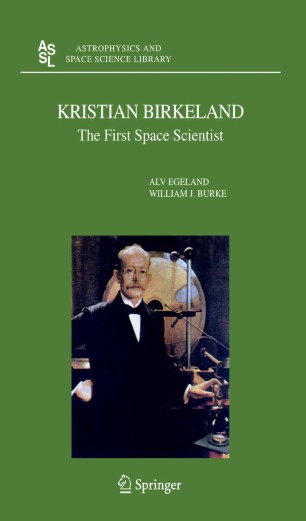
PREFACEThisscientific biography of Kristian Birkeland (1867–1917) was written to bring the story ofa Norwegian national hero to the attention ofthe English-speaking world. Birkeland’sheroic stature was established not on a field of military battle,but in the bitter cold of the Artic wilderness ashe sought to answer basic questions abouthow the Sun controlled northern lights andmag-netic storms. He was also afather of Norsk Hydro one ofNorway’s largest industries. Birkel and died before reaching the age of 50.Because Birkel and never kept adiary, documented information about his family and private life is sparse. Before he died, Olaf Devik, the last of Birke-ffland’s close friends, gave along interview and graciously transferred his personal archive to A.E. Birkeland’s 82 scientific papers and three book-length publications map the progress of his investigations. addressed this book questions that had vexed European scientists for centuries. Why do the northern lights appear overhead when the Earth’s magnetic field is disturbed? How are magnetic storms connected to disturbances on the Sun? To answer these questions Birkeland interpreted his advance laboratory simulations and daring campaigns in the Arctic wilderness in the light of Maxwell’s newly discovered laws of electricity and magnetism. Birkeland’s ideas were dismissed for decades, only to be vindicated when satellites could fly above the Earth’s atmosphere.

This volume is devoted to both instrumentation and computation aspects of EPR, while addressing applications such as spin relaxation time measurements, the measurement of hyperfine interaction parameters, and the recovery of Mn(II) spin Hamiltonian parameters via spectral simulation.

One the key aspects of this volume is to cut across the traditional taxonomy of disciplines in the study of alloys. Hence there has been a deliberate attempt to integrate the different approaches taken towards alloys as a class of materials in different fields, ranging from geology to metallurgical engineering. The emphasis of this book is to highlight commonalities between different fields with respect to how alloys are studied. The topics in this book fall into several themes, which suggest a number of different classification schemes. We have chosen a scheme that classifies the papers in the volume into the categories Microstructural Considerations, Ordering, Kinetics and Diffusion, Magnetic Considerations and Elastic Considerations. The book has juxtaposed apparently disparate approaches to similar physical processes, in the hope of revealing a more dynamic character of the processes under consideration. This monograph will invigorate new kinds of discussion and reveal challenges and new avenues to the description and prediction of properties of materials in the solid state and the conditions that produce them
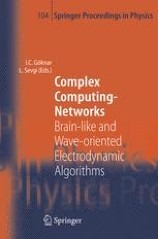
This book uniquely combines new advances in the electromagnetic and the circuits&systems theory. It integrates both fields regarding computational aspects of common interest. Emphasized subjects are those methods which mimic brain-like and electrodynamic behaviour; among these are cellular neural networks, chaos and chaotic dynamics, attractor-based computation and stream ciphers.

Mechanics, Electrodynamics, Quantum Mechanics, and Statistical Mechanics and Thermodynamics comprise the canonical undergraduate curriculum of theoretical physics. In Compendium of Theoretical Physics, Armin Wachter and Henning Hoeber offer a concise, rigorous and structured overview that will be invaluable for students preparing for their qualifying examinations, readers needing a supplement to standard textbooks, and research or industrial physicists seeking a bridge between extensive textbooks and formula books. The authors take an axiomatic-deductive approach to each topic, starting the discussion of each theory with its fundamental equations. By subsequently deriving the various physical relationships and laws in logical rather than chronological order, and by using a consistent presentation and notation throughout, they emphasize the connections between the individual theories. The reader’s understanding is then reinforced with exercises, solutions and topic summaries.

Compatible spatial discretizations are those that inherit or mimic fundamental properties of the PDE such as topology, conservation, symmetries, and positivity structures and maximum principles. It offer a snapshot of the current trends and developments in compatible spatial discretizations. The reader will find valuable insights on spatial compatibility from several different perspectives and important examples of applications compatible discretizations in computational electromagnetics, geosciences, linear elasticity, eigenvalue approximations and MHD. The contributions collected in this volume will help to elucidate relations between different methods and concepts and to generally advance our understanding of compatible spatial discretizations for PDEs.

سوريا - اتستراد درعا - غباغب
+963-15 2050 - 15 860 380 /1/2/3 - 11 662 3900