



الصفحة 3
الصفحة 3

Fearless leadership : Managing fear, leading with courage and strengthening authenticity
All management starts with self-management - handle fear and become an authentic leader. Often, the problem with management is not theoretical, but practical. Managers know enough about leadership, but a lot of them do not act accordingly.

Examining Innovation Management from a Fair Process Perspective
Companies nowadays still differ considerably in that they interact with employees. This interaction depends on different organisational cultures, leadership styles, and the ways in which information and communication take place. A recent trend, even in economic theory, is that interactions are valued in themselves and not solely to achieve rational economic maximisation. People care about outcomes, but they also care about the interactional processes that produce those outcomes. Thomas Limberg investigates a new approach to the management of human relationships in a knowledge-based work environment and analyses the relationship between fair process and innovation performance. Key findings are that social interactions have a significant influence on execution performance in organisations, and fairness can have positive effects on innovative behaviour and therefore on innovation performance. In the transition from a production-based to a knowledge-based economy, fair process is becoming a powerful tool for managing human interactions and for influencing attitudes and behaviours that are so critical in reaching high innovation performance.

Evidence-based school development in changing demographic contexts
This book features a school development model (Arizona Initiative for Leadership Development and Research – AZiLDR) that offers a roadmap for schools to navigate the complexities of continuous school development. Filled with processes that balance evidence-based values with democratic, culturally responsive values, this book offers strategies to mediate the tensions and to address school culture, context and values, leadership capacity, using data as a source of reflection, curricular and pedagogical activity, and strengths-based approaches to meeting the needs of culturally diverse students.

Evidence and Expertise in Nordic Education Policy : A Comparative Network Analysis
This book explores how policy makers draw on national, regional and international expertise in issuing school reform within five Nordic countries. In an era of international comparison, policy makers are expected to review best practices, learn from experiences from elsewhere, and apply international standards propelled by international organizations. The chapters draw methodologically on bibliometric data, network analysis, document analysis and expert interviews.

Entrepreneurship and innovation : Theory, practice and context, 4th
Provides an overview of the theory, Practice and context of entrepreneurship and innovation at both the industry and firm level. It provides a foundation of ideas and understandings designed to shape the reader’s thinking and behaviour to better appreciate the role of innovation and entrepreneurship in modern economies, And to recognise their own abilities in this regard. The book provides the reader with an overview of these elements and how they combine to create new value in the market.

Entrepreneurial responses to chronic adversity : The bright, the dark, and the in between
Extends recent work on entrepreneurship in response to adverse events to explore entrepreneurial responses by people who face chronic adversity more deeply. Instead of focusing on the sort of responses intended to destroy the institutions that create and sustain chronic adversity, the authors are interested in how individuals use entrepreneurial action to find a way within these adverse constraints to improve their lives. They explore the positive outcomes arising from these entrepreneurial actions for the entrepreneurial actor and their family members as well as the negative consequences of these entrepreneurial responses to chronic adversity — outcomes that diminish others’ well-being.

Engineering Design : A Systematic Approach
Engineering Design (3rd edition) describes a systematic approach to engineering design. The authors argue that such an approach, applied flexibly and adapted to a particular task, is essential for successful product development. The design process is first broken down into phases and then into distinct steps, each with its own working methods. The third edition of this internationally-recognised text is enhanced with new perspectives and the latest thinking. These include extended treatment of product planning; new sections on organisation structures, simultaneous engineering, leadership and team behaviour; and updated chapters on quality methods and estimating costs. New examples have been added and existing ones extended, with additions on design to minimise wear, design for recycling, mechanical connections, mechatronics, and adaptronics.

Employability revisited : Strengths- and life-phase-oriented human resource management
One of the most pressing issues in current and future human resource management is the inclusion of strengths and life stages within human resource structures. This book examines in a multi-perspective, innovative and participatory way the conditioning factors for persistent stereotyping processes in the context of age and work. Levers for change as well as the circular model for optimizing or implementing life-phase oriented human resource management are presented. It also offers practical assistance for corporate leaders and human resources managers for the implementation of a strength-oriented human resources management.

Emerging Economic Models for Sustainable Businesses : A Practical Approach
Analyses economic models that look at value propositions, creation and capture with ‘People, Planet and Profit’ deeply embedded in each stage of the value chain. The contributions bring out the interplay between new standards, evaluation frameworks, technology innovation and other emerging tools to show how they create a sustainable business. For this, they lean on learnings from successful sustainable businesses. Business leaders will find that this book provides deep insights on improving their existing sustainable practices, and speeding up the transition from linear to circular, narrow stakeholder driven to community driven.

Effective Multicultural Teams : Theory and Practice
Offers something that few other textbooks do: an accessible and understandable approach to discern the implications of complicated research. It will be a useful resource in courses on team building, multicultural and international issues at both the undergraduate and graduate levels. I was most impressed with the use of research from so many different cultures. Too often we take a Western, or even a U.S., perspective and assume that our way is the best way without understanding the cultural contexts. This material certainly avoids that trap.

Educating Students to Improve the World
This book addresses how to help students find purpose in a rapidly changing world. In a probing and visionary analysis of the field of global education Fernando Reimers explains how to lead the transformation of schools and school systems in order to more effectively prepare students to address today’s’ most urgent challenges and to invent a better future.

Digital Transformation of Learning Organizations
This Book provides insight into how organizations change through the adoption of digital technologies. Opportunities and challenges for individuals as well as the organization are addressed.

Digital Dilemmas : Exploring Social Media Ethics in Organizations
This book categorizes the dilemmas organizations across a range of industries can face when they implement social media to communicate with stakeholders. This book provides a systematic framework for analyzing these ethical dilemmas in social media using the Navigation Wheel. This tool leads the decision-maker through a series of considerations such as legal questions, corporate identity, morality, reputation, and ethics. Finally, the author considers implications for leaders and presents potential solutions to these dilemmas.

Digital business strategies in blockchain ecosystems : Transformational design and future of global business
Analyzes the effects of the latest technological advances in blockchain and artificial intelligence (AI) on business operations and strategies. Adopting an interdisciplinary approach, the contributions examine new developments that change the rules of traditional management. The chapters focus mainly on blockchain technologies and digital business in the "Industry 4.0" context, covering such topics as accounting, digitalization and use of AI in business operations and cybercrime.

DevOps for Digital Leaders : Reignite Business with a Modern DevOps-Enabled Software Factory
In DevOps for Digital Leaders, deep collective experience on both sides of the dev–ops divide informs the global thought leadership and penetrating insights of the authors, all three of whom are cross-portfolio DevOps leaders at CA Technologies. Aruna Ravichandran, Kieran Taylor, and Peter Waterhouse analyze the organizational benefits, costs, freedoms, and constraints of DevOps. They chart the coordinated strategy of organizational change, metrics, lean thinking, and investment that an enterprise must undertake to realize the full potential of DevOps and reach the sweet spot where accelerating code deployments drive increasing customer satisfaction, revenue, and profitability.

Designing Intelligent Construction Projects
Readers will find: Illuminating case study material that highlights how change management methodologies, game theory, and collaborative contractual design can deliver results Strategies for achieving lean, viable, and digitally oriented construction leadership fit for the modern market Rigorous discussions of the current and potential future impact of digitization on construction firms

Designing Digital Work : Concepts and Methods for Human-centered Digitization
This book could well be the most comprehensive collection to date of integrated ideas on the elicitation, representation, integration and digitization of work processes and collaboration. The authors take a heavily human-centered approach while never losing sight of engineering aspects involved. Rooted in relevant theories, they present a set of practice-oriented tools and methods that will help bring work and work support into the hyper connected, data-driven era we are now entering.
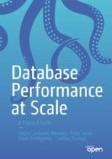
Database performance at scale: a practical guide
Optimizing database performance at the scale required for today’s data-intensive applications often requires more than performance tuning and scaling out. This book shares commonly overlooked considerations, pitfalls, and opportunities that have helped many teams break through database performance plateaus. It’s neither a definitive guide to distributed databases nor a beginner’s resource. Rather, it’s a look at the many different factors that impact performance, and our top field-tested recommendations for navigating them. Chapter 1 provides two (fun and fanciful) tales that surface some of the many roadblocks you might face and highlight the range of strategies for navigating around them.

Customer relationship management : Concept, strategy, and tools, 3rd
Presents an extensive discussion of the strategic and tactical aspects of customer relationship management as we know it today. It helps readers obtain a comprehensive grasp of CRM strategy, concepts and tools and provides all the necessary steps in managing profitable customer relationships. Throughout, the book stresses a clear understanding of economic customer value as the guiding concept for marketing decisions. Exhaustive case studies, mini cases and real-world illustrations under the title “CRM at Work” all ensure that the material is both highly accessible and applicable, and help to address key managerial issues, stimulate thinking, and encourage problem solving.

Culture in organizations : Development, impact and culture-mindful leadership
Describes the emergence and development of culture over time as well as the formation and influence of subcultures. Even though culture is always present, certain situations call for specific attention such as fast growth or stagnation, strategic alliances, M&As or situations of change. The book describes how to go about understanding and assessing an organization’s culture as a basis for culture change interventions as well as culture-sensitive and culture-mindful management and leadership.
