


تحسين النتائح
ترتيب حسب
من
الى

In the book : How to choose a leadership style that suits your personality, the people you work with, and your organizationHow to engage in the co-creation of leadership through generative leadership practice, including the development of an organizational philosophy, practice, and structureHow to manage employee performance and engagement and how to choose successful management systems to leverage success
“Joel Demski’s book is an excellent book in accounting that provides an insightful and comprehensive study on managerial accounting using issues through a new approach based on economic theory and quantitative methods. … this book is very insightful and worth reading. The book is recommended as teaching and research material since it motivates readers to study thoughtfully the philosophy and principles of managerial accounting, in addition addressing how to solve managerial problems based on accounting information.”
Brings together works by specialists from different disciplines and continents to reflect on the nexus between leadership, spirituality and discernment, particularly with regard to a world that is increasingly volatile, uncertain, complex, and ambiguous (VUCA). The book spells out, first of all, what our VUCA world entails, and how it affects businesses, organizations, and societies as a whole. Secondly, the book develops new perspectives on the processes of leadership, spirituality, and discernment, particularly in this VUCA context. These perspectives are interdisciplinary in nature, and are informed by e.g. management studies, leadership theory, philosophy, and theology.
In recent years, agent-based simulation has become a widely accepted tool when dealing with complexity in economics and other social sciences. The contributions presented in this book apply agent-based methods to derive results from complex models related to market mechanisms, evolution, decision making, and information economics. In addition, the applicability of agent-based methods to complex problems in economics is discussed from a methodological perspective. The papers presented in this collection combine approaches from economics, finance, computer science, natural sciences, philosophy, and cognitive sciences.
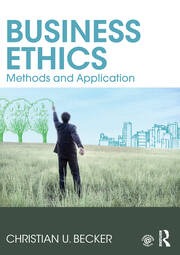
Business Ethics: Methods and Application provides a new systematic approach to normative business ethics that covers the complex and various ethical challenges of modern business.
Provides a tailored overview of what AI specifically means for financial services, a highly regulated yet also disrupted industry. it investigates the current state of AI applications in financial services today along with the state of funding and partnerships between tech and banking industries. it also examines the key pillars of responsible AI and the importance of keeping humans in the loop. the book takes a deep dive into the use cases in the financial services industry, the challenges and opportunities, and the fragmented regulatory landscape. how can we effectively assess risks, and balance innovation and customer centricity with trust in AI in financial services? can smaller organizations reap the benefits of the technology? how can institutions deploy AI responsibly and securely, and promote a fairer and more equitable future for more people?
An Annotated Timeline of Operations Research: An Informal History recounts the evolution of Operations Research (OR) as a new science - the science of decision making. Arising from the urgent operational issues of World War II, the philosophy and methodology of OR has permeated the resolution of decision problems in business, industry, and government. The Timeline chronicles the history of OR in the form of self-contained, expository entries. Each entry presents a concise explanation of the events and people under discussion, and provides key sources where further relevant information can be obtained. In addition, books and papers that have influenced the development of OR or helped to educate the first generations of OR academics and practitioners are cited throughout the book.
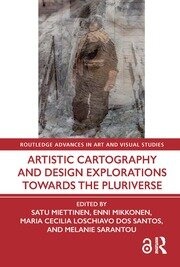
Explores the pluriverse of art and design through epistemological and methodological considerations. What kinds of sustainable ways are there for knowledge transfer, supporting plural agendas, finding novel ways for unsettling conversations, unlearning and learning and challenging power structures with marginalised groups and contexts through art and design? The main themes of the book are art and design methods, epistemologies and practices that provide critical, interdisciplinary, pluriversal and decolonial considerations. The book challenges the domination of the white logic of art and design and shifts away from the Anglo-European one-world system towards the pluriverse.

Aesthetics in Digital Photography presents theories developed over the last 25 centuries by philosophers and art critics, who have sometimes been governed by the objectivity of perception, and other times, of course, by the subjectivity of human judgement. It explores the advances that have been made in neuro-aesthetics and their current limitations.
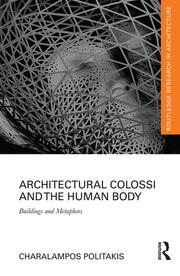
Architectural Colossi and the Human Body discusses the role of Platonic and Cartesian philosophy and how philosophers such as Heidegger and Merleau-Ponty, and theoreticians such as Frascari and Pallasmaa, have seen, described and analysed the human body and the role of architecture and perception. Drawing upon three key case studies and by employing theoretical ideas of Venturi and others, this book will provide an understanding of the role of anthromorphism and the relation and use of the human body with reference to selected architects and artists.
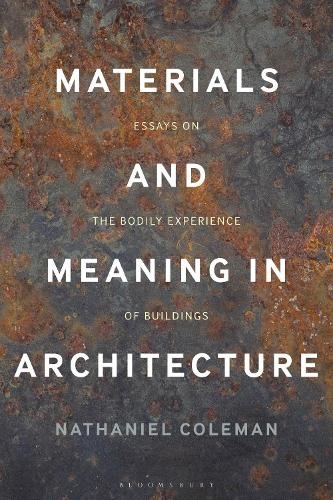
Interweaving architecture, philosophy and cultural history, Materials and Meaning in Architecture develops a rich and multi-dimensional exploration of materials and materiality, in an age when architectural practice seems otherwise preoccupied with image and visual representation.
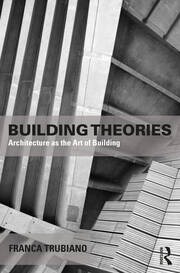
Discusses the content of treatises, essays, articles, and letters by those who have been, throughout history, committed to the art of building. In this, Building Theories argues for the return of a practice of architectural theory that is set amongst building, buildings, and builders. This journey of close reading reinterprets the words of Vitruvius, Alberti, de L’Orme, Le Camus de Mézières, Boullée, Laugier, Rondelet, Semper, Viollet-le-Duc, Hübsch, Bötticher, Berlage, Muthesius, Wagner, Behrendt, Gropius, and Arup. With chapters dedicated to texts from antiquity, the Renaissance, and the nineteenth century, and with a critical eye on architectural theory popularized in the Anglo-Saxon world post-1968, readers are introduced to a wider, more inclusive definition of architectural ideas.
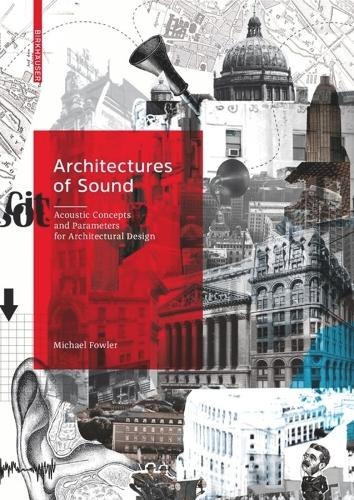
Architects are used to designing visually. In order to expand their basic design tools, this book explores the interactions between sound, space, hearing, and architecture. To this end, the author uses contemporary and historic buildings and projects, but also fictional, philosophical, and theoretical approaches – the idea is not only to define sound as a source, but also as an instrument of architectural space.
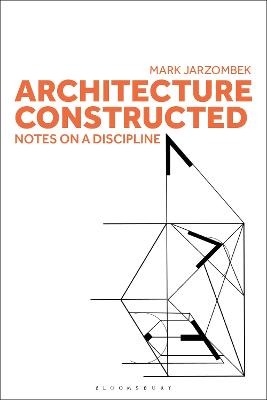
In this book, acclaimed architectural theorist Mark Jarzombek examines this tension head-on, and uses it to rethink the nature of the history of architecture. He reveals architecture to be a troubled, interconnected realm, incomplete and unstable, where labor, craft, and occupation are the ‘invisible’ complements to the work of the architect.
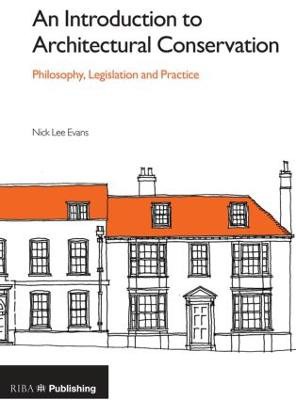
An Introduction to Architectural Conservation introduces non-specialist architects to the principles behind legislation concerning historic buildings. It is a practical guide to good working practice.
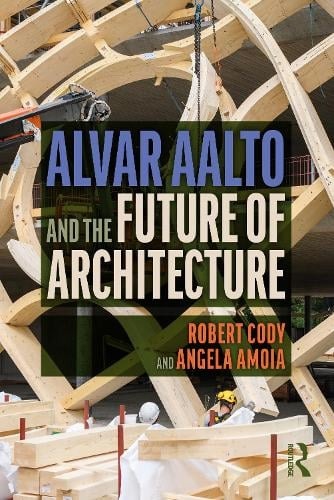
Exposes dialogue between history, theory, design, construction, technology, and sensory experience by means of digital simulations that enhance the assessment and values of our material choices. It offers a critical look to the past to inspire the future. This new edition looks to Alvar Aalto as the primary protagonist for channeling discussions related to these topics. Architects like ALA, Shigeru Ban, 3XN, Peter Zumthor, and others also play the role of contemporary guides in this review. The work of Aalto and selected contemporary architects, along with computer modeling software, showcase the importance of comprehensive design.
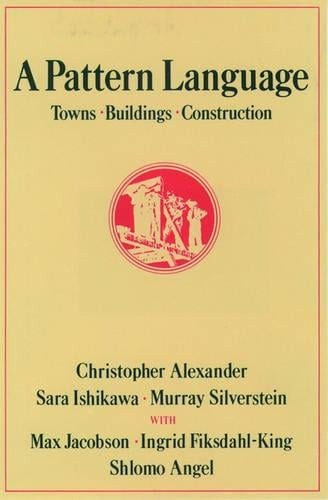
In this volume, 253 archetypal patterns consisting of problem statements, discussions, illustrations, and solutions provide lay persons with a framework for engaging in architectural design.
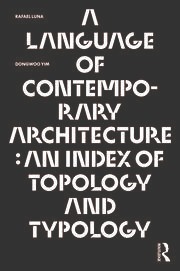
Provides an index of ideas, theories, projects, and definitions that string into a methodology for evaluating the contemporary language of architecture described as “contemporism” through a review of topology (form) and typology (system and elements). Trying to answer the postmodern question of how to move beyond modernism through a thread of architectural styles that tried to respond to deficiencies from the modern promise and contextual changes. Yet, the question remains, should this ongoing struggle to move beyond modernism be a stylistic battle? Has the present architectural practice ever left the modernist tendencies, and is there a structure for a contemporary language in architecture? Presents a collection of highly illustrated projects that have worked under these parameters to break away from modernism in order to present a holistic integration of topology and typology as a language for “contemporism.” The index is illustrated with individual spreads, which can be read sequentially or independently, and encourages the reader to make their own connections. It also includes interviews and contributions from Toyo Ito, Anthony Vidler, Ben van Berkel, Christian Kerez, and Greg Lynn.
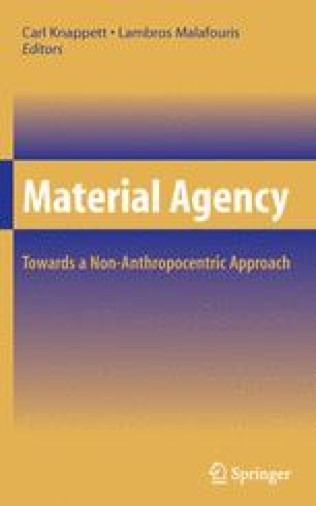
This book is a groundbreaking attempt to address questions of non-human and material agency from a wide range of perspectives and disciplines: archaeology, anthropology, sociology, cognitive science, philosophy, and economics. The editors and authors demostrate that a distributed, relational approach to agency, incorporating both humans and artifacts, has important ramifications for how we understand material culture.
MASS TERMS, COUNT TERMS, AND SORTAL TERMS Central examples of mass terms are easy to come by. 'Water', 'smoke', 'gold', etc. , differ in their syntactic, semantic, and pragmatic properties from count terms such as 'man', 'star', 'wastebasket', etc. Syntactically, it seems, mass terms do, but singular count terms do not, admit the quantifier phrases 'much', 'an amount of', 'a little', etc. The typical indefinite article for them is 'some' (unstressed)!, and this article cannot be used with singular count terms. Count terms, but not mass terms, use the quantifiers 'each', 'every', 'some', 'few', 'many'; and they use 'a(n)' as the indefinite article. They can, unlike the mass terms, take numerals as prefixes.

سوريا - اتستراد درعا - غباغب
+963-15 2050 - 15 860 380 /1/2/3 - 11 662 3900