



الصفحة 3
الصفحة 3

Artificial immune systems ; Vol. 3627 ; 4th International conference, ICARIS 2005, Banff, Alberta, Canada, August 14-17, 2005, Proceedings
Your immune system is unique. It is in many ways as complex as your brain, butit is not centred in one location, like the brain. It is not a single organ—it consistsof many different cell types, diverse methods of intercellular communication, andmany different organs. Its functionality is blurred throughout you—we can’textract the immune system, or point to where it begins and ends. The immunesystem is not separable from the system it protects. It has integral links to everyorgan of our bodies.This has radical implications for the field of Artificial Immune Systems (AIS),that we are only now beginning to comprehend. One of the first insights is thatmodelling the immune system, or developing any kind of immune algorithm, isdifficult. The immune system is one aspect of biology that we find difficult toapply simple reductionist explanations to. We can very successfully extract sub-processes of the whole and create immune algorithms based on those processes.
Anti-Neutrophil Cytoplasmic Antibody (ANCA) Associated Vasculitis
Covers all aspects of Anti-Neutrophil Cytoplasmic Antibody (ANCA) Associated Vasculitis (AAV). The expression refers to a group of diseases, characterized by destruction and inflammation of small vessels. The clinical signs vary and affect several organs, such as the kidney, lung, skin, nervous system and others. presents recently acquired knowledge on pathogenesis, diagnosis, and therapy with the aim of promoting a more holistic approach to these conditions. AAVs are systemic autoimmune diseases of unknown cause that affect small (to medium) sized blood vessels. They include granulomatosis with polyangiitis (formerly Wegener's granulomatosis), microscopic polyangiitis, and eosinophilic granulomatosis with polyangiitis (formerly Churg–Strauss syndrome).
Anorectal Malformations in Children : Embryology, Diagnosis, Surgical Treatment, Follow-up
The book assembles many new aspects in the broad field of anorectal and genitourinary malformations. Special attention is given to the new surgical techniques posterior sagittal anorectal plasty (PSARP), urogenital sinue advancement, and laparoscopy. The results of an international workshop of 26 international authorities on congenital malformations of the organs of the pelvis and perineum are presented. The new classification proposed at the Krickenberg Conference will enable future studies comparing the types and the results of treatment of anorectal malformations.

AI home decorator
Presents the development of “DesignMate”, an innovative AI home decorator application designed to revolutionize interior design. With three main features powered by artificial intelligence, DesignMate simplifies and enhances the process of home decoration. The first feature leverages an Autoregressive transformer model trained on the extensive 3Dfront dataset to suggest room decor based on room layouts. The second feature employs Generative Adversarial Networks (GANs) to enhance the colors of specific room layouts. The third feature introduces an expert system that tailors decor options to user-entered conditions. DesignMate also introduces an integrated e-commerce platform dedicated to furniture, offering users a wide selection of high-quality items that perfectly complement their preferred room designs.

Advances in Fracture Research : Honour and plenary lectures presented at the 11th International Conference on Fracture (ICF11), held in Turin, Italy, on March 20-25, 2005
Biological materials are bottom-up designed systems formed from billions of years of natural evolution. In the long course of Darwinian competition for survival, nature has evolved a huge variety of hierarchical and multifunctional systems from nucleic acids, proteins, cells, tissues, organs, organisms, animal communities to ecological s- tems. Multilevel hierarchy a rule of nature. The complexities of biology provide an opportunity to study the basic principles of hierarchical and multifunctional s- tems design, a subject of potential interest not only to biomedical and life sciences, but also to nanosciences and nanotechnology. Systematic studies of how hierarchical structures in biology are related to their functions and properties can lead to better understanding of the effects of aging, diseases and drugs on tissues and organs, and may help developing a scienti?c basis for tissue engineering to improve the standard of living.
Advanced Bioimaging Technologies in Assessment of the Quality of Bone and Scaffold Materials : Techniques and Applications
This book provides a perspective on the current status of bioimaging technologies developed to assess the quality of musculoskeletal tissue with an emphasis on bone and cartilage. It offers evaluations of scaffold biomaterials developed for enhancing the repair of musculoskeletal tissues. These bioimaging techniques include micro-CT, nano-CT, pQCT/QCT, MRI, and ultrasound, which provide not only 2-D and 3-D images of the related organs or tissues, but also quantifications of the relevant parameters. The advance bioimaging technologies developed for the above applications are also extended by incorporating imaging contrast-enhancement materials.
4th Kuala Lumpur International Conference on Biomedical Engineering 2008 ; BIOMED 2008 25–28 June 2008 Kuala Lumpur, Malaysia
The topics covered in the conference proceedings include: Artificial organs, bioengineering education, bionanotechnology, biosignal processing, bioinformatics, biomaterials, biomechanics, biomedical imaging, biomedical instrumentation, bioMEMS, clinical engineering, prosthetics.
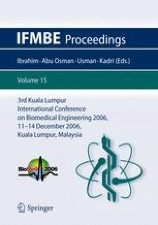
3rd Kuala Lumpur International Conference on Biomedical Engineering 2006 ; Biomed 2006, 11-14 December 2006, Kuala Lumpur, Malaysia
The Kuala Lumpur International Conference on Biomedical Engineering (Biomed 2006) was held from 11 to 14 December 2006 at the Palace of the Golden Horses, Kuala Lumpur, Malaysia. This international conference was jointly organised by the Department of Biomedical Engineering, University of Malaya, Malaysia; Department of Biomedical Engineering, Inje University, Korea; and Malaysian Society of Medical and Biological Engineering. The papers presented at Biomed 2006 cover the following areas: artificial intelligence, biological effects of non-ionising electromagnetic fields, biomaterials, biomechanics, biomedical sensors, biomedical signal analysis, biotechnology, clinical engineering, human performance engineering, imaging, medical informatics, medical instruments and devices, physiological modelling, simulation, and control, prostheses and artificial organs, regulations and organisations, rehabilitation engineering, telemedicine, tissue engineering, and virtual reality in medicine.
3D cell culture : Methods and protocols
Expands on the previous edition with discussions about the latest organoid models developed for many more organs; new hydrogels and devices for 3D culture; and the organoid systems that have been improved by incorporating more components of tissue microenvironments in the in vitro culture. The chapters in this book are organized into five parts and cover topics such as biofabrication, organoids, microfluidic systems, bioprinting, and image analysis. Written in the highly successful Methods in Molecular Biology series format, chapters include introductions to their respective topics, lists of the necessary materials and reagents, step-by-step, readily reproducible laboratory protocols, and tips on troubleshooting and avoiding known pitfalls.
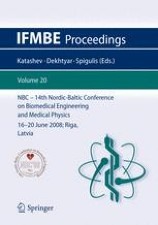
14th Nordic-Baltic conference on biomedical engineering and medical physics : NBC 2008 16–20 June 2008 Riga, Latvia
The topics covered by the Conference Proceedings include: Biomaterials and Tissue Engineering; Biomechanics, Artificial Organs, Implants and Rehabilitation; Biomedical Instrumentation and Measurements, Biosensors and Transducers; Biomedical Optics and Lasers; Healthcare Management, Education and Training; Information Technology to Health; Medical Imaging, Telemedicine and E-Health; Medical Physics; Micro and Nanoobjects, Nanostructured Systems, Biophysics
