



الصفحة 3
الصفحة 3

Mathematics for Ecology and Environmental Sciences
Dynamical systems theory in mathematical biology has attracted much attention from many scientific directions. The purpose of this volume is to discuss the many rich and interesting properties of dynamical systems that appear in ecology and environmental sciences. The main topics include population dynamics with dispersal, nonlinear discrete population dynamics, structured population models, mathematical models in evolutionary ecology, stochastic spatial models in ecology, game dynamics and the chemostat model. Each chapter will serve to introduce students and scholars to the state-of-the-art in an exciting area, to present important new results, and to inspire future contributions to mathematical modeling in ecology and environmental sciences.

Introduction to Wave Scattering, Localization and Mesoscopic Phenomena
Waves represent a classic topic of study in physics, mathematics, and engineering. Many modern technologies are based on our understanding of waves and their interaction with matter. In the past thirty years there have been some revolutionary developments in the study of waves. The present volume is the only available source which details these developments in a systematic manner, with the aim of reaching a broad audience of non-experts. It is an important resource book for those interested in understanding the physics underlying nanotechnology and mesoscopic phenomena, as well as for bridging the gap between the textbooks and research frontiers in any wave related topic. A special feature of this volume is the treatment of classical and quantum mechanical waves within a unified framework, thus facilitating an understanding of similarities and differences between the two.

Introduction to Genetic Algorithms
This book is designed to provide an in-depth knowledge on the basic operational features and characteristics of Genetic Algorithms. The various operators and techniques given in the book are pertinent to carry out Genetic Algorithm Research Projects. The book also explores the different types are Genetic Algorithms available with their importance. Implementation of Genetic Algorithm concept has been performed using the universal language C/C++ and the discussion also extends to Genetic Algorithm MATLAB Toolbox. Few Genetic Algorithm problems are programmed using MATLAB and the simulated results are given for the ready reference of the reader. The applications of Genetic Algorithms in Machine learning, Mechanical Engineering, Electrical Engineering, Civil Engineering, Data Mining, Image Processing, and VLSI are dealt to make the readers understand where the concept can be applied.

Introduction to Computational Biology : An Evolutionary Approach
Molecular biology has changed dramatically over the past two decades. Until the early 1990s genes were studied one at a time by small teams of researchers; today entire genomes are sequenced by internationally collaborating laboratories. In the bygone gene-centered era the accumulation of data was the rate-limiting step in research. Now that step is often data interpretation. This is increasingly dependent on computational methods and as a consequence, computational biology has emerged in the past decade as a new subdiscipline of biology. This introduction to computational biology is centered on the analysis of molecular sequence data. There are two closely connected aspects to biological sequences: (i) their relative position in the space of all other sequences, and (ii) their movement through this sequence space in evolutionary time. Accordingly, the first part of the book deals with classical methods of sequence analysis: pairwise alignment, exact string matching, multiple alignment, and hidden Markov models. In the second part evolutionary time takes center stage and phylogenetic reconstruction, the analysis of sequence variation, and the dynamics of genes in populations are explained in detail. In addition, the book contains a computer program with a graphical user interface that allows the reader to experiment with a number of key concepts developed by the authors.

Introduction to Biosemiotics : The New Biological Synthesis
This book is addressed to students, researchers and academics who have barely heard of the emerging young science of Biosemiotics, and who want to know more about it. Written by many of the field’s major contributors, it provides a highly qualified introduction to Biosemiotics and illustrates the most recent views in its background and development.

Intraspecific Genetic Diversity : Monitoring, Conservation, and Management
Population and evolutionary genetics have been quickly developing ?elds of biological research over the past decades. This book compiles our current understanding of genetic processes in natural populations. In addition, the book provides the author’s original ideas and concepts based on the data obtained by himself and his close coworkers. The author introduces his pioneering concept of population genetic stability,and much of thebook is concerned with the factors and conditions of such stability. Why does genetic stability matter so much? Altukhov argues that the sustainable use of natural resources, including genetic resources of popu- tions, critically depends on the maintenance of their stability. The preser- tion of well-adapted genetic characteristics from one generation to the next is essential for this stability. Traditionally, population genetics has been - cusedonevolution andthe role of evolutionary factorsinshapinggenetic structures of populations. While the idea of a population as a dynamic unit of evolution has been widely accepted, the signi?cance of genetic stability and its implications for the long-term survival of populations and species have not been fully appreciated.

Intelligent Multimedia Processing with Soft Computing
This edited monograph presents novel applications of soft computing in multimedia processing. It includes contributions by leading experts in their fields addressing important and timely problems in multimedia computing.

Intelligent data engineering and automated Learning - IDEAL 2008 ; 9th International Conference Daejeon, South Korea, November 2-5, 2008 Proceedings
This book constitutes the refereed proceedings of the 9th International Conference on Intelligent Data Engineering and Automated Learning, IDEAL 2008, held in Daejeon, Korea, in November 2008.The 56 revised full papers presented together with 10 invited papers were carefully reviewed and selected from numerous submissions for inclusion in the book. The papers are organized in topical sections on learning and information processing, data mining and information management, bioinformatics and neuroinformatics, agents and distributed systems, as well as financial engineering and modeling.

Intelligent data engineering and automated Learning - IDEAL 2007 ; 8th International Conference, Birmingham, UK, December 16-19, 2007, Proceedings
This book constitutes the refereed proceedings of the 8th International Conference on Intelligent Data Engineering and Automated Learning, IDEAL 2007. The papers are organized in topical sections on learning and information processing, data mining and information management, bioinformatics and neuroinformatics, agents and distributed systems, financial engineering and modeling, agent-based approach to service sciences, as well as neural-evolutionary fusion algorithms and their applications.
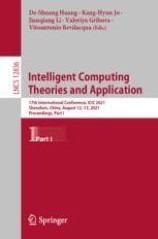
Intelligent Computing Theories and Application ; 17th International Conference, ICIC 2021, Shenzhen, China, August 12–15, 2021, Proceedings, Part I
The ICIC theme unifies the picture of contemporary intelligent computing techniques as an integral concept that highlights the trends in advanced computational intelligence and bridges theoretical research with applications. The theme for this conference is “Advanced Intelligent Computing Methodologies and Applications.”

Intelligent Computing ; International Conference on Intelligent Computing, ICIC 2006, Kunming, China, August 16-19, 2006, Proceedings, Part I
The International Conference on Intelligent Computing (ICIC) was formed to provide an annual forum with dedication to the emerging and challenging topics in artificial intelligence, machine learning, bioinformatics, and computational biology, etc. It aims to bring together researchers and practitioners from both the academia and industry to share ideas, problems and solutions related to the multifaceted aspects of intelligent computing. The ICIC 2006 to be held in Kunming, Yunnan, China, 16-19 August 2006 is the second International Conference on Intelligent Computing, which is built upon the success of ICIC 2005 held in Hefei, China, 2005. This year, the conference mainly concentrates on the theories & methodologies as well as the emerging applications of intelligent computing. It intends to unify the contemporary intelligent computing techniques within an integral framework that highlights the trends in advanced computational intelligence and bridges the theoretical research with the applications. In particular, the bio-inspired computing emerges as a key role in pursuing for novel technology in recently years. The resulting techniques vitalize the life science engineering and daily life applications. In light of this trend, the theme for this conference is the Emerging Intelligent Computing Technology and Applications. Papers related to this theme were especially solicited, including theories, methodologies, and applications in science and technology.

Institutional Reform for Innovation and Entrepreneurship : An Agenda for Europe
The authors of this book advise the economies of the European Union to become more entrepreneurial in promoting innovation and economic growth. The authors propose a reform strategy with respect to several aspects to achieve this goal. Starting with the rule of law and the protection of property rights; the tax system; the authors deal with regulations governing savings, capital and finance, and the organization of labor markets and social insurance systems. Framework strategies related to the regulations governing goods and service markets, bankruptcy and insolvency are also put forward. A core understanding and future path is also provided towards R&D, commercialization and knowledge spillovers; human capital investments; and informal institutions.

Innovations Towards Sustainability : Conditions and Consequences
The volume contains eight articles together with comments by twenty authors and discussants on the topic of innovations and sustainability. It provides a competently written, balanced and differentiated state-of-the-art insight into the relation between innovations and sustainability from the perspective of evolutionary economics. The scope of the contributions encompasses the technological, social, organizational, and political dimensions of the topic. Each article is discussed by a competently written commentary providing a critical evaluation and relating it to the relevant literature. Particular interest lies on the issues of steering opportunities and path formation capabilities by decentralized agents, or governmental institutions from the viewpoint of evolutionary economics.

Innovations in preventive dentistry
Preventive dentistry is a constantly changing and developing field: As new research emerges, some practices that had once been revolutionary are abandoned, while others continue to withstand the test of time. This book discusses new developments and innovations in preventive dentistry, from primary prevention to secondary prevention by inactivating initial lesions, and on to tertiary prevention to avoid subsequent progression and complications of manifest oral disease. The book relies on a solid evidence base and instructs readers how this can be translated into clinical dental practice—what changes should be made to how we practice and why they should be made. Topics include caries and periodontal disease, orthodontic problems, diagnostic approaches, diet and oral health, oral hygiene, oral disease patterns, caries treatment, fluoride guidelines, risk management, sealants, and probiotics.

Innovations in Intelligent Machines - 1
This book includes a collection of chapters on the state of art in the area of intelligent machines. This research would provide a sound basis to make autonomous systems human-like. The contributions include: An introduction to intelligent machines / Supervisory control of multiple UAVs / Intelligent autonomous UAV task allocation / UAV path planning / Dynamic path planning / Routing in UAVS State estimation of micro air vehicles / Architecture for soccer playing robots / Robot perception / Application engineers scientists and researchers will find this book useful.

Innovation, Industrial Dynamics and Structural Transformation : Schumpeterian Legacies
This book provides an account of work in the Schumpeterian and evolutionary tradition of industrial dynamics and the evolution of industries. It is shown that over time industries evolve and change their structure. In this dynamic process change is affected and sometimes constraint by many factors: knowledge and technologies, the capabilities and incentives of actors, new products and processes, and institutions. All these elements and their relations drive innovative activities and affect economic performance in an industry. Investigations into these complex phenomena show a deep interdependence between empirical work delivering a rich account of regularities and stylized facts in the structure of industries and their change, and theoretical analyses ranging from appreciate theorizing to formal modeling.

Innovation Policy in a Knowledge-Based Economy : Theory and Practice
Why Analyze Innovation Policies From a Knowledge- Based Perspective? It is broadly accepted that we have moved (or are moving) to a knowled- based economy, characterized at least by two main features: that knowl edge is a major factor in economic growth, and innovation processes are systemic by nature. It is not surprising that this change in the economic paradigm requires new analytical foundations for innovation policies. One of the purposes of this book is to make suggestions as to what they should include. Underpinning all the chapters in this book is a conviction of the impor tance of dynamic and systemic approaches to innovation policy. Nelson and Arrow saw innovation and the creation of new knowl edge as the emergence and the diffusion of new information, characterized essentially as a public good. The more recent theoretical literature regarded the rationale for innovation policies as being to provide solutions to "mar ket failures". Today, however, knowledge is seen as multidimensional (tacit vs. codified) and open to interpretation. Acknowledging that the creation, coordination and diffusion of knowledge are dynamic and cumu lative processes, and that innovation processes result from the coordination of distributed knowledge, renders the "market failure" view of innovation policies obsolete. Innovation policies must be systemic and dynamic

Information, Interaction, and Agency
Agents perform actions based on the available information and in the presence of other interacting agents. From this perspective Information, Interaction, and Agency neatly ties together classical themes like rationality, decision-making and belief revision with games, strategies and learning in a multi-agent setting.Unified by the central notions Information, Interaction, and Agency, the essays in this volume provide refreshing methodological perspectives on belief revision, dynamic epistemic logic, von Neumann games, and evolutionary game theory; all of which in turn are central approaches to understanding our own rationality and that of other agents.

Information Processing with Evolutionary Algorithms : From Industrial Applications to Academic Speculations
The last decade of the 20th century has witnessed a surge of interest in num- ical, computation-intensive approaches to information processing. The lines that draw the boundaries among statistics, optimization, arti cial intelligence and information processing are disappearing, and it is not uncommon to nd well-founded and sophisticated mathematical approaches in application - mains traditionally associated with ad-hoc programming. Heuristics has - come a branch of optimization and statistics. Clustering is applied to analyze soft data and to provide fast indexing in the World Wide Web. Non-trivial matrix algebra is at the heart of the last advances in computer vision. The breakthrough impulse was, apparently, due to the rise of the interest in arti cial neural networks, after its rediscovery in the late 1980s. Disguised as ANN, numerical and statistical methods made an appearance in the - formation processing scene, and others followed. A key component in many intelligent computational processing is the search for an optimal value of some function. Sometimes, this function is not evident and it must be made explicit in order to formulate the problem as an optimization problem. The search - ten takes place in high-dimensional spaces that can be either discrete, or c- tinuous or mixed. The shape of the high-dimensional surface that corresponds to the optimized function is usually very complex. Evolutionary algorithms are increasingly being applied to information processing applications that require any kind of optimization.

Information Processing in Medical Imaging ; 20th International Conference, IPMI 2007, Kerkrade, The Netherlands, July 2-6, 2007, Proceedings
The 20th International Conference on Information Processing in Medical Im- ing(IPMI)washeldduringJuly2–6,2007,atRolducAbbey,locatedinKerkrade in the south of the Netherlands. IPMI is one of the longest running conferences in medical imaging.
