


تحسين النتائح
ترتيب حسب
من
الى


The ultimate interior designer's guide to building systems and safety Building Systems for Interior Designers, Third Edition is the single-source technical reference that every designer needs, and an ideal solution for NCIDQ exam preparation. Addresses the special concerns of the interior designer within the context of the entire design team. New coverage includes the latest information on sustainable design and energy conservation, expanded coverage of security and building control systems, and a new and expanded art program with over 250 new illustrations. Covering systems from HVAC to water to waste to lighting, this book explains technical building systems and engineering issues in a clear and accessible way to help interior designers communicate more effectively with architects, engineers, and contractors.
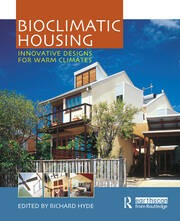
In the search for sustainable architecture, there is growing interest in the relationship between nature and design. In this context, Bioclimatic Housing covers creative, vernacular architecture to present both the theory and practice of innovative, low-energy architecture.The book interweaves the themes of social progress, technological fixes and industry transformation within a discussion of global and country trends, climate types, solutions and technologies. this is a truly international and authoritative work, providing an essential primer for building designers, builders, developers and advanced students in architecture and engineering.
Essential guide to creating well-lit, visually appealing interior spaces. The book begins with an overview of light and color theory, lighting fundamentals, and design principles. It then covers artificial, natural, decorative, and professional lighting in interior design, as well as standards and regulations, controls and systems, sustainable lighting, energy efficiency, light pollution reduction, and the use of environmentally friendly materials. With a focus on practical applications and real-world examples, this book provides readers with the tools and knowledge necessary to achieve their design goals while considering the latest trends and techniques in the field. A valuable resource for professionals and students in architecture and lighting design, it will also appeal to anyone interested in creating visually stunning and functional interior spaces.
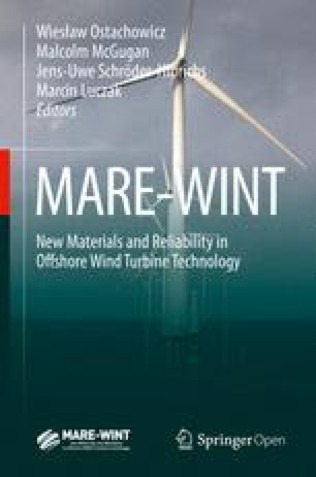
This book provides a holistic, interdisciplinary overview of offshore wind energy, and is a must-read for advanced researchers. Topics, from the design and analysis of future turbines, to the decommissioning of wind farms, are covered. The scope of the work ranges from analytical, numerical and experimental advancements in structural and fluid mechanics, to novel developments in risk, safety & reliability engineering for offshore wind. The core objective of the current work is to make offshore wind energy more competitive, by improving the reliability, and operations and maintenance (O&M) strategies of wind turbines.

This book provides insight into the Life Cycle Management (LCM) concept and the progress in its implementation. LCM is a management concept applied in industrial and service sectors to improve products and services, while enhancing the overall sustainability performance of business and its value chains. In this regard, LCM is an opportunity to differentiate through sustainability performance on the market place, working with all departments of a company such as research and development, procurement and marketing, and to enhance the collaboration with stakeholders along a company’s value chain. LCM is used beyond short-term business success and aims at long-term achievements by minimizing environmental and socio-economic burden, while maximizing economic and social value.
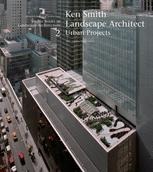
Ken Smith is one of the most interesting voices in landscape architecture today. His works reflect the intensity and energy of their surroundings and challenge the distinction between landscape and art. Ken Smith Landscape Architect/Urban Projects focuses on three prominent works in New York City: the East River Ferry Landings, P.S. 19, and a roof garden for the Museum of Modern Art. Featuring an interview with Ken Smith and extensive photographic documentation and drawings, as well as an essay by Nina Rappaport and a foreword by Peter Reed, the book reveals how each project expresses new relationships between landscape and place within the city
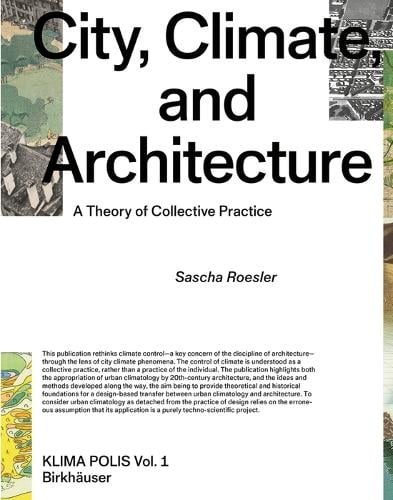
Based on a history of climate control on urban scales, it promotes the integration of indoors and outdoors in order to reduce environmental and thermal loads in cities. Just as heating and cooling practices inside the buildings are affecting the (urban) climate outdoors, urban heat islands are influencing the energy requirements and thermal conditions inside the buildings. While the first part of the book focuses on the interwar period in Europe, the publication’s second part considers examples from all over the globe, tracing the growing significance of ecological thinking for the design of urban environments.
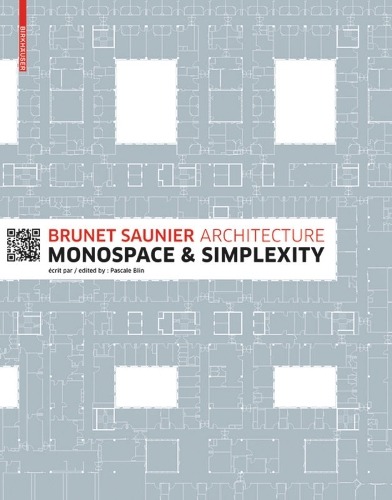
Discusses and analyzes this concept in detail, presenting trueto- scale floor plans, cross-sections, architectural views, and other information. The Monospace concept - which is based on a process of creative reduction down to essentials, i.e. "simplexity" - is adaptive rather than normative or prescriptive, and based on probabilities rather than determinism. It respects energy, even when it sometimes uses it. It takes the individual's experience into account, and starts from the position of the subject. It also permits changing perspectives. This design concept should attract attention far beyond the borders of France.
This book offers an optimistic view of the future and provides a road map for societies to get there. Drawing upon extensive research and many years as a thought leader in environmental and sustainability issues in Japan and internationally, Hiroshi Komiyama analyzes the most pressing challenges to the attainment of sustainability of economically advanced nations and argues forcefully for Japan to lead them out of the present dilemma through active promotion of creative consumer and societal demand. He shows how an active industry–government–academic partnership can provide the environment needed to promote such new creative demand and illustrates its potential through presentation of a Platinum Society Network that was launched on a regional basis in Japan in 2010 to facilitate the solution of common issues through the exchange of information and ideas.

Sets out the essential elements of low-energy architecture in a fresh, intuitive way. Where ever-changing technology and complex legislation can cloud the designer’s thought-process, this book equips you with the fundamentals you need to minimise CO2 emissions, design for low-energy use and work with, not against, the forces of nature.

Mathematical Control Theory: An Introduction presents, in a mathematically precise manner, a unified introduction to deterministic control theory. With the exception of a few more advanced concepts required for the final part of the book, the presentation requires only a knowledge of basic facts from linear algebra, differential equations, and calculus. In addition to classical concepts and ideas, the author covers the stabilization of nonlinear systems using topological methods, realization theory for nonlinear systems, impulsive control and positive systems, the control of rigid bodies, the stabilization of infinite dimensional systems, and the solution of minimum energy problems.
Global warming, shortage of low-cost oil resources and the increasing demand for energy are currently controlling the world's economic expansion while often opposing desires for sustainable and peaceful development. In this context, atomic energy satisfactorily fulfills the criteria of low carbon gas production and high overall yield. However, in the absence of industrial fast-breeders the use of nuclear fuel is not optimal, and the production of high activity waste materials is at a maximum. These are the principal reasons for the development of a new, fourth generation of nuclear reactors, minimizing the undesirable side-effects of current nuclear energy production technology while increasing yields by increasing operation temperatures and opening the way for the industrial production of hydrogen through the decomposition of water.
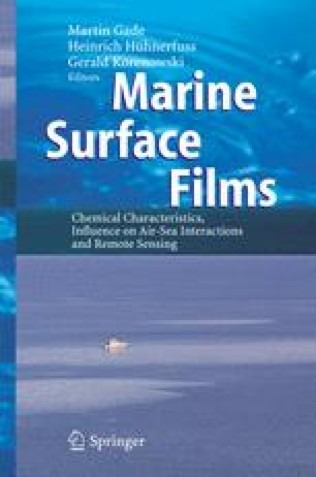
Since the late 1960s, various groups have investigated the influence of marine surface films on mechanisms dominating energy and mass transfer across the ocean/atmosphere interface. However, a compendium summarizing the state-of-the-art research in this field is still missing. The book fills this gap and transfers the accumulated knowledge to the scientific community. After a brief historical chapter basic chemical insights are presented, followed by theoretical and experimental approaches carried out in laboratory facilities. Air-sea interaction experiments are then described and finally, remote sensing applications with sea slicks and crude oil spills are presented.

With climate change now charging up the political agenda, there are three issues commonly making the headlines: carbon budgets, renewable energy, and the anticipated impacts of climate change. Equally important, though currently less well covered, is the issue how these effects might be mitigated. Given the significant role that forests play in the climate system – as sources, sinks, and through carbon trading – this book discusses the current scientific evidence on the relationships between climate, forest resources and forest management practices around the world. Drawing on expertise from forest scientists from several continents, the book presents both in depth analysis of the current knowledge, and a series of case studies which assess the biological and the economic impacts of climate change. It includes sections on forest responses to climate change, monitoring and modeling changes, economic and management implications, and carbon sequestration under specific management systems.
As it circulates in the atmosphere, in the rivers, lakes, soil, rock, and in the oceans, it is the major conveyer of va- ous chemical substances and of energy, and it can also be called as the blood of the ecosystems of this planet. But at the same time water is interwoven in the va- ous functions of the nature and the human society in countless ways which makes water one of the most complicated challenges of the mankind today.Human beings are exploiting and enjoying, but at the same time polluting and deteriorating, the waters in various ways and water is equally important to the - man socio-economic system as it is to the nature. It may sound a bit anecdotal to say that water obeys no borders, but that is true; the hydrologic cycle with its r- ers, river basins, lakes, aquifers, rainfalls, oceans, etc., cross administrational b- ders without any passport control. River and lake basins are in most cases very different from the administrational borders that the human beings have set up.

Using the spin-Hamiltonian formalism the magnetic parameters are introduced through the components of the Lambda-tensor involving only the matrix elements of the angular momentum operator. The energy levels for a variety of spins are generated and the modeling of the magnetization, the magnetic susceptibility and the heat capacity is done. Theoretical formulae necessary in performing the energy level calculations for a multi-term system are prepared with the help of the irreducible tensor operator approach. The goal of the programming lies in the fact that the entire relevant matrix elements (electron repulsion, crystal field, spin-orbit interaction, orbital-Zeeman, and spin-Zeeman operators) are evaluated in the basis set of free-atom terms. The modeling of the zero-field splitting is done at three levels of sophistication. The spin-Hamiltonian formalism offers simple formulae for the magnetic parameters by evaluating the matrix elements of the angular momentum operator in the basis set of the crystal-field terms. The magnetic functions for dn complexes are modeled for a wide range of the crystal-field strengths.
The development of a direct, inexpensive, and efficient method for converting solar energy into a portable, clean fuel would allow elimination of the growing problems associated with the ever increasing use of fossil fuels and the reality of their rapid depletion. As the title suggests, Light, Water, Hydrogen: The Solar Generation of Hydrogen by Water Photoelectrolysis, considers the combination of water and light with a suitable semiconductor to achieve a safe, renewable and therefore inexhaustable means for hydrogen generation via the splitting of the water molecule, or photoelectrolysis.

In the paper the author attempts to assess the fatigue life of chosen welded joints. It focuses especially on chosen problems that accompany deter- nation of the fatigue life of welded joints, taking into consideration the strain energy density parameter.
Energy, chemistry, solvents, and habitats -- the basic elements of living systems - define the opportunities and limitations for life on other worlds. This class-tested text examines each of these parameters in crucial depth and makes the argument that life forms we would recognize may be more common in our solar system than many assume. It also considers, however, exotic forms of life that would not have to rely on carbon as basic chemical element, solar energy as a main energy source, or water as primary solvent. Finally the question of detecting bio- and geosignature of such life forms is discussed, ranging from Earth environments to deep space. While speculative considerations in this emerging field of science cannot be avoided, the authors have tried to present their study with the breadth and seriousness that a scientific approach to this issue requires. They seek an operational definition of life and investigate the realm of possibilities that nature offers to realize this very special state of matter and avoid scientific jargon wherever possible to make this intrinsically interdisciplinary subject understandable to a broad range of readers.
Lasers and Nuclei describes the generation of high-energy-particle radiation with high-intensity lasers and its application to nuclear science. A basic introduction to laser--matter interaction at high fields is complemented by detailed presentations of state of the art laser particle acceleration and elementary laser nuclear experiments. The text also discusses future applications of lasers in nuclear science, for example in nuclear astrophysics, isotope generation, nuclear fuel physics and proton and neutron imaging.

سوريا - اتستراد درعا - غباغب
+963-15 2050 - 15 860 380 /1/2/3 - 11 662 3900