


تحسين النتائح
ترتيب حسب
من
الى

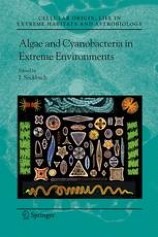
ALGAE AND CYANOBACTRIA IN EXTREME ENVIRONMENTS is a unique collection of essays, contributed by leading scientists from around the world, devoted to algae – and some related microbes – observed in unexpected harsh habits, which it seems are an oasis or Garden of Eden for these organisms. This timely book on Extremophilic alga, including its especially impressive micrographs, may provide clues about the edges of life on Earth and possibly elsewhere in the universe. This volume is a must for students of the field of biodiversity, as well as those in Phycology, ecology and general biological research.
Brings together some of the most important current research in European agroforestry, and evaluates the current scope and future potential of agroforestry across the EU.While the majority of Europe’s agroforestry practices are currently focused in the Mediterranean, this volume draws together examples from a wide range of countries – including Greece, Spain, the UK, Hungary, Germany, Italy, the Netherlands, Switzerland, France and Slovenia. The book also covers a range of agroforestry types, including silvopastoralism – Europe’s predominant form of agroforestry – as well as alley cropping, forest farming, silvoarable systems and the use of trees for shelter. Through these examples the book also discusses the potential roles for these traditional land management systems in addressing both environmental issues such as water quality, biodiversity conservation, desertification, ecosystem services and socioeconomic issues such as rural population stabilization.
BIOTA is an interdisciplinary research project focusing on sustainable use and conservation of biodiversity in Africa (http://www.biote-africa.de). Session titles were Biogeography and Speciation Processes, Phylogenetic Patterns and Systematics, Diversity Declines and Conservation, and Applied Biodiversity Informatics
Food insecurity is a central concern and a fundamental challenge for human welfare and economic growth in Africa. Low agricultural production, results in low incomes, poor nutrition, vulnerability to risks and lack of empowerment. Land degradation and soil fertility depletion are considered the major threats to food security and natural resource conservation in sub-Saharan Africa (SSA). Investments in technology, policy and institutional reforms are needed to increase agricultural productivity to ensure food security and sustained national economies. Past research has generated numerous soil fertility management technologies which if adopted could propel the African continent out of the poverty trap. However, these technologies have had little, if any, impact due to low adoption by the smallholder farmers.
Advances in Algal Biology: A Commemoration of the Work of Rex Lowe was written by students and colleagues of Rex Lowe to acknowledge his esteemed career that included exceptional contributions to research and teaching. Papers in the book cover a variety of topics in algal ecology, focusing on benthic algal ecology in freshwater ecosystems. The studies provide an unusual combination of small-scale experiments and large-scale regional surveys that bridge both basic and applied ecology. Ecologists, limnologists, phycologists, and environmental scientists will find valuable contributions to the development and application of algal research.
This book uses modern biological knowledge to tackle the question: "What distinguishes living organisms from the non-living world?" In the first few chapters, the authors draw on recent advances in cell and molecular biology to develop an account of the "living state" that applies to all organisms, but only to organisms. Subsequent chapters use this account to explore questions about evolution, the origin of life and the possibility of extraterrestrial life. Towards the end of the book the authors consider human evolution, intelligence and the extent to which our species can be regarded as biologically unique. About Life is written as far as possible in non-technical language; all scientific terms are explained straightforwardly when they are introduced. It is aimed at the general, non-specialist reader, but the novel approach that it takes to general issues in biology will also interest students of the life sciences.
A Sea Change in a Changing Sea The oceans, seas and coastal areas encompass over 70% of the earth’s surface. They are a critical driver of the earth’s hydrologic cycle and climate system, important for c- merce, transport, and tourism, a source of economically important living marine resources, minerals such as hydrocarbons, as well as new pharmaceutical compounds. The marine environment provides essential habitats for thousands of marine living 1 2 resources, which in turn contribute significantly to global food security, employment, 3 and trade. Overall, the sea’s contribution to human welfare, in terms of market and non-market resources and environmental services, has been estimated at US$21 trillion/year (Costanza, 2000). However, despite the importance of the ocean realm to humans, there is a growing sense that human impacts are destabilizing this system. Some experts believe that current fishing levels are approaching or exceeding the total 4 productivity of the ocean ecosystem (National Research Council, 1999).
The authors address the future role of atmospheric CO2 and its likely effects on ecosystems. This book incorporates the advances of various earth science, environmental, and ecological fields into an overall account of global change and the changing dynamics of life on Earth.
This book shows the factors linking information flow, social intelligence, rights management and modelling with epistemic democracy, offering licensed linked data along with information about the rights involved. This model of democracy for the web of data brings new challenges for the social organisation of knowledge, collective innovation, and the coordination of actions. Licensed linked data, licensed linguistic linked data, right expression languages, semantic web regulatory models, electronic institutions, artificial socio-cognitive systems are examples of regulatory and institutional design (regulations by design). The web has been massively populated with both data and services, and semantically structured data, the linked data cloud, facilitates and fosters human-machine interaction. Linked data aims to create ecosystems to make it possible to browse, discover, exploit and reuse data sets for applications. Rights Expression Languages semi-automatically regulate the use and reuse of content.
Artificial Life Models in Software presents software tools, environments and realities dealing with creation, imitation and analysis of artefactual, virtual and living forms, written by those who personally design and produce software, hardware and art installations in artificial life, simulated complex systems and virtual worlds. This timely volume offers a nearly exhaustive overview and original analysis of major non-profit artificial life software packages. The carefully selected topics include: · simulation of real and imaginary life forms and their evolution · self-organization · emergent behaviours · swarm intelligence · evolutionary robotics · agent-based simulations · adaptive, complex and biologically inspired ecosystems · creative computer art There has long been a need within the academic and research community for an informal introduction and guidance to modern software tools for modelling and simulation of life-like phenomena – Artificial Life Models in Software fills this gap and provides invaluable information to both professional and amateur readers, offering detailed reviews of contemporary software for artificial life.
Discusses the evolution of future generation technologies through Internet of Things (IoT) in the scope of Artificial Intelligence (AI). The main focus of this volume is to bring all the related technologies in a single platform, so that undergraduate and postgraduate students, researchers, academicians, and industry people can easily understand the AI algorithms, machine learning algorithms, and learning analytics in IoT-enabled technologies. This book uses data and network engineering and intelligent decision support system-by-design principles to design a reliable AI-enabled IoT ecosystem and to implement cyber-physical pervasive infrastructure solutions. This book brings together some of the top IoT-enabled AI experts throughout the world who contribute their knowledge regarding different IoT-based technology aspects. Addresses the complete functional framework workflow in AI-enabled IoT ecosystem; Presents intelligent object identification and object discovery through the IoT ecosystem and its implications to the real world ;Explores security and privacy issues and trustworthy machine learning related to data-intensive technologies in AI-based IoT ecosystems.
The sustainable management of water cycles is crucial in the context of climate change and global warming. It involves managing global, regional, and local water cycles, as well as urban, agricultural, and industrial water cycles, to conserve water resources and their relationships with energy, food, microclimates, biodiversity, ecosystem functioning, and anthropogenic activities. Hydrological modeling is indispensable for achieving this goal, as it is essential for water resources management and the mitigation of natural disasters. In recent decades, the application of artificial intelligence (AI) techniques in hydrology and water resources management has led to notable advances. In the face of hydro-geo-meteorological uncertainty, AI approaches have proven to be powerful tools for accurately modeling complex, nonlinear hydrological processes and effectively utilizing various digital and imaging data sources, such as ground gauges, remote sensing tools, and in situ Internet of Things (IoT) devices.
This book proposes a novel approach to Artificial Intelligence (AI) ethics. AI offers many advantages: better and faster medical diagnoses, improved business processes and efficiency, and the automation of boring work.
Provides a valuable combination of relevant research works on developing smart city ecosystem from the artificial intelligence (AI) and Internet of things (IoT) perspective. The technical research works presented here are focused on a number of aspects of smart cities: smart mobility, smart living, smart environment, smart citizens, smart government, and smart waste management systems as well as related technologies and concepts. This edited book offers critical insight to the key underlying research themes within smart cities, highlighting the limitations of current developments and potential future directions.
This book presents up-to-date analyses of community-based approaches to sustainable resource management of SEPLS (socio-ecological production landscapes and seascapes) in areas where a harmonious relationship between the natural environment and the people who inhabit it is essential to ensure community and environmental well-being as well as to build resilience in the ecosystems that support this well-being.
This book tells the story of how Sweden is becoming a virtually cashless society. Its goal is to improve readers’ understanding of what is driving this transition, and of the factors that are fostering and hampering it. In doing so, the book covers the role of central banks, political factors, needs for innovation, and the stakeholders involved in developing a cashless ecosystem. Adopting a historical standpoint, and drawing on a unique dataset, it presents an academic perspective on Sweden’s leading role in this global trend. The global interest in the future of cash payments makes the Swedish case particularly interesting. As a country that is close to becoming a cashless economy, it offers a role model for many other countries to learn from - whether they want to stimulate or reduce the use of cash. This highly topical book will be of interest to politicians, researchers, businesses, financial service providers and payment service providers, as well as fintech start-ups, regulators and other authorities.
Aims to explore the aspects of strategic leadership in a digital context together with the cyber-physical relationships whilst performing business activities. Furthermore, this book looks to investigate the interactions from both the organization strategy including the cross-functional actors/stakeholders whom are operating within the organization and the various characteristics of operating in a cyber secure ecosystem.
This book contributes to the creation of a cyber ecosystem supported by blockchain technology in which technology and people can coexist in harmony. Blockchains have shown that trusted records, or ledgers, of permanent data can be stored on the Internet in a decentralized manner.
Explores the past, present, and future of artificiality and sustainability in entrepreneurship – the unforeseen consequences and ways to advance to a sustainable future. In particular, it connects artificiality, sustainability and entrepreneurship, intertwining artificial with the specific phenomenon of those novel digital technologies that provoke continuous and significant change in our lives and business. Unlike digital entrepreneurship research, which focuses on digital technology development and management, this book covers processes and mechanisms of sustainable adaptability of entrepreneurs, the business logic of start-ups, and the collaborative behaviours under the mass digital transformation, including the prevalence of artificial intelligence. Some of the questions that this book answers are as follows: How has entrepreneurship reacted to such challenges previously? What lessons have been learned and need to be carried forward? How can entrepreneurship and the artefacts of entrepreneurship respond to current challenges? What should be the mindset of the entrepreneur to assure sustainable adaptation? How to embrace and embed the new business logic?
Mathematics needs Sustainable Development. When science was gradually reinvented in European medieval societies, it was legitimised as contributing to the disclosure of God’s divine creation. The conflicts that emerged became well known as a result of the clash between Galileo and the Church. Science found a new legitimacy through recognition that it was a powerful force against superstition. In the Enlightenment the argument was pushed forward by attributing Progress to the advancement of science: science could produce a better world by promoting rationality. In our modern society, science has become intimately linked to technology. Science for its own sake unfortunately rarely has positive outcomes in terms of research grant applications. Meanwhile, science and technology, and the progress they are supposed to produce, meet with wide scale scepticism. We all know of the current global problems: climate change, resource depletion, a thinning ozone layer, space debris, declining biodiversity, malnutrition, dying ecosystems, global inequity, and the risk of unprecedented nuclear wars

سوريا - اتستراد درعا - غباغب
+963-15 2050 - 15 860 380 /1/2/3 - 11 662 3900