


تحسين النتائح
ترتيب حسب
من
الى

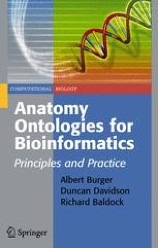
This book provides a timely and first-of-its-kind collection of contributed chapters on anatomy ontologies. It is interdisciplinary in its approach, bringing together relevant expertise from computing and biomedical studies, and covering both theoretical and applied aspects, with an emphasis on newer work relevant to the emerging Semantic Web.

Thousands of mini computers (comparable to a stick of chewing gum in size), equipped with sensors, are deployed in some terrain or other. After activation the sensors form a self-organized network and provide data, for example about a forthcoming earthquake. The trend towards wireless communication increasingly affects electronic devices in almost every sphere of life. Conventional wireless networks rely on infrastructure such as base stations; mobile devices interact with these base stations in a client/server fashion. In contrast, current research is focusing on networks that are completely unstructured, but are nevertheless able to communicate (via several hops) with each other, despite the low coverage of their antennas. Such systems are called sensor or ad hoc networks, depending on the point of view and the application. Wireless ad hoc and sensor networks have gained an incredible research momentum. Computer scientists and engineers of all flavors are embracing the area. Sensor networks have been adopted by researchers in many fields: from hardware technology to operating systems, from antenna design to databases, from information theory to networking, from graph theory to computational geometry.

This book presents a comprehensive treatment of biometrics and offers coverage of the entire gamut of topics in the field, including data acquisition, pattern-matching algorithms, and issues that impact at the system level, such as standards, security, networks, and databases.

This explosion is a result of the growing use of electronic media. But what is data mining (DM)? A Web search using the Google search engine retrieves many (really many) definitions of data mining. We include here a few interesting ones. One of the simpler definitions is: “As the term suggests, data mining is the analysis of data to establish relationships and identify patterns” [1]. It focuses on identifying relations in data. Our next example is more elaborate: An information extraction activity whose goal is to discover hidden facts contained in databases. Using a combination of machine learning, statistical analysis, modeling techniques and database technology, data mining finds patterns and subtle relationships in data and infers rules that allow the prediction of future results. Typical applications include market segmentation, customer profiling, fraud detection, evaluation of retail promotions, and credit risk analysis .

Whether or not youve already benefited from Scot P. Hillier's first renowned Apress book, Microsoft SharePoint: Building Office 2003 Solutions, this fantastic follow-up is sure to please! This book will cover advanced techniques for programming web parts and SharePoint Services. Hillier also covers advanced integration techniques with related products like BizTalk Server 2004 and Content Server. Intended for advanced developers who already know all of the basic SharePoint Services, this book will steer you in solving ultra-specific, advanced problems.

This book serves as an introduction to the state of the art on data warehouse design, with many references to more detailed sources. Providing a clear and a concise presentation of the major concepts and results of data warehouse design, it can also be used as the basis of a graduate or advanced undergraduate course.

Adobe® Acrobat® and PDF for Architecture, Engineering, and Construction is designed to appeal to the engineering mind. The book is a practical guide focusing on the applications of PDF in the solution of "engineering" problems which may arise in a number of disciplines from architecture to construction. Using real-world examples, the authors follow a project from design through build and long-term maintenance. As the sample project evolves, suitable Acrobat® tools and techniques are identified and brought into play at each stage, showing readers how to personalize the context and processes to meet their own project development and management needs.

In that book we tried very hard not to simply list everything that we knew about the product. Instead we tried to act as intelligent filters, presenting only the essential information that you need to get started. Every screen shot has been retaken and every section has been re-checked to ensure, not only that it still works, but also that it is actually still relevant. We have re-written parts where the product has changed and also added some. For example, there is a new section on Object Dependencies and a whole new chapter about Data Access Pages - helping you to put your Access database onto an intranet.
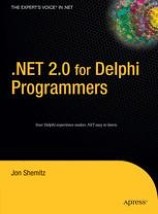
.NET 2.0 for Delphi Programmers explores .NET from a Delphi programmers viewpoint, and it is ideal for Delphi programmers moving to .NET. It presents the core concepts of the .NET world in terms you are familiar with. This book will help you with Delphi for .NET as well as C#. Apress publishes migration books for both Visual Basic 6 and C++ programmers moving to .NET. Consider this the Delphi installment of Apress migration books! There is ample coverage of C# as well as Delphi for .NET inside this edition.

The basis for the material in this book centers around a long term research project with autonomous unmanned aerial vehicle systems. One of the main research topics in the project is knowledge representation and reasoning. The focus of the research has been on the development of tractable combinations of approximate and nonmonotonic reasoning systems. The techniques developed are based on intuitions from rough set theory. Efforts have been made to take theory into practice by instantiating research results in the context of traditional relational database or deductive database systems.

Describes data mining , techniques as they apply to law. Law students, legal academics and applied information technology specialists are guided thorough all phases of the knowledge discovery from databases process with clear explanations of numerous data mining algorithms including rule induction, neural networks and association rules. Throughout the text, assumptions that make data mining in law quite different to mining other data are made explicit. Issues such as the selection of commonplace cases, the use of discretion as a form of open texture, transformation using argumentation concepts and evaluation and deployment approaches are discussed at length.

Chemoinformatics: Theory, Practice & Products covers theory, commercially available packages and applications of Chemoinformatics. Chemoinformatics is broadly defined as the use of information technology to assist in the acquisition, analysis and management of data and information relating to chemical compounds and their properties.The book also provides a summary of currently available, state-of-the-art, commercial Chemoinformatics products, with a specific focus on databases, toolkits, and modelling technologies designed for drug discovery.
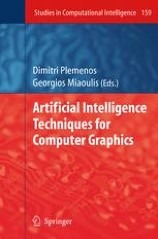
This volume contains both invited and selected extended papers from the last 3IA Conference (3IA’2008), together with an introduction presenting the area of Intelligent Computer Graphics and various Computer Graphics areas where introduction of intelligent techniques permitted to resolve important problems.

This book integrates a wide variety of data analysis methods into a single and flexible interface: the R language. This open source language is available for a wide range of computer systems and has been adopted as a computational environment by many authors of statistical software. Adopting R as a main tool for phylogenetic analyses will ease the workflow in biologists' data analyses, ensure greater scientific repeatability, and enhance the exchange of ideas and methodological developments.

This volume, an outgrowth of an "International Conference on Statistical Methods in Health Sciences," covers a wide range of topics pertaining to new statistical methods and novel applications in the health sciences.

Realizing the growing importance of semantic adaptation and personalization of media, the editors of this book brought together leading researchers and practitioners of the field to discuss the state-of-the-art, and explore emerging exciting developments. This volume comprises extended versions of selected papers presented at the 1st International Workshop on Semantic Media Adaptation and Personalization (SMAP 2006).

Acollection of world class paper articles addressing the following topics: Image and Pattern Recognition: Compression, Image processing, Signal Processing Architectures, Signal Processing for Communication, Signal Processing Implementation, Speech Compression, and Video Coding Architectures. Languages and Systems: Algorithms, Databases, Embedded Systems and Applications, File Systems and I/O, Geographical Information Systems, Kernel and OS Structures, Knowledge Based Systems, Modeling and Simulation, Object Based Software Engineering, Programming Languages, and Programming Models and tools. Parallel Processing: Distributed Scheduling, Multiprocessing, Real-time Systems, Simulation Modeling and Development, and Web Applications. New trends in computing: Computers for People of Special Needs, Fuzzy Inference, Human Computer Interaction, Incremental Learning, Internet-based Computing Models, Machine Intelligence, Natural Language Processing, Neural Networks, and Online Decision Support System.

Recent years have seen dramatic progress in shape recognition algorithms applied to ever-growing image databases. They have been applied to image stitching, stereo vision, image mosaics, solid object recognition and video or web image retrieval. More fundamentally, the ability of humans and animals to detect and recognize shapes is one of the enigmas of perception. The book describes a complete method that starts from a query image and an image database and yields a list of the images in the database containing shapes present in the query image. A false alarm number is associated to each detection. Many experiments will show that familiar simple shapes or images can reliably be identified with false alarm numbers ranging from 10-5 to less than 10-300.

سوريا - اتستراد درعا - غباغب
+963-15 2050 - 15 860 380 /1/2/3 - 11 662 3900