



الصفحة 3
الصفحة 3

Microbial bioprocessing of agri-food wastes : food ingredients
Food ingredients are important molecules of the most diverse chemical classes responsible for conferring nutrition, stability, color, flavor, rheological and sensorial characteristics, in addition to several other important uses in the food industry. In this way, the production routes of these ingredients have gained more and more attention from consumers and producing industries, who expect that, in addition to their technological properties, these ingredients are still obtained without synthetic means, with savings of natural resources and mainly with less environmental impact.

Microbes in agri-forestry biotechnology
Explores recent advances on the use of microbes for agri-forestry biotechnological applications. It provides technical concepts and discussions on the use of microorganisms for processes such as bioprocessing, bioremediation, soil enhancement, aquaponics advances, and plant-host symbiosis. The book provides an overview of the microbial approach to the tools and processes used in agriculture and forestry that make or modify products, improve plants for specific uses, and make use of livestock in agricultural systems. The authors discuss the main process conditions that enhance agri-forestry applications with the use of microbes and introduce the use of genetically modified (GM) microbes in agrobiotechnology. Finally, the authors explore the main technological advances in the production of secondary metabolites with potential applications in agri-forestry.

mHealth Innovation in Asia : Grassroots Challenges and Practical Interventions
Offers a detailed account of a range of mHealth initiatives across South, Southeast and East Asia. It provides readers with deep insights into the challenges such initiatives face on the ground, and a view of the diverse cultural contexts shaping strategies for overcoming these challenges. The book brings together various discussions on the broader mHealth literature, and demonstrates how a research focus on diverse Asian contexts influences the success and/or failure of current mHealth initiatives. It also highlights the important roles social scientists can play in advancing theoretical approaches, as well as planning, implementing and evaluating mHealth initiatives. The book is a valuable resource for project planners, policy developers in NGOs and government institutions, as well as academics, researchers and students in the fields of public health, communications and development studies.

Metric Handbook : Planning and Design Data
A major handbook of planning and design data for architects and architecture students. Covering basic design data for all the major building types, it is the ideal starting point for any project. For each building type, the book gives the basic design requirements and all the principal dimensional data, and succinct guidance on how to use the information and what regulations the designer needs to be aware of.
Methods for measuring greenhouse Gas balances and evaluating mitigation options in smallholder agriculture
This book provides standards and guidelines for quantifying greenhouse gas emissions and removals in smallholder agricultural systems and comparing options for climate change mitigation based on emission reductions and livelihood trade-offs. Globally, agriculture is directly responsible for about 11% of annual greenhouse gas (GHG) emissions and induces an additional 17% through land use change, mostly in developing countries. Farms in the developing countries of sub-Saharan Africa and Asia are predominately managed by smallholders, with 80% of land holdings smaller than ten hectares. However, little to no information exists on greenhouse gas emissions and mitigation potentials in smallholder agriculture.
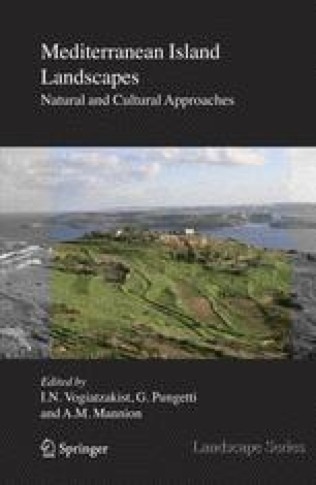
Mediterranean Island Landscapes : Natural and Cultural Approaches
Mediterranean islands exhibit many similarities in their biotic ecological, physical and environmental characteristics. There are also many differences in terms of their human colonization and current anthropogenic pressures. This book addresses in three sections these characteristics and examines the major environmental changes that the islands experienced during the Quaternary period. The first section provides details on natural and cultural factors which have shaped island landscapes. It describes the environmental and cultural changes of the Holocene and their effects on biota, as well as on the current human pressures that are now threats to the sustainability of the island communities. The second section focuses on the landscapes of the largest islands namely Sicily, Sardinia, Corsica, Cyprus, Crete, Malta and the Balearics. Each island chapter includes a special topic reflecting a particular characteristic of the island. Part three presents strategies for action towards sustainability in Mediterranean islands and concludes with a comparison between the largest islands.

Media resistance : Protest, dislike, abstention
his book is about those who dislike, protest, and try to abstain from media, both new and old. It explains why media resistance persists and answers two questions: What is at stake for resisters and how does media resistance inspire organized action? Yet, despite the interest in media scepticism and dislike, there seems to be no book on the market discussing media resistance as a phenomenon in its own right. This book explores resistance across media, historical periods and national borders, from early mass media to current digital media. Drawing on cases and examples from the US, Britain, Scandinavia and other countries, media resistance is discussed as a diverse phenomenon encompassing political, professional, networked and individual arguments and actions.

Measuring the Value of Culture : Methods and Examples in Cultural Economics
Acknowledgement of the value of culture and cultural goods is increasing world-wide. So too is interest in finding methods to quantify this value so that governments and private sponsors can make efficient funding decisions. "Measuring the Value of Culture" documents methods that can be used to put a price on the arts and cultural goods, including theatre, heritage, cultural events (like arts festivals), museums, archaeological sites and libraries. The methods discussed include economic impact studies, which use market data, as well as non-market valuation techniques, like willingness to pay studies, and the newer choice experiments. In addition, advances in more qualitative valuation methods are considered.

Measuring emission of agricultural greenhouse gases and developing mitigation options using nuclear and related Techniques : Applications of nuclear techniques for GHGs
This book is an outcome of the collaboration between the Soil and Water Management & Crop Nutrition Section, Joint FAO/IAEA Division of Nuclear Techniques in Food and Agriculture, Department of Nuclear Sciences and Applications, International Atomic Energy Agency (IAEA), Vienna, Austria, and the German Science Foundation research unit DASIM (Denitrification in Agricultural Soils: Integrated control and Modelling at various scales) and other institutes.

Meaning-Making for Living : The Emergence of the Presentational Self in Children’s Everyday Dialogues
This Brief analyzes the dynamics in which children’s selves emerge through their everyday activities of meaning construction, both in their relationships with family and within school education. It begins with a discussion of new psychological inquiries into children's selves and builds upon the innovative theoretical notion of the Presentational Self, developed by the author over the last decade. The book illustrates how the observation of children’s meaning construction in their everyday lives becomes a starting point for theoretical and empirical inquiries into child development and gives a framework that promotes new inquiries in this area. The book describes the Presentational Self Theory as a sense of how the notion of the Self is being worked upon in everyday life encounters. Chapters feature in-depth analyses of exchanges between adults and children in the Japanese cultural context.

Meaning in Action : Constructions, Narratives, and Representations
are far from genetically ? xing what behavioral preferences they may possess. Instead, learning mechanisms offer a ? exible way of attaining locally important cultural knowledge within temporal windows of opportunity as has been convi- ingly shown by research in language and culture attainment. Similar mechanisms are likely to exist for other social capacities, such as mate preferences, for example. It is this role of our biological inheritance that social science must appreciate in order to furnish a more complete understanding of human behavior. Within the natural range of variation of capacities and armed with biologically conditioned learning mechanisms we live out lives of meaning – in which we hold some things to be real, rational, valuable or morally right, and others not. It is this world of meaning in which we ? nd love and hate, struggles for justice, power, and money, and the dramas that lend to life both its depth and passion.

Mathematics teacher education in the Andean region and Paraguay : A comparative analysis of issues and challenges
This Open Access book is an excellent synthesis of the initial and continuing preparation for Mathematics Teaching in Bolivia, Ecuador, Paraguay and Peru, from which comparative analyses can be made that show similarities and differences, and highlight various perspectives. This book brings to the international Educational Community an important collection of experiences and ideas in the Mathematics Education of four Latin-American countries in the developing Andean region and Paraguay. The dissemination of these results can promote the search for international collaborative actions in a wider scale.

Mathematics Education in Different Cultural Traditions- A Comparative Study of East Asia and the West : The 13th ICMI Study
The volume covers a very wide field including the contexts of mathematics education, the curriculum, teaching and learning, and teachers’ values and beliefs. Within these broad parameters some of the particular cross-cultural issues that are discussed include intuition and logical reasoning, influences of Confucianism and Ancient Greek traditions, basic skills and process abilities, learners’ perspectives, assessment practices, text books and ICT multimedia.

Invasive Plants : Ecological and Agricultural Aspects
The study of plant invasions is the science that attempts to understand causes and consequences of plant introductions outside of their native areas. contributing authors have strived to provide up-to-date reviews and discussions of invasion-related research involving natural and agroecosystems. Readers will get a unique perspective on ecological and agricultural aspects of plant invasions through employing general principles of ecology to plant invasions.

Introduction to Agricultural Engineering Technology : A Problem Solving Approach
Agricultural Engineering Technology: A problem Solving Approach is an invaluable text for agriculture students at the introductory level. The third edition has been thoroughly updated and reorganized to meet the current units and standards of the American Society of Agricultural and Biological Engineers (ASABE).The book aims to: Familiarize students with a wide range of applications of engineering principles to agriculture, Discuss a selection of independent but related topics, Advance students’ problem solving abilitiesEach chapter lists education objects, introductory material, and example problems where appropriate. In addition problems using ISO (metric) units, are now included.

Internet of Things and Machine Learning in Agriculture
Machine Learning (ML) and the Internet of Things (IoT) can play a very promising role in the agricultural industry. Some examples include: an AI-powered drone to monitor the field, an IoT-designed automated crop watering system, sensors embedded in the field to monitor temperature and humidity, etc. The agriculture industry is the largest in the world, but when it comes to innovation there is a lot more to explore. IoT devices can be used to analyze the status of crops. For instance, with soil sensors, farmers can detect any irregular conditions such as high acidity and efficiently tackle these issues to improve their yield. In this book, we will point out the challenges facing the agro-industry that can be addressed by ML and IoT and explore the impacts of these technologies in the agriculture sector.

Internationalisation and Globalisation in Mathematics and Science Education
This book aims to: Develop theoretical frameworks of the phenomena of internationalisation and globalisation and identify related ethical, moral, political and economic issues facing mathematics and science educators. Provide a venue for the publication of results of international comparisons on cultural differences and similarities rather than merely on achievement and outcomes. Provide a forum for critical discussion of the various models and forms of international projects and collaborations. Provide a representation of the different voices and interests from around the world rather than consensus on issues.

International leadership : Effecting success across borders in a boundaryless world
From both an academic’s and a practitioner’s perspective, the book focuses on international leaders and their potential to be or become enablers of international success, for and within their respective organizations. The contributions are assigned to three sections, corresponding to the three core challenges of international leadership: Leading international organizations, leading international teams, and (self)leadership with intercultural excellence. An additional section is dedicated to case studies, exhibiting these challenges in practice.

International Handbook of Research in Arts Education
Providing a distillation of knowledge in the various disciplines of arts education (dance, drama, music, literature and poetry and visual arts), the Handbook synthesizes existing research literature, helps define the past, and contributes to shaping the substantive and methodological future of the respective and integrated disciplines of arts education. While research can at times seem distant from practice, the Handbook aims to maintain connection with the lived practice of art and of education, capturing the vibrancy and best thinking in the field of theory and practice. The Handbook is organized into 13 sections, each centering on a major area or issue in arts education research. These areas include: History of arts education, curriculum, evaluation, cultural centers, appreciation, composition, informal learning, child culture, creativity, the body, spirituality, and technology. The individual chapters address cross-cultural research related to the central theme of the section from the perspectives of the particular arts discipline. Interludes provide reflective thoughts on the theme.

International comparative studies in mathematics : Lessons for improving students’ learning
It argues that the main purpose of educational research is to improve student learning, and that international comparative studies are no exception.
