


تحسين النتائح
ترتيب حسب
من
الى

Concise and up-to-date coverage of the most important drugs Integration of experimental and clinical pharmacology with focus on diseases Discusses the most important drugs (400) in the context of relevant diseases. Summary tables and schemes, MCQ exam questions, case studies and a list of drugs aid memorization of the material before an exam. All chapters are written in the same concise style and use a modern and precise pharmacological nomenclature. After reading of the book, the student will be able to critically assess the proper use of the most important drugs and advise patients properly. The didactic concept of the book has been developed on the author’s own pharmacology courses for which he has received numerous teaching awards. The book takes advantage of the learning spiral, in which material is presented repeatedly from various angles.
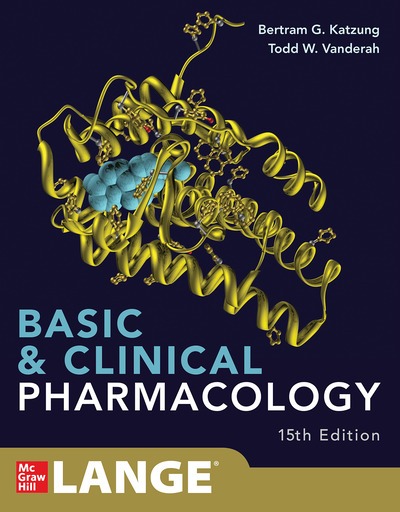
Covers the important concepts students need to know about the science of pharmacology and its application to clinical practice. This edition has been extensively updated to provide expanded coverage of transporters, pharmacogenomics, and new drugs Delivers the knowledge and insight needed to excel in every facet of pharmacology!. Encompasses all aspects of medical pharmacology, including botanicals and over-the-counter drugs Major revisions of the chapters on immunopharmacology, antiseizure, antipsychotic, antidepressant, antidiabetic, anti-inflammatory, and antiviral drugs, prostaglandins, and central nervous system neurotransmitters New chapter on the increasingly relevant topic of cannabis pharmacology Each chapter opens with a case study, covers drug groups and prototypes, and closes with summary tables and diagrams that encapsulate important information Revised full-color illustrations provide more information about drug mechanisms and effects and help clarify important concepts Trade Name/Generic Name tables are provided at end of each chapter for easy reference when writing a chart order or prescription Includes descriptions of important new drugs released through May 2019 New and updated coverage of general concepts relating to recently discovered receptors, receptor mechanisms, and drug transporters
The complexarchitectureofneuronal networks togetherwith the extraordinary associated functions make the nervous system a fascinating biological structure. The considerable work performed to explore this cellular machinery is nowadays successfulbecause the mysteryofnervous system developmentisbeing unravelled. As described in their outstanding review published 10 years ago in Science.' Marc Tessier-Lavigne and Corey Goodman-the pioneers of the molecular era of axon guidance-summarized the assembly of nervous system connections as a subtle game of attraction and repulsion of neuronal growth cones. The cellular ballet ensuring the formation of billions of synapses, which ultimately gives rise to the highest cognitive functions, is primarily orchestrated by a step-by-step mechanism of growth driven by multiple molecular cues. While our general concept of axon guidance remains identical, a profound evolution ofour knowledge ofthe molecular identityofthe guidance cues together with their interactions and signalling pathways occurred over the past ten years.
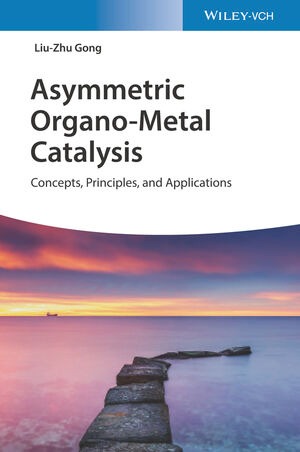
In Asymmetric Organo-Metal Catalysis: Concepts, Principles, and Applications, accomplished chemist Liu-Zhu Gong delivers a comprehensive discussion of how to design efficient organo/metal combined catalyst systems, new cooperatively catalyzed asymmetric reactions, relay catalytic cascades, and multicomponent reactions. The distinguished author covers critical topics, like the combined catalysis of chiral phase transfer catalysts, enamine, iminium, nucleophilic Lewis base, or Bronsted acids with metal complexes, while also covering the cooperative catalysis of photocatalysts and organocatalysts.
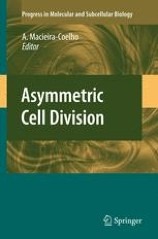
Cell biologists have recently become aware that the asymmetry of cell division is an important regulatory phenomenon in the fate of a cell. During development, cell diversity originates through asymmetry; in the adult organism asymmetric divisions regulate the stem cell reservoir and are a source of the drift that contributes to the aging of organisms with renewable cell compartments. Because of the concept of semi-conservative DNA synthesis, it was thought that the distribution of DNA between daughter cells was symmetric. The analysis of the phenomenon in cells during mitosis, however, revealed the asymmetry in the distribution of the genetic material that creates the drift contributing to aging of mammals. On the other hand, cancer cells can originate from a deregulation of asymmetry during mitosis in particular during stem cell expansion. The book describes the phenomenon in different organisms from plants to animals and addresses its implications for the development of the organism, cell differentiation, human aging and the biology of cancers.
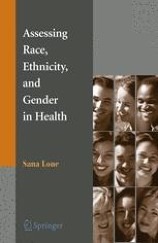
Where there are patients, clients, or study participants, there are data. And when data involve personal variables of race, ethnicity, gender, and/or sexual orientation, questions of relevance and marginalization often arise. Assessing Race, Ethnicity, and Gender in Health brings needed clarity to the debate by identifying the ethical issues as well as the technical challenges inherent in measuring these elusive concepts.
Optimal dose individualization has become more important in improving clinical efficacy and safety, given the variability in drug response, e.g., due to concurrent illnesses or co-medications. Therefore, the role of optimal dose finding in early clinical drug development so as to maximize successful clinical use is emphasized. The continued use of biomarkers – based on the (known) pharmacology of the drug and/or biology of the underlying disease – along with exposure–response evaluation throughout all phases of drug development can quantitatively integrate clinical pharmacology knowledge, provide early proof of concept, and help in rational dose selection and rational drug product labeling for clinical use.
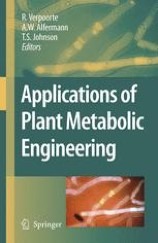
Written by leading international experts in the field of plant metabolic engineering, this book discusses, mainly, applications of plant metabolic engineering. Metabolic engineering, which is part of second generation biotechnology, has made several contributions at basic level as well as at conceptualising products ever since its emergence in the early 1980s. Applications resulting from metabolic engineering are expected to play a very important role in future for plant breeding, e.g. for improved resistance or improved traits concerning health promoting constituents, and production of fine chemicals such as medicines, flavors and fragrances.
Covers general concepts of anti-viral metabolites, classifications, ethnopharmacology, chemistry, clinical and preclinical studies focusing on different medicinal plants against various types of viral infections. Various plants have been used in medicine since ancient times and are known for their strong therapeutic effects. The book will describe potential antiviral properties of medicinal plants against a diverse group of viruses, and provide an insight to the potential plants possess for broad-spectrum antiviral effects against emerging viral infections.The book aims to target a broad audience including virologists, molecular biologist, microbiologist and scientists working with natural products as well as researchers, students, healthcare experts involved in pharmaceutical and medical field.
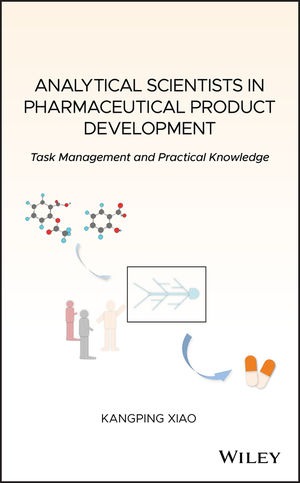
Explains task management concepts and outlines practical knowledge to help pharmaceutical analytical scientists become productive and enhance their career. •Presents broad topics such as product development process, regulatory requirement, task and project management, innovation mindset, molecular recognition, separation science, degradation chemistry, and statistics. •Provokes thinking through figures, tables, and case studies to help understand how the various functions integrate and how analytical development can work efficiently and effectively by applying science and creativity in their work. •Discusses how to efficiently develop a fit-for-purpose HPLC method without screening dozens of columns, gradients, or mobile phase combinations each time, since the extra effort may not provide enough of a benefit to justify the cost and time in a fast-paced product development environment.
A Practical Guide for Healthcare Professionals is the definitive reference book for the emerging and exciting use of AI throughout clinical medicine. AI in Clinical Medicine: A Practical Guide for Healthcare Professionals is divided into four sections. Section 1 provides readers with the basic vocabulary that they require, a framework for AI, and highlights the importance of robust AI training for physicians. Section 2 reviews foundational ideas and concepts, including the history of AI. Section 3 explores how AI is applied to specific disciplines. Section 4 describes emerging trends, and applications of AI in medicine in the future.
There is wide agreement on the need to change the prevalent agricultural models, given their negative impacts and their incompatibility with current societal issues. Agroecological transition has been promoted as a potential solution to the ecological, social and economic problems generated by these models. It however involves a systemic, multi-scale and transdisciplinary process. Due to this complexity, the overall picture of what farms and food systems “actually are” and “might be” may not be apparent at the individual level. Yet individuals’ knowledge and values provide complementary insights on how to proceed in deepening ecological modernisation. Expertise can also provide landmarks to be considered in that process. Because local stakeholders’ experience and skills are key resources in the adaptation and adoption of agroecological transition, new conceptual and methodological frameworks and tools have to be developed to support them in the design process of such a complex transition. This book presents feedback from the ‘Territorial Agroecological Transition in Action’- TATA-BOX research project, which was devoted to these specific issues.
This authoritative reference book assembles the experience of an international faculty of authors, each of whom has performed several thousand facelifts, i.e. procedures to rejuvenate and harmonize the human face. All procedures in this regard are covered and the text is accompanied by extensive artwork and photographs. The authors share their experience, including tips and tricks, as well as ways to avoid complications and pitfalls. Special emphasis is given to the concept of looking at the face as a mosaic, i.e. treating its individual parts in a harmonic way and maintaining mimic units. Combining different methods.
Addition Reactions with Unsaturated Hydrocarbons presents an up-to-date overview of modern methods that utilize reactions of unsaturated hydrocarbons as building blocks of organic synthesis, covering the conceptual and practical knowledge required for designing atom-efficient reactions to synthesize functionalized molecules. This authoritative volume discusses homo-dimerization and cross-dimerization of alkynes and/or alkenes, synthesis of carbonyl compounds from the hydration of alkynes, cycloadditions of alkynes and alkenes for the synthesis of carbocycles and heterocycles.
The focus is on selected critical molecular determinants of AML pathogenesis and pathophysiology and the exploitation of these factors by diverse therapeutic agents and modalities. Bringing together new concepts and findings in the basic and clinical science of AML, the book emphasizes the molecular basis for new therapies that stand to have the greatest potential impact on the clinical face of these diseases. The text provides insights into selected novel strategies currently and prospectively being developed, including interruption of specific signal transduction pathways, modulation of gene expression, attempts to reinstate differentiation, and immunomodulation.
This book uses modern biological knowledge to tackle the question: "What distinguishes living organisms from the non-living world?" In the first few chapters, the authors draw on recent advances in cell and molecular biology to develop an account of the "living state" that applies to all organisms, but only to organisms. Subsequent chapters use this account to explore questions about evolution, the origin of life and the possibility of extraterrestrial life. Towards the end of the book the authors consider human evolution, intelligence and the extent to which our species can be regarded as biologically unique. About Life is written as far as possible in non-technical language; all scientific terms are explained straightforwardly when they are introduced. It is aimed at the general, non-specialist reader, but the novel approach that it takes to general issues in biology will also interest students of the life sciences.
Les médecins généralistes sont destinataires d’un grand nombre d’informations sur l’alcool, son usage et ses conséquences pathologiques immédiates ou potentielles. Ces connaissances, émanant de médecins le plus souvent hospitaliers et spécialisés, ont conduit à des recommandations destinées à guider les médecins généralistes dans le repérage des malades de l’alcool et leur prise en charge thérapeutique. Cependant, la pertinence et l’applicabilité de la plupart de ces recommandations sont peu ou mal évaluées dans la pratique de la médecine générale. De ce fait, les médecins généralistes, parfois à l’encontre des recommandations, sont amenés à élaborer des concepts et des pratiques propres à leur clientèle et à leurs conditions de travail. L’originalité de ce livre vient de la confrontation des connaissances et des pratiques de deux médecins, soignant des malades de l’alcool dans des structures différentes.
Written primarily for researchers and advanced students in environmental and social sciences, this latest book in Springer’s Landscape Series looks at some of the emerging fields and new challenges in landscape research. These include: the role of value systems in perceiving, appreciating, and managing landscapes the ‘space’ and ‘place’ concept in landscape research GIS and remote sensing techniques for gathering and processing spatially and temporally explicit land cover, vegetation, and land use data methods of landscape history landscape genetics and genetic methods to test landscape connectivity and dispersal of plant and animal species

Delves into the theoretical and practical studies of al-Qawaid al-Fiqhiyyah in Islamic legal theory. It elucidates the importance of this concept in the application of Islamic law and demonstrates how the concept relates to the objectives of Islamic law generally.
Offers readers comprehensive coverage and a high level of academic rigour while maintaining its signature accessible and engaging style. Introducing the readers to the fundamental concepts of international criminal law, as well as the domestic and international institutions that enforce that law, this book engages with critical questions, political and moral challenges, and alternatives to international justice.

سوريا - اتستراد درعا - غباغب
+963-15 2050 - 15 860 380 /1/2/3 - 11 662 3900