



الصفحة 261
الصفحة 261

Automated Reasoning with Analytic Tableaux and Related Methods ; 16th International Conference, TABLEAUX 2007, Aix en Provence, France, July 3-6, 2007, Proceedings
It covers the wide range of logics, from intuitionistic and substructural logics to modal logics (including temporal and dynamic logics), from many-valued logics to nonmonotonic logics, and from classical first-order logic to description logics.

Automated reasoning ; 4th International Joint Conference, IJCAR 2008 Sydney, Australia, August 12-15, 2008 Proceedings
This book constitutes the refereed proceedings of the 4th International Joint Conference on Automated Reasoning, IJCAR 2008, held in Sydney, Australia, in August 2008.

Automated reasoning ; 3rd International Joint Conference, IJCAR 2006, Seattle, WA, USA, August 17-20, 2006, Proceedings
This book constitutes the refereed proceedings of the Third International Joint Conference on Automated Reasoning,The papers address the entire spectrum of research in automated reasoning including formalization of mathematics, proof theory, proof search, description logics, interactive proof checking, higher-order logic, combination methods, satisfiability procedures, and rewriting. The papers are organized in topical sections on proofs, search, higher-order logic, proof theory, search, proof checking, combination, decision procedures, CASC-J3, rewriting, and description logic.
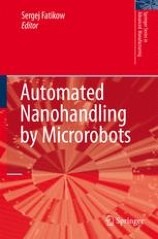
Automated nanohandling by microrobots
Automated Nanohandling by Microrobots introduces an actuation principle for such microrobots and presents a new robot design. Different aspects of this research field regarding the hardware and software implementation of the system components, including the sensory feedback for automated nanohandling, are discussed in detail. Extensive applications of the microrobot station for nanohandling, nano-characterization and nanostructuring are provided, together with the experimental results.
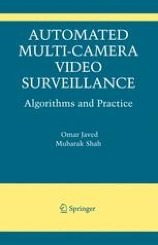
Automated multi-camera surveillance : Algorithms and practice
This book discusses and proposes techniques for development of an automated multi-camera surveillance system for outdoor environments, while identifying the important issues that a system needs to cope with in realistic surveillance scenarios. The goal of the research presented in this book is to build systems that can deal effectively with these realistic surveillance needs.
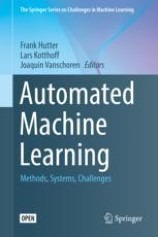
Automated machine learning : Methods, systems, challenges
This book presents the first comprehensive overview of general methods in Automated Machine Learning (AutoML), collects descriptions of existing systems based on these methods, and discusses the first series of international challenges of AutoML systems. The recent success of commercial ML applications and the rapid growth of the field has created a high demand for off-the-shelf ML methods that can be used easily and without expert knowledge. However, many of the recent machine learning successes crucially rely on human experts, who manually select appropriate ML architectures (deep learning architectures or more traditional ML workflows) and their hyperparameters. To overcome this problem, the field of AutoML targets a progressive automation of machine learning, based on principles from optimization and machine learning itself.

Automated deduction in Geometry ; 6th International Workshop, ADG 2006, Pontevedra, Spain, August 31-September 2, 2006, Revised Papers
The book show the lively variety of topics and methods and the current applicability of automated deduction in geometry to different branches of mathematics and to other sciences and technologies.

Automated deduction in Geometry ; 5th International Workshop, ADG 2004, Gainesville, FL, USA, September 16-18, 2004, Revised Papers
This book constitutes the thoroughly refereed post-proceedings of the 6th International Workshop on Automated Deduction in Geometry, ADG 2006, held at Pontevedra, Spain, in August/September 2006 as a satellite event of the International Congress of Mathematicians, ICM 2006. The 13 revised full papers presented were carefully selected from the submissions made due to a call for papers - within the scope of ADG - shortly after the meeting. The papers show the lively variety of topics and methods and the current applicability of automated deduction in geometry to different branches of mathematics and to other sciences and technologies.

Automated deduction – CADE-21 ; 21st International Conference on automated deduction, Bremen, Germany, July 17-20, 2007, Proceedings
All current aspects of automated deduction are addressed, ranging from theoretical and methodological issues to presentation and evaluation of theorem provers and logical reasoning systems. The papers are organized in topical sections on higher-order logic, description logic, intuitionistic logic, satisfiability modulo theories, induction, rewriting, and polymorphism, first-order logic, model checking and verification, termination, as well as tableaux and first-order systems.

Automated deduction – CADE-20 ; 20th International Conference on automated deduction, Tallinn, Estonia, July 22-27, 2005, Proceedings
This book constitutes the refereed proceedings of the 20th International Conference on Automated Deduction, CADE-20, held in Tallinn, Estonia, in July 2005. The 25 revised full papers and 5 system descriptions presented were carefully reviewed and selected from 78 submissions. All current aspects of automated deduction are addressed, ranging from theoretical and methodological issues to presentation and evaluation of theorem provers and logical reasoning systems.

Automated deduction – CADE 28 ; 28th International Conference on automated deduction, Virtual Event, July 12–15, 2021, Proceedings
This book constitutes the proceeding of the 28th International Conference on Automated Deduction, CADE 28, held virtually in July 2021. The 29 full papers and 7 system descriptions presented together with 2 invited papers were carefully reviewed and selected from 76 submissions. CADE is the major forum for the presentation of research in all aspects of automated deduction, including foundations, applications, implementations, and practical experience. The papers are organized in the following topics: Logical foundations; theory and principles; implementation and application; ATP and AI; and system descriptions.

Automata, languages and programming ; Vol. 4052 : 33rd International Colloquium, ICALP 2006, Venice, Italy, July 10-14, 2006, Proceedings, Part II
a series of annual conferences of the European Association for Theoretical Computer Science (EATCS) which frsttookplacein 1972.Thisyear,. ICALP 2006 consisted of four invited lectures and the contributed papers. This volume of the proceedings contains all contributed papers presented at the conference in Track A, together with the paper by the invited speaker Noga Alon , A companion volume contains all contributed papers presented inTrack Band TrackCtogetherwiththepapersbytheinvited speakers Cynthia Dwork (Microsoft Research, USA) and Prakash Panangaden (Mc Gill University, Canada). The programhad an additional invited lecture by Simon Peyton Jones (Microsoft Research, UK), which does not appear in the proceedings.

Automata, languages and programming ; Vol. 4051 : 33rd International Colloquium, ICALP 2006, Venice, Italy, July 10-14, 2006, Proceedings, Part I
ICALP is a series of annual conferences of the European Association for Theoretical Computer Science (EATCS) which frsttookplacein1972 .Thisyear, ICALP 2006 consisted of four invited lectures and the contributed papers. This volume of the proceedings contains all contributed papers presented at the conference in Track A, together with the paper by the invited speaker Noga Alon (Tel Aviv University, Israel). A companion volume contains all contributed paper spresentedinTrackBandTrackCtogetherwiththepapersbytheinvited speakers Cynthia Dwork (Microsoft Research, USA) and Prakash Panangaden (Mc Gill University, Canada).

Automata, languages and programming ; Vol. 3580 ; 32nd International Colloquim, ICALP 2005, Lisbon, Portugal, July 11-15, 2005, Proceedings
This book constitutes the refereed proceedings of 32nd International Colloquium on Automata, Languages and Programming ICALP 2005, Lisbon, Portugal, July 11-15, 2005. including Topics Computer Science, general Mathematical Logic and Foundations Theory of Computation Software Engineering/Programming and Operating Systems Data Structures and Information Theory Data Structures

Automata, languages and programming ; 35th International Colloquium, ICALP 2008, Reykjavik, Iceland, July 7-11, 2008, Proceedings, Part II
The two-volume set LNCS 5125 and LNCS 5126 constitutes the refereed proceedings of the 35th International Colloquium on Automata, Languages and Programming, ICALP 2008, held in Reykjavik, Iceland, in July 2008.

Automata, Languages and Programming ; 35th International Colloquium, ICALP 2008, Reykjavik, Iceland, July 7-11, 2008, Proceedings, Part I
The two-volume set LNCS 5125 and LNCS 5126 constitutes the refereed proceedings of the 35th International Colloquium on Automata, Languages and Programming, ICALP 2008, held in Reykjavik, Iceland, in July 2008.

Automata, languages and programming ; 34th International Colloquium, ICALP 2007, Wroclaw, Poland, July 9-13, 2007, Proceedings
This volume presented three major tracks covering algorithms, automata, complexity, and games
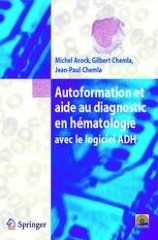
Autoformation et aide au diagnostic en hématologie avec le logiciel ADH = Self-study and diagnostic aid in hematology with ADH software
The software includes a rich iconography on blood and marrow cells which will complement the knowledge in cytology of hematologists. Certain cytological abnormalities encountered in certain pathologies are also presented.
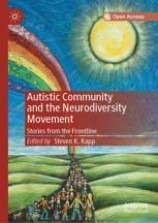
Autistic community and the neurodiversity movement : Stories from the frontline
This book marks the first historical overview of the autism rights branch of the neurodiversity movement, describing the activities and rationales of key leaders in their own words since it organized into a unique community in 1992. Sandwiched by editorial chapters that include critical analysis, the book contains 19 chapters by 21 authors about the forming of the autistic community and neurodiversity movement, progress in their influence on the broader autism community and field, and their possible threshold of the advocacy establishment
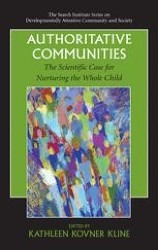
Authoritative communities : The scientific case for nurturing the whole child
Authoritative Communities: The Scientific Case for Nurturing the Whole Child introduces innovative solutions based firmly in the children’s mental health and resilience literature and in the hypothesis that humans are "hardwired to connect." These "authoritative communities" consist of such individuals and institutions as parents, teachers, coaches, elders, and a variety of organizations that are committed to each other’s well-being over the long-term and who instill children with prosocial values such as empathy and compassion. Living within these communities enables children and youth to develop a consistent sense of purpose and meaning, so that they, in turn, are able to grow up to be responsible, productive, and nurturing adults.
