



الصفحة 23
الصفحة 23

Globalization and Regional Economic Modeling
Globalization is affecting regional economies in a broad spectrum of aspects, from labor market conditions and development policies to climate change. To understand better how this works, we need both conceptual and methodological contributions. We need new schemes to organize our thinking, direct our attention, and frame thought experiments on the basis of which guidance may be offered. And we need methodological innovations that enable us to carry out studies and thought experiments at levels of spatial and temporal resolution and formal complexity adequate to capture and account for the phenomena that characterize globalization. The chapters of this volume, written by an international cast of eminent regional scientists, represent contributions of both types, in many cases introducing and demonstrating the use of new tools for analyzing and understanding enormous changes underway in regional economies around the world.

Globalization and Environmental Challenges : Reconceptualizing Security in the 21st Century
This book contiants chapters address the theoretical, philosophical, ethical and religious and spatial context of security; discuss the relationship between security, peace, development and environment; review the reconceptualization of security in philosophy, international law, economics and political science and for the political, military, economic, social and environmental security dimension and the adaptation of the institutional security concepts of the UN, EU and NATO; analyze the reconceptualization of regional security and alternative security futures and draw conclusions for future research and action.

Global Warming - Myth or Reality? : The Erring Ways of Climatology
In the global-warming debate, definitive answers to questions about ultimate causes and effects remain elusive. In Global Warming: Myth or Reality? Marcel Leroux seeks to separate fact from fiction in this critical debate from a climatological perspective. Beginning with a review of the dire hypotheses for climate trends, the author describes the history of the 1998 Intergovernmental Panel on Climate Change (IPCC)

Global Risk Governance : Concept and Practice Using the IRGC Framework
This book innovative risk governance framework, the careful reviews it received from internationally recognized scientists, and the results of several case studies in which the framework has been applied to a number of significant but different risks.

Global Product : Strategy, Product Lifecycle Management and the Billion Customer Question
In the early years of the 21st Century, as a result of many changes, it has become possible for the first time for tens of thousands of companies to offer manufactured products to customers across six continents. For many of these "global products", there are potentially more than a billion customers. In 2007, Wall Street hit new highs as the enormous opportunity for increased sales and profits became clear. However the new environment is not easy to manage and the risks are high. Meeting the various requirements of customers from a range of countries, choosing the most suitable locations for the different stages of development and manufacturing, deciding what can be global and what must be local, implementing suitable processes and systems, accommodating different national regulations, and efficiently dividing the workload between diverse sites are among the many challenges faced by providers of global products.

Global energy supply and emissions : An interdisciplinary view on effects, restrictions, requirements and options
offers an authoritative analysis of the state-of-the art in energy and climate research and policy. It starts by describing the current status of technologies that are expected to have an influence on the energy systems of the future. For an adequate evaluation, it presents the latest findings on the effects of energy supply and consumption as well as of the emissions on both the environment and people’s health. This is followed by an extensive discussion of the economic and social problems related to climate change, the need for energy transitions, and other issues that may require public investment and international agreements. reviews the problem of energy policy from a global perspective, providing readers with the technical, political, economic and ethical background needed to understand the current situation and work at better solutions for a sustainable, just and prospering world.

Global Computing ; IST/FET International Workshop, GC 2004, Rovereto, Italy, March 9-12, 2004, Revised Selected Papers
This book constitutes the thoroughly refereed post-proceedings of the IST/FET International Workshop on Global Computing, GC 2004, held in Rovereto, Italy in March 2004. The 18 revised full papers presented were carefully selected during two rounds of reviewing and improvement from numerous submissions. Among the topics covered are programming environments, dynamic reconfiguration, resource guarantees, peer-to-peer networks, analysis of systems and resources, resource sharing, and security, as well as foundational calculi for mobility.
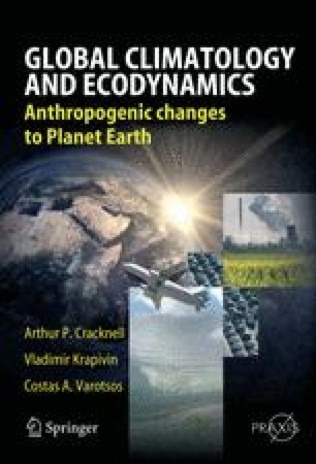
Global Climatology and Ecodynamics : Anthropogenic Changes to Planet Earth
The purpose of the book is to summarize existing information and assess the level of these uncertainties. We want to stimulate readers to think in the longer term about climate change and ecological damage that is being done to the planet Earth in the hope that it may remain fit for human habitation and a satisfying life style for future generations, not just the next generation or two.

Global Citizenship Education : Critical and International Perspectives
This book takes a critical and international perspective to the mainstreaming of the Global Citizenship Concept and analyses the key issues regarding global citizenship education across the world. In that respect, it addresses a pressing need to provide further conceptual input and to open global citizenship agendas to diversity and indigeneity.

Global Changes : Ethics, Politics and Environment in the Contemporary Technological World
offers an authoritative analysis of the challenges that have arisen as a result of modern technologies. It covers several environmental problems, such as climate change, overexploitation of natural resources, loss of natural habitats, pollution and human population growth, and discusses practical scenarios for sustainable human dwelling of our planet. Adopting an interdisciplinary approach, the first part introduces “global changes”, describing how they are happening in reality, and the challenges arising from them. The second part introduces methodological approaches borrowed from various disciplines, such as engineering, management science, philosophy and theology, which can help deal with the contemporary challenges resulting from global changes.

Global Change and the Earth System : A Planet Under Pressure
The interactions between environmental change and human societies have a long, complex history spanning many millennia, but these have changed fundamentally in the last century. Human activities are now so pervasive and profound that they are altering the Earth in ways which threaten the very life support system upon which humans depend. This book describes what is known about the Earth System and the impact of changes caused by humans. It considers the consequences of these changes with respect to the stability of the Earth System and the well-being of humankind; as well as exploring future paths towards Earth System science in support of global sustainability.
Global Change and Mountain Regions : An Overview of Current Knowledge
Mountain regions occupy about a quarter of the global terrestrial land surface and provide goods and services to more than half the humanity. Global environmental change threatens the integrity of these systems and their ability to provide the goods and services upon which humanity has come to depend. This book gives an overview of the state of research in fields pertaining to the detection, understanding and prediction of global change impacts in mountain regions. More than 60 contributions from paleoclimatology, cryospheric research, hydrology, ecology, and development studies are compiled in this volume, each with an outlook on future research directions.

Global Change and Integrated Coastal Management : The Asia-Pacific Region
Most of the world’s population lives close to the coast and is highly dependent on coastal resources, which are being exploited at unsustainable rates. These resources are being subject to further pressures associated with population increase and the globalization of coastal resource demand. This is particularly so for the Asia-Pacific region which contains almost two thirds of the world’s population and most of the world’s coastal megacities. The region has globally important atmospheric and oceanic phenomena, which affect world climate such as the Asian Monsoon and the El-Niño Southern Oscillation phenomena. The Asia-Pacific region also has highly significant marine diversity but over the last few decades, coastal resources such as mangroves, coral reefs and fisheries have experienced large-scale depletion.

Global business strategy : Multinational corporations venturing into emerging markets
This book presents theories and case studies for corporations in developed nations, including Japan, for designing strategies to maximize opportunities and minimize threats in business expansion into developing nations. The case studies featured here focus on Asia, including China and India, and use examples of Japanese manufacturers. Five case studies are provided, including Hitachi Construction Machinery and Shiseido in China and Maruti Suzuki in India. These cases facilitate the reader’s understanding of the business environments in emerging economies.

Global antitrust and sustainability : Law, economics, enforcement
Investigates how competition law and competition authorities around the world deal with sustainability. It covers, economics, law, and enforcement matters. The book also sets out the basics of the concept of sustainability that are necessary for competition lawyers to work with such matters. It explores what economics has to say about the relationship between sustainability and competition.

GIS for Health and the Environment : Development in the Asia-Pacific Region
This book is a result of the International Conference in GIS and Health held on 27-29 June 2006 in Hong Kong. The selected chapters are organized into four themes: GIS Informatics; Human and Environmental Factors; Disease modeling; and Public health, population health technologies, and surve- lance.

Giant Metallic Deposits : Future Sources of Industrial Metals
Geological characteristics of giant metallic deposits and their setting and the politico-economic constraints of access to and exploitation in prospective areas have been a "hot topic" in the past fifteen years, but the knowledge generated and published has been one-sided, scattered and fragmented. This is the first comprehensive book on the subject that provides body of solid facts rather than rapidly changing theories, written by author of the Empirical Metallogeny book series and founder of the Data Metallogenica visual knowledge system on mineral deposits of the world, who has had an almost 40 years long international academic and industrial experience. The book will provide abundant material for comparative research in metallogeny, practical information for the explorationists as to where to look for the "elephants", and some inspiration for commodity investors.

Geotechnical Slope Analysis
The influence of initial stresses, pore water pressures and seismic forces has been explored not only on performance indicators such as the ‘Factor of Safety’ but also on the location of critical slip surfaces. In addition to these factors, it is shown that the chosen method of analysis may also have a significant influence on the location of the critical slip surface. This book focuses on research studies concerning slope behaviour, the occurrence of landslides and the use of alternative methods of analysis and interpretation. The importance of uncertainties in slope performance and, more broadly, in geotechnical engineering is emphasised.
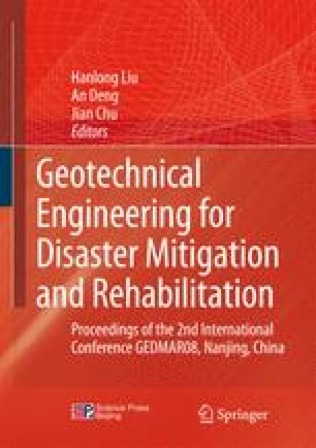
Geotechnical Engineering for Disaster Mitigation and Rehabilitation ; Proceedings of the 2nd International Conference GEDMAR08, Nanjing, China 30 May – 2 June, 2008
"Geotechnical Engineering for Disaster Mitigation and Rehabilitation" presents the latest developments and case studies in the field. All contributions to this proceedings were rigorously reviewed to cover the newest developments in disasters related to earthquakes, landslides and slopes, soil dynamics, risk assessment and management, disaster mitigation and rehabilitation, and others.
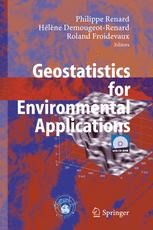
Geostatistics for environmental applications ; Proceedings of the Fifth European Conference on geostatistics for environmental applications
Once applied only to problems of mining-reserves assessment or petroleum-reservoir characterization, geostatistics is now being used in an increasingly large number of disciplines in environmental sciences. On the one hand, it enables the analysis and handling, in a rigorous probabilistic framework of the issues of spatial and temporal interpolation of continuous or categorical environmental variables. On the other hand, the methodology is also used to design and optimize sampling campaigns. "Geostatistics for Environmental Applications" contains forty selected contributions covering the latest progress in a broad spectrum of fields including air quality, climatology, ecology, groundwater hydrology, surface hydrology, oceanography, soil contamination, epidemiology and health, natural hazards, and remote sensing.
