



الصفحة 23
الصفحة 23

Multiparadigm Programming in Mozart/Oz ; 2nd International Conference, MOZ 2004, Charleroi, Belgium, October 7-8, 2004, Revised Selected Papers
Oz's concurrency model yields simplicity and clarity (because Oz makes it easier to express complex programs with many interacting components), g- erality, and better interfaces (because the data?ow model automatically makes interfaces more lightweight). Constraint programming in Oz again yields simplicity and clarity (because theprogrammercanexpresswhatneedstobetrueratherthanthemorecomplex issue of how to make it true), and o?ers a powerful mathematical notation that is di?cult to implement on top of languages that do not support it natively. Mozart's distributed computing model makes for improved interfaces and eases the evolution of systems. In my own work, one of the most important concernsistobeabletoquicklyscaleupaprototypeimplementationintoalar- scale service that can run reliably on thousands of computers, serving millions of users.
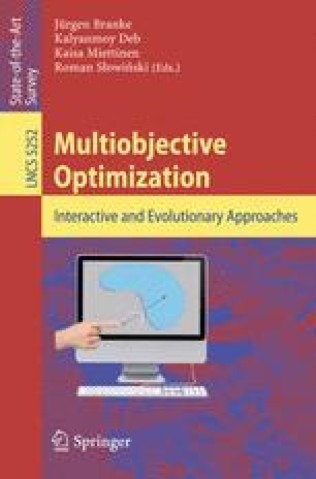
Multiobjective Optimization : Interactive and Evolutionary Approaches
Multiobjective optimization deals with solving problems having not only one, but multiple, often conflicting, criteria. Such problems can arise in practically every field of science, engineering and business, and the need for efficient and reliable solution methods is increasing. The task is challenging due to the fact that, instead of a single optimal solution, multiobjective optimization results in a number of solutions with different trade-offs among criteria, also known as Pareto optimal or efficient solutions. Hence, a decision maker is needed to provide additional preference information and to identify the most satisfactory solution. Depending on the paradigm used, such information may be introduced before, during, or after the optimization process. Clearly, research and application in multiobjective optimization involve expertise in optimization as well as in decision support.

Multi-objective Management in Freight Logistics : Increasing Capacity, Service Level and Safety with Optimization Algorithms
Multi-objective Management in Freight Logistics provides decision makers with new methods and tools to implement multi-objective optimization models in logistics. The book combines theoretical aspects with applications, showing the advantages and the drawbacks of adopting scalarization techniques, and when it is worthwhile to reduce the problem to a goal programming one. The book also shows applications where more than one decision maker evaluates the effectiveness of the logistic system and thus a multilevel programming approach is sought to attain meaningful solutions.

Multi-Objective Machine Learning
This monograph presents a selected collection of research work on multi-objective approach to machine learning, including multi-objective feature selection, multi-objective model selection in training multi-layer perceptrons, radial-basis-function networks, support vector machines, decision trees, and intelligent systems.
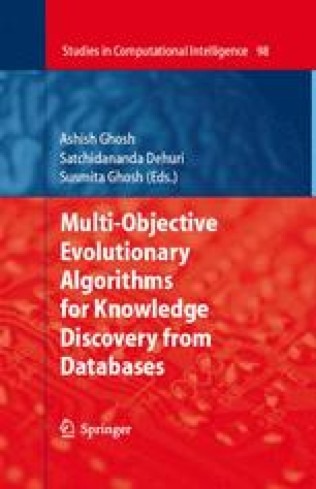
Multi-Objective Evolutionary Algorithms for Knowledge Discovery from Databases
The present volume provides a collection of seven articles containing new and high quality research results demonstrating the significance of Multi-objective Evolutionary Algorithms (MOEA) for data mining tasks in Knowledge Discovery from Databases (KDD). These articles are written by leading experts around the world. It is shown how the different MOEAs can be utilized, both in individual and integrated manner, in various ways to efficiently mine data from large databases.
Multiobjective Evolutionary Algorithms and Applications
Multiobjective Evolutionary Algorithms and Applications provides comprehensive treatment on the design of multiobjective evolutionary algorithms and their applications in domains covering areas such as control and scheduling. Emphasizing both the theoretical developments and the practical implementation of multiobjective evolutionary algorithms, a profound mathematical knowledge is not required. Written for a wide readership, engineers, researchers, senior undergraduates and graduate students interested in the field of evolutionary algorithms and multiobjective optimization with some basic knowledge of evolutionary computation will find this book a useful addition to their book case.

Multimodality in architecture : Collaboration, technology and education
Examines multimodality in architecture and its impacts on collaborative, technical and educational processes or systems. Multimodality is becoming increasingly critical in contemporary architectural practice and education. Creative design teams face new challenges when they embrace new modes of communication, technology, and knowledge development processes. From diverse online modes of communication to shared digital environments, generative AI and advanced hardware solutions, new modes of information creation, sharing, and application are changing the ways architects and designers work. The book presents new research which empowers international researchers and designers to work more effectively in a diverse range of digital environments. Whether the readers are architects, teachers, students, or scholars, this book provides critical insights and practical tools for understanding and optimising processes in architecture and design.

Multimodal Processing and Interaction : Audio, Video, Text
Multimodal Processing and Interaction: Audio, Video and Text presents high quality, state-of-the-art research ideas and results from theoretic, algorithmic and application viewpoints. This edited volume contains both state-of-the-art reviews and original contributions by leading experts in the scientific and technological field of multimedia. It grew out of a four-year collaboration among research groups participating in the European network of Excellence on Multimedia Understanding, Semantics, Computation and Learning (MUSCLE).

Multimodal Intelligent Information Presentation
Intelligent Multimodal Information Presentation relates to the ability of a computer system to automatically produce interactive information presentations, taking into account the specifics about the user, such as needs, interests and knowledge, and engaging in a collaborative interaction that helps the retrieval of relevant information and its understanding on the part of the user.The volume includes descriptions of some of the most representative recent works on Intelligent Information Presentation and a view of the challenges ahead.

Multimodal Concepts for Integration of Cytotoxic Drugs
The first part of this book summarizes the rationale and the preclinical data for combined treatment with ionizing radiation and pharmaceutical agents. Individual chapters focus on different forms of combined treatment, with due consideration being given to a range of drugs and to emerging combinations with small molecules and antibodies, derived from recent advances in molecular oncology. The second part of the book comprises a series of disease-specific chapters in which the clinical results of combined modality treatment are presented. In addition, the topics of acute and late toxicity, supportive treatment and tolerance in elderly patients are reviewed.

Multimedia technology and enhanced learning ; 2nd EAI International conference, ICMTEL 2020, Leicester, UK, April 10-11, 2020, Proceedings, Part II
This two-volume book constitutes the refereed proceedings of the Second International Conference on Multimedia Technology and Enhanced Learning, ICMTEL 2020, held in Leicester, United Kingdom, in April 2020. Due to the COVID-19 pandemic all papers were presented in YouTubeLive. The 83 revised full papers have been selected from 158 submissions. They describe new learning technologies which range from smart school, smart class and smart learning at home and which have been developed from new technologies such as machine learning, multimedia and Internet of Things.
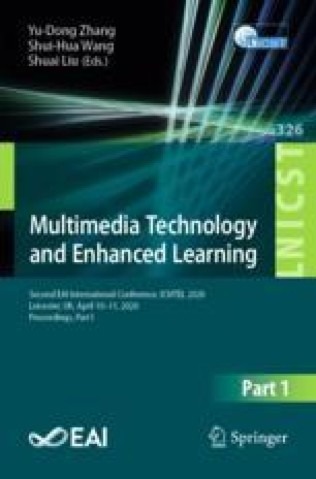
Multimedia Technology and Enhanced Learning ; 2nd EAI International Conference, ICMTEL 2020, Leicester, UK, April 10-11, 2020, Proceedings, Part I
This two-volume book constitutes the refereed proceedings of the Second International Conference on Multimedia Technology and Enhanced Learning, ICMTEL 2020, held in Leicester, United Kingdom, in April 2020. Due to the COVID-19 pandemic all papers were presented in YouTubeLive. The 83 revised full papers have been selected from 158 submissions. They describe new learning technologies which range from smart school, smart class and smart learning at home and which have been developed from new technologies such as machine learning, multimedia and Internet of Things.

Multimedia security : Algorithm development, analysis and applications (algorithms for intelligent systems)
Provides an insight about various techniques used in multimedia security and identifies its progress in both technological and algorithmic perspectives. In the contemporary world, digitization offers an effective mechanism to process, preserve and transfer all types of information. The incredible progresses in computing and communication technologies augmented by economic feasibility have revolutionized the world. The availability of efficient algorithms together with inexpensive digital recording and storage peripherals have created a multimedia era bringing conveniences to people in sharing the digital data that includes images, audio and video. The ever-increasing pace, at which the multimedia and communication technology is growing, has also made it possible to combine, replicate and distribute the content faster and easier, thereby empowering mankind by having a wealth of information at their disposal.

Multimedia Retrieval
The single chapters of this textbook explain the general architecture of multimedia information retrieval systems; various metadata languages like Dublin Core, RDF, or MPEG; pattern recognition through Markov models, unsupervised learning, and pattern clustering; various indexing approaches to audio and video streams; interaction and control; the protection of content and user privacy; and search effectiveness and efficiency.

Multimedia Introduction to Programming Using Java
Although vital to modern software development, Java and object-oriented programming can pose significant challenges to newcomers. This text, unique in both scope and approach and accompanied by interactive content that you may find on extras.springer.com, addresses that learning curve by providing a careful, classroom-tested presentation of Java -- from the fundamentals of variables, types, and expressions to procedural concepts like loops and sophisticated object-oriented ideas. Additional key features of this work Introduces objects and classes early in the exposition, rendering object-oriented programming intuitive and natural. Develops programs, rather than simply showcasing them. Supports all concepts through complementary lectures on the zip-file featured on extras.springer.com. Contains numerous self-help exercises that encourage readers to practice programming. With its comprehensive appendices and bibliography, systematic approach, and helpful interactive programs on extras.springer.com, this exciting work provides the key tools they needed for successful object-oriented programming. It is ideal for use at the undergraduate and graduate beginning level, whether in the classroom or for distance learning; furthermore, the text will also be a valuable self-study resource or reference volume in any programmer’s library.

Multimedia Forensics
Media forensics has never been more relevant to societal life. Not only media content represents an ever-increasing share of the data traveling on the net and the preferred communications means for most users, it has also become integral part of most innovative applications in the digital information ecosystem that serves various sectors of society, from the entertainment, to journalism, to politics. Undoubtedly, the advances in deep learning and computational imaging contributed significantly to this outcome. The underlying technologies that drive this trend, however, also pose a profound challenge in establishing trust in what we see, hear, and read, and make media content the preferred target of malicious attacks.

Multimedia Encryption and Watermarking
Multimedia Encryption and Watermarking presents a comprehensive survey of contemporary multimedia encryption and watermarking techniques, which enable a secure exchange of multimedia intellectual property. Part I, Digital Rights Management (DRM) for Multimedia, introduces DRM concepts and models for multimedia content protection, and presents the key players. Part II, Multimedia Cryptography, provides an overview of modern cryptography, with the focus on modern image, video, speech, and audio encryption techniques. This book also provides an advanced concept of visual and audio sharing techniques. Part III, Digital Watermarking, introduces the concept of watermarking for multimedia, classifies watermarking applications, and evaluates various multimedia watermarking concepts and techniques, including digital watermarking techniques for binary images. Multimedia Encryption and Watermarking is designed for researchers and practitioners, as well as scientists and engineers who design and develop systems for the protection of digital multimedia content. This volume is also suitable as a textbook for graduate courses on multimedia security.

Multimedia Database Retrieval : A Human-Centered Approach
Multimedia Database Retrieval: A Human-Centered Approach presents the latest development in user-centered methods and the state-of-the-art in visual media retrieval. It includes discussion on perceptually inspired non-linear paradigm in user-controlled interactive retrieval (UCIR) systems. It also features a coherent approach which focuses on specific topics within content/concept-based retrievals via audio-visual information modeling of multimedia. Highlights include: * Exploring an adaptive machine that can learn from its environment * Optimizing the learning system by incorporating self-organizing adaptation into the retrieval process * Demonstrating state-of-the-art applications within small, medium, and large databases
Multimedia Content Representation, Classification and Security ; International Workshop, MRCS 2006, Istanbul, Turkey, September 11-13, 2006, Proceedings
This book constitutes the refereed proceedings of the International Workshop on Multimedia Content Representation, Classification and Security, MRCS 2006, held in Istanbul, Turkey in September 2006. The 100 revised papers presented together with 4 invited lectures were carefully reviewed and selected from more than 190 submissions. The papers are organized in topical sections on biometric recognition, multimedia content security, steganography, watermarking, authentication, classification for biometric recognition, digital watermarking, content analysis and representation, 3D object retrieval and classification, representation, analysis and retrieval in cultural heritage, content representation, indexing and retrieval, content analysis and classification, feature extraction and classification, multimodal signal processing, 3D video and free viewpoint video, multimedia content transmission and classification, video and image processing, as well as video analysis and representation.

Multimedia Content Analysis and Mining ; International Workshop, MCAM 2007, Weihai, China, June 30-July 1, 2007, Proceedings
The workshop gives a snapshot of the current wor- wide research in multimedia analysis. Through recent advances in computing, networking, and data storage, multimedia will create new interesting technical possibilities in a wide range of ?elds, such as entertainment, commerce, science, medicine, and public safety.
