



الصفحة 23
الصفحة 23
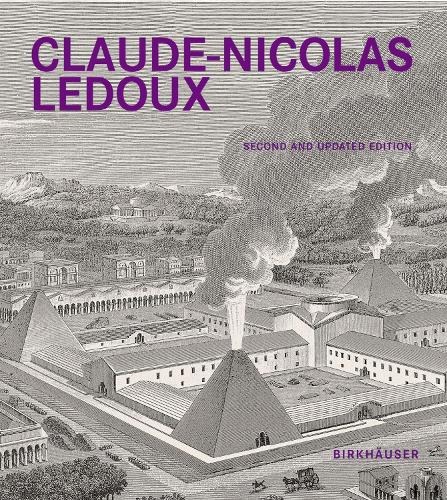
Claude-Nicolas Ledoux : Architecture and uopia in the era of the French revolution
Claude-Nicolas Ledoux (1736-1806) is today regarded as chief representative of French revolutionary architecture. With his extraordinary inventiveness he projected the architectural ideals of his era. Ledoux's influential buildings and projects are presented and interpreted both aesthetically and historically in this book. His best-known projects - the Royal Saltwords of Arc-et-Senans, the tollgates of Paris, the ideal city of Chaux - reveal the architect's allegiance to the principles of antiquity and Renaissance but also illustrate the evolution of his own utopian language. With the French Revolution, Ledoux ceased building as his contemporaries perceived him as a royal architect. He focused on the development of his architectural theory and redefined the vision of the modern architect
Civil Engineering Materials for Transportation Infrastructure
Includes the fundamental mechanical and physical properties of materials; properties, tests, and gradation designs of aggregates; production, composition, hydration, properties, and tests of lime and cement; composition, tests, and design of cement concrete; mechanisms, properties, and design of inorganic binder stabilized material; properties, tests, and grading of asphalt; composition, properties, tests, and designs of asphalt mixture; and properties, treatments, tests, and selections of steel.
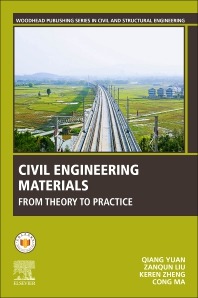
Civil engineering materials : From theory to practice ; 1st ed.
Presents the state-of-the-art in civil engineering materials, including the fundamental theory of materials needed for civil engineering projects and unique insights from decades of large-scale construction in China. The title includes the latest advances in new materials and techniques for civil engineering, showing the relationship between composition, structure and properties, and covering ultra-high-performance concrete and self-compacting concrete developed in China. This book provides comprehensive coverage of the most commonly used, most advanced materials for use in civil engineering. This volume consists of eight chapters covering the fundamentals of materials, inorganic cementing materials, Portland cement concrete, bricks, blocks and building mortar, metal, wood, asphalt and polymers.
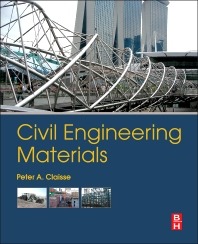
Civil engineering materials
Concentrates on demonstrating methods to obtain, analyse and use information rather than focusing on presenting large amounts of data. Beginning with basic properties of materials, it moves on to more complex areas such as the theory of concrete durability and corrosion of steel.

Chemokines and Viral Infection
This edition of Current Topics in Microbiology and Immunology examines the role of chemokines and chemokine receptors in host defense and disease development following viral infection. Chemokines represent a family of over 40 small proteins that, for the most part, are secreted into the environment and function by binding to G protein-coupled receptors (GPCRs) that are expressed on numerous different cell types. When initially identified close to 30 years ago, these molecules were associated with various human inflammatory diseases and it was recognized that expression may be integral in leukocyte recruitment to inflamed tissue. There are now four sub-families of chemokines identified based on defined structural criteria relating to the positional location of conserved cysteine residues within the amino-terminus of the protein. Chemokines are now recognized as important in numerous biological processes ranging from maintaining the organizational integrity of secondary lymphoid tissue to participating in various aspects of both innate and adaptive immune responses following microbial infection. With this in mind, this book highlights the functional roles of chemokines and their receptors in participating in various aspects of the immune response against well-known viral pathogens.
Chemical Biology and Drug Discovery
Gives the reader, through the specific selection of chemical-biological techniques and concepts, the necessary tools to be able to develop new ways of thinking and thus new therapeutic options in the complex field of chemical biology and drug development. The stated aim of this book is to provide concrete solutions and inspiration to students, (post)graduate students, and experienced scientists at universities as well as in industry in their problems.
Ceramic and Glass Materials : Structure, Properties and Processing
Ceramic and Glass Materials: Structure, Properties and Processing is a concise and comprehensive guide to the key ceramic and glass materials used in modern technology. Each chapter focuses on the structure-property relationships for these important materials and expands the reader’s understanding of their nature by simultaneously discussing the technology of their processing methods. In each case, the resulting understanding of the contemporary applications of the materials provides insights as to their future roles in twenty first century engineering and technology. Organized to be a practical and comprehensive resource, each chapter is dedicated to a specific material such as: alumina, mullite, sillimanite minerals, aluminates, quartz and silicas, refractory oxides, clays, concrete and cement, lead compounds, and zirconia.
Central European Functional Programming School : 2nd Summer School, CEFP 2007, Cluj-Napoca, Romania, June 23-30, 2007, Revised Selected Lectures
This volume presents texts from selected lectures given by leading researchers at the Second Central European Functional Programming School, CEFP 2007, held in Cluj-Napoca, Romania, in June 2007.
Cellular Genetic Algorithms
CELLULAR GENETIC ALGORITHMS defines a new class of optimization algorithms based on the concepts of structured populations and Genetic Algorithms (GAs). The authors explain and demonstrate the validity of these cellular genetic algorithms throughout the book. This class of genetic algorithms is shown to produce impressive results on a whole range of domains, including complex problems that are epistatic, multi-modal, deceptive, discrete, continuous, multi-objective, and random in nature. The focus of this book is twofold. On the one hand, the authors present new algorithmic models and extensions to the basic class of Cellular GAs in order to tackle complex problems more efficiently. On the other hand, practical real world tasks are successfully faced by applying Cellular GA methodologies to produce workable solutions of real-world applications.

Cellular Automata and Discrete Complex Systems ; 26th IFIP WG 1.5 International Workshop, AUTOMATA 2020, Stockholm, Sweden, August 10–12, 2020, Proceedings
This volume constitutes the refereed post-conference proceedings of the 26th IFIP WG 1.5 International Workshop on Cellular Automata and Discrete Complex Systems, AUTOMATA 2020, held in Stockholm, Sweden, in August 2020. The workshop was held virtually. The 11 full papers presented in this book were carefully reviewed and selected from a total of 21 submissions. The topics of the conference include dynamical, topological, ergodic and algebraic aspects of CA and DCS, algorithmic and complexity issues, emergent properties, formal languages, symbolic dynamics, tilings, models of parallelism and distributed systems, timing schemes, synchronous versus asynchronous models, phenomenological descriptions, scientific modeling, and practical applications.
Cell-secreted vesicles : Methods and protocols
Pesents hands-on technological protocols used to target an array of cell-secreted extracellular vesicles (EVs) in a variety of biological systems. Beginning with methods for EV purification and analysis, the book continues with sections on the study of EV functions as well as specific systems and models allowing for the study of EVs of different origin. Written for the highly successful Methods in Molecular Biology series, chapters include introductions to their respective topics, lists of the necessary materials and reagents, step-by-step and readily reproducible laboratory protocols, and tips on troubleshooting and avoiding known pitfalls.
Cell-Cell Channels
The biological sciences are dominated by the idea that cells are the functionally autonomous, physically separated, discrete units of life. This concept was propounded in the 19th century by discoveries of the cellular structuring of both plants and animals. Moreover, the ap parent autonomy of unicellular eukaryotes, as well as the cellular basis of the mammalian brain (an organ whose anatomy for a long while defied attempts to validate the idea of the cellular nature of its neurons), seemed to provide the final conclusive evidence for the completeness of *cell theory', a theory which has persisted in an almost dogmatic form up to the present day. However, it is very obvious that there are numerous observations which indicate that it is not the cells which serve as the basic units of biological life but that this property falls to some other, subcellular assemblage. To deal with this intricate problem concerning the fundamental unit of living matter, we proposed the so-called Cell Body concept which, in fact, devel ops an exceedingly original idea proposed by Julius Sachs at the end of the 19th century. In the case of eukaryotic cells, DNA-enriched nuclei are intimately associated with a microtubular cytoskeleton. In this configuration—as a Cell Body—these two items comprise the fundamental functional and struc tural unit of eukaryotic living matter. The Cell Body seems to be inherent to all cells in all organisms.
CEB-FIP Model code 1990 : Design code
This document is a comprehensive design code for concrete. It is the result of a comprehensive revision to the original model code of 1978, which was produced jointly by the Comite Euro-International du Beton (CEB) and the Federation Internationale de la Precontrainte (FIP). Model Code 1990 has more detailed guidelines and explanations than national codes and can be used as a basis for them. It has already influenced the codification work that is being carried out both nationally and internationally and will continue to do so. With the publication of Eurocode 2: Part 1 as a draft pre-standard, this document is a useful reference during the consultative period before Eurocode 2 becomes a European standard. It may be of use to anyone involved in codification work on concrete.
Cathodic protection for reinforced concrete structures
For specialist contractors, large consultants and owners of corrosion damaged structures, and looks at international experience with this technique. It examines why corrosion is occurring, the differences in the application of CP with the stark dichotomy in its success and failure, and finally ways in which its performance can be improved on future installations.

Case Studies in Building Rehabilitation
Presents recent research and practical insights relating to building pathology. As such it contributes toward the systematization and dissemination of knowledge regarding structural and hygrothermal pathologies, durability and diagnostic techniques, while at the same time, demonstrating the latest advances in this domain. It includes new developments in the field of building pathology and rehabilitation, bridging the gap between current approaches to the surveying of buildings and the detailed study of defect diagnosis, prognosis and remediation. It also features a number of case studies and a detailed list of references and suggestions for further reading. Providing an overview of the current state of the art in the field, the book will appeal to scientists, students, practitioners and lecturers. Furthermore, the topics covered are relevant to a variety of scientific and engineering disciplines, including civil, materials and mechanical engineering.
Cálculo científico con MATLAB y Octave = Scientific computing with MATLAB and Octave
This textbook is an introduction to Scientific Calculus, illustrating various numerical methods for the computer solution of certain classes of mathematical problems. The authors show how to compute the zeros or integrals of continuous functions, solve linear systems, approximate functions by polynomials, and construct precise approximations for the solution of differential equations. To make the presentation concrete and attractive, the MATLAB programming environment has been adopted as a faithful companion.
Caesarean section delivery
It is the most common surgical operation performed in the world. Since first described 400 years ago, surgical rates continue to rise globally. Caesarean rates are now reported from South American countries of over 50% and rates of over 32% are currently being reported from the United States, China, England and Scotland. Surgical complications can occur at the time of operation and there are major implications for future pregnancies, including increased rates of placenta previa/accreta, stillbirth and preterm labour. This Element discusses many aspects of CD, including the Robson 10 group classification system, which classifies populations by characteristics such as parity, presentation of the fetus and the history of previous births, an evidencebased approach to surgical techniques, recommendations of the major guidelines and recommendations concerning trial of labour after previous caesarean.
C# 10 Quick Syntax Reference : A Pocket Guide to the Language, APIs, and Library
Reviews the essential C# 10 and earlier syntax, not previously covered, in a well-organized format that can be used as a handy reference. Specifically, unions, generic attributes, CallerArgumentExpression, params span, Records, Init only setters, Top-level statements, Pattern matching enhancements, Native sized integers, Function pointers and more. You will: Employ nullable reference types / Work with ranges and indices / Apply recursive patterns to your applications / Use switch expressions
Buildings for Education: A Multidisciplinary Overview of The Design of School Buildings
This book presents theoretical and practical research relating to the vast, publicly financed program for the construction of new schools and the reorganization of existing educational buildings in Italy.
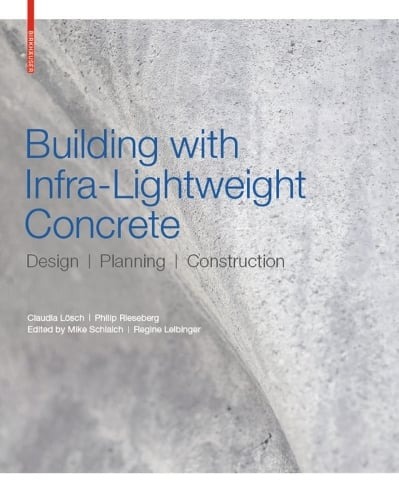
Building with infra-lightweight concrete : design, planning, construction
Infra-lightweight concrete combines the structural and thermal insulation functions of the building envelope in one monolithic material, thus providing new design options. The handbook is a practical guide to building with this new type of material.
