


تحسين النتائح
ترتيب حسب
من
الى


This edited volume explores the legal, economic and political context for the debate about intellectual property rights for traditional knowledge and genetic resources and critically analyses the theory and practice of access and benefits sharing efforts around the world. The book also investigates the current flashpoints—the David and Goliath battle between Monsanto and Percy Schmeiser over farmers’ rights; the dispute over coexistence of GM and organic production; and the ownership and control of human genetic materials stored in human gene banks around the world.
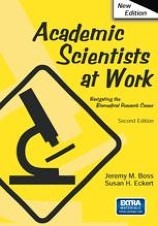
This book focuses on the three aspects of promotion in an academic setting: Scholarship, Teaching, and Service. Templates and worksheets designed to help you navigate your career with point-by-point instructions on how to complete them are provided. In addition to updating the contents of the previous version, this second edition includes a dozen articles written by the authors on managing your career that first appeared in Science's Next Wave.

This book shines a light on how and why academic work became entwined with air travel, and what can be done to change academia’s flying habit. The starting point of the book is that flying is only one means of scholarly communication among many, and that the state of the planet now obliges us to shift to other means.

As part of its review of competition law that started in the late 1990s, the European Commission proposes to revise its interpretation and application of the Treaty’s prohibition of abuses of dominant positions. Also, it has instigated a debate about the promotion of private enforcement of EC competition law. The chapters in this volume critically appraise the Commission’s proposals, including the most recent ones. The authors also highlight the repercussions of the proposed ‘more economic approach’ to abuses of dominant positions on private litigants’ opportunities to bring damages actions in national courts for such abuses.
Abductive Reasoning: Logical Investigations into Discovery and Explanation is a much awaited original contribution to the study of abductive reasoning, providing logical foundations and a rich sample of pertinent applications.

Walter Charleton (1619-1707) has been widely depicted as a natural philosopher whose intellectual career mirrored the intellectual ferment of the ‘scientific revolution’. Instead of viewing him as a barometer of intellectual change, I examine the previously unexplored question of his identity as a physician. Examining three of his vernacular medical texts, this volume considers Charleton’s thoughts on anatomy, physiology and the methods by which he sought to understand the invisible processes of the body.
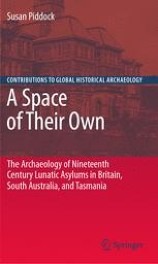
The history of lunatic asylums – what do we really know about them? Films and television programs have portrayed them as places of horror where the patients are restrained and left to listen to the cries of their fellow inmates in despair. But what was the world of nineteenth century lunatic asylums really like? Are these images true? This book will explore this world using the techniques of historical archaeology and history.

In this concise, clearly written, and sympathetic new book, Elizabeth Kavaler suggests that a new approach to UT disorders is long overdue. One of the surprisingly small number of female urologists practicing in the U.S., Dr. Kavaler explains what these diseases are and what patients can do to get themselves diagnosed and treated properly. But more than that, she extends an expert, sympathetic, and skilled hand to those who’ve been distressed, isolated, and embarrassed for too long.
The author undertakes an investigation into the history of Russian Freemasonry that has not been attempted previously. Her premise is that the Russian Enlightenment shows peculiar features, which prevent the application of the interpretative framework commonly used for the history of western thought. The author deals with the development of early Russian masonry, the formation of the Novikov circle in Moscow, the ‘programme’ of Rosicrucianism and the character of its Russian variant and, finally, the clash between the Rosicrucians and the State. The author concludes that the defenders of the Ancien Régime were not wrong. In fact the democratic behaviour, the critical attitude, the practice of participation, the freedom of thought, the tolerance for the diversity, the search for a direct communication with the divinity.
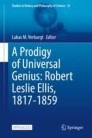
Written by a diverse team of experts, the chapters in the book’s first part contain in-depth examinations of, among other things, Ellis’s family, education, Bacon scholarship and mathematical contributions. The second part consists of annotated transcriptions of a selection of Ellis’s diaries and correspondence. Taken together, A Prodigy of Universal Genius: Robert Leslie Ellis, 1817–1859 is a rich resource for historians of science, historians of mathematics and Victorian scholars alike.

This book is designed to provide both novice and experienced users of PBL with resources for designing and implementing problem-based management education. The book provides the novice with useful theoretical and practical background on how to design a PBL curriculum, use PBL in a classroom, and develop PBL materials. At the same time, the book will challenge experienced users of PBL and case teaching to extend their applications through the use of learning technologies and more systematic approaches to assessment and curriculum design. Finally, the volume includes a set of sample PBL materials that provide readers with in-dept examples of what a PBL unit looks like and how it may be employed in the classroom.

Integrates decision-making and environmental science. For ecologists it will bridge the gap to economics. For practitioners in environmental economics and management it will be a major reference book. It probably contains the largest collection available of expressions and basic equations that are used in environmental sciences. Applying these expressions as "rules-of-thumb" will give participants in a decision-making process a common platform for discussion and arbitration.

This book challenges this widespread assumption and demonstrates how primal religions have something significant to offer on virtually every theme discussed in the philosophy of religion. Through this book the primal religous tradition stakes its claim for a place at the table.Despite the absence of written texts, primal religions have an implicit philosophy.This study shows how materials of primal religious experience can be incorporated in the categories of modern philosophy of religion. The book contends that the primal perspective can widen and deepen the horizons of philosophy of religion and enhance the philosophical appreciation of religion as a universal phenomenon.

This book contains the edited version of the invited lectures that were delivered by prominent researchers at UTL. This book brings together in a review manner a comprehensive summary of high quality research contri- tions across basic and applied sciences. The contributing papers are organized around the following major areas: – Emergent areas (Nanosciences, Quantic Computations and Infor- tion, Risk and Volatility in Financial Markets); – Basic Sciences (Mathematics, Physics, Chemistry and Materials); – Social Sciences, Economics and Management Sciences; – Life Sciences and Biotechnology; – Engineering and Technologies – Nature, Environment and Sustainability; – Public Health, Food Quality and Safety; – Health and Sport Sciences; – Urbanism, Transports, Architecture, Arts and Design.
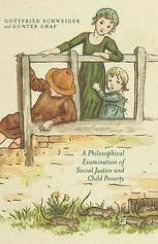
Investigates child poverty from a philosophical perspective. It identifies the injustices of child poverty, relates them to the well-being of children, and discusses who has a moral responsibility to secure social justice for children.

This book provides insight on how to interpret capability in ageing – one’s individual ability to perform actions in order to reach goals one has reason to value – from a multidisciplinary approach. the book describes this demographic trends as well as the large global challenges and important societal implications this will have such as a worldwide increase in the number of persons affected with dementia, and in the ratio of retired persons to those still in the labor market. Through contributions from many different research areas, it discussed how capability depends on interactions between the individual (e.g. health, genetics, personality, intellectual capacity), environment (e.g. family, friends, home, work place), and society (e.g. political decisions, ageism, historical period).
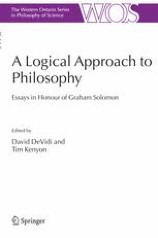
The papers in this collection are united by an approach to philosophy. They illustrate the manifold contributions that logic makes to philosophical progress, both by the application of formal methods to traditional philosophical problems and by opening up new avenues of inquiry as philosophers sort out the implications of new and often surprising technical results. Contributions include new technical results rich with philosophical significance for contemporary metaphysics, attempts to diagnose the philosophical significance of some recent technical results, philosophically motivated proposals for new approaches to negation, investigations in the history and philosophy of logic, and contributions to epistemology and philosophy of science that make essential use of logical techniques and results.

This book presents the findings of a study into the social shaping of reproductive genetics in Germany and Israel, two exceptionally interesting social settings, which share a traumatic history. ‘This is a unique and courageous book. Yael Hashiloni-Dolev studied the field of reproductive genetics in Israel and Germany, and found out that while in Germany social, cultural, legal and religious conditions restrict the selection of embryos based on prenatal diagnosis, it is strongly encouraged in Israel. This unexpected finding is brilliantly analyzed by the author. Thus this excellent book must be read and discussed by social scientists, human geneticists, genetic counsellors, bio ethicists and medical students.'

Explores the under-researched history of male mental illness from the mid-twentieth century. It argues that statistics suggesting women have been more vulnerable to depression and anxiety are misleading since they underplay a host of alternative presentations of 'distress' more common in men.
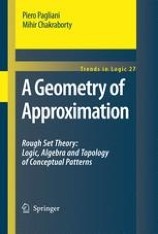
A Geometry of Approximation' addresses Rough Set Theory, a field of interdisciplinary research first proposed by Zdzislaw Pawlak in 1982, and focuses mainly on its logic-algebraic interpretation. The theory is embedded in a broader perspective that includes logical and mathematical methodologies pertaining to the theory, as well as related epistemological issues. Any mathematical technique that is introduced in the book is preceded by logical and epistemological explanations. Intuitive justifications are also provided, insofar as possible, so that the general perspective is not lost.

سوريا - اتستراد درعا - غباغب
+963-15 2050 - 15 860 380 /1/2/3 - 11 662 3900