



الصفحة 21
الصفحة 21
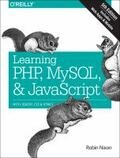
Learning PHP, MySQL & JavaScript : With jQuery, CSS & HTML5
You'll tackle dynamic web programming with the latest versions of today's core technologies: PHP, MySQL, JavaScript, CSS, HTML5, and key jQuery libraries.

Law and the Semantic Web : Legal Ontologies, Methodologies, Legal Information Retrieval, and Applications
As part of this objective, ICT (information and communication technologies) services should become available for every citizen, and for all schools, homes and businesses. The book you have in front of you is about Semantic Web technology and law. Law is something omnipresent; all citizens — at some points in their lives — have to deal with it. In addition, law involves a large group of professionals, and is a mul- billion business world wide. Information technology is important because it that can improve citizens’ interaction with law, as well as improve legal professionals’ work environment. Legal professionals dedicate a significant amount of their time to finding, reading, analyzing and synthesizing information in order to take decisions, and prepare advice and trials, among other tasks. As part of the “Semantic-Based Knowledge and Content Systems” Strategic Objective, the European Commission is funding projects to construct technology to make the Semantic Web vision come true. 1 The articles in this book are related to two current foci of the Strategic Objective : • Knowledge acquisition and modelling, capturing knowledge from raw information and multimedia content in webs and other distributed repositories to turn poorly structured information into machi- processable knowledge.

Lattice Hadron Physics
This series of lectures draws upon the developments made in recent years in implementing chirality on the lattice via the overlap formalism. These developments exploit chiral effective field theory in order to extrapolate lattice results to physical quark masses, new forms of improving operators to remove lattice artefacts, analytical studies of finite volume effects in hadronic observables, and state-of-the-art lattice calculations of excited resonances. This volume is designed to assist those outside the field who want quickly to becoming literate in these topics. So it is intended for graduate students and experienced researchers in other areas of hadronic physics to provide the background through which they can appreciate, if not become active in, contemporary lattice gauge theory and its applications to hadronic phenomena.

LATIN 2006 : Theoretical Informatics ; 7th Latin American Symposium, Valdivia, Chile, March 20-24, 2006, Proceedings
This book constitutes the refereed proceedings of the 7th International Symposium, Latin American Theoretical Informatics, LATIN 2006, held in March 2006. The 66 revised full papers presented together with seven invited papers were carefully reviewed and selected from 224 submissions. The papers presented are devoted to a broad range of topics in theoretical computer science with a focus on algorithmics and computations related to discrete mathematics as well as on cryptography, data compression and Web applications.

Laser Resonators and Beam Propagation : Fundamentals, Advanced Concepts, Applications
Optical Resonators provides a detailed discussion of the properties of optical resonators for lasers from basic theory to recent research. In addition to describing the fundamental theories of resonators such as geometrical optics, diffraction, and polarisation the characteristics of all important resonator schemes and their calculation are presented. Experimental examples, practical problems and a collection of measurement techniques support the comprehensive treatment of the subject. Optical Resonators is the only book currently available that provides a comprehensive overview of the the subject. Combined with the structure of the text and the autonomous nature of the chapters this work will be as suitable for those new to the field as it will be invaluable to specialists conducting research. This second edition has been enlarged by new sections on Q-switching and resonators with internal phase/amplitude control. In addition, the whole book has been brought up-to-date.

Large-Scale Knowledge Resources. Construction and Application ; 3rd International Conference on Large-Scale Knowledge Resources, LKR 2008, Tokyo, Japan, March 3-5, 2008. Proceedings
At the start of the 21st century,we are now well on the way to wards aknowled- intensive society, in which knowledge plays ever more important roles. Thus, research interest should inevitably shift from information to knowledge, with the problems of building, organizing, maintaining and utilizing knowledge - coming centralissues in a wide varietyof felds. The 21stCentury COE program “Framework for Systematization and Application of Large-scale Knowledge - sources (COE-LKR)” conducted by the Tokyo Institute of Technology is one of several early attempts worldwide to address these important issues. Inspired by this project, LKR2008 aimed at bringing together diverse contributions in cognitive science, computer science, education and linguistics to explore design, construction, extension, maintenance, validation and application of knowledge.

Languages, Methodologies and Development Tools for Multi-Agent Systems ; 1st International Workshop, LADS 2007, Durham, UK, September 4-6, 2007. Revised Selected Papers
Constitutes the thoroughly refereed post-workshop proceedings of the First International Workshop on Languages, Methodologies and Development Tools for Multi-Agent Systems, LADS 2007, held in Durham, UK, in September 2007. The workshop was part of MALLOW 2007, a federation of workshops on Multi-Agent Logics, Languages, and Organizations.

Languages and Compilers for Parallel Computing ; Vol. 2481 : 15th Workshop, LCPC 2002, College Park, MD, USA, July 25-27, 2002, Revised Papers
LCPC 2002 brought together over 60 researchers from academia and research institutions from many countries. The program of 26 papers was selected from 32 submissions. Each paper was reviewed by at least three Program Committee members and sometimes by additional reviewers. Prior to the workshop, revised versions of accepted papers were informally published on the workshop’s website and in a paper proceedings that was distributed at the meeting. This year, the workshopwas organizedinto sessions of papers on related topics, and each session consisted of two to three 30-minute presentations.Based on feedback from the workshop,the papers were revised and submitted for inclusion in the formal proceedings published in this volume. Two papers were presented at the workshop but later withdrawn from the ?nal proceedings by their authors. We were very lucky to have Bill Carlson from the Department of Defense give the LCPC 2002 keynote speech on “UPC: A C Language for Shared M- ory Parallel Programming.” Bill gave an excellent overview of the features and programming model of the UPC parallel programming language.

Languages and Compilers for High Performance Computing ; 17th International Workshop, LCPC 2004, West Lafayette, IN, USA, September 22-24, 2004, Revised Selected Papers
Cetus is a compiler infrastructure for the source-to-source transformation of programs. Since its creation nearly three years ago, it has grown to over 12,000 lines of Java code, been made available publically on the web, and become a basis for several research projects. We discuss our experience using Cetus for a selection of these research projects. The focus of this paper is not the projects themselves, but rather how Cetus made these projects possible, how the needs of these projects influenced the development of Cetus, and the solutions we applied to problems we encountered with the infrastructure. We believe the research community can benefit from such a discussion, as shown by the strong interest in the mini-workshop on compiler research infrastructures where some of this information was first presented.

Language Technologies for the Challenges of the Digital Age ; 27th International Conference, GSCL 2017, Berlin, Germany, September 13-14, 2017, Proceedings
Constitutes the refereed proceedings of the 27th biennial conference of the German Society for Computational Linguistics and Language Technology, GSCL 2017, held in Berlin, Germany, in September 2017, which focused on language technologies for the digital age. The 16 full papers and 10 short papers included in the proceedings were carefully selected from 36 submissions. Topics covered include text processing of the German language, online media and online content, semantics and reasoning, sentiment analysis, and semantic web description languages.

Landscape Analysis and Visualisation : Spatial Models for Natural Resource Management and Planning
This book presents a collection and synthesis of many of these perspectives — perhaps it could only be produced in a land urb- ised in the tiniest of pockets, and yet so daunting with respect to the way non-populated landscapes dwarf its cities. Many travel to Australia to its cities and never see the landscapes — but it is these that give the country its power and imagery. It is the landscapes that so impress on us the need to consider how our intervention, through activities ranging from resource exploitation and settled agriculture to climate change, poses one of the greatest crises facing the modern world. In this sense, Australia and its landscape provide a mirror through which we can glimpse the extent to which our intervention in the world threatens its very existence.

Knowledge-Based Intelligent Information and Engineering Systems ; Vol.3683 : 9th International Conference, KES 2005, Melbourne, Australia, September 14-16, 2005, Proceedings, Part III
The KES conference series has been established for almost a decade, and it cont- ues each year to attract participants from all geographical areas of the world, including Europe, the Americas, Australasia and the Paci?c Rim. The KES conferences cover a wide range of intelligent systems topics. The broad focus of the conference series is the theory and applications of intelligent systems. From a pure research ?eld, intel- gent systems have advanced to the point where their abilities have been incorporated into many business and engineering application areas. KES 2005 provided a valuable mechanism for delegates to obtain an extensive view of the latest research into a range of intelligent-systems algorithms, tools and techniques. The conference also gave de- gates the chance to come into contact with those applying intelligent systems in diverse commercial areas. The combination of theory and practice represented a unique opp- tunity to gain an appreciation of the full spectrum of leading-edge intelligent-systems activity. The papers for KES 2005 were either submitted to invited sessions, chaired and organized by respected experts in their ?elds, or to a general session, managed by an extensive International Program Committee, or to the Intelligent Information Hiding and Multimedia Signal Processing (IIHMSP) Workshop, managed by an International Workshop Technical Committee.

Knowledge-Based Intelligent Information and Engineering Systems ; Vol.3682 : 9th International Conference, KES 2005, Melbourne, Australia, September 14-16, 2005, Proceedings, Part II
The KES conference series has been established for almost a decade, and it cont- ues each year to attract participants from all geographical areas of the world, including Europe, the Americas, Australasia and the Paci?c Rim. The KES conferences cover a wide range of intelligent systems topics. The broad focus of the conference series is the theory and applications of intelligent systems. rom a pure research ?eld, intel- gent systems have advanced to the point where their abilities have been incorporated into many business and engineering...

Knowledge-Based Intelligent Information and Engineering Systems ; Vol. 4253 ; 10th International Conference, KES 2006, Bournemouth, UK, October 9-11 2006, Proceedings, Part III
Delegates and friends, we are very pleased to extend to you the sincerest of welcomes to this, the 10th International Conference on Knowledge Based and Intelligent Information and Engineering Systems at the Bournemouth International Centre in Bournemouth, UK, brought to you by KES International. This is a special KES conference, as it is the 10th in the series, and as such, it represents an occasion for celebration and an opportunity for reflection. The first KES conference was held in 1997 and was organised by the KES conference founder, Lakhmi Jain. In 1997, 1998 and 1999 the KES conferences were held in Adelaide, Australia. In 2000 the conference moved out of Australia to be held in Brighton, UK; in 2001 it was in Osaka, Japan; in 2002, Crema near Milan, Italy; in 2003, Oxford, UK; in 2004, Wellington, New Zealand; and in 2005, Melbourne, Australia. The next two conferences are planned to be in Italy and Croatia. Delegate numbers have grown from about 100 in 1997, to a regular figure in excess of 500. The conference attracts delegates from many different countries, in Europe, Australasia, the Pacific Rim, Asia and the Americas, and may truly be said to be ‘International’.

Knowledge-Based Intelligent Information and Engineering Systems ; 12th International Conference, KES 2008, Zagreb, Croatia, September 3-5, 2008, Proceedings, Part III
Constitutes the refereed proceedings of the 12th International Conference on Knowledge-Based Intelligent Information and Engineering Systems, KES 2008, held in Zagreb, Croatia, in September 2008.The 316 revised papers presented were carefully reviewed and selected. The papers present a wealth of original research results from the field of intelligent information processing in the broadest sense; topics covered in the third volume are intelligent data processing in process systems and plants; neural information processing for data mining; soft computing approach to management engineering; advanced groupware; agent and multi-agent systems.

Knowledge-Based Intelligent Information and Engineering Systems ; 12th International Conference, KES 2008, Zagreb, Croatia, September 3-5, 2008, Proceedings, Part II
The papers present a wealth of original research results from the field of intelligent information processing in the broadest sense; topics covered in the second volume are artificial intelligence driven engineering design optimization; biomedical informatics: intelligent information management from nanomedicine to public health; communicative intelligence; computational intelligence for image processing and pattern recognition; computational intelligence in human cancer research; computational intelligence techniques for Web personalization; computational intelligent techniques for bioprocess modelling, monitoring and control; intelligent computing for Grid.

Knowledge-Based Intelligent Information and Engineering Systems ; 12th International Conference, KES 2008, Zagreb, Croatia, September 3-5, 2008, Proceedings, Part I
The 316 revised papers presented were carefully reviewed and selected. The papers present a wealth of original research results from the field of intelligent information processing in the broadest sense; topics covered in the first volume are artificial neural networks and connectionists systems; fuzzy and neuro-fuzzy systems; evolutionary computation; machine learning and classical AI; agent systems; knowledge based and expert systems; intelligent vision and image processing; knowledge management, ontologies, and data mining; Web intelligence, text and multimedia mining and retrieval; and intelligent robotics and control.

Knowledge science, engineering and management ; 2nd International Conference, KSEM 2007, Melbourne, Australia, November 28-30, 2007, Proceedings
Constitutes the refereed proceedings of the Second International Conference on Knowledge Science, Engineering and Management, KSEM 2007, held in Melbourne, Australia, in November 2007. The papers provide new ideas and report research results in the broad areas of knowledge science, knowledge engineering, and knowledge management.

Knowledge science, engineering and management ; 1st International Conference, KSEM 2006, Guilin, China, August 5-8, 2006, Proceedings
Here are the refereed proceedings of the First International Conference on Knowledge Science, Engineering and Management, KSEM 2006, held in Guilin, China in August 2006 in conjunction with PRICAI 2006. The book presents 51 revised full papers and 57 revised short papers together with 4 invited talks, reporting a wealth of new ideas and current research results in the broad areas of knowledge science, knowledge engineering, and knowledge management.

Knowledge mining : Proceedings of the NEMIS 2004 final conference
The book presents results from the application of knowledge mining techniques in various sector of the academic and indystrial research. The results are increased scientific understanding along with improvements in research quality and value.
