



الصفحة 206
الصفحة 206

Allelopathy in Sustainable Agriculture and Forestry
This book reports on the latest advances in allelopathy through the contributions of leading scientists in the field. The book addresses the history of allelopathy, the science of allelochemicals, and the application of allelopathy in agriculture and forestry. An emphasis on both methodology and application makes Allelopathy a truly practical reference for scientists, researchers and students of plant science, agriculture, forestry, terrestrial ecology and environmental science.
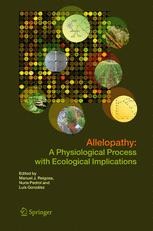
Allelopathy : A Physiological Process with Ecological Implications
This book provides the reader relevant information about actual knowledge about the process of allelopathy, covering all aspects from the molecular to the ecological level. Special relevance is given to the physiological and ecophysiological aspects of allelopathy. Several ecosystems are studied and methodological considerations are taken into account in several different chapters. The book has been written to be useful both for Ph.D. students and for senior researchers, so the chapters include all necessary information to be read by beginners, but they also include a lot of useful information and discussion for the initiated.
Allelochemicals : Biological Control of Plant Pathogens and Diseases
This book is organized around the indication that allelochemicals can be employed for biological control of plant pathogens and plant diseases. Specifically, this volume focuses on (i) discovery and development of natural product based fungicides for agriculture, (ii) direct use of allelochemicals as well as indirect effects through cover crops and organic amendments for plant parasitic pest control and (iii) application of allelopathy in pest management.
All of Nonparametric Statistics
The goal of this text is to provide the reader with a single book where they can find a brief account of many, modern topics in nonparametric inference. The book is aimed at Master's level or Ph.D. level students in statistics, computer science, and engineering. It is also suitable for researchers who want to get up to speed quickly on modern nonparametric methods.This text covers a wide range of topics including: the bootstrap, the nonparametric delta method, nonparametric regression, density estimation, orthogonal function methods, minimax estimation, nonparametric confidence sets, and wavelets. The book has a mixture of methods and theory.
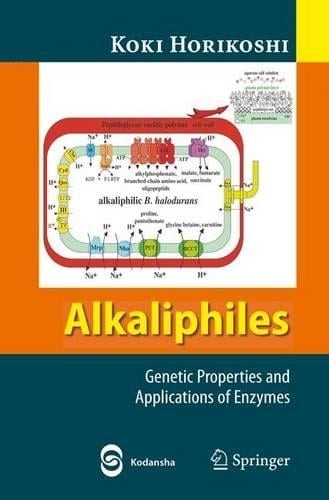
Alkaliphiles : Genetic properties and applications of enzymes
The pioneering work of Dr. Koki Horikoshi on the discovery, research and applications of alkaliphilic bacteria are described here in their entirety. The isolation, distribution and taxonomy of alkaliphilic microorganisms as well as their cell structure and physiology are discussed for a basic understanding of these entities. The molecular biology and genome sequencing of some alkaliphilic bacterial strains are also presented. Part II of the volume focuses on enzymes of alkaliphiles and their applications. These include alkaline proteases, starch-degrading enzymes and numerous others. Some of these enzymes are currently in wide commercial use as laundry detergent additives and in wastewater treatment. Alkaliphiles are a relatively recent field of research that will no doubt provide avenues to a wide range of further discoveries and applications for a new generation of workers in bioscience and technology.

Algoritmi : Lo spirito dell’informatica = Algorithms : The spirit of information technology
Algorithms are the heart of computer science and mathematics, since without them the use of computers would not be possible. In this book, which in its English edition has been a longtime bestseller, Harel and Feldmann answer all questions relating to this topic. They talk about the evaluation, correctness and effectiveness of algorithms, but also clarify some doubts about programming techniques and also refer to the very current discussion on quantum computing. The book is useful both as a basic text for an introductory university course in computer science, and as a general introduction to natural sciences, mathematics or engineering.
Algorithms on Trees and Graphs : With Python Code
Introduces graph algorithms on an intuitive basis followed by a detailed exposition using structured pseudocode, with correctness proofs as well as worst-case analyses. Centered around the fundamental issue of graph isomorphism, the content goes beyond classical graph problems of shortest paths, spanning trees, flows in networks, and matchings in bipartite graphs. Advanced algorithmic results and techniques of practical relevance are presented in a coherent and consolidated way. Numerous illustrations, examples, problems, exercises, and a comprehensive bibliography support students and professionals in using the book as a text and source of reference. Furthermore, Python code for all algorithms presented is given in an appendix. Topics and features: Algorithms are first presented on an intuitive basis, followed by a detailed exposition using structured pseudocode / Correctness proofs are given, together with a worst-case analysis of the algorithms / Full implementation of all the algorithms in Python / An extensive chapter is devoted to the algorithmic techniques used in the book / Solutions to all the problems

Algorithms in Bioinformatics ; Vol.4175 : 6th International Workshop, WABI 2006, Zurich, Switzerland, September 11-13, 2006, Proceedings
This book constitutes the refereed proceedings of the 6th International Workshop on Algorithms in Bioinformatics, WABI 2006, held in Zurich, Switzerland in September 2006 in the course of the ALGO 2006 conference meetings. The 36 revised full papers presented were carefully reviewed and selected from 100 submissions. All current issues of algorithms in bioinformatics are addressed, ranging from mathematical tools to experimental studies of approximation algorithms and reports on significant computational analyses. Numerous biological problems are dealt with, including genetic mapping, sequence alignment and sequence analysis, phylogeny, comparative genomics, and protein structure. For the first time also machine-learning approaches along with combinatorial optimization are covered.
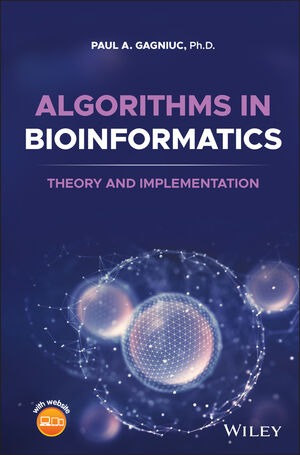
Algorithms in Bioinformatics : Theory and Implementation
Explores a comprehensive and insightful treatment of the practical application of bioinformatic algorithms in a variety of fields. Delivers a fulsome treatment of some of the main algorithms used to explain biological functions and relationships. It introduces readers to the art of algorithms in a practical manner which is linked with biological theory and interpretation. The book covers many key areas of bioinformatics, including global and local sequence alignment, forced alignment, detection of motifs, Sequence logos, Markov chains or information entropy. Other novel approaches are also described, such as Self-Sequence alignment, Objective Digital Stains (ODSs) or Spectral Forecast and the Discrete Probability Detector (DPD) algorithm. Readers will also benefit from the inclusion of: A detailed presentation of new methods, such as Self-sequence alignment, Objective Digital Stains and Spectral Forecast ; A treatment of sequence alignment, including local sequence alignment, global sequence alignment and forced sequence alignment with full implementations ; Discussions of position-specific weight matrices, including the count, weight, relative frequencies, and log-likelihoods matrices ; A detailed presentation of the methods related to Markov Chains as well as a description of their implementation in Bioinformatics and adjacent fields ; An examination of information and entropy, including sequence logos and explanations related to their meaning ; A chapter on philosophical transactions that allows the reader a broader view of the prediction process ; Extensive worked examples with detailed case studies that point out the meaning of different results
Algorithms and Models for the Web-Graph ; 5th International Workshop, WAW 2007, San Diego, CA, USA, December 11-12, 2007, Proceedings
The book address a wide variety of topics related to the study of the Web-graph such as random graph models for the Web-graph, PageRank analysis and computation, decentralized search, local partitioning algorithms,and traceroute sampling. The Web-graph has been the focal point of a tremendous amount of research for more than a decade. The view of the Web as a graph has great practical importance and has also generated much interesting theoretical work.
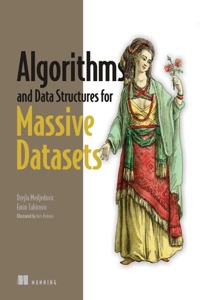
Algorithms and data structures for massive datasets
Learn: Probabilistic sketching data structures for practical problems Choosing the right database engine for your application Evaluating and designing efficient on-disk data structures and algorithms Understanding the algorithmic trade-offs involved in massive-scale systems Deriving basic statistics from streaming data Correctly sampling streaming data Computing percentiles with limited space resources Algorithms and Data Structures for Massive Datasets reveals a toolbox of new methods that are perfect for handling modern big data applications. You'll explore the novel data structures and algorithms that underpin Google, Facebook, and other enterprise applications that work with truly massive amounts of data. These effective techniques can be applied to any discipline, from finance to text analysis. Graphics, illustrations, and hands-on industry examples make complex ideas practical to implement in your projects--and there's no mathematical proofs to puzzle over. Work through this one-of-a-kind guide, and you'll find the sweet spot of saving space without sacrificing your data's accuracy. About the Technology Standard algorithms and data structures may become slow--or fail altogether--when applied to large distributed datasets. Choosing algorithms designed for big data saves time, increases accuracy, and reduces processing cost.
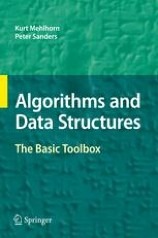
Algorithms and data structures : The Basic Toolbox
This book is a concise introduction addressed to students and professionals familiar with programming and basic mathematical language.
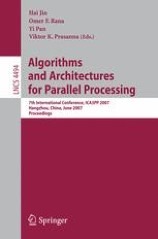
Algorithms and architectures for parallel processing ; 7th International Conference, ICA3PP 2007, Hangzhou, China, June 11-14, 2007, Proceedings
The improvements in computation and communication capabilities have enabled the creation of demanding applications in critical domains such as the environment, health, aerospace, and other areas of science and technology. Similarly, new classes of applications are enabled by the availability of heterogeneous large-scale distributed systems which are becoming available nowadays (based on technologies such as grid and peer-to-peer systems).Parallel computing systems exploit a large diversity of computer architectures, from supercomputers, shared-memory or distributed-memory multi processors, to local networks and clusters of p- sonal computers. With the recent emergence of multi core architectures, parallel computing is now set to achieve “mainstream” status. Approaches that have been advocated by parallel computing researchers in the past are now being utilized in a number of software libraries and hardware systems that are available for everyday use. Parallel computing ideas have also come to dominate areas such as multi user gaming (especially in the development of gaming engines based on “cell” arc- tectures).

Algorithmic information theory : Mathematics of digital information processing
This book treats the Mathematics of many important areas in digital information processing.It covers, in a unified presentation, five topics: Data Compression, Cryptography, Sampling (Signal Theory), Error Control Codes, Data Reduction. The thematic choices are practice-oriented. So, the important final part of the book deals with the Discrete Cosine Transform and the Discrete Wavelet Transform, acting in image compression. The presentation is dense, the examples and numerous exercises are concrete. The pedagogic architecture follows increasing mathematical complexity.
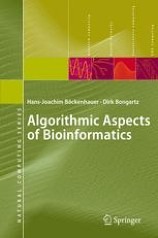
Algorithmic Aspects of Bioinformatics
Advances in bioinformatics and systems biology require improved computational methods for analyzing data, while progress in molecular biology is in turn influencing the development of computer science methods. This book introduces some key problems in bioinformatics, discusses the models used to formally describe these problems, and analyzes the algorithmic approaches used to solve them. After introducing the basics of molecular biology and algorithmics, Part I explains string algorithms and alignments; Part II details the field of physical mapping and DNA sequencing; and Part III examines the application of algorithmics to the analysis of biological data. Exciting application examples include predicting the spatial structure of proteins, and computing haplotypes from genotype data. This book describes topics in detail and presents formal models in a mathematically precise, yet intuitive manner, with many figures and chapter summaries, detailed derivations, and examples. It is well suited as an introduction into the field of bioinformatics, and will benefit students and lecturers in bioinformatics and algorithmics, while also offering practitioners an update on current research topics.
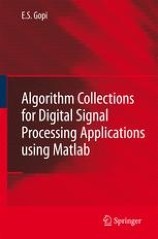
Algorithm collections for digital signal processing applications using matlab
The Algorithms such as SVD, Eigen decomposition, Gaussian Mixture Model, HMM etc. are scattered in different fields. There is the need to collect all such algorithms for quick reference. Also there is the need to view such algorithms in application point of view. Algorithm Collections for Digital Signal Processing Applications using MATLAB attempts to satisfy the above requirement. Also the algorithms are made clear using MATLAB programs.
Algèbre, Chapitre 4 à 7 = Algebra, Chapter 4 to 7
The Mathematics Elements of Nicolas BOURBAKI aim to provide a rigorous, systematic presentation without prerequisites of mathematics from their foundations. Deals in particular with extensions of fields and Galois theory. It includes the chaptires: 4. Polynomials and rational fractions; 5. Commutative bodies 6. Orderly groups and bodies; 7. Modules on the main rings

Algèbre commutative : Chapitres 1à 4 = = Commutative algebra : Chapters 1 to 4
Nicolas BOURBAKI's Elements of Mathematics aim to provide a rigorous, systematic presentation without prerequisites of mathematics from their foundations. This first volume of the Book of Commutative Algebra, the seventh Book of the treatise, is devoted to the fundamental concepts of commutative algebra. It includes the chapters, Flat modules, Localization, Graduations, filtrations and topologies, First associated ideals and primary decomposition, It also contains historical notes. This volume is a reprint of the 1969 edition.

Algebraic Theory of Locally Nilpotent Derivations
This book explores the theory and application of locally nilpotent derivations, which is a subject of growing interest and importance not only among those in commutative algebra and algebraic geometry, but also in fields such as Lie algebras and differential equations. The author provides a unified treatment of the subject, beginning with 16 First Principles on which the entire theory is based. These are used to establish classical results, such as Rentschler’s Theorem for the plane, right up to the most recent results, such as Makar-Limanov’s Theorem for locally nilpotent derivations of polynomial rings.
Algebraic Cycles, Sheaves, Shtukas, and Moduli : Impanga Lecture Notes
The articles in this volume are devoted to: - moduli of coherent sheaves. - principal bundles and sheaves and their moduli. - new insights into Geometric Invariant Theory. - stacks of shtukas and their compactifications. - algebraic cycles vs. commutative algebra. - Thom polynomials of singularities. - zero schemes of sections of vector bundles.
