



الصفحة 204
الصفحة 204
A Platform-Centric Approach to System-on-Chip (SOC) Design
The book proposes a new methodology for realizing platform-centric design of complex systems, and presents a detailed plan for its implementation. The proposed plan allows component vendors, system integrators and product developers to collaborate effectively and efficiently to create complex products within budget and schedule constraints.
A New Foundation of Physical Theories
Written in the tradition of G. Ludwig’s groundbreaking works, this book aims to clarify and formulate more precisely the fundamental ideas of physical theories. By introducing a basic descriptive language of simple form, in which it is possible to formulate recorded facts, ambiguities of physical theories are avoided as much as possible. In this approach the field of physics that should be described by a theory is determined by basic concepts only, i.e. concepts that can be explained without a theory.In this context the authors introduce a new concept of idealization and review the process of discovering new concepts. They believe that, when the theories are formulated within an axiomatic basis, solutions can be found to many difficult problems such as the interpretation of physical theories, the relations between theories as well as the introduction of physical concepts.
A Natural Introduction to Probability Theory
According to Leo Breiman (1968), probability theory has a right and a left hand. The right hand refers to rigorous mathematics, and the left hand refers to ‘pro- bilistic thinking’. The combination of these two aspects makes probability theory one of the most exciting ?elds in mathematics. One can study probability as a purely mathematical enterprise, but even when you do that, all the concepts that arisedo haveameaningontheintuitivelevel.Forinstance,wehaveto de?newhat we mean exactly by independent events as a mathematical concept, but clearly, we all know that when we ?ip a coin twice, the event that the ?rst gives heads is independent of the event that the second gives tails.
A Modern Introduction to Probability and Statistics : Understanding Why and How
A Modern Introduction to Probability and Statistics has numerous quick exercises to give direct feedback to the students. In addition the book contains over 350 exercises, half of which have answers, of which half have full solutions. A website at www.springeronline.com/1-85233-896-2 gives access to the data files used in the text, and, for instructors, the remaining solutions. The only pre-requisite for the book is a first course in calculus; the text covers standard statistics and probability material, and develops beyond traditional parametric models to the Poisson process, and on to useful modern methods such as the bootstrap.

A Modern Course in Aeroelasticity
In this new edition, the fundamental material on classical linear aeroelasticity has been revised. Also new material has been added describing recent results on the research frontiers dealing with nonlinear aeroelasticity as well as major advances in the modelling of unsteady aerodynamic flows using the methods of computational fluid dynamics and reduced order modeling techniques.
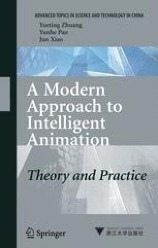
A Modern Approach to Intelligent Animation : Theory and Practice
Part of the new series, Advanced Topics in Science and Technology in China, this book discusses concepts, theory, and core technologies of intelligent theory and human animation, including video based human animation, and intelligent technology of motion data management and reusing. It introduces systems developed to demonstrate the technologies of video based animation. Each chapter is independent. Lively pictures and demos will be presented to make the theory and technologies more understandable.
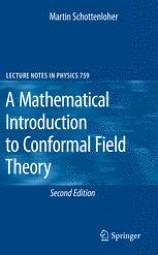
A Mathematical Introduction to Conformal Field Theory
The first part of this book gives a detailed, self-contained and mathematically rigorous exposition of classical conformal symmetry in n dimensions and its quantization in two dimensions. In particular, the conformal groups are determined and the appearance of the Virasoro algebra in the context of the quantization of two-dimensional conformal symmetry is explained via the classification of central extensions of Lie algebras and groups. The second part surveys some more advanced topics of conformal field theory, such as the representation theory of the Virasoro algebra, conformal symmetry within string theory, an axiomatic approach to Euclidean conformally covariant quantum field theory and a mathematical interpretation of the Verlinde formula in the context of moduli spaces of holomorphic vector bundles on a Riemann surface.
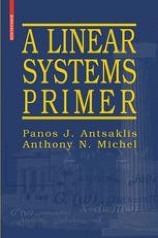
A Linear Systems Primer
Based on a streamlined presentation of the authors' successful work Linear Systems, this textbook provides an introduction to systems theory with an emphasis on control. The material presented is broad enough to give the reader a clear picture of the dynamical behavior of linear systems as well as their advantages and limitations. Fundamental results and topics essential to linear systems theory are emphasized. The emphasis is on time-invariant systems, both continuous- and discrete-time.

A Life (Un)Worthy of Living: Reproductive Genetics in Israel and Germany
This book presents the findings of a study into the social shaping of reproductive genetics in Germany and Israel, two exceptionally interesting social settings, which share a traumatic history. ‘This is a unique and courageous book. Yael Hashiloni-Dolev studied the field of reproductive genetics in Israel and Germany, and found out that while in Germany social, cultural, legal and religious conditions restrict the selection of embryos based on prenatal diagnosis, it is strongly encouraged in Israel. This unexpected finding is brilliantly analyzed by the author. Thus this excellent book must be read and discussed by social scientists, human geneticists, genetic counsellors, bio ethicists and medical students.'

A History of Radionuclide Studies in the UK : 50th Anniversary of the British Nuclear Medicine Society
The British Nuclear Medicine Society celebrates its 50th Anniversary with this booklet, which reflects the research of many of the pioneers in the use of radionuclides for the diagnosis and therapy of human disease. Since 1949 there have been remarkable advances in radionuclide techniques and imaging equipment: from the first devices “home-made” in the many physics departments throughout the UK, to the sophisticated multimodality imagers now in everyday use in Nuclear Medicine. The BNMS has been instrumental in promoting the use of radionuclide techniques in the investigation of pathology by supporting and providing education, research and guidelines on the optimum use of radiation to help patients.
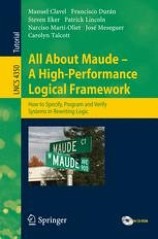
A High-Performance Logical Framework -- All About Maude : How to Specify, Program, and Verify Systems in Rewriting Logic
This book gives a comprehensive account of Maude, a language and system based on rewriting logic. Many examples are used throughout the book to illustrate the main ideas and features of Maude, and its many possible uses. Maude modules are rewrite theories. Computation with such modules is - cient deduction by rewriting. Because of its logical basis and its initial model semantics,aMaude module defines a precise mathematical model.This means that Maude and its formal tool environment can be used in three, mutually reinforcing ways: • as a declarative programming language; • as an executable formal specification language; and • as a formal verification system. Maude’s rewriting logic is simple, yet very expressive. This gives Maude good representational capabilities as a semantic framework to formally represent a wide range of systems, including models of concurrency, distributed al- rithms, network protocols, semantics of programming languages, and models of cell biology. Rewriting logic is also an expressive universal logic,making Maude a fiexible logical framework in which many difierent logics and - ference systems can be represented and mechanized. This makes Maude a useful metatool to build many other tools, including those in its own formal tool environment. Thanks to the logic’s simplicity and the use of advanced semi-compilation techniques, Maude has a high-performance implementation, making it competitive with other declarative programming languages.

A handful of happiness herbs
Depression is a multifactorial disorder that affects millions of people worldwide, and none of the currently available therapeutics can completely cure it. Thus, there is a need for developing novel, potent, and safer agents. Recent medicinal chemistry findings on the structure and function of the serotonin 2A (5-HT2A) receptor facilitated design and discovery of novel compounds with antidepressant action. The consumption of cocoa-based products rich in bioactive compounds can be related to decreased risk in coronary heart problems, hypertension, diabetes, and depression...

A Guide to Lead-free Solders : Physical Metallurgy and Reliability
While tin/lead solders have dominated the electronics industry for many years, environmental considerations and new legislation are forcing change. Backed by more than ten years of research in Pb-free solders, many electronics manufacturers are poised for conversion. A Guide to Lead-free Solders is intended as a tool to help industry as it moves into a new era in the production and use of solders. An overview of the principles of soldering technology is provided beginning with the theory underlying each concept. Focusing on the most up-to-date methods for testing and characterization, these theories are then reinforced by experimental examples and industrial applications.
A Geometry of Approximation : Rough Set Theory: Logic, Algebra and Topology of Conceptual Patterns
A Geometry of Approximation' addresses Rough Set Theory, a field of interdisciplinary research first proposed by Zdzislaw Pawlak in 1982, and focuses mainly on its logic-algebraic interpretation. The theory is embedded in a broader perspective that includes logical and mathematical methodologies pertaining to the theory, as well as related epistemological issues. Any mathematical technique that is introduced in the book is preceded by logical and epistemological explanations. Intuitive justifications are also provided, insofar as possible, so that the general perspective is not lost.
A General introduction to data analytics
A guide to the principles and methods of data analysis that does not require knowledge of statistics or programming. A guide to the reasoning behind data mining techniques. A unique illustrative example that extends throughout all the chapters. Exercises at the end of each chapter and larger projects at the end of each of the text’s two main parts
A First Course in Statistical Inference
Offers a modern and accessible introduction to Statistical Inference, the science of inferring key information from data. Aimed at beginning undergraduate students in mathematics, it presents the concepts underpinning frequentist statistical theory. Written in a conversational and informal style, this concise text concentrates on ideas and concepts, with key theorems stated and proved. Detailed worked examples are included and each chapter ends with a set of exercises, with full solutions given at the back of the book. Examples using R are provided throughout the book, with a brief guide to the software included. Topics covered in the book include: sampling distributions, properties of estimators, confidence intervals, hypothesis testing, ANOVA, and fitting a straight line to paired data.
A First Course in Modular Forms
This book introduces the theory of modular forms with an eye toward the Modularity Theorem: All rational elliptic curves arise from modular forms. The topics covered include: • elliptic curves as complex tori and as algebraic curves, • modular curves as Riemann surfaces and as algebraic curves, • Hecke operators and Atkin–Lehner theory, • Hecke eigenforms and their arithmetic properties, • the Jacobians of modular curves and the Abelian varieties associated to Hecke eigenforms, • elliptic and modular curves modulo p and the Eichler–Shimura Relation, • the Galois representations associated to elliptic curves and to Hecke eigenforms. As it presents these ideas, the book states the Modularity Theorem in various forms, relating them to each other and touching on their applications to number theory.

A First Course in Harmonic Analysis
This book is a primer in harmonic analysis using an elementary approach. Its first aim is to provide an introduction to Fourier analysis, leading up to the Poisson Summation Formula. Secondly, it makes the reader aware of the fact that both, the Fourier series and the Fourier transform, are special cases of a more general theory arising in the context of locally compact abelian groups. The third goal of this book is to introduce the reader to the techniques used in harmonic analysis of noncommutative groups. There are two new chapters in this new edition. One on distributions will complete the set of real variable methods introduced in the first part. The other on the Heisenberg Group provides an example of a group that is neither compact nor abelian, yet is simple enough to easily deduce the Plancherel Theorem.

A Field Guide to Algebra
Focuses on the structure of fields and is intended for a second course in abstract algebra. Besides providing proofs of the transcendance of pi and e, the book includes material on differential Galois groups and a proof of Hilbert's irreducibility theorem. The reader will hear about equations, both polynomial and differential, and about the algebraic structure of their solutions. In explaining these concepts, the author also provides comments on their historical development and leads the reader along many interesting paths. In addition, there are theorems from analysis: as stated before, the transcendence of the numbers pi and e, the fact that the complex numbers form an algebraically closed field, and also Puiseux's theorem that shows how one can parametrize the roots of polynomial equations, the coefficients of which are allowed to vary. There are exercises at the end of each chapter, varying in degree from easy to difficult. To make the book more lively, the author has incorporated pictures from the history of mathematics, including scans of mathematical stamps and pictures of mathematicians.

A Course on Mathematical Logic
This is a short, distinctive, modern, and motivated introduction to mathematical logic for senior undergraduate and beginning graduate students in mathematics and computer science. Any mathematician who is interested in knowing what logic is concerned with and who would like to learn Gödel’s incompleteness theorems should find this book particularly convenient. The treatment is thoroughly mathematical, and the entire subject has been approached like a branch of mathematics. Serious efforts have been made to make the book suitable for the classroom as well as for self-reading. The book does not strive to be a comprehensive encyclopedia of logic. Still, it gives essentially all the basic concepts and results in mathematical logic. The book prepares students to branch out in several areas of mathematics related to foundations and computability such as logic, axiomatic set theory, model theory, recursion theory, and computability.
