



الصفحة 201
الصفحة 201

AI home decorator
Presents the development of “DesignMate”, an innovative AI home decorator application designed to revolutionize interior design. With three main features powered by artificial intelligence, DesignMate simplifies and enhances the process of home decoration. The first feature leverages an Autoregressive transformer model trained on the extensive 3Dfront dataset to suggest room decor based on room layouts. The second feature employs Generative Adversarial Networks (GANs) to enhance the colors of specific room layouts. The third feature introduces an expert system that tailors decor options to user-entered conditions. DesignMate also introduces an integrated e-commerce platform dedicated to furniture, offering users a wide selection of high-quality items that perfectly complement their preferred room designs.
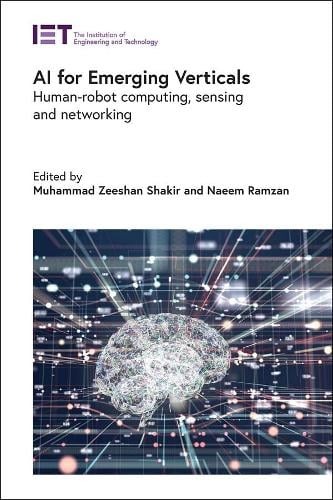
AI For Emerging Verticals : Human-robot computing, sensing and networking
Artificial intelligence (AI) and machine learning (ML) will play a major role. By adopting AI software and services, businesses can create predictive strategies, enhance their capabilities, better interact with customers, and streamline their business processes. Explores novel concepts and cutting-edge research and developments towards designing these fully automated advanced digital systems. Fostered by technological advances in artificial intelligence and machine learning, such systems potentially have a wide range of applications in robotics, human computing, sensing and networking. The chapters focus on models and theoretical approaches to guarantee automation in large multi-scale implementations of AI and ML systems; protocol designs to ensure AI systems meet key requirements for future services such as latency; and optimisation algorithms to leverage the trusted distributed and efficient complex architectures.
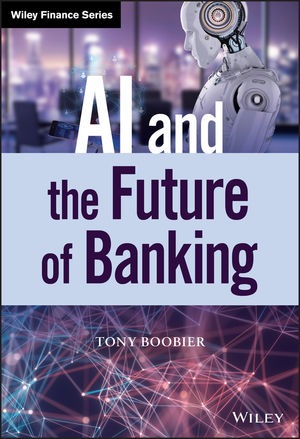
AI and the future of banking
Across its entire breadth and depth, the banking industry is at the forefront of investigating Advanced Analytics and AI technology for use in a broad range of applications, such as customer analytics and providing wealth advice for clients. AI and the Future of Banking provides new and established banking industry professionals with the essential information on the implications of data and analytics on their roles, responsibilities and personal career development.
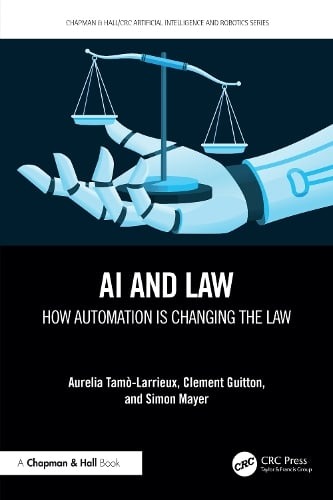
AI and law : How automation is changing the law
Provides insights into how AI is changing legal practice, government processes, and individuals’ access to those processes, encouraging each of us to consider how technological advances are changing the legal system. Particularly, and distinct from current debates on how to regulate AI, this books focuses on how the progressive merger between computational methods and legal rules changes the very structure and application of the law itself.
AI and IoT for smart city applications
Provides a valuable combination of relevant research works on developing smart city ecosystem from the artificial intelligence (AI) and Internet of things (IoT) perspective. The technical research works presented here are focused on a number of aspects of smart cities: smart mobility, smart living, smart environment, smart citizens, smart government, and smart waste management systems as well as related technologies and concepts. This edited book offers critical insight to the key underlying research themes within smart cities, highlighting the limitations of current developments and potential future directions.

AI 2020 : Advances in artificial intelligence ; 33rd Australasian Joint Conference, AI 2020, Canberra, ACT, Australia, November 29–30, 2020, Proceedings
Constitutes the proceedings of the 33rd Australasian Joint Conference on Artificial Intelligence, AI 2020, held in Canberra, ACT, Australia, in November 2020.* The 36 full papers presented in this volume were carefully reviewed and selected from 57 submissions. The paper were organized in topical sections named: applications; evolutionary computation; fairness and ethics; games and swarms; and machine learning.
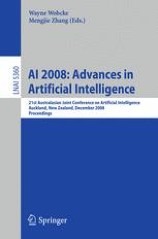
AI 2008 : Advances in artificial intelligence ; 21st Australasian Joint Conference on Artificial Intelligence Auckland, New Zealand, December 1-5, 2008. Proceedings
This book constitutes the refereed proceedings of the 21th Australasian Joint Conference on Artificial Intelligence, AI 2008, held in Auckland, New Zealand, in December 2008.
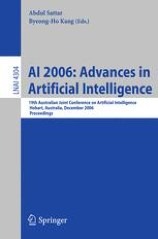
AI 2006 : Advances in artificial intelligence ; 19th Australian Joint Conference on Artificial Intelligence, Hobart, Australia, December 4-8, 2006, Proceedings
This volume contains the proceedings of the 19th Australian Joint Conference on Artificial Intelligence (AI 2006) held at Hobart, Australia. AI 2006 received a record number of submissions, a total of 689 submissions from 35 countries. The papers in this volume give an indication of recent advances in artificial int- ligence. The topics covered include Machine Learning, Robotics, AI Applications, Planning, Agents, Data Mining and Knowledge Discovery, Cognition and User Interface, Vision and Image Processing, Information Retrieval and Search, AI in the Web, Knowledge Representation, Knowledge-Based Systems, and Neural Networks.
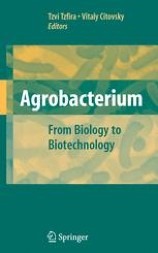
Agrobacterium : From Biology to Biotechnology
Agrobacterium’ is a comprehensive book on Agrobacterium research, including its history, application, basic biology discoveries, and effects on human society. Although the book largely focuses on providing a detailed review of virtually all molecular events of the genetic transformation process, it also provides coverage of ethical and legal issues relevant to the use of Agrobacterium as a "genetic transformation machine". The result is an all-inclusive text which readers—including scientists and students involved in plant genetic engineering—will find useful as a reference source for all major aspects of the Agrobacterium-mediated genetic transformation of plant and non-plant organisms.

Agricultural Medicine : A Practical Guide
Covering both injury prevention and environmental h- ards, this innovative work is a practical guide for the family physician wo- ing in a rural area. The contents demonstrate the vitality of agromedicine and the vision and insight of the authors. The chapters on farm chemicals provide thorough information about the many types of chemicals commonly used in the farm environment, how they are applied, and the principles of diagnosis and management for family physicians treating patients for toxic chemical exposure.
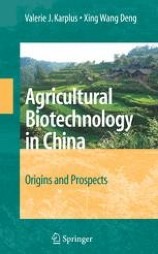
Agricultural Biotechnology in China : Origins and Prospects
Building on a long tradition of agricultural advances, Chinese scientists have applied biotechnology techniques to develop hundreds of novel crop varieties suited to local farming conditions and challenges.Agricultural Biotechnology in China: Origins and Prospects is a comprehensive examination of how the origins of biotechnology research agendas, along with the effectiveness of the seed delivery system and biosafety oversight, help to explain current patterns of crop development and adoption in China. Based on firsthand insights from China’s laboratories and farms, Valerie Karplus and Dr. Xing Wang Deng explore the implications of China’s investment for the nation’s rural development, environmental footprint, as well as its global scientific and economic competitiveness.
Aging, shaking, and cracking of infrastructures : From mechanics to concrete dams and nuclear structures
Focuses on the safety assessment of existing structures subjected to multi-hazard scenarios through advanced numerical methods. Whereas the focus is on concrete dams and nuclear containment structures, the presented methodologies can also be applied to other large-scale ones. This book is composed of seven sections: Fundamentals: theoretical coverage of solid mechnics, plasticity, fracture mechanics, creep, / seismology, dynamic analysis, probability and statistics / Damage: that can affect concrete structures, such as cracking of concrete, AAR, chloride ingress, and rebar corrosion, / Finite Element: formulation for both linear and nonlinear analysis including stress, heat and fracture mechanics, / Engineering Models: for soil/fluid-structure interaction, uncertainty quantification, probablilistic and random finite element analysis, machine learning, performance based earthquake engineering, ground motion intensity measures, seismic hazard analysis, capacity/fragility functions and damage indeces, / Applications to dams through potential failure mode analyses, risk-informed decision making, deterministic and probabilistic examples, / Applications to nuclear structures through modeling issues, aging management programs, critical review of some analyses, / Other applications and case studies: massive RC structures and bridges, detailed assessment of a nuclear containment structure evaluation for license renewal.
Agile software engineering
This textbook presents the crucial issues in software engineering using the agile approach to software development - one of the mainstream paradigms for the management of software projects and one that is being applied more and more extensively.
Agile software construction
Agile software is a means of putting the software first while at the same time reacting to these user requirements in a flexible and agile way.Agile Software Construction covers the emerging methods and approaches (including extreme programming, feature-driven development and adaptive software development), that are loosely described as "Agile" and shows how to apply them effectively to software development projects. It shows how to plan, organise and develop systems using agile techniques, and highlights some of the problems that may be encountered.
Agile Development with the ICONIX Process : People, Process, and Pragmatism
Describes how to apply ICONIX Process (a minimal, use case-driven modeling process) in an agile software project. It's full of practical advice for avoiding common agile pitfalls. Further, the book defines a core agile subset so those of you who want to get agile need not spend years learning to do it. Instead, you can simply read this book and apply the core subset of techniques. The book follows a real-life .NET/C# project from inception and UML modeling, to working code through several iterations. You can then go on-line to compare the finished product with the initial set of use cases. The book also introduces several extensions to the core ICONIX Process, including combining test-driven development (TDD) with up-front design to maximize both approaches (with examples using Java and JUnit). And the book incorporates persona analysis to drive the projects goals and reduce requirements churn.

Aggregation functions : A guide for practitioners
Aggregation of information is of primary importance in the construction of knowledge based systems in various domains, ranging from medicine, economics, and engineering to decision-making processes, artificial intelligence, robotics, and machine learning. This book gives a broad introduction into the topic of aggregation functions, and provides a concise account of the properties and the main classes of such functions, including classical means, medians, ordered weighted averaging functions, Choquet and Sugeno integrals, triangular norms, conorms and copulas, uninorms, nullnorms, and symmetric sums. It also presents some state-of-the-art techniques, many graphical illustrations and new interpolatory aggregation functions. A particular attention is paid to identification and construction of aggregation functions from application specific requirements and empirical data. This book provides scientists, IT specialists and system architects with a self-contained easy-to-use guide, as well as examples of computer code and a software package. It will facilitate construction of decision support, expert, recommender, control and many other intelligent systems.
Agents and peer-to-peer computing ; Vol. 4118 : 4th International workshop, AP2PC 2005, Utrecht, Netherlands, J uly 25, 2005, Revised and Invited Papers
Constitutes the thoroughly refereed post-proceedings of the 4th International Workshop on Agents and Peer-to-Peer Computing, AP2PC 2005, held in Utrecht, Netherlands, July 2005, in the context of the 4th International Joint Conference on Autonomous Agents and Multi-Agent Systems, AAMAS 2005. The 13 revised full papers cover trust and reputation, P2P infrastructure, semantic infrastructure, as well as community and mobile applications.
Agents and peer-to-peer computing ; 5th International workshop, AP2PC 2006, Hakodate, Japan, May 9, 2006, Revised and Invited Papers
This book constitutes the thoroughly refereed post-workshop proceedings of the 5th International Workshop on Agents and Peer-to-Peer Computing, AP2PC 2006, held in Hakodate, Japan, in May 2006, in the context of the 5th International Joint Conference on Autonomous Agents and Multi-Agent Systems, AAMAS 2006.
Agent-oriented software engineering VII ; 7th International Workshop, AOSE 2006, Hakodate, Japan, May 8, 2006, Revised and Invited Papers
Software architectures that contain many dynamically interacting components, each with their own thread of control, and engaging in complex coordination protocols, are difficult to correctly and efficiently engineer. Agent-oriented modelling techniques are important for supporting the design and development of such applications.The book is organized in topical sections on modelling and design of agent systems, modelling open agent systems, formal reasoning about designs, as well as testing, debugging and evolvability.
Agent-oriented software engineering V ; 5th International workshop, AOSE 2004, New York, NY, USA, July 2004, revised selected papers
The explosive growth of application areas such as electronic commerce, ent- prise resource planning and mobile computing has profoundly and irreversibly changed our views on software systems. Nowadays, software is to be based on open architectures that continuously change and evolve to accommodate new components and meet new requirements. Software must also operate on di?- ent platforms, without recompilation, and with minimal assumptions about its operating environment and its users. Furthermore, software must be robust and ¨ autonomous, capable of serving a naive user with a minimum of overhead and interference. Agent concepts hold great promise for responding to the new realities of software systems. They o?er higher-level abstractions and mechanisms which address issues such as knowledge representation and reasoning, communication, coordination, cooperation among heterogeneous and autonomous parties, p- ception, commitments, goals, beliefs, and intentions, all of which need conceptual modelling. On the one hand, the concrete implementation of these concepts can lead to advanced functionalities.
