


تحسين النتائح
ترتيب حسب
من
الى


This book focuses on processing, modeling, and visualization of anisotropy information…

Many difficult scientific discovery tasks can only be solved in interactive ways, by combining intelligent computing techniques with intuitive and adaptive user interfaces. It is inevitable to use human intelligence in scientific discovery systems: human eyes can capture complex patterns and relationships, along with detecting the exceptional cases in a data set; the human brain can easily manipulate perceptions to make decisions. Ambient intelligence is about this kind of ubiquitous and autonomous human interaction with information. Scientific discovery is a process of creative perception and communication, dealing with questions like: how do we significantly reduce information while maintaining meaning, or how do we extract patterns from massive data and growing data resources. Originating from the SIGCHI Workshop on Ambient Intelligence for Scientific Discovery, this state-of-the-art survey is organized in three parts: new paradigms in scientific discovery, ambient cognition, and ambient intelligence systems. Many chapters share common features such as interaction, vision, language, and biomedicine.
This book presents the state-of-the-practice in successfully engineered self-organizing systems, and examines ways to balance design and self organization in the context of applications.
This explosion is a result of the growing use of electronic media. But what is data mining (DM)? A Web search using the Google search engine retrieves many (really many) definitions of data mining. We include here a few interesting ones. One of the simpler definitions is: “As the term suggests, data mining is the analysis of data to establish relationships and identify patterns” [1]. It focuses on identifying relations in data. Our next example is more elaborate: An information extraction activity whose goal is to discover hidden facts contained in databases. Using a combination of machine learning, statistical analysis, modeling techniques and database technology, data mining finds patterns and subtle relationships in data and infers rules that allow the prediction of future results. Typical applications include market segmentation, customer profiling, fraud detection, evaluation of retail promotions, and credit risk analysis .
Divided into three parts. The first part discusses the architectural and design aspects of Flex 3 application development. It explains the internals of a Flex 3 application and advocates a few best practices to fine-tune your application to ensure maximum performance. It includes tutorials on creating custom components, data binding, and creating AIR-powered desktop applications. The second part concentrates on effectively integrating Flex 3 with server- and client-side technologies. Techniques for integration with Java and PHP are covered in detail, and content covering interaction with client-side technologies is also included. After reading the chapter on JavaScript integration, you will be ready to create applications that can use Ajax and Flex 3 together. The third and final part of the book is a unique and eclectic mix of some advanced topics like mash-ups, collaborative applications, 3D rendering, highly interactive visualization, and audio and video streaming.

This book presents up-to-date analyses of community-based approaches to sustainable resource management of SEPLS (socio-ecological production landscapes and seascapes) in areas where a harmonious relationship between the natural environment and the people who inhabit it is essential to ensure community and environmental well-being as well as to build resilience in the ecosystems that support this well-being.
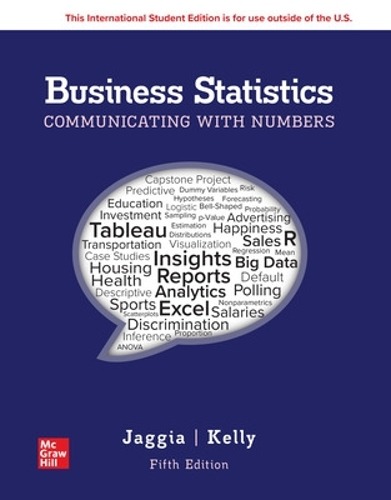
Takes a comprehensive and contemporary approach that aims to bridge the gap between how statistics is taught and applied in the business world. this title not only prepares students in basic statistics but also gets them excited about further exploration of data analytics. the authors emphasize communicating with numbers rather than number crunching, through relatable case studies with relevant statistical methods and takeaways. this title incorporates timely examples from various fields, reinforces core features from previous editions, uses Excel and R to analyze data and solve problems, and includes new improvements, such as a revised chapter on data visualization, an exclusive chapter on logistic regression, and digital enhancements such as a big data capstone project with algorithmic exercises that span across multiple chapt.

The visualization of light in space, its effect on model cubature and scenery, is one of the great challenges in architectural rendering. This is a decisive reason for the use of 3D tools – both for architecture offices and students. This volume features a number of exercises that enable the reader to learn how to light architecture models correctly. Complete virtual 3D scenarios are included that allow for the step-by-step construction of a lighting set up with the help of Cinema 4D® software that creates a realistic spatial impression. The tutorials are complemented by a chapter on the use of Cinema 4D®, importing CAD models and light sources as well as shadow types, which have been revised and expanded in the 9.5 and 10 version.

This book and the exhibition it tells arise from the desire to communicate how beautiful and interesting a discipline such as mathematics can be and to bring the curious "visitor" closer to it. Here are collected the texts and images of the four thematic areas (topology, maximum and minimum, visualization and symmetry) developed in the exhibition and illustrated taking inspiration from the reality of Trento and its territory.
Divided into three parts - theory, method and implementation, this book starts with a summary of the state-of-the-art in mobile technologies. It also introduces a conceptual framework of mobile cartography with the emphasis on mobile usage context. It is accompanied by a CD-ROM which contains the PDF-Files in colour.
It addresses methods and techniques for topics that range from design and rendering, context modelling, personalisation, multimodal interaction to usability test. Instead of striving for a seamless coverage of all essential theoretical and technical issues with an equal depth and extent, we attempt to pinpoint a number of research highlights and representative development activities at universities, research institutions and so- ware industry. The operational prototypes and platforms reported in the book are on the one hand outcome and feasibility proof of various approaches. On the other hand, they serve as a new starting point for the refinement of user interfaces and iterative usability tests.
Provides for the first time a general overview of research activities related to location and map-based services. These activities have emerged over the last years, especially around issues of positioning, spatial modelling, cartographic communication as well as in the fields of ubiquitious cartography, geo-pervasive services, user-centered modelling and geo-wiki activities. Topics cover an enormous range with heterogenous relationships to the main book issues. Whilst contemporary cartography aims at looking at new and efficient ways for communicating spatial information the development and availability of technologies like mobile networking, mobile devices or short-range sensors lead to interesting new possibilities for achieving this aim.
R is rapidly growing in popularity as the environment of choice for data analysis and graphics both in academia and industry. Lattice brings the proven design of Trellis graphics (originally developed for S by William S. Cleveland and colleagues at Bell Labs) to R, considerably expanding its capabilities in the process. Lattice is a powerful and elegant high level data visualization system that is sufficient for most everyday graphics needs, yet flexible enough to be easily extended to handle demands of cutting edge research. Written by the author of the lattice system, this book describes it in considerable depth, beginning with the essentials and systematically delving into specific low levels details as necessary. No prior experience with lattice is required to read the book, although basic familiarity with R is assumed.
This book explores the possibilities of applying the theories of complexity and self-organization developed to account for various phenomena in the natural science to artifacts traditionally the realm of humanities and social sciences. The emphasis of this volume is on the development of cities and the impact of these methods on urban simulation methods.
In this book, we aim at urging the development of data-based methods and methodologies for interdisciplinary and creative communications for solving emerging social problems. The reader shall view the direction to combine three methodological frameworks: data mining, data sharing, and communication in the contexts of sciences and businesses.

For this book, the editors invited and called for contributions from indispensable research areas relevant to "chance discovery," which has been defined as the discovery of events significant for making a decision, and studied since 2000. From respective research areas as artificial intelligence, mathematics, cognitive science, medical science, risk management, methodologies for design and communication, the invited and selected authors in this book present their particular approaches to chance discovery. The chapters here show contributions to identifying rare or hidden events and explaining their significance, predicting future trends, communications for scenario development in marketing and design, identification effects and side-effects of medicines, etc.
Block coplolymers have been studied for several decades, a period that has been punctuated by a number of books and review articles on the topic. Despite this history, the subject is far from exhausted and, if anything, has experienced a strong renewal in recent years. This has been speartheaded by a vast variety of new block copolymers, the important development of powerful visualization techniques, AFM in particular, that have become readily available, as well as motivating visions of nanotechnological applications. In this context, this new two-volume book, with its focus on the most recent developments in the area, is timely,
Block copolymers have been studied for several decades, a period that has been punctuated by a number of books and review articles on the topic. Despite this history, the subject is far from exhausted and, if anything, has experienced a strong renewal in recent years. This has been spearheaded by a vast variety of new block copolymers, the important development of powerful visualization techniques, AFM in particular, that have become readily available, as well as motivating visions of nanotechnological applications. In this context, this new two-volume book, with its focus on the most recent developments in the area, is timely
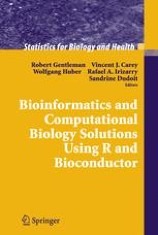
Bioconductor is a widely used open source and open development software project for the analysis and comprehension of data arising from high-throughput experimentation in genomics and molecular biology. Bioconductor is rooted in the open source statistical computing environment R. This volume's coverage is broad and ranges across most of the key capabilities of the Bioconductor project, including: Importation and preprocessing of high-throughput data from microarray, proteomic, and flow cytometry platforms / Curation and delivery of biological metadata for use in statistical modeling and interpretation. / Statistical analysis of high-throughput data, including machine learning and visualization,modeling and visualization of graphs and networks. This book is a dynamic document. Code underlying all of the computations that are shown is made available on a companion website, and readers can reproduce every number, figure, and table on their own computers.
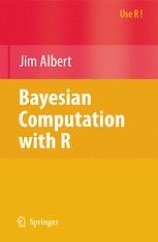
R's open source nature, free availability, and large number of contributor packages have made R the software of choice for many statisticians in education and industry. Bayesian Computation with R introduces Bayesian modeling by the use of computation using the R language.

سوريا - اتستراد درعا - غباغب
+963-15 2050 - 15 860 380 /1/2/3 - 11 662 3900