


تحسين النتائح
ترتيب حسب
من
الى


This collection of essays by some of the most prominent Catholic bioethicists addresses the Pope’s statements, the moral issues surrounding artificial feeding and hydration, the refusal of treatment, and the ethics of care for those at the end of life.
This book provides the first explicit case study for an application of the method of reflective equilibrium (RE), using it to develop and defend a precautionary principle. It thereby makes an important and original contribution to questions of philosophical method and methodology. The book shows step-by-step how RE is applied, and develops a methodological framework which will be useful for everyone who wishes to use reflective equilibrium. With respect to precautionary principles, the book demonstrates how a rights-based precautionary principle can be constructed and defended.
This book explores the social history of the anti-vivisection movement in Britain from its nineteenth-century beginnings until the 1960s. It discusses the ethical principles that inspired the movement and the socio-political background that explains its rise and fall. Opposition to vivisection began when medical practitioners complained it was contrary to the compassionate ethos of their profession. Christian anti-cruelty organizations took up the cause out of concern that callousness among the professional classes would have a demoralizing effect on the rest of society. As the nineteenth century drew to a close, the influence of transcendentalism, Eastern religions and the spiritual revival led new age social reformers to champion a more holistic approach to science, and dismiss reliance on vivisection as a materialistic oversimplification.
This book brings together authoritative voices in animal and environmental ethics, who address the many different facets of changing human-animal relationships in the Anthropocene. As we are living in complex times, the issue of how to establish meaningful relationships with other animals under Anthropocene conditions needs to be approached from a multitude of angles. This book offers the reader insight into the different discussions that exist around the topics of how we should understand animal agency, how we could take animal agency seriously in farms, urban areas and the wild, and what technologies are appropriate and morally desirable to use regarding animals. This book is of interest to both animal studies scholars and environmental ethics scholars, as well as to practitioners working with animals, such as wildlife managers, zookeepers, and conservation biologists.
This book provides an introduction into the ethics of robots and artificial intelligence. The book was written with university students, policy makers, and professionals in mind but should be accessible for most adults. The book is meant to provide balanced and, at times, conflicting viewpoints as to the benefits and deficits of AI through the lens of ethics. As discussed in the chapters that follow, ethical questions are often not cut and dry. Nations, communities, and individuals may have unique and important perspectives on these topics that should be heard and considered. While the voices that compose this book are our own, we have attempted to represent the views of the broader AI, robotics, and ethics communities.
The two volumes of Altering Nature consider the complex ways that concepts of 'nature' and 'the natural' are understood and the relevance of those understandings to discussions of biotechnology.Volume Two, Religion, Biotechnology, and Public Policy, reviews recent religious and ethical analyses of four specific areas of biotechnology: assisted reproduction, genetic therapy and enhancement, human-machine incorporation, and biodiversity. It identifies and explores the richer normative themes that inform particular debates and suggests ways that policy choices in biotechnology may be illuminated by devoting greater attention to religious perspectives.
Volume One, Concepts of 'Nature' and 'The Natural' in Biotechnology Debates, offers nuanced accounts of the ways that nature is invoked and interpreted, both descriptively and prescriptively, by different disciplines, including perspectives from spirituality and religion, philosophy, science and medicine, law and economics, and aesthetics. In the context of that broad discussion.
This book provides an exploration of the consequences of the ontological differences between natural and social objects (sometimes described as objects of nature and objects of thought) in the workings of causal and agency relationships.

Intellectual origins & orientations We begin by providing an overview of Bourdieu’s life as a scholar and a public intellectual. The numerous obituaries and memorial tributes that have appeared following Bourdieu’s untimely death have revealed something of his life and career, but few have stressed the intersection of his social origins, career trajectory, and public intellectual life with the changing political and social context of France. This is precisely what David Swartz’s “In memoriam” attempts to accomplish. In it he emphasizes the coincidence of Bourdieu’s young and later adulthood with the period of decolonization, the May 1968 French university crisis, the opening up of France to privatization of many domains previously entrusted to the state (l’état providence), and, most threatening to post-World War II reforms, the emergence of globalization as the hegemonic structure of the 21st century.
The present volume is a continuation of the series Contemporary Philosophy (International Institute of Philosophy). As with the earlier volumes in the series, the present chronicles purport to give a survey of significant trends in contemporary philosophy. This volume on Aesthetics, containing nineteen surveys, shows the variety of approaches to Aesthetics in various cultures. The close connection between aesthetics and religion and between aesthetics and ethics is emphasized in several contributions.

The book examines international aspects, the personification of stakeholders, the predominance of values and ethics for CEOs and the inefficient safeguards of the stakeholders' interests. The book presents new vehicles for the safeguard of those interests, such as the Internet, Transparency, Ethical Funds and Activist Associations, and future activist vehicles, such as the Supervision Board and the Institute of Ethics.

presents a systemic analysis of Spinoza’s philosophy and challenges the traditional views. It deals with Spinoza’s concepts of substance, truth conditions, attributes, and the first, second, and supreme grades of knowledge. Based upon an analysis of the relevant details in all of Spinoza’s philosophical works, reveals many important points, including the following: Spinoza’s system is not, nor is meant to be, a foundational-deductive system but was meant to be a coherent system of a network model. Spinoza’s reality is not made in the image of a mathematical model. Imaginatio, the first grade of knowledge, and ratio, the second grade, are parts or properties of the supreme grade of knowledge, scientia intuitiva, which is their essence.
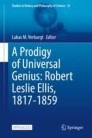
Written by a diverse team of experts, the chapters in the book’s first part contain in-depth examinations of, among other things, Ellis’s family, education, Bacon scholarship and mathematical contributions. The second part consists of annotated transcriptions of a selection of Ellis’s diaries and correspondence. Taken together, A Prodigy of Universal Genius: Robert Leslie Ellis, 1817–1859 is a rich resource for historians of science, historians of mathematics and Victorian scholars alike.
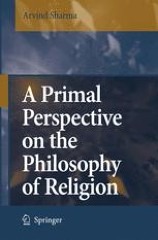
This book challenges this widespread assumption and demonstrates how primal religions have something significant to offer on virtually every theme discussed in the philosophy of religion. Through this book the primal religous tradition stakes its claim for a place at the table.Despite the absence of written texts, primal religions have an implicit philosophy.This study shows how materials of primal religious experience can be incorporated in the categories of modern philosophy of religion. The book contends that the primal perspective can widen and deepen the horizons of philosophy of religion and enhance the philosophical appreciation of religion as a universal phenomenon.
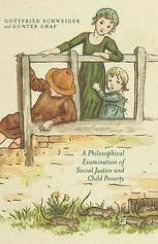
Investigates child poverty from a philosophical perspective. It identifies the injustices of child poverty, relates them to the well-being of children, and discusses who has a moral responsibility to secure social justice for children.
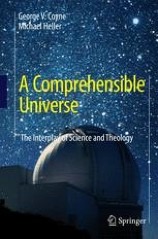
Why is our world comprehensible? This question seems so trivial that few people have dared to ask it. In this book we explore the deep roots of the mystery of rationality. The inquiry into the rationality of the world began over two-and-a-half-thousand years ago, when a few courageous people tried to understand the world with the help of reason alone, rejecting the comforting fabric of myth and legend.
This book helps readers combine history, politics, and ethics to address the most pressing problem facing the world today: environmental survival. In A Climate of Justice, Marvin Brown connects the environmental crisis to basic questions of economic, social, and racial justice. Brown shows how our current social climate maintains systemic injustices, and he uncovers resources for change through a civic ethics of repair and reciprocity.

سوريا - اتستراد درعا - غباغب
+963-15 2050 - 15 860 380 /1/2/3 - 11 662 3900