



الصفحة 2
الصفحة 2

Integration of AI and OR Techniques in Constraint Programming for Combinatorial Optimization Problems ; 4th International Conference, CPAIOR 2007, Brussels, Belgium, May 23-26, 2007, Proceedings
This book constitutes the refereed proceedings of the 4th International Conference on Integration of AI and OR Techniques in Constraint Programming for Combinatorial Optimization Problems, CPAIOR 2007, held in Brussels, Belgium in May 2007.

Green human resource management research : Issues, trends, and challenges
This book, engaging SDGs 4 and 8, among others, examines green HRM from a variety of perspectives. Divided into three sections, it explores the process of human resource acquisition, the connection between green HRM practice and employee behavior, and international perspectives of green HRM.

Foundation of semantic web technologies
Concentrates on Semantic Web technologies standardized by the World Wide Web Consortium: RDF and SPARQL enable data exchange and querying, RDFS and OWL provide expressive ontology modeling, and RIF supports rule-based modeling. The text also describes methods for specifying, querying, and reasoning with ontological information. In addition, it explores topics that are clearly beyond foundations, such as tools, applications, and engineering aspects.

Évaluation des troubles neuropsychologiques en vie quotidienne = Assessment of neuropsychological disorders in daily life
Neurological diseases such as stroke, head trauma, Alzheimer's disease pose a public health problem. They affect all ages, from children to the elderly. They affect the possibilities of autonomy in daily life, the possibilities of social or professional integration. In these pathologies, neuropsychological disorders: disorders of language, memory, attention, etc., are the source of crucial difficulties. Cognitive tests performed by psychologists are essential for their diagnosis, but do not on their own make it possible to prejudge the difficulties encountered by people in their everyday life. This book presents an original approach to neuropsychological disorders, by describing specific assessments describing difficulties in daily life, in order to better understand them and to quantify their impact. The second part of the book develops the consequences in clinical practice in particular populations - children and the elderly - or the social objective of the evaluation, in particular school integration, professional integration and driving. Finally, the relevance of these assessments in the context of recent laws on disabled people as well as the development of compensation for bodily injury after an accident are also discussed.

Discrete geometry for computer imagery ; Vol. 3429 ; 12th International Conference, DGCI 2005, Poitiers, France, April 11-13, 2005, Proceedings
This book constitutes the refereed proceedings of the 12th International Conference on Discrete Geometry for Computer Imagery, DGCI 2005, held in Poitiers, France in April 2005. The 36 revised full papers presented together with an invited paper were carefully reviewed and selected from 53 submissions. The papers are organized in topical sections on applications, discrete hierarchical geometry, discrete tomography, discrete topology, object properties, reconstruction and recognition, uncertain geometry, and visualization.

Discovery Science ; Vol. 4265 ; 9th International Conference, DS 2006, Barcelona, Spain, October 7-10, 2006, Proceedings
This LNAI volume, containing the proceedings of the 9th International C- ference onDiscoveryScience, is structured in three parts. The ?rstpart contains the papers/abstracts of the invited talks, the second part contains the accepted long papers, and the third part the accepted regular (short) papers. Out of 87 submitted papers, 23 were accepted for publication as long papers, and 18 as regular papers. All the submitted papers were reviewed by two or three ref- ees. In addition to the presentations of accepted papers, the DS 2006 conference program consisted of three invited talks, two tutorials, the collocated ALT 2006 conference and the Pascal Dialogues workshop.

Design and Optimization of Passive UHF RFID Systems
Radio Frequency Identification (RFID) is an automatic identification method, relying on storing and remotely retrieving data using devices called RFID tags or transponders. An RFID tag is an object that can be attached to or incorporated into a product, animal, or person for the purpose of identification using radio waves. Chip-based RFID tags contain silicon chips and antennas. Active tags require an internal power source, while passive tags do not.

Cryptographic hardware and embedded systems - CHES 2007 ; 9th International Workshop, Vienna, Austria, September 10-13, 2007, Proceedings
The papers collected in this volume represent cutting-edge world wide research in the rapidly evolving fields of crypto-hardware, fault-based and side-channel cryptanalysis, and embedded cryptography, at the crossing of academic and - dustrial research. The wide diversity of subjects appearing in these proceedings covers virtually all related areas and shows our e?orts to extend the scope of CHES more than usual.

Conceptual Structures : Inspiration and Application ; 14th International Conference on Conceptual Structures, ICCS 2006, Aalborg, Denmark, July 16-21, 2006, Proceedings
th The 14 International Conference on Conceptual Structures (ICCS 2006) was held in Aalborg, Denmark during July 16 – 21, 2006. Responding to the Call for Papers, we received 62 papers from 20 different countries, representing six different continents. This clearly indicates the international nature of the ICCS community as well as the widespread interest which was spawned by the previous conferences.

Concentration inequalities and model selection ; Ecole d'Eté de Probabilités de Saint-Flour XXXIII - 2003
An overview of a non-asymptotic theory for model selection is given here and some selected applications to variable selection, change points detection and statistical learning are discussed. This volume reflects the content of the course given by P. Massart in St. Flour in 2003.

Mass Vaccination : Global Aspects - Progress and Obstacles
Mass immunization is the blitzkrieg of vaccination practice. It serves to rapidly protect populations, both because of the high coverage achieved and because of the herd immunity thereby induced. However, as in war, mass immunization campaigns must be conducted intelligently, with careful strategy and strong attention to logistics of supply and deployment. If conducted badly, mass immunization may fail or even be counter-productive. In this volume, some of the most successful practitioners of mass im- nization tell us about its art and science. David Heymann and Bruce Aylward of WHO begin the book with a theoretical and practical overview of mass immunization. Michael Lane, who participated in the successful effort to eradicate smallpox relates how this was done using mass vaccination and other strategies. Application of mass immunization by the US military is c- ered by John Grabenstein and Remington Nevin, who have a large experience in these matters. Karen Noakes and David Salisbury recount the striking s- cesses of mass immunization in the United Kingdom. The global control of the clostridia that produce diphtheria toxin is described by Charles Vitek. Hepa- tis A is decreasing dramatically under the impact of large-scale vaccination, as Francis André illustrates. The French experience with Hepatitis B vac- nation has been mixed, and François Denis and Daniel Levy-Bruhl explain the circumstances. In?uenza vaccination is an annual example of large-scale campaigns, the complexity of which is recounted by Benjamin Schwartz and Pascale Wortley.
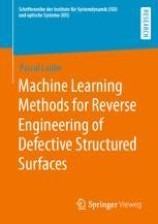
Machine learning methods for reverse engineering of defective structured surfaces
Pascal Laube presents machine learning approaches for three key problems of reverse engineering of defective structured surfaces: parametrization of curves and surfaces, geometric primitive classification and inpainting of high-resolution textures. The proposed methods aim to improve the reconstruction quality while further automating the process. The contributions demonstrate that machine learning can be a viable part of the CAD reverse engineering pipeline.

Machine Learning for Multimodal Interaction ; Vol.3361 : 1st International Workshop, MLMI 2004, Martigny, Switzerland, June 21-23, 2004, Revised Selected Papers
his book contains a selection of refereed papers presented at the 1st Wo- shop on Machine Learning for Multimodal Interaction (MLMI 2004), held at the “Centre du Parc,” Martigny, Switzerland, during June 21–23, 2004. The workshop was organized and sponsored jointly by three European projects, – AMI, Augmented Multiparty Interaction, http://www.amiproject.org – PASCAL, Pattern Analysis, Statistical Modeling and Computational Learning, http://www.pascal-network.org – M4, Multi-modal Meeting Manager, http://www.m4project.org as well as the Swiss National Centre of Competence in Research (NCCR): – IM2: Interactive Multimodal Information Management, http://www.im2.ch MLMI 2004 was thus sponsored by the European Commission and the Swiss National Science Foundation.

Machine learning challenges : Evaluating predictive uncertainty, Visual Object Classification, and Recognizing Textual Entailment, 1st Pascal Machine Learning Challenges Workshop, MLCW 2005, Southampton, UK, April 11-13, 2005, Revised Selected Papers
Constitutes the refereed post-proceedings of the First PASCAL Machine Learning Challenges Workshop, MLCW 2005. 25 papers address three challenges: finding an assessment base on the uncertainty of predictions using classical statistics, Bayesian inference, and statistical learning theory; second, recognizing objects from a number of visual object classes in realistic scenes; third, recognizing textual entailment addresses semantic analysis of language to form a generic framework for applied semantic inference in text understanding.
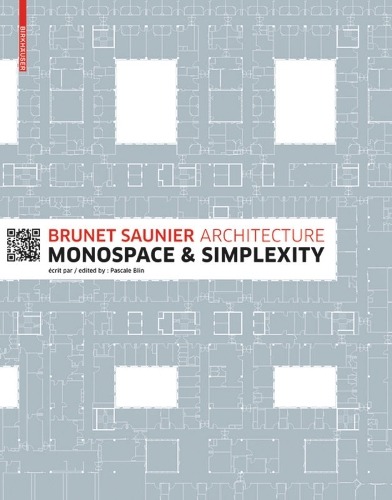
Brunet Saunier Architecture : Monospace and Simplexity
Discusses and analyzes this concept in detail, presenting trueto- scale floor plans, cross-sections, architectural views, and other information. The Monospace concept - which is based on a process of creative reduction down to essentials, i.e. "simplexity" - is adaptive rather than normative or prescriptive, and based on probabilities rather than determinism. It respects energy, even when it sometimes uses it. It takes the individual's experience into account, and starts from the position of the subject. It also permits changing perspectives. This design concept should attract attention far beyond the borders of France.

Biomimetic restorative dentistry ; Vol.1 : Fundamentals and basic clinical procedures
Takes the science of esthetic dental reconstruction to a new level both clinically and academically, and it offers all that a clinician could wish for in terms of indications and the classic clinical steps for tooth preparation, laboratory and CAD/CAM procedures, adhesive luting procedures, and maintenance. But above all, what makes this book so unique is the biomimetic principle—as such, restoring or mimicking the biomechanical, structural, and esthetic integrity of teeth is paramount. The core of this book centers on the application of the biomimetic principle in the form of bonded restorations using composite resins and ceramics, covering indications, treatment planning, diagnosis, tooth preparation and impression, laboratory and CAD/CAM procedures, final delivery, follow-up, maintenance, and repair. Written by a true master and artist, this book will undoubtedly inspire excellence in anyone who picks it up.

Astrobiology : Future perspectives
Astrobiology, a new exciting interdisciplinary research field, seeks to unravel the origin and evolution of life wherever it might exist in the Universe. The current view of the origin of life on Earth is that it is strongly connected to the origin and evolution of our planet and, indeed, of the Universe as a whole. We are fortunate to be living in an era where centuries of speculation about the two ancient and fundamental problems: the origin of life and its prevalence in the Universe are being replaced by experimental science. The subject of Astrobiology can be approached from many different perspectives. This book is focused on abiogenic organic matter from the viewpoint of astronomy and planetary science and considers its potential relevance to the origins of life on Earth and elsewhere. Guided by the review papers in this book, the concluding chapter aims to identify key questions to motivate future research and stimulate astrobiological applications of current and future research facilities and space missions. Today’s rich array of new spacecraft, telescopes and dedicated scientists promises a steady flow of discoveries and insights that will ultimately lead us to the answers we seek.
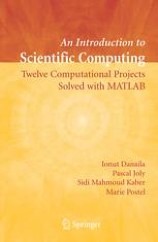
An Introduction to Scientific Computing : Twelve Computational Projects Solved with MATLAB
This book provides twelve computational projects aimed at numerically solving problems from a broad range of applications including Fluid Mechanics, Chemistry, Elasticity, Thermal Science, Computer Aided Design, Signal and Image Processing. For each project the reader is guided through the typical steps of scientific computing from physical and mathematical description of the problem, to numerical formulation and programming and finally to critical discussion of numerical results. Considerable emphasis is placed on practical issues of computational methods. The last section of each project contains the solutions to all proposed exercises and guides the reader in using the MATLAB scripts.
