


تحسين النتائح
ترتيب حسب
من
الى

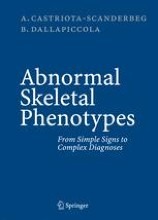
This book focuses on the radiographic changes of malformation syndromes and skeletal dysplasias. It is structured such that the reader can identify the radiographic changes and relate them to specific disease entities. The aim is to provide an essential, practical guideline to the recognition of the key radiographic signs for diagnosing malformation syndromes and skeletal dysplasias.

Today, the financial services sector is facing a period of rapid disruption and innovation, and artificial intelligence (AI) is at the heart of these changes. Artificial intelligence can be used to gather enormous amounts of data, detect abnormalities, and solve complex problems. Financial institutions are already experimenting extensively with AI strategies to enhance and streamline financial institutions, BSA and AML compliance, CRA requirements, fraud detection, and real estate valuations, all while reducing cost levels. This book looks at how artificial intelligence is affecting the financial services industry.

This book is written for members of the scholarly research community, and for persons involved in research evaluation and research policy. More specifically, it is directed towards the following four main groups of readers: – All scientists and scholars who have been or will be subjected to a quantitative assessment of research performance using citation analysis. – Research policy makers and managers who wish to become conversant with the basic features of citation analysis, and about its potentialities and limitations. – Members of peer review committees and other evaluators, who consider the use of citation analysis as a tool in their assessments. – Practitioners and students in the field of quantitative science and technology studies, informetrics, and library and information science. Citation analysis involves the construction and application of a series of indicators of the ‘impact’, ‘influence’ or ‘quality’ of scholarly work, derived from citation data, i.e. data on references cited in footnotes or bibliographies of scholarly research publications. Such indicators are applied both in the study of scholarly communication and in the assessment of research performance. The term ‘scholarly’ comprises all domains of science and scholarship, including not only those fields that are normally denoted as science – the natural and life sciences, mathematical and technical sciences – but also social sciences and humanities.

The book reports the proceedings of the 15th Italian workshop on neural networks issued by the Italian Society on Neural Networks SIREN. The longevity recipe of this conference stands in three main points that normally renders the reading of these proceedings so interesting as appealing. 1. The topics of the neural networks is considered an attraction pole for a set of researches centered on the inherent paradigm of the neural networks, rather than on a specific tool exclusively. Thus, the subsymbolic management of the data information content constitutes the key feature of papers in various fields such as Pattern Recognition, Stochastic Optimization, Learning, Granular Computing, and so on, with a special bias toward bioinformatics operational applications. An excerpt of all these matters may be found in the book. 2. Though managed at domestic level, the conference attracts contributions from foreign researchers as well, so that in the book the reader may capture the flavor of the state of the art in the international community. 3. The conference is a meeting of friends as well. Thus the papers generally reflect a relaxed atmosphere where researchers meet to generously exchange their thought and explain their actual results in view of a common cultural growing of the community.
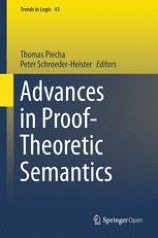
This volume is the first ever collection devoted to the field of proof-theoretic semantics. Contributions address topics including the systematics of introduction and elimination rules and proofs of normalization, the categorial characterization of deductions, the relation between Heyting's and Gentzen's approaches to meaning, knowability paradoxes, proof-theoretic foundations of set theory, Dummett's justification of logical laws, Kreisel's theory of constructions, paradoxical reasoning, and the defence of model theory.
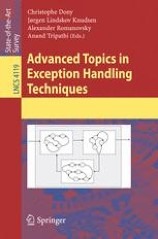
Modern software systems are becoming more complex in many ways and are having to cope with a growing number of abnormal situations which, in turn, are increasingly complex to handle.This book is composed of five parts; the first four deal with topics related to exception handling in the context of programming languages, concurrency and operating systems, pervasive computing systems, and requirements and specifications. The last part focuses on case studies, experimentation and qualitative comparisons. The 16 coherently written chapters by leading researchers competently address a wide range of issues in exception handling.
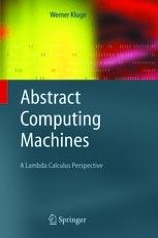
The book addresses ways and means of organizing computations, highlighting the relationship between algorithms and the basic mechanisms and runtime structures necessary to execute them using machines. It completely abstracts from concrete programming languages and machine architectures, taking instead the lambda calculus as the basic programming and program execution model to design various abstract machines for its correct implementation. The emphasis is on fully normalizing machines based on full-fledged beta-reductions as essential prerequisites for symbolic computations that treat functions and variables truly as first-class objects. Their weakly normalizing counterparts are shown to be functional abstract machines that sacrifice the flavors of full beta-reductions for decidedly simpler runtime structures and improved runtime efficiency. Further downgrading of the lambda calculus leads to classical imperative machines that permit side-effecting operations on the runtime environment.

Provides orthodontists, plastic and oral and maxillofacial surgeons, speech and language therapists, pediatric dentists, and prosthodontists with the information they need to evaluate and treat these conditions. Highlighting the multidisciplinary team approach, the book aids clinicians in developing a complete plan for their patients.

This collection analyzes the impact of Western consumer culture on local cultures and consumption in Southeast Europe and East Asia. Cultural, historical, economic and sociopolitical contexts are examined regarding buying behaviors, usage and customization practices and consumer activism, specifically in Bulgaria, Serbia, and Romania as cultures continue to evolve in the post-socialist era, and in China and Japan as a continuation of movements toward modernity and progress. Surprising and thought-provoking contrasts stand out as consumers balance the global with the local in terms of clothing, technology, luxury items, and food.
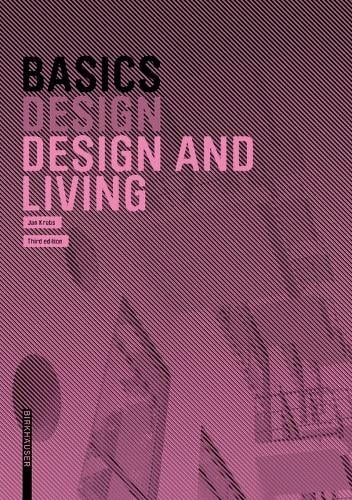
Residential Buildings are normally the first design projects encountered by the student in his or her training. The focus at this point is on the different conceptual possibilities that allow one to take the first step toward an actual idea. Themes: concepts and kinds of cohabitation and dwelling residential functions the creation of living space design in housing construction This book is intended to help readers to find an easy way into the complex subject of housing design, explaining fundamental concepts, the way the individual living areas can cohere, and building form variations.

Charts the patterns created by reigning modes of transportation and examines how people came to accept the bland, branded boxes lining America's streets and freeways as architecture. Beginning with a portrait of ambulatory Native American societies and the introduction of horses by the Spaniards, Kaven discusses the built environment shaped by trains, cars, planes and rockets, and looks toward a future architecture defined by autonomous cars and air taxis

The book is divided into three parts. The first part introduces the basic ideas of linear and metric spaces, including the Jordan canonical form of matrices and the spectral theorem for self-adjoint and normal operators. The second part examines the role of general topology in the context of metric spaces and includes the notions of homotopy and degree. The third and final part is a discussion on Banach spaces of continuous functions, Hilbert spaces and the spectral theory of compact operators.

Mathematica for Theoretical Physics: Electrodynamics, Quantum Mechanics, General Relativity, and Fractals This second edition of Baumann's Mathematica® in Theoretical Physics shows readers how to solve physical problems and deal with their underlying theoretical concepts while using Mathematica® to derive numeric and symbolic solutions. Each example and calculation can be evaluated by the reader, and the reader can change the example calculations and adopt the given code to related or similar problems. The second edition has been completely revised and expanded into two volumes: The first volume covers classical mechanics and nonlinear dynamics. Both topics are the basis of a regular mechanics course. The second volume covers electrodynamics, quantum mechanics, relativity, and fractals and fractional calculus. New examples have been added and the representation has been reworked to provide a more interactive problem-solving presentation. This book can be used as a textbook or as a reference work, by students and researchers alike. A brief glossary of terms and functions is contained in the appendices.

The main topic of Magnetic Control of Tokamak Plasmas is the design of feedback control systems guaranteeing the stability of plasma equilibrium inside a tokamak and the regulation of the plasma position and shape during plasma pulses. Modelling and control details are presented, allowing the non-expert to understand the control problem. Starting from equations of magneto-hydro-dynamics, all the steps needed for the derivation of plasma state-space models are enumerated. The basics of electromagnetics are frequently recalled. The control problem is then described beginning with control of current and position – vertical and radial – and progressing to the more challenging shape control. The solutions proposed vary from simple PIDs to more sophisticated MIMO controllers.

Assimilating new research in the field of low-dimensional metals, this monograph provides a detailed overview of the current status of research on quasi-one- and two-dimensional molecular metals, describing normal-state properties, magnetic field effects, superconductivity, and the phenomena of interacting p and d electrons. It will be useful not only for frontier researchers with a broad interest in low-dimensional electronic and magnetic properties, but also for graduate students of solid-state physics and chemistry with some background knowledge of solid-state physics. It includes a number of fundamental and novel findings relating to the characteristics of these low-dimensional metals, which in future are likely to become standard material in textbooks on solid-state physics.

Describes the fundamental principles, the manufacturing process, and applications of low thermal expansion glass ceramics. The composition, structure, and stability of polycrystalline materials having a low thermal expansion are described, and it is shown how low thermal expansion glass ceramics can be manufactured from appropriately chosen glass compositions. Examples illustrate the formation of this type of glass ceramic by utilizing normal production processes together with controlled crystallization. Thus glass ceramics with thermal coefficients of expansion of less than 0.3 x 10(-6)K(-1) can be obtained. Even for the mass production of high-quality cooktop panels (Ceran®., oven windows, and other household appliances a high reproducibility of the properties is achieved. Special glass ceramics (Zerodur®. for technological and scientific applications such as high-precision optics or large astronomical mirrors are likewise discussed. The completely revised edition also features new sections on glass-ceramic applications, with details on their performance, CDC-grinding, and laser gyroscopes containing Zerodur®..
A mathematically consistent formulation of relativistic quantum electrodynamics (QED) has still to be found. Nevertheless, there are several simplified effective models that successfully describe many body quantum systems and the interaction of radiation with matter. Large Coulomb Systems explores a selection of mathematical topics inspired by QED. It comprises selected, expanded and edited lectures given by international experts at a topical summer school and is intended as a high-level introduction for graduate students, postdocs and nonspecialists from related fields.
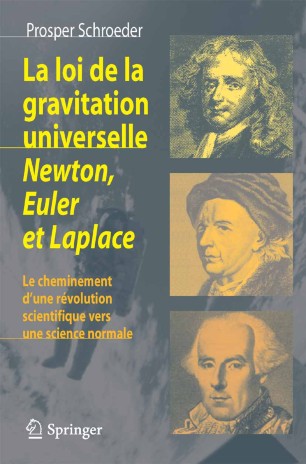
An analysis of Newton's ideas dismisses this hypothesis by the simple fact that the Principia sought to demonstrate the fallacy of earlier approaches. However, Newton suffered a failure in the application of his theory of gravitation to the explanation of the movement of the Moon, failure which marked the development of celestial mechanics throughout the 18th century. Clairaut, d'Alembert and Euler doubted the validity of Newtonian law almost at the same time and their ideas advanced celestial mechanics which reached the state of "normal science" with Laplace's treatise on celestial mechanics, a century after Newton.

This book assesses the profound impact of Japan’s aspirations to become a great power on Japanese security, democracy and foreign relations. Rather than viewing the process of normalization and rejuvenation as two decades of remilitarization in face of rapidly changing strategic environment and domestic political circumstances, this volume contextualizes Japan’s contemporary international relations against the longer grain of Japanese historical interactions.It also submits that an improvement in Japan-China relations would enhance rather than detract Japan-US relations and that Tokyo will find that her new found automony in the US-Japan alliance would not only accord her more political respect and strategic latitude, but also allow her to ameliorate the excesses of American foreign policy adventurism, paving for her to become a truly normal great power.

Among numerical methods applied in acoustics, the Finite Element Method (FEM) is normally favored for interior problems whereas the Boundary Element Method (BEM) is quite popular for exterior ones. That is why this valuable reference provides a complete survey of methods for computational acoustics, namely FEM and BEM. It demonstrates that both methods can be effectively used in the complementary cases. The chapters by well-known authors are evenly balanced: 10 chapters on FEM and 10 on BEM. An initial conceptual chapter describes the derivation of the wave equation and supplies a unified approach to FEM and BEM for the harmonic case. A categorization of the remaining chapters and a personal outlook complete this introduction. In what follows, both FEM and BEM are discussed in the context of very different problems.

سوريا - اتستراد درعا - غباغب
+963-15 2050 - 15 860 380 /1/2/3 - 11 662 3900