



الصفحة 2
الصفحة 2

Geotechnical Engineering for Disaster Mitigation and Rehabilitation ; Proceedings of the 2nd International Conference GEDMAR08, Nanjing, China 30 May – 2 June, 2008
"Geotechnical Engineering for Disaster Mitigation and Rehabilitation" presents the latest developments and case studies in the field. All contributions to this proceedings were rigorously reviewed to cover the newest developments in disasters related to earthquakes, landslides and slopes, soil dynamics, risk assessment and management, disaster mitigation and rehabilitation, and others.

Fundamentals of electrical drives
This brings us to the purpose of this book namely to help students and engineers appreciate and understand the fundamental concepts of modern electrical drives. An interactive learning approach is taken in this text: theory and calculations are augmented by generic models which are transposed to a simulation platform. The 'build and play' method used in this text visualizes the dynamic operation of a comprehensive set of modules ranging from an inductance to a novel 'ideal rotating transformer' (IRTF). This module is at the center of the generic models used in this text to explore the dynamic and steady state operation of grid and converter fed induction, synchronous and DC machines. The section on modulation and control emphasizes the role of power electronics and digital signal processors in drives. Downloadable files that accompany this text have an extensive set of 'build and play' tutorials, in Simulink R° and Caspoc. The latter is a simulation platform which allows direct access to the 'build and play' modules, without further licensing needs. All figures in this text are included in the downloadable files in order to help with the preparation of customized Power Point type lecture material.

Frontiers of Combining Systems ; 6th International Symposium, FroCoS 2007, Liverpool, UK, September 10-12, 2007. Proceedings
This book constitutes the refereed proceedings of the 6th International Symposium on Frontiers of Combining Systems, FroCoS 2007, held in Liverpool, UK, September 2007. combination issues in rewriting and programming as well as in logical frameworks and theorem proving systems.

Foundations of Atlas : Rapid Ajax Development with ASP.NET 2.0
This book introduces a fast-track path to understanding Atlas, and how this technology can increase the power and functionality of your code while conserving time and effort. The book begins with a bare-bones introduction that explains how Atlas relates to Ajax. Microsoft Atlas is a web-client framework that makes building Ajax-style applications easier. It provides a prewritten framework that gives you a structured environment in which to work. Atlas also provides you with an object model and standardized debugging to make development faster and simpler. Ajax is a way of combining a number of Web technologies including JavaScript, dynamic HTML, and a feature known as XMLHttp (which reduces the need for client browsers to constantly reconnect to the server every time new information is downloaded). But at the moment, people developing with Ajax have to write their code from the ground up, which is complex and time consuming.

Foundation Expression Blend 2 : Building applications in WPF and silverlight
This book shows you how to take full advantage of Blend's interface, together with and Silverlight's vastly improved designer-developer workflow, guiding you through every step of development from downloading and installing of the development environment through creating finished, functional projects. You'll learn how to create simple drawing applications with the InkCanvas, make tabbed and scrollable interfaces, as well as build fully featured media players, photo galleries, and interactive 3D designs. Each chapter discusses major WPF and Silverlight features, provides a hands-on tutorial, and explains how that feature is implemented in the real world. In the end, you will have a collection of impressive WPF and Silverlight applications that can be added to your portfolio.

Experimental and Efficient Algorithms ; 4th International Workshop, WEA 2005, Santorini Island, Greece, May 10-13, 2005, Proceedings
This proceedings volume contains the accepted papers and invited talks p- sented at the 4th International Workshop of E?cient and Experimental Al- rithms (WEA 2005), that was held May 10–13, on Santorini Island, Greece. The WEA events are intended to be an international forum for research on the design, analysis and especially the experimental implementation, evaluation and engineering of algorithms, as well as on combinatorial optimization and its applications. The?rstthreeworkshopsinthisserieswereheldinRiga(2001),MonteVerita (2003) and Rio de Janeiro (2004). Thisvolumecontains3invitedpapersrelatedtocorrespondingkeynotetalks.

Evolution, Monitoring and Predicting Models of Rockburst : Precursor Information for Rock Failure
Focuses on investigating predicting precursor information and key points of rockburst in mining engineering through laboratory experiment, theoretical analysis, numerical simulation and case studies. Understanding the evolution patterns for the microstructure instability of rock is a prerequisite for rockburst prediction. The book provides a guide for readers seeking to understand the evolution patterns for the microstrucure of rock failure, the predicting key point of rock failure and the rockburst predicting model. It will be an essential reference to understand mechanism of rockburst and sheds new light on dynamic disasters prediction. Chapters are carefully developed to cover (1) The evolution patterns for the microstructure instability of rock; (2) Rockburst hazard monitoring and predicting criterion and predicting models. The book addresses the issue with a holistic and systematic approach that investigates the occurrence mechanism of rockburst based on the evolution patterns for the microstructure of rock failure and establishes the predicting model of rockburst.

Essays on congruence theory in marketing : Special focus on digital products and webstores
Digital products are intangible goods, mainly presented visually and acoustically to consumers in the form of videos, images, texts, and music that can be bought, downloaded, or streamed via various web stores. Their consumption primarily fulfills hedonic needs. Before purchasing, a consumer's interaction with a digital product is always mediated by technology. Therefore, consumers cannot directly judge the quality through "touch and feel" experiences.

Entropy Methods for the Boltzmann Equation : Lectures from a Special Semester at the Centre Émile Borel, Institut H. Poincaré, Paris, 2001
Entropy and entropy production have recently become mathematical tools for kinetic and hydrodynamic limits, when deriving the macroscopic behaviour of systems from the interaction dynamics of their many microscopic elementary constituents at the atomic or molecular level. During a special semester on Hydrodynamic Limits at the Centre Émile Borel in Paris, 2001 two of the research courses were held by C. Villani and F. Rezakhanlou. Both illustrate the major role of entropy and entropy production in a mutual and complementary manner and have been written up and updated for joint publication. Villani describes the mathematical theory of convergence to equilibrium for the Boltzmann equation and its relation to various problems and fields, including information theory, logarithmic Sobolev inequalities and fluid mechanics. Rezakhanlou discusses four conjectures for the kinetic behaviour of the hard sphere models and formulates four stochastic variations of this model, also reviewing known results for these.

Endodontology at a Glance
Covers all the essential topics (diagnosis, endodontic therapy, pain management and outcome of treatment) as well as the recent developments that comprise the field of endodontology. Written by experts in the field, the book explores the causes and sequelae of endodontic disease and offers suggestions for taking an effective patient history. New addition to the At a Glance series covering a core area of dentistry Review style makes for the ideal revision companion Includes access to a companion website with MCQs for self-assessment and downloadable images for use in teaching

Elliptic Theory and Noncommutative Geometry : Nonlocal Elliptic Operators
This comprehensive yet concise book deals with nonlocal elliptic differential operators, whose coefficients involve shifts generated by diffeomorophisms of the manifold on which the operators are defined. The main goal of the study is to relate analytical invariants (in particular, the index) of such elliptic operators to topological invariants of the manifold itself. This problem can be solved by modern methods of noncommutative geometry. This is the first and so far the only book featuring a consistent application of methods of noncommutative geometry to the index problem in the theory of nonlocal elliptic operators. Although the book provides important results, which are in a sense definitive, on the above-mentioned topic, it contains all the necessary preliminary material, such as C*-algebras and their K-theory or cyclic homology.

DNA Computing ; Vol. 3892 ; 11th International Workshop on DNA Computing, DNA11, London, ON, Canada, June 6-9, 2005. Revised Selected Papers.
It is evidence of how well the interdisciplinary nature of the conference has truly matured that the major criterion of quality, agreed upon in advance by the Program Committee (PC), produced a nearly balanced program as well across the two major categories, full papers and talks with an abstract only.

Digital Phase Lock Loops : Architectures and Applications
This exciting new book covers various types of digital phase lock loops. It presents a comprehensive coverage of a new class of digital phase lock loops called the time delay tanlock loop (TDTL). It also details a number of architectures that improve the performance of the TDTL through adaptive techniques that overcome the conflicting requirements of the locking rage and speed of acquisition. These requirements are of paramount importance in many applications including wireless communications, consumer electronics and others. Digital Phase Lock Loops then illustrates the process of converting the TDTL class of digital phase lock loops for implementation on an FPGA-based reconfigurable system. These devices are being utilized in software-defined radio, DSP-based designs and many other communication and electronic systems to implement complex high-speed algorithms.

Digital Finance : Security Tokens and Unlocking the Real Potential of Blockchain
In Digital Finance: Security Tokens and Unlocking the Real Potential Blockchain, readers will realize why security tokens are creating huge excitement in the financial industry. By combining the latest in technology and the potential for automated world-class investor protections, regulatory compliance and customer service, security tokens offer a plethora of benefits that will drive cost reductions, enhance flexibility and open up opportunities for new business models and revenue streams. Digital Finance thoroughly examines how this powerful technology can overhaul our current financial infrastructure in a way that will increase efficiency, transparency, and security.

Deconstructing Olduvai : A taphonomic study of the bed I sites
Plio-Pleistocene sites are a rare occurrence in same sites. This combination of factors is the archaeological record. When they are unique in East African Plio-Pleistocene uncovered, the faunal materials so crucial to archaeology and has stimulated much debate unlocking their behavioral meaning are often over the socioeconomic function of early sites. poorly preserved. For example, at Koobi Fora, Influential models of early hominid behavior Kenya, a prolific region that preserves several in the late 1960s and early 1970s were based classic Plio-Pleistocene sites, many bones are exclusively on information from Olduvai affected by poor cortical surface preservation Gorge (Leakey, 1971).
Database performance at scale: a practical guide
Optimizing database performance at the scale required for today’s data-intensive applications often requires more than performance tuning and scaling out. This book shares commonly overlooked considerations, pitfalls, and opportunities that have helped many teams break through database performance plateaus. It’s neither a definitive guide to distributed databases nor a beginner’s resource. Rather, it’s a look at the many different factors that impact performance, and our top field-tested recommendations for navigating them. Chapter 1 provides two (fun and fanciful) tales that surface some of the many roadblocks you might face and highlight the range of strategies for navigating around them.
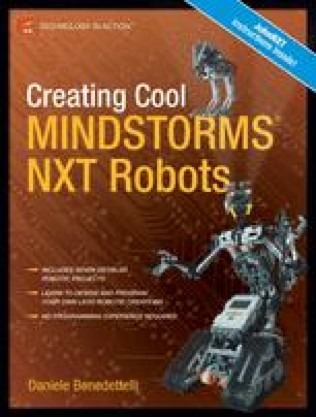
Creating Cool MINDSTORMS® NXT Robots
Build and program MINDSTORM NXT robots with Daniele Benedettelli, one of the world's most respected NXT robot builders. He shows you how to build and program them from scratch, starting with the simplest robots and progressing in difficulty to a total of seven award–winning robots! You can download all the code, along with low–resolution videos that show how your robot works when it's finished. You don't need to be a programmer to develop these cool robots, because all the code is provided, but advanced developers will enjoy seeing the secrets of Benedettelli's code and techniques revealed.

Computer Aided Verification ; Vol. 3576 ; 17th International Conference, CAV 2005, Edinburgh, Scotland, UK, July 6-10, 2005, Proceedings
This volume contains the proceedings of the International Conference on Computer Aided Veri?cation (CAV), held in Edinburgh, Scotland, 2005. CAV 2005 was the seventeenth in a series of conferences dedicated to the advancement of the theory and practice of computer-assisted formal an- ysis methods for software and hardware systems. The conference covered the spectrum from theoretical results to concrete applications, with an emphasis on practical veri?cation tools and the algorithms and techniques that are needed for their implementation.

Computer Aided Verification ; 19th International Conference, CAV 2007, Berlin, Germany, July 3-7, 2007, Proceedings
This volume contains advancement of the theory and practice of computer-assisted formal analysis methods for software and hardware systems. covers the spectrum from theoretical - sults to concrete applications, with an emphasis on practical verification tools and the algorithms and techniques that are needed for their implementation.

Computational earthquake physics ; Part II
Exciting developments in earthquake science have benefited from new observations, improved computational technologies, and improved modeling capabilities. Designing realistic supercomputer simulation models for the complete earthquake generation process is a grand scientific challenge due to the complexity of phenomena and range of scales involved from microscopic to global. The present volume - Part II - incorporates computational environment and algorithms, data assimilation and understanding, model applications and iSERVO. Topics covered range from iSERVO and QuakeSim: implementing the international solid earth research virtual observatory by integrating computational grid and geographical information web services; LURR (Load-Unload Response Ratio) described in six papers involving this promising earthquake forecasting model; pattern informatics and phase dynamics and their applications, which was also a highlight in the Workshop; computational algorithms, including continuum damage models and visualization and analysis of geophysical datasets; evolution of mantle material; the state vector approach; and assimilation of data such as geodetic data, GPS data, and seismicity and laboratory experimental data.
