


تحسين النتائح
ترتيب حسب
من
الى

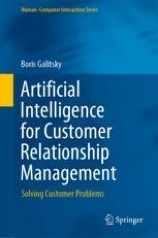
This book describes a number of applications of Artificial Intelligence in the field of Customer Relationship Management with the focus of solving customer problems. We design a system that tries to understand the customer complaint, his mood, and what can be done to resolve an issue with the product or service. To solve a customer problem efficiently, we maintain a dialogue with the customer so that the problem can be clarified and multiple ways to fix it can be sought. We introduce dialogue management based on discourse analysis: a systematic linguistic way to handle the thought process of the author of the content to be delivered. We analyze user sentiments and personal traits to tailor dialogue management to individual customers. We also design a number of dialogue scenarios for CRM with replies following certain patterns and propose virtual and social dialogues for various modalities of communication with a customer.
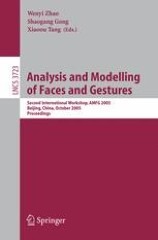
During the last 30 years, face recognition and related problems such as face detection/tracking and facial expression recognition have attracted researchers from both the engineering and psychology communities. In addition, extensive research has been carried out to study hand and body gestures. The understanding of how humans perceive these important cues has significant scientific value and extensive applications. this one-day workshop (AMFG 2005) provided a focused international forum to bring together well-known researchers and research groups to review the status of recognition, analysis and modeling of faces and gestures, to discuss the challenges that we are facing, and to explore future directions. Overall, 30 papers were selected from 90 submitted manuscripts. The topics of these papers range from feature representation, robust recognition, learning, and 3D modeling to psychology.

Provides the reader with a comprehensive introductory overview of ontology engineering. A secondary aim is to provide hands-on experience in ontology development that illustrate the theory. The book is divided into three blocks: Block I: logic foundations for ontologies both regarding the languages (mainly First Order predicate Logic, Description Logics, and OWL) and automated reasoning. Block II: developing good ontologies with methods and methodologies, the top-down approach with foundational ontologies, and the bottom-up approach to extract as much useful content as possible from legacy material. Block III: advanced topics with a selection of areas of specialisation, including Ontology-Based Data Access, the interaction between ontologies and natural languages (multilingual ontologies, controlled natural language), and advanced modelling with additional language features (fuzzy and temporal ontologies)

Contains all the articles accepted and published in the Special Issue “Advances in Artificial Intelligence: Models, Optimization, and Machine Learning” of the MDPI Mathematics journal, which covers a wide range of topics connected to the theory and applications of artificial intelligence and its subfields. These topics include, among others, deep learning and classic machine learning algorithms, neural modelling, architectures and learning algorithms, biologically inspired optimization algorithms, algorithms for autonomous driving, probabilistic models and Bayesian reasoning, intelligent agents and multiagent systems.
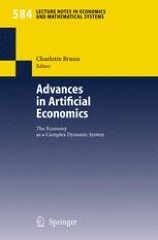
Perceiving the economy as a complex dynamic system, generates a need for new tools for its study. As a constructive simulation method, Agent-Based Computational Economics (ACE) has in recent years proven its strength and extensive applicability. Fields of study are widely spread within economics, with a cluster around financial markets. This book is based on communications given at AE’2006 (Aalborg, Denmark) – the second symposium on Artificial Economics, and covers both wellknown questions of economics, like the existence of market efficiency, as well as new questions raised by the new tools, for example questions related to networks of social interaction.
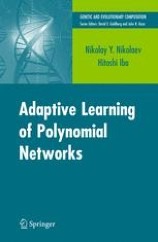
This book provides theoretical and practical knowledge for develop ment of algorithms that infer linear and nonlinear models. It offers a methodology for inductive learning of polynomial neural network mod els from data. The design of such tools contributes to better statistical data modelling when addressing tasks from various areas like system identification, chaotic time-series prediction, financial forecasting and data mining. The main claim is that the model identification process involves several equally important steps: finding the model structure, estimating the model weight parameters, and tuning these weights with respect to the adopted assumptions about the underlying data distrib ution. When the learning process is organized according to these steps, performed together one after the other or separately, one may expect to discover models that generalize well.
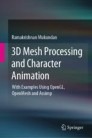
Focusses specifically on topics that are important in three-dimensional modelling, surface design and real-time character animation. It provides an in-depth coverage of data structures and popular methods used in geometry processing, keyframe and inverse kinematics animations and shader based processing of mesh objects. It also introduces two powerful and versatile libraries, OpenMesh and Assimp, and demonstrates their usefulness through implementations of a wide range of algorithms in mesh processing and character animation respectively. This Textbook is written for students at an advanced undergraduate or postgraduate level who are interested in the study and development of graphics algorithms for three-dimensional mesh modeling and analysis, and animations of rigged character models.
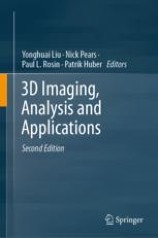
This textbook is designed for postgraduate studies in the field of 3D Computer Vision. It also provides a useful reference for industrial practitioners; for example, in the areas of 3D data capture, computer-aided geometric modelling and industrial quality assurance. This second edition is a significant upgrade of existing topics with novel findings. Additionally, it has new material covering consumer-grade RGB-D cameras, 3D morphable models, deep learning on 3D datasets, as well as new applications in the 3D digitization of cultural heritage and the 3D phenotyping of crops.

A comprehensive guide to 3D printing and 3D bioprinting methods and their application in oral and maxillofacial surgeries. Among the 3D printing methods considered are fused deposition modeling, selective laser sintering, photopolymer jetting, powder binder printing, and stereolithography, while the coverage of 3D bioprinting encompasses inkjet, microextrusion, and laser techniques. In each case, the relevance of the technique to oral and maxillofacial surgery is explained. In addition, the available inks and bioinks for 3D printing are reviewed. The roles of soft and hard tissue printing in oral and maxillofacial tissue engineering and the use of 3D printing in multi- and interfacial tissue engineering are then examined in depth. The particular value of 3D printing in the treatment of critically sized defects is discussed separately. Finally, up-to-date information is provided on guided tissue/bone regeneration using 3D printing. The book will be of interest to both oral and maxillofacial surgeons and biomedical engineers.
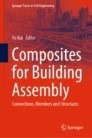
Pesents buildings developed using modular assembly approaches based on lightweight and corrosion-resistant fiber reinforced polymer (FRP) composites. Construction methods and the choice of building materials offer great opportunities for more productive and environmentally friendly solutions. This book includes valuable experimental data on large-scale structural components (beams, slabs, amd columns), connections (shear connections, wall stud connections, beam-column connections, column-column connections) and structures (composite floor system, structural sandwich assemblies, and full-scale structural demonstrations), supported with detailed numerical modelling and analytical methods.

This book introduces readers to a new methodology for assessing the risks to the marine environment following accidental oil spills. The methodology will soon be implemented on the Norwegian Continental Shelf and will be complemented by guidelines for its use in a regulatory framework.
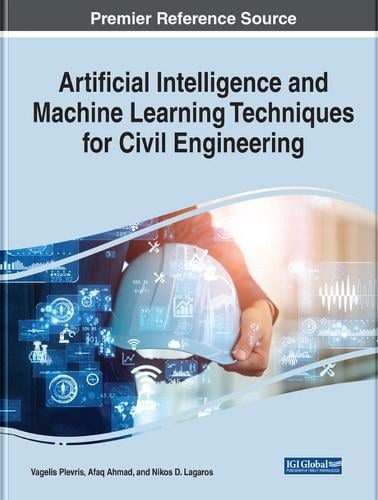
Offers state-of-the-art contributions in the area of AI and its applications in the field of civil engineering presenting methods and implementation of AI and machine learning in multiple facets of civil engineering
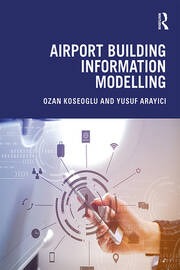
Details how Building Information Modelling is being successfully deployed in the planning, design, construction and future operation of the Istanbul New Airport, a mega-scale construction project incorporating a varying mix of infrastructures including terminals, runways, passenger gates, car parks, railways and roads. The book demonstrates how Airport Building Information Modelling (ABIM) is being used to: • facilitate collaboration, cooperation and integrated project delivery • manage subcontractors and eliminate cost over-runs • reduce waste on site and enhance overall quality • connect people in a virtual environment to encourage collaborative working • provide clients with an effective interface for lifecycle management including: design development, construction documentation, construction phases and BIM and Big Data Integration for future facilities management
Presents the most recent advances on testing and experimentation in civil engineering, especially in the branches of materials, structures, and buildings, complementing the authors’ publication Advances on Testing and Experimentation in Civil Engineering - Geotechnics, Transportation, Hydraulics and Natural Resources. It includes advances in physical modelling, monitoring techniques, data acquisition and analysis, and provides an invaluable contribution to the installation of new civil engineering experimental facilities.
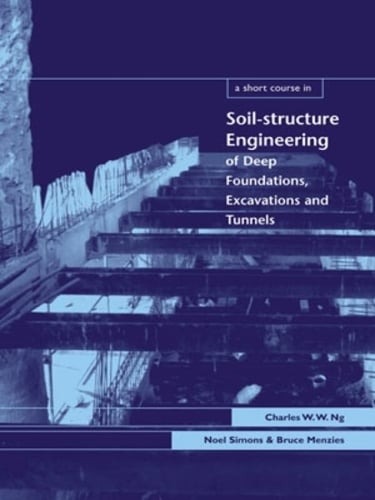
A Short Course in Soil-structure Engineering of Deep Foundations, Excavations and Tunnels, focuses on the three major geotechnical challenges of static soil-structure interaction problems. Deep foundations - piles, barrettes, Multi-propped deep excavations and Bored and open face tunnels beneath cities. This book gives both students and practising civil engineers an authoritative review of the state-of-the-art of designing deep foundations, excavations and tunnels. In addition, the case studies and numerical modelling presented will give valuable insights into the challenges of soil-structure engineering.
In this new edition, the fundamental material on classical linear aeroelasticity has been revised. Also new material has been added describing recent results on the research frontiers dealing with nonlinear aeroelasticity as well as major advances in the modelling of unsteady aerodynamic flows using the methods of computational fluid dynamics and reduced order modeling techniques.

Includes recording and analysis of maritime archaeology through emerging technologies, including both practical and theoretical contributions. Topics include photogrammetric recording, laser scanning, marine geophysical 3D survey techniques, virtual reality, 3D modelling and reconstruction, data integration and Geographic Information Systems. This convergence of digital technologies such as underwater photography and photogrammetry, 3D sonar, 3D virtual reality, and 3D printing has highlighted a pressing need for these new methodologies to be considered together, both in terms of defining the state-of-the-art and for consideration of future directions.
Sheds light on marketing effectiveness and accountability marketing in small and medium-sized enterprises (SMEs). Using a multi-method investigation, it includes a knowledge inquiry of marketing knowledge and customer knowledge, a qualitative inquiry utilizing semi structured interviews and thematic data analysis, a quantitative analysis utilizing survey and structural equations modelling, and a case study that employs both narrative (storytelling) data analysis and an accountability audit with a techno marketing SME.
Natural disasters cause considerable economic damage. While developed countries usually are able to cope with the impacts of natural hazards, developing countries are faced with severe consequences for their resources. In order to prevent long-term macroeconomic repercussions, governments need a comprehensive disaster risk management strategy.Budgetary resources are allocated to pre-disaster risk management strategies to reduce the probability of financing gaps. The framework and model approach allows cross country comparisons as well as the assessment of financial vulnerability, macroeconomic risk, and risk management strategies.
This book encompasses a collection of in-depth analyses showcasing the challenges and ways forward for macroeconomic modelling of R&D and innovation policies. Based upon the proceedings of the EC-DG JRC-IEA workshop held in Brussels in 2017, it presents cutting-edge contributions from a number of leading economists in the field. It provides a comprehensive overview of the current academic and policy challenges surrounding R&D as well as of the state-of-the-art modelling techniques.

سوريا - اتستراد درعا - غباغب
+963-15 2050 - 15 860 380 /1/2/3 - 11 662 3900