



الصفحة 2
الصفحة 2
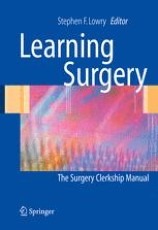
Learning Surgery : The Surgery Clerkship Manual
Provides a ready reference to those in third and fourth year residencies. Essential algorithms and case presentations meet with clerkship learning objectives as outlined by the Association of Surgical Education in their ASE Manual. Two sections include Introduction to Clinical Surgery in the Surgical Clerkship Setting and Management of Surgical Diseases During the Clerkship. Chapters include: Stroke, Hypertension, Abdominal Masses, Head Injuries, and Burns. Written by leading clinicians and educators, both surgery residents and medical students will find LEARNING SURGERY indispensible in their rotations and clerkships. Surgeons who train residents will also find the text a valuable ajunct to their teaching.

Chemistry for pharmacy students : General, organic and natural product chemistry ; 2nd ed.
Opens with an overview of the general aspects of chemistry and their importance to modern life, with emphasis on medicinal applications. The text then moves on to discuss the concepts of atomic structure and bonding and the fundamentals of stereochemistry and their significance to pharmacy in relation to drug action and toxicity. Various aspects of organic functional groups, organic reactions, heterocyclic chemistry, nucleic acids and their pharmaceutical importance are then covered in subsequent chapters, with the final chapter dealing with drug discovery and development, and natural product chemistry. Provides a student-friendly introduction to the main areas of chemistry required by pharmacy degree courses. Written at a level suitable for non-chemistry students in pharmacy, but also relevant to those in life sciences, food science, and the health sciences Includes learning objectives at the beginning of each chapter Focuses on the physical properties and actions of drug molecules
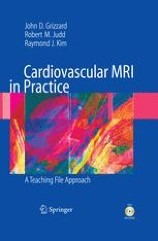
Cardiovascular MRI in practice : A teaching file approach
This text resource outlines the systematic approach to CMR interpretation. The depiction of a "core exam" and the modifications used for a variety of patient circumstances are demonstrated using simple visual assessment of the images. Special emphasis on the advantages of CMR relative to other modalities reinforces practical learning objectives, organized so that the reader starts with patient images – as one would in a clinical scenario – and works back to the didactic material.
Beginning Java 17 Fundamentals : Object-Oriented Programming in Java 17
Learn the fundamentals of the Java 17 LTS or Java Standard Edition version 17 Long Term Support release, including basic programming concepts and the object-oriented fundamentals necessary at all levels of Java development. You will: Write your first Java programs with emphasis on learning object-oriented programming / How to work with switch expressions, value types (records), local variable type inference, pattern matching switch and more from Java 17 / Handle exceptions, assertions, strings and dates, and object formatting / Learn about how to define and use modules / Dive in depth into classes, interfaces, and inheritance in Java / Use regular expressions / Take advantage of the JShell REPL tool
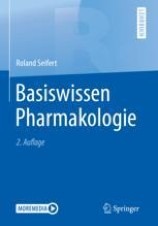
Basiswissen pharmakologie = Basic knowledge of pharmacology
Offers a clear and concise overview of all exam-relevant pharmacology content. It guides you through the entire foundational knowledge, from the basics to the most important clinical pictures, in an easily understandable way and aligned with the German National Competency-Based Learning Objectives for Medicine (GK) and National Competency-Based Learning Objectives for Medicine (NKLM). Benefit from the lecturer's many years of experience, who has carefully selected and presented the essential information for you.

Advances in web based learning -- ICWL 2006 ; 5th International conference, Penang, Malaysia, July 19-21, 2006, Revised Papers
The conference program was organized in a single-track 3-day workshop. It included a tutorial, a keynote talk, and oral/poster paper presentations in several sessions dedicated to specific topics. Session topics included “Personalization in E-Learning,” “Designs, Model and Framework of E-Learning Systems,” “Implementations and Evaluations of E-Learning Systems,” “Tools in E-Learning,” and “Learning Resource Deployment, Organization and Management. ” We received a total of 99 submissions from all over the world.
