


تحسين النتائح
ترتيب حسب
من
الى

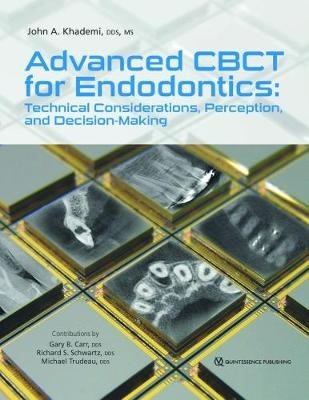
This book encourages endodontists to develop a sound technical and theoretical understanding of CBCT. The authors compare the capabilities of modern CBCT imaging with traditional radiography and also present vital information about image interpretation and perception to increase competence and confidence in CBCT interpretation and minimize overdiagnosis and subsequent overtreatment.

Full understanding of the role of cone beam computed tomography (CBCT) in helping to solve many of the most challenging problems in endodontics. It will shorten the learning curve in application of this exciting imaging technology in a variety of contexts: difficult diagnostic cases, treatment planning, evaluation of internal tooth anatomy prior to root canal therapy, nonsurgical and surgical treatments, early detection and treatment of resorptive defects, and outcomes assessment. The ability to obtain an accurate 3D representation of a tooth and the surrounding structures by means of noninvasive CBCT imaging is changing the approach to clinical decision making in endodontics. Clinicians long accustomed to working in very small, three-dimensional spaces are no longer constrained by the limitations of two-dimensional imaging. The challenges of mastering the new technology can, however, be daunting. The detailed guidance contained in this book will help endodontists to take full advantage of the important benefits offered by CBCT.
Provides readers with a full understanding of the role of cone beam computed tomography (CBCT) in helping to solve many of the most challenging problems in endodontics. It will shorten the learning curve in application of this exciting imaging technique in a variety of contexts: difficult diagnostic cases, treatment planning, evaluation of internal tooth anatomy prior to root canal therapy, nonsurgical and surgical treatments, early detection and treatment of resorptive defects, and outcomes assessment.
In recent years an increasing emphasis has been placed on numerically based methods of structural analysis. This has been reflected in the production of structural mechanics texts that are orientated towards particular numerical methodologies, especially the finite element method. Whilst this approach serves the needs of potential research' engineers, a concentration on the numerical analysis aspects of structural mechanics is of less relevance to professional' engineers, who are likely to be concerned with the use and interpretation of numerical analyses, but not in the development of the methodologies.
Includes recording and analysis of maritime archaeology through emerging technologies, including both practical and theoretical contributions. Topics include photogrammetric recording, laser scanning, marine geophysical 3D survey techniques, virtual reality, 3D modelling and reconstruction, data integration and Geographic Information Systems. This convergence of digital technologies such as underwater photography and photogrammetry, 3D sonar, 3D virtual reality, and 3D printing has highlighted a pressing need for these new methodologies to be considered together, both in terms of defining the state-of-the-art and for consideration of future directions.
Offers something for everyone working with market segmentation: practical guidance for users of market segmentation solutions; organisational guidance on implementation issues; guidance for market researchers in charge of collecting suitable data; and guidance for data analysts with respect to the technical and statistical aspects of market segmentation analysis. Even market segmentation experts will find something new, including a vast array of useful visualisation techniques that make interpretation of market segments and selection of target segments easier. The book talks the reader through every single step, every single potential pitfall, and every single decision that needs to be made to ensure market segmentation analysis is conducted as well as possible. All calculations are accompanied not only with a detailed explanation, but also with R code that allows readers to replicate any aspect of what is being covered in the book using R, the open-source environment for statistical computing and graphics.
Organizations need to identify risks and chances of environmental changes in order to adapt to or possibly even to influence them. Early warning which comprises scanning and interpretation plays an important role in this process. Whereas the traditional contingency approach considers early warning as a part of the organizational structure, the extended contingency theory assumes the additional influence of an individual’s personality on early warning. Andreas Kirschkamp empirically analyses the early warning behavior of Chief Executive Officers in German medium-sized companies. First, he presents the design variables of early warning, then the influencing contingency variables. On the basis of the scholarly research on psychological and contingency theory, the author deduces hypotheses and tests them. The results show that early warning behavior is not only influenced by traditional contingency variables but also by personal attitudes.
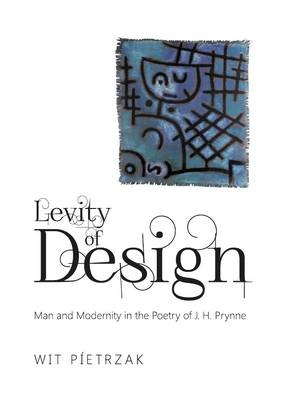
How can poetry embrace morality through focusing on metaphrasts? What is the relation between an allummette and the alpha rhythm? Why is it that money has turned into a metonym of goodness and success? And above all, is it still possible to think of the human subject as a viable category in late modernity? These are some of the questions that J.
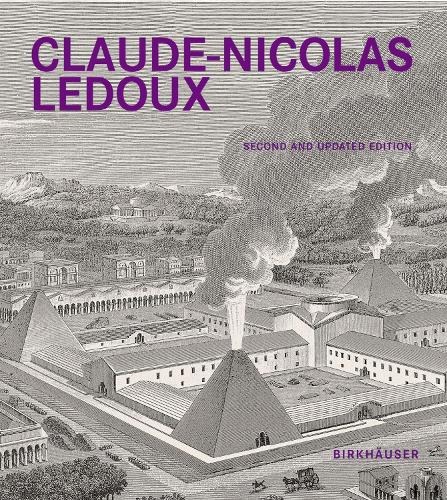
Claude-Nicolas Ledoux (1736-1806) is today regarded as chief representative of French revolutionary architecture. With his extraordinary inventiveness he projected the architectural ideals of his era. Ledoux's influential buildings and projects are presented and interpreted both aesthetically and historically in this book. His best-known projects - the Royal Saltwords of Arc-et-Senans, the tollgates of Paris, the ideal city of Chaux - reveal the architect's allegiance to the principles of antiquity and Renaissance but also illustrate the evolution of his own utopian language. With the French Revolution, Ledoux ceased building as his contemporaries perceived him as a royal architect. He focused on the development of his architectural theory and redefined the vision of the modern architect
Introduction to the complex relationship between form making, historical analysis, and conceptual explorations. This book focuses on the relationship and interdependence between design, theory, and history for an innovative and holistic studio approach. Draws from a diverse range of thinkers and designers to highlight the many interpretations of key architectural concepts, and provides readers with the context essential for developing their own approaches to any design problem.
Exposes dialogue between history, theory, design, construction, technology, and sensory experience by means of digital simulations that enhance the assessment and values of our material choices. It offers a critical look to the past to inspire the future. This new edition looks to Alvar Aalto as the primary protagonist for channeling discussions related to these topics. Architects like ALA, Shigeru Ban, 3XN, Peter Zumthor, and others also play the role of contemporary guides in this review. The work of Aalto and selected contemporary architects, along with computer modeling software, showcase the importance of comprehensive design.

Bridges the gap between monograph and survey text by providing a new level of access and interpretation to Islamic art. The more than 50 newly commissioned essays revisit canonical topics, and include original approaches and scholarship on neglected aspects of the field. showcases more than 50 specially commissioned essays and an introduction that survey Islamic art and architecture in all its traditional grandeurEssays are organized according to a new chronological-geographical paradigm that remaps the unprecedented expansion of the field and reflects the nuances of major artistic and political developments during the 1400-year span. Represents recent developments in the field, and encourages future horizons by commissioning innovative essays that provide fresh perspectives on canonical subjects, such as early Islamic art, sacred spaces, palaces, urbanism, ornament, arts of the book, and the portable arts while introducing others that have been previously neglected, including unexplored geographies and periods, transregional connectivities, talismans and magic, consumption and networks of portability, museums and collecting,
Hydrocarbon exploration and production incorporate great technology challenges for the oil and gas industry. In order to meet the world's future demand for oil and gas, further technological advance is needed, which in turn requires research across multiple disciplines, including mathematics, geophysics, geology, petroleum engineering, signal processing, and computer science. This book addresses important aspects and fundamental concepts in hydrocarbon exploration and production. Moreover, new developments and recent advances in the relevant research areas are discussed, whereby special emphasis is placed on mathematical methods and modelling. The book reflects the multi-disciplinary character of the hydrocarbon production workflow, ranging from seismic data imaging, seismic analysis and interpretation and geological model building, to numerical reservoir simulation. Various challenges concerning the production workflow are discussed in detail.
The book sets the philosophical writings of philosophers in the context of the development of Marxist philosophy internationally, and examines particularly the influence on these philosophers of Soviet Marxist philosophy. It argues that these Chinese Marxist philosophers’ interpretations of Marxist philosophy were quite orthodox when judged by the standards of contemporary Soviet Marxism. The book explores core themes in Marxist philosophy in China, including the dilemma of determinism, and investigates the way in which these Chinese Marxist philosophers sought a formula for the ‘Sinification’ of Marxist philosophy that both retained the universal dimensions of Marxism and allowed its application to the Chinese context. The book concludes with analysis of the role of the Yanan New Philosophy Association in developing from Soviet Marxist philosophy the philosophical dimension of Mao Zedong Thought, the official ideology of the Chinese Communist Party after 1945.

The concept of genuine responsibility, recognizing the complexity of health care and the need for stakeholder-specific interpretations of responsibility, proposes as the underlying premise of responsibility (at least in regard to health care) the social agreement that distributive choices should be made on the basis of the premise of deliberate reciprocity. When all parties share the same foundation on which the notion of responsibility is built the resulting trust and cooperation among stakeholders enables them to find morally appropriate solutions in reforming health care.This book that is at the same time provocative and important. It proposes to change the way we think about deploying healthcare resources. It will accomplish its goal for readers who are willing to be challenged at a basic level. Intellectually sound and a very good read too.
Making Meaning in English examines the broader purpose and reasons for teaching English and explores what knowledge looks like in a subject concerned with judgement, interpretation and value. He discusses the principles and tools we can use to make decisions about what to teach and offers a curriculum framework that draws these strands together to allow students to make sense of the knowledge they encounter.

During its century-long unfolding, spreading in numerous directions, Husserlian phenomenology while loosening inner articulations, has nevertheless maintained a somewhat consistent profile. As we see in this collection, the numerous conceptions and theories advanced in the various phases of reinterpretations have remained identifiable with phenomenology.
In this book control algorithms are represented by the linear graph-schemes of algorithms (GSA), where the number of operator vertices is not less than 75% of the total number of all algorithm vertices. A special class of control units named as compositional microprogram control units (CMCU) is proposed as the best way for interpretation of linear control algorithms.
The book addresses the “balancing act” between developing students’ modelling skills on the one hand, and using modelling to help them learn mathematics on the other, which arises from the integration of modelling into classrooms. In addition the book highlights professional learning and development for in-service teachers, particularly in systems where the introduction of modelling into curricula means reassessing how mathematics is taught.
In Europe, the idea of Lifelong Learning has developed from an education policy to the most important pedagogic paradigm. The concept was created as an answer to the international education crisis, diagnozed by Philip H. Coombs in 1967. Since the European Year of Lifelong Learning in 1996, it has been regarded as an alternative to deal with the rapid social, political and economic changes of the modern world. Andrea Óhidy shows the genesis of the concept and its development towards a pedagogic paradigm. She investigates the relations between the concept of Lifelong Learning and school education and points out the most important links between Lifelong Learning and adult education.

سوريا - اتستراد درعا - غباغب
+963-15 2050 - 15 860 380 /1/2/3 - 11 662 3900