


تحسين النتائح
ترتيب حسب
من
الى

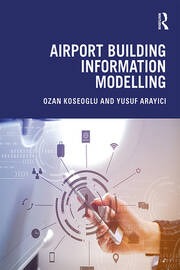
Details how Building Information Modelling is being successfully deployed in the planning, design, construction and future operation of the Istanbul New Airport, a mega-scale construction project incorporating a varying mix of infrastructures including terminals, runways, passenger gates, car parks, railways and roads. The book demonstrates how Airport Building Information Modelling (ABIM) is being used to: • facilitate collaboration, cooperation and integrated project delivery • manage subcontractors and eliminate cost over-runs • reduce waste on site and enhance overall quality • connect people in a virtual environment to encourage collaborative working • provide clients with an effective interface for lifecycle management including: design development, construction documentation, construction phases and BIM and Big Data Integration for future facilities management
Focuses on the safety assessment of existing structures subjected to multi-hazard scenarios through advanced numerical methods. Whereas the focus is on concrete dams and nuclear containment structures, the presented methodologies can also be applied to other large-scale ones. This book is composed of seven sections: Fundamentals: theoretical coverage of solid mechnics, plasticity, fracture mechanics, creep, / seismology, dynamic analysis, probability and statistics / Damage: that can affect concrete structures, such as cracking of concrete, AAR, chloride ingress, and rebar corrosion, / Finite Element: formulation for both linear and nonlinear analysis including stress, heat and fracture mechanics, / Engineering Models: for soil/fluid-structure interaction, uncertainty quantification, probablilistic and random finite element analysis, machine learning, performance based earthquake engineering, ground motion intensity measures, seismic hazard analysis, capacity/fragility functions and damage indeces, / Applications to dams through potential failure mode analyses, risk-informed decision making, deterministic and probabilistic examples, / Applications to nuclear structures through modeling issues, aging management programs, critical review of some analyses, / Other applications and case studies: massive RC structures and bridges, detailed assessment of a nuclear containment structure evaluation for license renewal.
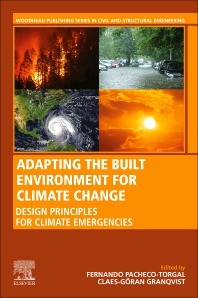
Adapting the Built Environment for Climate Change: Design Principles for Climate Emergencies analyzes several scenarios and proposes various adaptation strategies for climate emergencies (heat waves, wildfires, floods, and storms). Divided into three themes, the book offers an organized vision of a complex and multi-factor challenge. It covers climatic resilience and building refurbishment, implications for service life prediction and maintainability, and climate adaptation in the maintenance and management of buildings. Sections cover infrastructure materials, climate emergency adaptation and building adaptation to heat waves, wildfires, floods and storms.
The emergence of the Internet of Things (IoT), combined with greater heterogeneity not only online in cloud computing architectures but across the cloud-to-edge continuum, is introducing new challenges for managing applications and infrastructure across this continuum.
Alternative Investments is the definitive guide to understanding non-traditional asset classes. Alternatives are a disparate group of investments that are distinguished from long-only, publicly traded investments in stocks, bonds, and cash (often referred to as traditional investments). Alternative investments include real estate, commodities, infrastructure, and other non-traditional investments such as private equity or debt and hedge funds.

This book provides a multi-perspective approach to the caravan trade in the Sahara during the 19th century. Based on travelogues from European travelers, recently found Arab sources, historical maps and results from several expeditions, the book gives an overview of the historical periods of the caravan trade as well as detailed information about the infrastructure which was necessary to establish those trade networks.

A guidebook for landscape architects to learn the fundamental practices and use of the computational software Rhino 3D and the plugin Grasshopper for parametric modeling, landscape inventory, and performative analysis. This process visually connects intangible and abstract information with physical and spatial relationships to signify the impact ecological, climate, and cultural factors have on landscape performance and decision making.
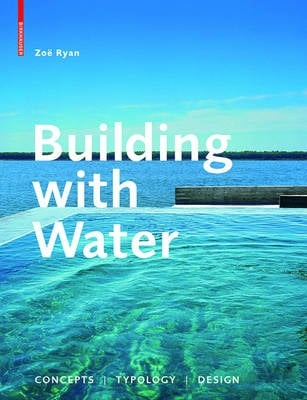
It presents buildings that explicitly refer to water in their design and form. It establishes a typology of building by the water: residential structures, recreation facilities, industry and infrastructure, buildings for culture and art. The various design parameters are explored in four essays. Subsequently, twenty-two international projects are presented, organized according to their locations by a river, a lake or the sea. The authors’ concern is not to show luxurious buildings in privileged locations but rather presenting projects that seriously grapple with the main criterion of the location—namely, water—in an ecologically sustainable way and respond to it with their design.

Introduces a comfortable approach to learning landscape architectural design free of design jargon and derived from their existing knowledge. A step-by-step process has readers consider their knowledge of language as metaphorically related to basic design and landscape design. Through information delivery and questioning processes, readers build on what they already know, their tacit understanding of language as applied to problem solving and storytelling. Everyone is a storyteller.
Subject areas discussed in this book include shipwrecks and abandoned vessels, The application of National and State legislation and management regimes to these underwater cultural heritage sites is also highlighted, together with the important role of avocational divers and training programs in raising the profile of underwater and maritime heritage sites.The book includes a comprehensive bibliography of work conducted both in Australia and by Australian maritime archaeologists in the Asia-Pacific region. This book will be of interest to students and practitioners of maritime and historical archaeology and cultural heritage managers throughout the world .
This book summarizes work being pursued in the context of the CIPRNet (Critical Infrastructure Preparedness and Resilience Research Network) research project, co-funded by the European Union under the Seventh Framework Programme (FP7). The project is intended to provide concrete and on-going support to the Critical Infrastructure Protection (CIP) research communities, enhancing their preparedness for CI-related emergencies, while also providing expertise and technologies for other stakeholders to promote their understanding and mitigation of the consequences of CI disruptions, leading to enhanced resilience.
At the beginning of each year, there is a deluge of top-10 lists on just about every subject you can imagine. A top-10 list of biggest news stories, best-selling books, most popular music and movies, richest companies, and best places to visit or live. It seems everyone has his or her own top-10 list, reflecting, perhaps, differences in regional, national, and cultural values. Companies and governments most often tend to focus their top-10 lists on economic priorities, or priorities related to national defense, security, public health, and new infrastructure. This year, 2007, was no exception. Yet, increasingly, we see governments, private organizations, and companies advocating a new type of prioritization. This framework needs to reach beyond the realms of economics, world trade, and corporate management to include the environment, stakeholders, public preferences, and social goals. Moreover, corporations and individuals are not only interested in generic 10-best lists; they want lists tailored to their values, goals, and current economic and social state. For example, the U. S.
Each chapter in Managing Complexity focuses on analyzing real-world complex systems and transferring knowledge from the complex-systems sciences to applications in business, industry and society. The interdisciplinary contributions range from markets and production through logistics, traffic control, and critical infrastructures, up to network design, information systems, social conflicts and building consensus. They serve to raise readers' awareness concerning the often counter-intuitive behavior of complex systems and to help them integrate insights gained in complexity research into everyday planning, decision making, strategic optimization, and policy.
Computer and communication networks are among society's most important infrastructures. The internet, in particular, is a giant global network of networks without central control or administration. It is a paradigm of a complex system, where complexity may arise from different sources: topological structure, network evolution, connection and node diversity, or dynamical evolution. The present volume is the first book entirely devoted to the new and emerging field of nonlinear dynamics of TCP/IP networks. It addresses both scientists and engineers working in the general field of communication networks.

Broadband Fixed Wireless Access provides a systematic overview of the emerging WiMax technology, and much of the material is based on the practical experiences of the authors in building broadband wireless systems. This material will be of significant interest to network architects and developers of broadband fixed wireless access products. With the adoption of the IEEE 802.16 standard and the advent of next generation equipment, the WiMax technology has been growing in interest. The authors discuss applications at microwave frequencies between 2 and 11 GHz that could be attractive options for operators without an existing access infrastructure for reaching end users with broadband services. This introductory volume demystifies the technology and provides technical exposure to the various system trade-offs. Additionally.
The individual papers represent a valuable collection of information on the current state-of-the-art research in the field of 3D geoinformation. It covers a range of these challenges, collected under the themes of Applications, Acquisition, Modelling, Analysis and Visualisation. The main strength of the collection concerns the data modelling and DBMS implementation issues with 3D GIS.
Ad-Hoc Networking Towards Seamless Communications is dedicated to an area that attracts growing interest in academia and industry and concentrates on wireless ad hoc networking paradigm. The persistent efforts to acquire the ability to establish dynamic wireless connections from anywhere to anyone with any device without prerequisite imbedded infrastructure move the communications boundaries towards ad-hoc networks. Recently, ad hoc networking has attracted growing interest due to advances in wireless communications, and developed framework for running IP based protocols. The expected degree of penetration of these networks will depend on the successful resolution of the key features.

سوريا - اتستراد درعا - غباغب
+963-15 2050 - 15 860 380 /1/2/3 - 11 662 3900