


تحسين النتائح
ترتيب حسب
من
الى


In 2003, Goldman Sachs published a startling report on the BRICs (Brazil, Russia, India, and China) region: These four countries would be larger than the G6 economics within 40 years, muscling their way to economic dominance over the coming decades, and powering past developed countries such as the United Kingdom, Germany, and Japan. This book focuses on the technology and technology-enabled services that underpin this social and economic revolution. The editor analyses the reasons why these four countries are in a unique position to lead a 21st century growth in international services. He then features 12 chapters written by the most important chief executives from the BRICs service economy. Indian technology leaders, such as Nandan Nilekani (Infosys), Shiv Nadar (HCL), and Rajendra Pawar (NIIT), feature alongside their peers from Brazil, Russia, and China outlining their views on the next decade for offshoring.
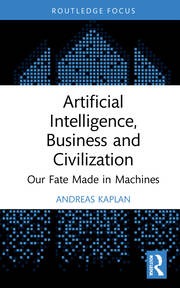
Looks at what exactly artificial intelligence is, how it can be classified, how it differentiates from other concepts such as machine learning, big data, blockchain, or the Internet-of-Things, and how it has evolved and might evolve over time.
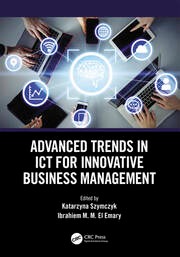
Contains a collection of scientific chapters addressing the emerging trends in IT and telecommunications, as well as the issues that accompany them in business. It addresses issues in cyber applications, ICT solutions and innovative cyber know-how, and demonstrates how high-tech IT communications resources can be used to improve business production, sales and service strategies, supply chains and logistics.

The production plants of today develop into modern service centers. Economic efficiency of modern added value is not a property of products alone but of the process. Decisive potential in business now is a question of process capability, rather than production capability. Process capability in business requires real-time systems for optimization. Business-IT needs to be developed from telecommunications and ERP to real time services, which are not offered by the prevailing ERP systems. Today, only modern Manufacturing Execution Systems (MES) offer real-time applications. They generate current as well as historic mappings of production facilities and thus they can be used as basis for optimizations. It is important to map the supply chain in real time. Increasing complexity in production requires an integrated view of the production and service facilities: detailed scheduling, status collection, quality, performance analysis, tracing of material and so on have to be recorded and displayed in an integrated way.
Tremendous human progress is becoming possible through the development of converging technologies stimulated by advances in four core fields: Nanotechnology, Biotechnology Information technology, and new technologies based in Cognitive science (NBIC). This book provides a unique review of technical developments related to the unification that is rapidly taking place today among these fields.

Describes data mining , techniques as they apply to law. Law students, legal academics and applied information technology specialists are guided thorough all phases of the knowledge discovery from databases process with clear explanations of numerous data mining algorithms including rule induction, neural networks and association rules. Throughout the text, assumptions that make data mining in law quite different to mining other data are made explicit. Issues such as the selection of commonplace cases, the use of discretion as a form of open texture, transformation using argumentation concepts and evaluation and deployment approaches are discussed at length.
Concurrent engineering is well-established as an approach to engineer product parts. However, the concept has much broader application. Complex Systems Concurrent Engineering: Collaboration, Technology Innovation and Sustainability demonstrates how concurrent engineering can be used to benefit the development of complex systems, to produce results that sustain balanced stakeholder satisfaction over time. Gathered from the 14th ISPE International Conference on Concurrent Engineering, the collected papers cover all aspects of the sustainable and integrated development of complex systems, such as airplanes, satellites, space vehicles, automobiles and ships.
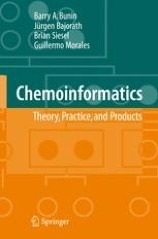
Chemoinformatics: Theory, Practice & Products covers theory, commercially available packages and applications of Chemoinformatics. Chemoinformatics is broadly defined as the use of information technology to assist in the acquisition, analysis and management of data and information relating to chemical compounds and their properties.The book also provides a summary of currently available, state-of-the-art, commercial Chemoinformatics products, with a specific focus on databases, toolkits, and modelling technologies designed for drug discovery.

This new edition strives yet again to provide readers with a working knowledge of chaos theory and dynamical systems through parallel introductory explanations in the book and interaction with carefully-selected programs supplied on the accompanying diskette. The programs enable readers, especially advanced-undergraduate students in physics, engineering, and math, to tackle relevant physical systems quickly on their PCs, without distraction from algorithmic details. For the third edition of Chaos: A Program Collection for the PC, each of the previous twelve programs is polished and rewritten in C++ (both Windows and Linux versions are included). A new program treats kicked systems, an important class of two-dimensional problems, which is introduced in Chapter 13. Each chapter follows the structure: theoretical background; numerical techniques; interaction with the program; computer experiments; real experiments and empirical evidence; reference.

Algorithms are the heart of computer science and mathematics, since without them the use of computers would not be possible. In this book, which in its English edition has been a longtime bestseller, Harel and Feldmann answer all questions relating to this topic. They talk about the evaluation, correctness and effectiveness of algorithms, but also clarify some doubts about programming techniques and also refer to the very current discussion on quantum computing. The book is useful both as a basic text for an introductory university course in computer science, and as a general introduction to natural sciences, mathematics or engineering.
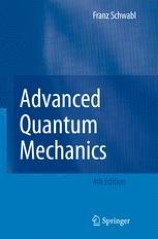
Discusses nonrelativistic multi-particle systems, relativistic wave equations and relativistic quantum fields. Characteristic of the author´s work are the comprehensive mathematical discussions in which all intermediate steps are derived and where numerous examples of application and exercises help the reader gain a thorough working knowledge of the subject. The topics treated in the book lay the foundation for advanced studies in solid-state physics, nuclear and elementary particle physics. This text both extends and complements Schwabl´s introductory Quantum Mechanics, which covers nonrelativistic quantum mechanics and offers a short treatment of the quantization of the radiation field. The fourth edition has been thoroughly revised with new material having been added. Furthermore, the layout of the figures has been unified, which should facilitate comprehension.

سوريا - اتستراد درعا - غباغب
+963-15 2050 - 15 860 380 /1/2/3 - 11 662 3900