



الصفحة 2
الصفحة 2

Discontinuous Finite Elements in Fluid Dynamics and Heat Transfer
Discontinuous Finite Elements in Fluid Dynamics and Heat Transfer offers its readers a systematic and practical introduction to the discontinuous finite element method. It moves from a brief review of the fundamental laws and equations governing thermal and fluid systems, through a discussion of different approaches to the formulation of discontinuous finite element solutions for boundary and initial value problems, to their applicaton in a variety of thermal-system and fluid-related problems, including: heat conduction problems / convection-dominant problems / computational compressible flows / external radiation problems / internal radiation and radiative transfer / free- and moving-boundary problems / micro- and nanoscale heat transfer and fluid flow / thermal fluid flow under the influence of applied magnetic fields.

Differential Models : An Introduction with Mathcad
Differential equations are often used in mathematical models for technological processes or devices. However, the design of a differential mathematical model is crucial and difficult in engineering.

Convective and Advective Heat Transfer in Geological Systems
This monograph aims to provide state-of-the-art theoretical results in a systematic treatment of convective and advective heat transfer during fluid flow in geological systems at the crustal scale. Although some numerical results are provided to complement theoretical ones, the main focus of this monograph is on theoretical aspects of the topic. The theoretical treatment contained in this monograph is also applicable to a wide range of problems of other length-scales such as engineering length-scales.

Convection in Porous Media
This book provides a user-friendly introduction to convection in porous media, such as fibrous insulation, geological strata, and catalytic reactors. The presentation is self-contained, requiring only routine classical mathematics and the basic elements of fluid mechanics and heat transfer. It will thus be of use not only to researchers and practicing engineers as a review and reference, but also to graduate students and others just entering the field. Convection in Porous Media includes nearly 1000 new references and covers: convection in deforming porous media, "designed" porous media, the theory of deformable media, modeling viscous dissipation in hyperporous media, and more.

Computational Engineering : Introduction to Numerical Methods
This book is an introduction to modern numerical methods in engineering. It covers applications in fluid mechanics, structural mechanics, and heat transfer as the most relevant fields for engineering disciplines such as computational engineering, scientific computing, mechanical engineering as well as chemical and civil engineering. The content covers all aspects in the interdisciplinary field which are essential for an ''up-to-date'' engineer.

Kinetics of Catalytic Reactions
This textbook contains all the information needed for graduate students or industrial researchers to design kinetic experiments involving heterogeneous catalysts, to characterize these catalysts, to acquire valid rate data, to verify the absence of mass (and heat) transfer limitations, to propose reaction models, to derive rate expressions based on these models and, finally, to assess the consistency of these rate equations.Many illustrations of these and other topics are provided along with numerous problems and a Solutions Manual for instructors. This book will be applicable to any graduate course in chemical engineering, chemistry or materials science that involves kinetics of catalytic reactions, including those catalyzed by enzymes.

C++ for Engineers and Scientists
Introduce the power and practicality of C++ programming to entry-level engineers with Bronson's C++ FOR ENGINEERS AND SCIENTISTS, 4E. This proven, pragmatic text is designed specifically for today's first- and second-year engineering and science students with a wealth of new applications and examples taken from real situations involving electrical and structural engineering, fluid mechanics, mathematics, power generation, and heat transfer challenges.
Building Physics : Heat, Ventilation, Moisture, Light, Sound, Fire, and Urban Microclimate
Presents the theoretical background of building physics, dealing with the evaluation of physical phenomena related to heat transfer and energy use in buildings, water and water vapour transfer in building structures, daylighting and electric lighting of buildings, sound transmission in building structures and protection against noise, the occurrence and spread of fires in buildings and the thermal response of cities. It contains numerical and computational evaluation methods, numerous computational case studies and examples of experimental analyses. The book demonstrates that the considered physical processes affect the quality of living and working comfort in indoor and outdoor environment.
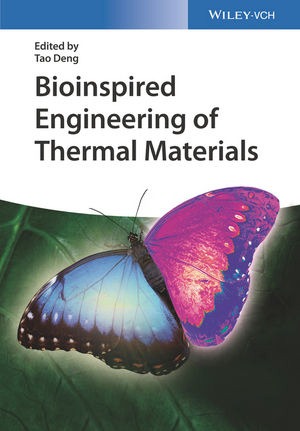
Bioinspired engineering of thermal materials
A comprehensive overview and summary of recent achievements and the latest trends in bioinspired thermal materials. Following an introduction to different thermal materials and their effective heat transfer to other materials, the text discusses heat detection materials that are inspired by biological systems, such as fire beetles and butterflies. There then follow descriptions of materials with thermal management functionality, including those for evaporation and condensation, heat transfer and thermal insulation materials, as modeled on snake skins, polar bears and fire-resistant trees.
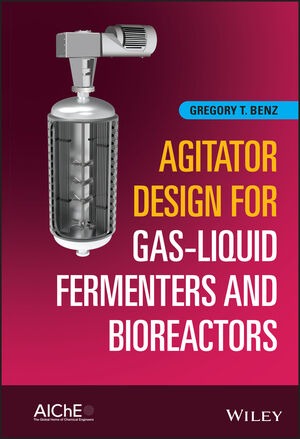
Agitator Design for Gas-Liquid Fermenters and Bioreactors
Agitator Design for Gas-Liquid Fermenters and Bioreactors delivers a concise treatment and explanation of how to design mechanically sound agitation systems that will perform the agitation process function efficiently and economically. The book covers agitator fundamentals, impeller systems, optimum power and air flow at peak mass transfer calculations, optimizing operation for minimum energy per batch, heat transfer surfaces and calculations, shaft seal considerations, mounting methods, mechanical design, and vendor evaluation.
