


تحسين النتائح
ترتيب حسب
من
الى


Challenges in complexity and variability of multimedia data have led to revolutions in machine learning techniques. Multimedia data, such as digital images, audio streams and motion video programs, exhibit richer structures than simple, isolated data items. A number of pixels in a digital image collectively conveys certain visual content to viewers. A TV video program consists of both audio and image streams that unfold the underlying story. To recognize the visual content of a digital image, or to understand the underlying story of a video program, we may need to label sets of pixels or groups of image and audio frames jointly.
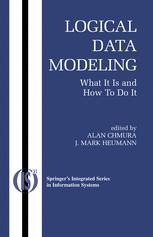
LOGICAL DATA MODELING: What It Is and How To Do IT is directed toward three groups of people: (1) Business subject matter experts, (2) information technology professionals, (3) advanced students in Computer Science, Management Information Systems, and e-Business. Its purpose is to outline the basics of logical data modeling—specifically, data modeling for relational database management systems—in simple, practical terms and in a business context. The focus on relational data modeling is consciously made because it is superior in modeling real business activities.

Linked Open Data (LOD) is a pragmatic approach for realizing the Semantic Web vision of making the Web a global, distributed, semantics-based information system. This book presents an overview on the results of the research project “LOD2 -- Creating Knowledge out of Interlinked Data”. LOD2 is a large-scale integrating project co-funded by the European Commission within the FP7 Information and Communication Technologies Work Program. Commencing in September 2010, this 4-year project comprised leading Linked Open Data research groups, companies, and service providers from across 11 European countries and South Korea.

This book is written for members of the scholarly research community, and for persons involved in research evaluation and research policy. More specifically, it is directed towards the following four main groups of readers: – All scientists and scholars who have been or will be subjected to a quantitative assessment of research performance using citation analysis. – Research policy makers and managers who wish to become conversant with the basic features of citation analysis, and about its potentialities and limitations. – Members of peer review committees and other evaluators, who consider the use of citation analysis as a tool in their assessments. – Practitioners and students in the field of quantitative science and technology studies, informetrics, and library and information science. Citation analysis involves the construction and application of a series of indicators of the ‘impact’, ‘influence’ or ‘quality’ of scholarly work, derived from citation data, i.e. data on references cited in footnotes or bibliographies of scholarly research publications. Such indicators are applied both in the study of scholarly communication and in the assessment of research performance. The term ‘scholarly’ comprises all domains of science and scholarship, including not only those fields that are normally denoted as science – the natural and life sciences, mathematical and technical sciences – but also social sciences and humanities.

This book presents the most recent achievements in some fascinating and rapidly developing fields within Computer Science. The scientific works presented in this book have been partitioned into three topical groups: Image Analysis and Biometrics, Computer Security Systems, and Artificial Intelligence and Applications. Image Analysis and Biometrics is the branch of Computer Science dealing with the very difficult task of artificial, visual perception of objects and surroundings, as well as the problems connected with it. Computer Security and Safety is at present a very important and intensively investigated branch of Computer Science because of the menacing activity of hackers and computer viruses.

This book includes a self-contained approach of the general theory of quadratic forms and integral Euclidean lattices.It explains how the new advances in the Langlands program mentioned above pave the way for a solution. This study proves to be very rich, leading us to classical themes such as theta series, Siegel modular forms, the triality principle, L-functions and congruences between Galois representations.
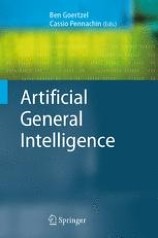
This book focused on engineering general intelligence – autonomous, self-reflective, self-improving, commonsensical intelligence.Each author explains a specific aspect of AGI in detail in each chapter, while also investigating the common themes in the work of diverse groups, and posing the big, open questions in this vital area.

During the last 30 years, face recognition and related problems such as face detection/tracking and facial expression recognition have attracted researchers from both the engineering and psychology communities. In addition, extensive research has been carried out to study hand and body gestures. The understanding of how humans perceive these important cues has significant scientific value and extensive applications. this one-day workshop (AMFG 2005) provided a focused international forum to bring together well-known researchers and research groups to review the status of recognition, analysis and modeling of faces and gestures, to discuss the challenges that we are facing, and to explore future directions. Overall, 30 papers were selected from 90 submitted manuscripts. The topics of these papers range from feature representation, robust recognition, learning, and 3D modeling to psychology.

Provides an accessible introduction to knot theory, focussing on Vassiliev invariants, quantum knot invariants constructed via representations of quantum groups, and how these two apparently distinct theories come together through the Kontsevich invariant. Consisting of four parts, the book opens with an introduction to the fundamentals of knot theory, and to knot invariants such as the Jones polynomial. The second part introduces quantum invariants of knots, working constructively from first principles towards the construction of Reshetikhin-Turaev invariants and a description of how these arise through Drinfeld and Jimbo's quantum groups. Its third part offers an introduction to Vassiliev invariants, providing a careful account of how chord diagrams and Jacobi diagrams arise in the theory, and the role that Lie algebras play. The final part of the book introduces the Konstevich invariant. This is a universal quantum invariant and a universal Vassiliev invariant, and brings together these two seemingly different families of knot invariants. The book provides a detailed account of the construction of the Jones polynomial via the quantum groups attached to sl(2), the Vassiliev weight system arising from sl(2), and how these invariants come together through the Kontsevich invariant.
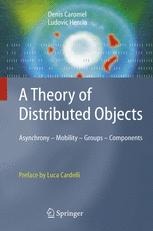
Distributed and communicating objects are becoming ubiquitous. In global, Grid and Peer-to-Peer computing environments, extensive use is made of objects interacting through method calls. So far, no general formalism has been proposed for the foundation of such systems. Caromel and Henrio are the first to define a calculus for distributed objects interacting using asynchronous method calls with generalized futures, i.e., wait-by-necessity -- a must in large-scale systems, providing both high structuring and low coupling, and thus scalability. The authors provide very generic results on expressiveness and determinism, and the potential of their approach is further demonstrated by its capacity to cope with advanced issues such as mobility, groups, and components.

Strengthens the margin of safety of office-based anesthesia administration by helping practitioners determine whether the patients they treat are good candidates for office-based anesthesia. This book is organized into three sections. The first section provides a review of the principles of anesthesia, including the pharmacology of anesthetic agents, local anesthesia, patient monitoring, preoperative evaluation, the airway, and management of emergencies and complications. The major organ systems of the body are reviewed in section two, and the most common comorbid conditions that affect these systems are described in terms of their pathophysiology, diagnosis, management, and anesthesia-related considerations. Section three reviews patient groups that warrant special consideration in the administration of office-based anesthesia, such as geriatric, pediatric, pregnant, and obese patients. Spiral-bound and featuring tabs for quick and easy reference, this important book belongs on the shelf of every clinician who provides anesthesia in the office setting.

this work introduces its users to the fundamental knowledge that is indispensable in this complex and exciting field of Marketing. It has been compiled especially for first-degree students of Business Administration and Marketing who take an interest in the international aspects of these disciplines.The book gives an introduction to the generic issues of Marketing Communications as well as an overview of the information behaviour of targeted customer groups. The foundation laid in the initial chapters is followed up by more specific areas such as situational analysis and the development of communications strategies.

Over the last decade, many industrialized countries shifted from passive unemployment and welfare benefit regimes and traditional active labor market and social policies to activation strategies by making benefit receipt conditional upon accepting job offers or participation in active labor market schemes. But countries differ with regard to the design of activation instruments and their implementation, the definition of target groups and the effects of activation in the national labor market setting. This volume provides an up-to-date overview of activation strategies in unemployment benefit systems and social assistance in selected European countries and the US. A particular focus lies on the development of activation schemes, governance and implementation as well as on the outcomes of activation in terms of labor market and social integration. The volume is the first to address these issues both from a socio-economic and a legal perspective.

Makes use of Lie groups to shed new light on the analysis of economic conservation laws. Economic conservation laws are not simply abstract concepts; this book shows that they are tools of empirical analysis that can be applied to such topics as analyses of macro performance and corporate efficiency.
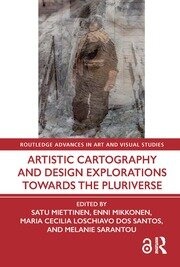
Explores the pluriverse of art and design through epistemological and methodological considerations. What kinds of sustainable ways are there for knowledge transfer, supporting plural agendas, finding novel ways for unsettling conversations, unlearning and learning and challenging power structures with marginalised groups and contexts through art and design? The main themes of the book are art and design methods, epistemologies and practices that provide critical, interdisciplinary, pluriversal and decolonial considerations. The book challenges the domination of the white logic of art and design and shifts away from the Anglo-European one-world system towards the pluriverse.

In this book we describe the basic principles, problems, and methods of clssical mechanics. Our main attention is devoted to the mathematical side of the subject. Although the physical background of the models considered here and the applied aspects of the phenomena studied in this book are explored to a considerably lesser extent, we have tried to set forth first and foremost the “working” apparatus of classical mechanics. This apparatus is contained mainly in Chapters 1, 3, 5, 6, and 8. Chapter 1 is devoted to the basic mathematical models of classical - chanics that are usually used for describing the motion of real mechanical systems. Special attention is given to the study of motion with constraints and to the problems of realization of constraints in dynamics. In Chapter 3 we discuss symmetry groups of mechanical systems and the corresponding conservation laws. We also expound various aspects of ord- reduction theory for systems with symmetries, which is often used in appli- tions. Chapter 4 is devoted to variational principles and methods of classical mechanics. They allow one, in particular, to obtain non-trivial results on the existence of periodic trajectories. Special attention is given to the case where the region of possible motion has a non-empty boundary. Applications of the variational methods to the theory of stability of motion are indicated.

The first part of the book deals with the geometrical description of uniform bodies and their homogeneity (i.e., integrability) conditions. In the second part, a theory of material evolution is developed and its relevance in various applied contexts discussed. The necessary geometrical notions are introduced as needed in the first two parts but often without due attention to an uncompromising mathematical rigour. This task is left for the third part of the book, which is a highly technical compendium of those concepts of modern differential geometry that are invoked in the first two parts (differentiable manifolds, Lie groups, jets, principal fibre bundles, G-structures, connections, frame bundles, integrable prolongations, groupoids, etc.).

Since the late 1960s, various groups have investigated the influence of marine surface films on mechanisms dominating energy and mass transfer across the ocean/atmosphere interface. However, a compendium summarizing the state-of-the-art research in this field is still missing. The book fills this gap and transfers the accumulated knowledge to the scientific community. After a brief historical chapter basic chemical insights are presented, followed by theoretical and experimental approaches carried out in laboratory facilities. Air-sea interaction experiments are then described and finally, remote sensing applications with sea slicks and crude oil spills are presented.
This book deals with the differential geometry of manifolds, loop spaces, line bundles and groupoids, and the relations of this geometry to mathematical physics. Various developments in mathematical physics (e.g., in knot theory, gauge theory, and topological quantum field theory) have led mathematicians and physicists to search for new geometric structures on manifolds and to seek a synthesis of ideas from geometry, topology and category theory. In this spirit, this book develops the differential geometry associated to the topology and obstruction theory of certain fiber bundles (more precisely, associated to grebes). The theory is a 3-dimensional analog of the familiar Kostant--Weil theory of line bundles. In particular the curvature now becomes a 3-form.
Local Newforms for GSp(4) describes a theory of new- and oldforms for representations of GSp(4) over a non-archimedean local field. This theory considers vectors fixed by the paramodular groups, and singles out certain vectors that encode canonical information, such as L-factors and epsilon-factors, through their Hecke and Atkin-Lehner eigenvalues. While there are analogies to the GL(2) case, this theory is novel and unanticipated by the existing framework of conjectures. An appendix includes extensive tables about the results and the representation theory of GSp(4).

سوريا - اتستراد درعا - غباغب
+963-15 2050 - 15 860 380 /1/2/3 - 11 662 3900