



الصفحة 2
الصفحة 2

Handbook of nanoencapsulation : Preparation, characterization, delivery, and safety of nutraceutical nanocomposites
Nutraceutical encapsulation envelopes protection of products from oxidative damage, controlled delivery of nanoencapsulated nutraceuticals and improved nutraceutical bioavailability as well as biological action. It is a promising technique to ensure the stabilization of such labile compounds and to protect the core ingredients from premature reactions and interactions In a comprehensive manner, the Handbook of Nanoencapsulation: Preparation, Characterization, Delivery and Safety of Nutraceutical Nanocomposites presents various nanosystems/nanocarriers, physical and chemical techniques used in encapsulation of various nutraceuticals, and the targeted delivery of various significant nutraceuticals.

Fundamentals of Food Process Engineering
While continuing the tradition of expansive coverage, Fundamentals of Food Process Engineering, Third Edition, has been fully updated and revised. The new edition of this classic text emphasizes problem solving, including technological principles that form the basis for a process so that the process can be better understood and the selection of processing parameters to maximize product quality and safety can be made more effective. In addition, the book contains new, hard-to-find data needed to conduct food process engineering calculations.

Functional Foods
Functional Foods Presenting cutting-edge information on new and emerging food engineering processes, Functional Foods, the second volume in the groundbreaking new series, “Bioprocessing in Food Science,” is an essential reference on the modeling, quality, safety, and technologies associated with food processing operations today.

Functional Biomaterials : Drug Delivery and Biomedical Applications
Explores in depth a wide range of functional biomaterials-based systems for drug, gene delivery, and biomedical aspects. The chapters cover newer technologies such as polymeric micelle, pH-responsive biomaterials, stimuli-responsive hydrogels, silk fibroin, inorganic biomaterials, synthetic biomaterials, 3D printed biomaterials, metallic biomaterials, ceramic and hybrid biomaterials. It also describes the theranostic approaches for cancer therapy, the biomaterials-based nanofibers scaffolds in tissue engineering, as well as the strategies applications of metallic biomaterials for the medical and dental prosthetic field.

Food Safety Culture : Creating a Behavior-Based Food Safety Management System
Food safety awareness is at an all time high, new and emerging threats to the food supply are being recognized, and consumers are eating more and more meals prepared outside of the home. Accordingly, retail and foodservice establishments, as well as food producers at all levels of the food production chain, have a growing responsibility to ensure that proper food safety and sanitation practices are followed, thereby, safeguarding the health of their guests and customers. Achieving food safety success in this changing environment requires going beyond traditional training, testing, and inspectional approaches to managing risks. It requires a better understanding of organizational culture and the human dimensions of food safety. To improve the food safety performance of a retail or foodservice establishment, an organization with thousands of employees, or a local community, you must change the way people do things. You must change their behavior. In fact, simply put, food safety equals behavior.

Food Safety : A Practical and Case Study Approach
The ISEKI-Food book series is a collection where various aspects of food safety and environmental issues are introduced and reviewed by scientists specializing in the field. In all of the books special emphasis is placed on including case studies applicable to each specific topic. The books are intended for graduate students and senior level undergraduate students as well as professionals and researchers interested in food safety and environmental issues applicable to food safety."ISEKI-Food" is an acronym for "Integrating Safety and Environmental Knowledge Into Food Studies".

Food nanotechnology
Nanotechnology is increasingly being utilized within the food industry to create innovative products with new or improved properties. This book introduces the history of nanotechnology applications in the food industry. It then discusses the key physicochemical and structural characteristics of the different kinds of nanoparticles found in foods, as well as showing how these characteristics lead to their unique functional attributes. Applications of nanotechnology in the food and agricultural industries are then covered, including the creation of nanopesticides, nanofertilizers, nutrient delivery systems, functional ingredients, smart packaging materials, nanofilters, and sensors, as well as for the conversion of waste materials into value-added products. Finally, the potential toxicity of both organic and inorganic nanoparticles found in foods is critically assessed. The author is a Distinguished Professor of food science who uses physics, chemistry, and biology to improve the quality, safety, and healthiness of foods. He has published over a thousand scientific articles and numerous books in this area and is currently the most highly cited food scientist in the world. He has won numerous awards for his scientific achievements.

Food Materials Science : Principles and Practice
Food manufacture is about producing billions of units of standardized products which must be cheap, nutritious, safe and appealing to the consumer’s taste. Food products are complex multicomponent and structured edible materials that nevertheless must comply with the laws of physics and fundamentals of engineering sciences. In the last 20 years the design of food products with specific functionalities has advanced significantly by the application of scientific knowledge from disciplines such as polymer physics, colloidal and mesoscopic physics, materials science and new imaging and probing techniques borrowed from chemistry, biology and medicine. Our knowledge of the relationship between microstructure, processing, and macroscopic properties continues to increase as the science of food materials advances at a fast pace.

Food Engineering : Integrated Approaches
Food Engineering: Integrated Approaches presents an up-to-date review of important food engineering concepts, issues and recent advances in the field. Distinguished food engineers and food scientists from key institutions worldwide have contributed chapters that provide a deep analysis of their particular subjects. At the same time, each topic is framed within the context of a broader more integrated approach, demonstrating its relationship and interconnectedness to other areas. The premise of this work, therefore, is to offer both a comprehensive understanding of food engineering as a whole and a thorough knowledge of individual subjects. This approach appropriately conveys the basic fundamentals, state-of-the-art technology, and applications of the involved disciplines.

Food Emulsifiers and Their Applications
Thoroughly revised and updated, the second edition of Food Emulsifiers and their Applications integrates theoretical background with practical orientation and serves as the definitive reference on subject. It offers practitioners an overview of the manufacture, analysis, physical properties, interactions and applications of emulsifiers used in processed food. Written for food technologists as well as R & D and product development personnel, begins with the design and preparation of emulsifiers (including interactions with other food ingredients), which leads in to product categories, including dairy, infant nutrition, bakery, confectionery, and margarine, followed by nutrition improvement and processing techniques.
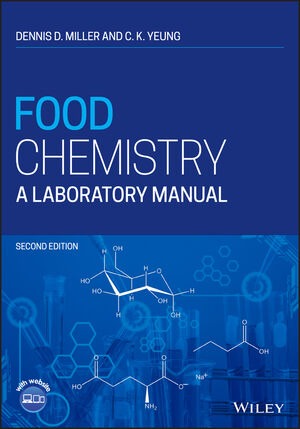
Food chemistry : A laboratory manual
FOOD CHEMISTRY A manual designed for Food Chemistry Laboratory courses that meet Institute of Food Technologists undergraduate education standards for degrees in Food Science Every chapter offers introductory summaries of key methodological concepts and interpretations of the results obtained from food experiments. The book provides a supplementary online Instructor’s Guide useful for adopting professors that includes a Solutions Manual and Preparation Manual for laboratory sessions.

Food bites : The science of the foods we eat
Food Bites is an easy-to-read, often humorous book on the scientific basis of the foods we eat, and answers those pesky, niggling questions such as: Is the quality of beer really affected by the type of water used? and Processed foods: good or bad? Readers will be captivated by this superbly written book, especially so as their guides are Professor Richard Hartel, professor of Food Engineering at UW-Madison, along with his daughter, AnnaKate Hartel. Professor Hartel has for the last four years penned a witty and illuminating column on all aspects of food science for the Capital Times of Madison, and his weekly wisdom has now been collected into a single publication.
Food biotechnology
This work, with only six chapters, covers a fraction of the vast area of food biotechnology … . the detailed information included in each chapter is meticulously referenced and complete. … the chapters are well written and easy to understand. The many examples used by the authors give the book a very practical feel, making it an easier read than one might expect.
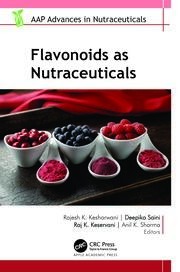
Flavonoids as nutraceuticals
Flavonoids are well-known plant metabolites that have extraordinary properties that can be used for treating health issues. The pharmaceutical importance of flavonoids is due to their anti-depressant, anti-viral, anti-inflammatory, and antioxidant capacities. They are also of great importance when it comes to neuroprotection, cardiovascular disorders, and many types of cancer. Flavonoids are also easily available and produce less harmful side effects than some conventional therapeutics. This new volume examines the growing use of flavonoids for prevention and treatment of diseases and discusses their beneficial mechanisms. Chapters in the volume address diverse uses as anti-aging tools, as anti-inflammatory agents, for treating pregnancy-induced disorders, as a promising tool to combat infection of Covid-19, etc. The book explores their specific therapeutic antiviral potentials, the gene expression by flavonoids, and the role of flavonoids in agriculture.

Extracting Methods of Essential laurel oil and Fixed oil, Their effects on bacteria
Laurus nobilis is an evergreen plant belonging to the Lauraceae family, native to Southern Europe and the Mediterranean area. This is the report on the composition and bioactivity of laurel essential oil (EO) from leaves and extraction essential oil by two solvents (water and ethanol 69%) using by two devices (Clevenger and evaporator) then we apply the effect of oil and extract on the bacteria. there are some differences between the extraction by water and ethanol . The antibacterial properties of laurel EOs were examined according to the agar well diffusion method The leaf EO showed antibacterial activities against almost all strains of the microorganisms tested, whereas the twig EO was only able to inhibit Staphylococcus aurous and Escherichia coli were the bacterial strains that showed the highest resistance to the laurel EO. The results can benefit the EO industry and bio pesticide development.

Essentials in Food Science
Knowledge of food science is applicable to all persons, in diverse college majors. This text is designed with a user-friendly approach to Food Science for the non-major. This text reviews an Introduction to Food Components – quality and water. Next it addresses carbohydrates – including starches, pectins and gums, breads and pasta, vegetables and fruits. Then proteins – meats, poultry, fish, beans, eggs, milk and milk products are presented. Following proteins are fats and emulsions. Then sugars and sweeteners, and baked products, the latter of which builds upon basic food component knowledge. Various aspects of Food Production are examined, including food safety, preservation and processing, food additives and packaging. Government regulation and labeling complete the chapter information.

Essential oils as antimicrobial agents in food preservation
As the food industry responds to the increasing consumer demand for green, safe and sustainable products, it is reformulating new products to replace chemical synthetic food additives. Essential Oils as Antimicrobial Agents in Food Preservation provides a comprehensive introduction to the antimicrobial activity of plant essential oils and their application strategies in food preservation. It is aimed at food microbiology experts, food preservation experts, food safety experts, food technicians and students.

Electromagnetic Technologies in Food Science
Electromagnetic Technologies in Food Science examines various methods employed in food applications that are based on the entire electromagnetic (EM) spectrum. Focusing on recent advances and challenges in food science and technology, this is an up-to-date volume that features vital contributions coming from an international panel of experts who have shared both fundamental and advanced knowledge of information on the dosimetry methods, and on potential applications of gamma irradiation, electron beams, X-rays, radio and microwaves, ultraviolet, visible, pulsed light, and more.
Edible Plants in Health and Diseases ; Vol.1 : Cultural, Practical and Economic Value
Provides significant information on some of the promising edible medicinal plants and how these possess both nutritive as well as medicinal value. The significance of these edible plants in traditional medicine, their distribution in different regions and the importance of their chemical constituents are discussed systematically concerning the role of these plants in ethnomedicine in different regions of the world. The current volume focuses on the economic and culturally important medicinal uses of edible plants and a detailed survey of the literature on scientific researches of pharmacognostical characteristics, traditional uses, scientific validation, and phytochemical composition, and pharmacological activities. This book is a single-source scientific reference to explore the specific factors that contribute to these potential health benefits, as well as discussing how to maximize those potential benefits. Chemists, food technologists, pharmacologists, phytochemists as well as all professionals involved with quality control and standardization will find in this book a valuable and updated basis for their work.

Edible Plants in Health and Diseases ; Vol. II : Phytochemical and Pharmacological Properties
Provides essential information on some of the promising edible medicinal plants and how these possess both nutritional as well as therapeutic value. The significance of the edible plants in traditional medicine and the importance of the distribution of their chemical constituents are discussed systematically concerning the role of these plants in ethnomedicine in different regions of the world. The current volume deals with the individual plants' phytochemical and pharmacological properties, emphasizing human health. The title would demonstrate the value of natural edible plants and introduce readers to state-of-the-art developments and trends in omics-driven research.
