



الصفحة 2
الصفحة 2

Fields and Galois Theory
The pioneering work of Abel and Galois in the early nineteenth century demonstrated that the long-standing quest for a solution of quintic equations by radicals was fruitless: no formula can be found. The techniques they used were, in the end, more important than the resolution of a somewhat esoteric problem, for they were the genesis of modern abstract algebra. This book provides a gentle introduction to Galois theory suitable for third- and fourth-year undergraduates and beginning graduates. The approach is unashamedly unhistorical: it uses the language and techniques of abstract algebra to express complex arguments in contemporary terms. Thus the insolubility of the quintic by radicals is linked to the fact that the alternating group of degree 5 is simple - which is assuredly not the way Galois would have expressed the connection.

Field Theory ; 2nd ed.
This book presents the basic theory of fields, starting more or less from the beginning. It is suitable for a graduate course in field theory, or independent study.There are new exercises, a new chapter on Galois theory from an historical perspective, and additional topics sprinkled throughout the text, including a proof of the Fundamental Theorem of Algebra, a discussion of casus irreducibilis, Berlekamp's algorithm for factoring polynomials over Zp and natural and accessory irrationalities.

Feynman Integral Calculus
The problem of evaluating Feynman integrals over loop momenta has existed from the early days of perturbative quantum field theory. The goal of the book is to summarize those methods for evaluating Feynman integrals that have been developed over a span of more than fifty years. `Feynman Integral Calculus' characterizes the most powerful methods in a systematic way. It concentrates on the methods that have been employed recently for most sophisticated calculations and illustrates them with numerous examples, starting from very simple ones and progressing to nontrivial examples. It also shows how to choose adequate methods and combine them in a non-trivial way.

Explorations in Mathematical Physics : The Concepts Behind an Elegant Language
This book takes you on a tour of the main ideas forming the language of modern mathematical physics. Here you will meet novel approaches to concepts such as determinants and geometry, wave function evolution, statistics, signal processing, and three-dimensional rotations. You'll see how the accelerated frames of special relativity tell us about gravity. On the journey, you'll discover how tensor notation relates to vector calculus, how differential geometry is built on intuitive concepts, and how variational calculus leads to field theory. You will meet quantum measurement theory, along with Green functions and the art of complex integration, and finally general relativity and cosmology.

Evaluating Feynman Integrals
The problem of evaluating Feynman integrals over loop momenta has existed from the early days of perturbative quantum field theory. Although a great variety of methods for evaluating Feynman integrals has been developed over a span of more than fifty years, this book is a first attempt to summarize them. 'Evaluating Feynman Integrals' characterizes the most powerful methods, in particular those used for recent, quite sophisticated calculations, and then illustrates them with numerous examples, starting from very simple ones and progressing to nontrivial examples.

EM Modeling of Antennas and RF Components for Wireless Communication Systems
The book focuses on the practical aspects of computational electrodynamics. A short review of electromagnetic field theory and an illustrative introduction to basic concepts of numerical methods provide the mathematical and physical background. The main part the book guides the reader step-by-step through the modelling process: from the initial "what question shall the model answer?", through the setting up of a computer model by creating geometry, boundary conditions, sources, …, to post processing, validation, and optimization. A number of antenna and filter examples demonstrate the advantages and disadvantages of different numerical methods. So the book provides a realistic view on the capabilities and limits of state-of-the-art 3D-field simulators and on how to apply this knowledge efficiently to EM analysis and designing of RF applications in modern communication systems.

Elektromagnetische feldtheorie : für ingenieure und physiker = Electromagnetic field theory : For engineers and physicists
This well-established, didactically excellent textbook combines clarity with extraordinary accuracy in the formation of terms and in the derivations. The electromagnetic field theory and the mathematical methods required for it are taught. Maxwell's equations are presented and explained. This is followed by explanations about electrostatics, flow problems, magnetostatics, quasi-stationary fields and electromagnetic waves. It gives an outlook on fundamental questions, some of which are still open, from physics to quantum mechanics. A chapter on the special theory of relativity, with the help of which numerous problems of electromagnetic field theory can be solved more easily, rounds off the work.

Electromagnetic Field Theory for Engineers and Physicists
This established, didactically excellent textbook unifies intuitiveness with extraordinary precision of its terminology and the derivation of concepts. It was developed as manuscript to teach students in electrical engineering, and has served to do so for thousands of students over two decades.

Collider Physics within the Standard Model : A Primer
In 2013 the late Prof. Altarelli wrote: The discovery of the Higgs boson and the non-observation of new particles or exotic phenomena have made a big step towards completing the experimental confirmation of the standard model of fundamental particle interactions. It is thus a good moment for me to collect, update and improve my graduate lecture notes on quantum chromodynamics and the theory of electroweak interactions, with main focus on collider physics. I hope that these lectures can provide an introduction to the subject for the interested reader, assumed to be already familiar with quantum field theory and some basic facts in elementary particle physics as taught in undergraduate courses.
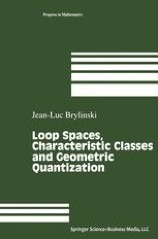
Loop Spaces, Characteristic Classes and Geometric Quantization
This book deals with the differential geometry of manifolds, loop spaces, line bundles and groupoids, and the relations of this geometry to mathematical physics. Various developments in mathematical physics (e.g., in knot theory, gauge theory, and topological quantum field theory) have led mathematicians and physicists to search for new geometric structures on manifolds and to seek a synthesis of ideas from geometry, topology and category theory. In this spirit, this book develops the differential geometry associated to the topology and obstruction theory of certain fiber bundles (more precisely, associated to grebes). The theory is a 3-dimensional analog of the familiar Kostant--Weil theory of line bundles. In particular the curvature now becomes a 3-form.

Lectures on Quantum Mechanics
Presents theoretical physics with a breathtaking array of examples and anecdotes. Basdevant's style is clear and stimulating, in the manner of a brisk classroom lecture that students can follow with ease and enjoyment.
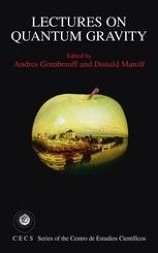
Lectures on Quantum Gravity
A primary goal was to foster interaction and communication between participants from different cultures, both in the layman’s sense of the term and in terms of approaches to quantum gravity. We hope that the links formed by students and the school will persist throughout their professional lives, continuing to promote interaction and the essential exchange of ideas that drives research forward. This volume contains improved and updated versions of the lectures given at the School. It has been prepared both as a reminder for the participants, and so that these pedagogical introductions can be made available to others who were unable to attend. We expect them to serve students of all ages well.
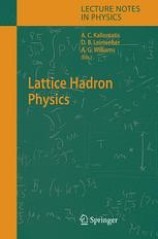
Lattice Hadron Physics
This series of lectures draws upon the developments made in recent years in implementing chirality on the lattice via the overlap formalism. These developments exploit chiral effective field theory in order to extrapolate lattice results to physical quark masses, new forms of improving operators to remove lattice artefacts, analytical studies of finite volume effects in hadronic observables, and state-of-the-art lattice calculations of excited resonances. This volume is designed to assist those outside the field who want quickly to becoming literate in these topics. So it is intended for graduate students and experienced researchers in other areas of hadronic physics to provide the background through which they can appreciate, if not become active in, contemporary lattice gauge theory and its applications to hadronic phenomena.
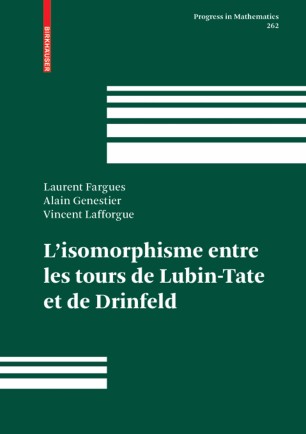
L’isomorphisme entre les tours de Lubin-Tate et de Drinfeld = The isomorphism between the Lubin-Tate and Drinfeld towers
This book contains a detailed and complete demonstration of the existence of an equivariate isomorphism between the Lubin-Tate and Drinfeld p-adic turns. The result is established in equal and unequal characteristics. There is also given as an application a proof that the equivariant cohomologies of these two turns are isomorphic, a result which has applications to the study of the local Langlands correspondence. During the proof, reminders and complements are given on the structure of the two preceding moduli spaces, the p-divisible formal groups and the p-adic rigid analytical geometry.
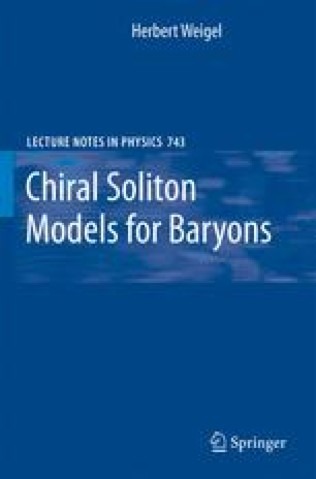
Chiral Soliton Models for Baryons
This concise research monograph introduces and reviews the concept of chiral soliton models for baryons. In these models, baryons emerge as (topological) defects of the chiral field. The many applications shed light on a number of bayron properties, ranging from static properties via nucleon resonances and deep inelastic scattering to even heavy ion collisions. As far as possible, the theoretical investigations are confronted with experiment. Conceived to bridge the gap between advanced graduate textbooks and the research literature, this volume also features a number of appendices to help nonspecialist readers to follow in more detail some of the calculations in the main text.

Bordieuan Field Theory as an Instrument for Military Operational Analysis
This book uses Pierre Bourdieu’s field theory as a lens through which to examine military operations. Novel in its approach, this innovative text provides a better, more nuanced understanding of the modern ‘battlespace’, particularly in instances of prolonged low-intensity conflict. Formed in two parts, this book primarily explores the scope of Bourdien theory before secondly providing a detailed case study of the Yugoslavian succession war of 1990-1992. Gunneriusson suggests that although theories do not necessarily provide answers, they do help us ask better questions. This volume suggests news lines of interdisciplinary investigation that will be of interest to members of armed forces, practitioners from NGOs, and policymakers.
Basic bundle theory and K-Cohomology invariants
Based on several recent courses given to mathematical physics students, this volume is an introduction to bundle theory with the aim to provide newcomers to the field with solid foundations in topological K-theory. A fundamental theme, emphasized in the book, centers around the gluing of local bundle data related to bundles into a global object. One renewed motivation for studying this subject, which has developed for almost 50 years in many directions, comes from quantum field theory, especially string theory, where topological invariants play an important role.
Axions : Theory, Cosmology, and Experimental Searches
Axions are peculiar hypothetical particles that could both solve the CP problem of quantum chromodynamics and at the same time account for the dark matter of the universe. Based on a series of lectures by world experts in this field held at CERN (Geneva), this volume provides a pedagogical introduction to the theory, cosmology and astrophysics of these fascinating particles and gives an up-to-date account of the status and prospect of ongoing and planned experimental searches. Learners and practitioners of astroparticle physics will find in this book both a concise introduction and a current reference work to a showcase topic that connects the "inner space" of the elementary particle world with the "outer space" of the universe at large.
Approaches to Fundamental Physics : An Assessment of Current Theoretical Ideas
This book presents contributions on particle theory, quantum field theory, general relativity, quantum gravity, string theory and cosmology. These represent the outcome of numerous discussions, taking place among the authors over a period of several years, about the research landscape of present-day fundamental theoretical physics. Indeed, the resultant book documents their attempt, out of their respective and highly specialized scientific positions, to find a way of communicating about methods, achievements and promises of the different approaches which shape the development of this field. It is therefore also an attempt to elucidate the connections between these approaches, and present them not as disjoint ventures but rather as facets of a common quest for understanding. Readers interested in fundamental approaches of theoretical physics will find this book highly stimulating and enlightening.
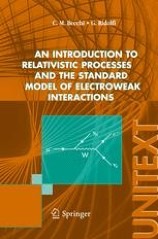
An introduction to relativistic processes and the standard model of electroweak interactions
The first part of the volume is devoted to the description of scattering processes in the context of relativistic quantum field theory. The use of the semi-classical approximation allows us to illustrate the relevant computation techniques in a reasonably small amount of space. Our approach to relativistic processes is original in many respects. The second part contains a detailed description of the construction of the standard model of electroweak interactions, with special attention to the mechanism of particle mass generation. The extension of the standard model to include neutrino masses is also described. We have included a number of detailed computations of cross sections and decay rates of pedagogical and phenomenological relevance.
