



الصفحة 2
الصفحة 2

Drug Selectivity : An Evolving Concept in Medicinal Chemistry
Provides a current overview and comprehensive compilation for medicinal chemists that discusses the effects of aiming for multiple targets on the entire drug development process. The result is a broad survey of current and future strategies for drug selectivity in medicinal chemistry with theoretical but also practical aspects. Different strategies are presented and evaluated, such as various design approaches, merged multiple ligands, discovery technologies and a broad range of successful examples of unselective drugs taken from all major disease areas. With its wide-ranging view of an emerging new paradigm in drug development, this handbook is of prime importance for every medicinal and pharmaceutical chemist.

Drug discovery with privileged building Blocks : Tactics in medicinal chemistry
Drug Discovery with Privileged Building Blocks traces back PharmaBlock’s founding philosophy of designing privileged building blocks. High-quality building blocks are crucial not only to biological activities of different molecules but also to ADMET properties, which eventually will impact the success rate of drug discovery projects. A thorough study of how building blocks perform in drug molecules and a regular analysis of new building block structures in the latest researches have proven to be a fruitful strategy to generate novel building blocks. Using this strategy, PharmaBlock has supplied the drug industry with a great number of building blocks, which are increasingly being adopted by drug hunters, and these are identified in this book.

Drug discovery and development
Presents up-to-date scientific information for maximizing the ability of a multidisciplinary research team to discover and bring new drugs to the marketplace. It explores many scientific advances in new drug discovery and development for areas such as screening technologies, biotechnology approaches, and evaluation of efficacy and safety of drug candidates through preclinical testing. This book also greatly expands the focus on the clinical pharmacology, regulatory, and business aspects of bringing new drugs to the market and offers coverage of essential topics for companies involved in drug development. Historical perspectives and predicted trends are also provided.

Drug design : A conceptual overview
The newer research areas in pharmaceutical sciences, particularly molecular modeling and simulations, prompted a more efficient drug discovery process. Informatics integrated with pharmaceutical sciences (cheminformatics and bioinformatics) became an essential component of drug research. Drug informatics such as genomics and proteomics assists in the Rational Drug Design (RDD). This emerging discipline is known as “Computer-Aided Drug Design" (CADD), which has profound application in RDD. The advanced and adequate practice in drug design informatics is essential for pharmacy graduates. Hence, a companion for acquiring knowledge on these concepts is vital. The students of B. Pharmacy, M. Pharmacy (Pharmaceutical Chemistry, Pharmacology, and Pharmaceutics), biotechnology, biomedical engineering and other interdisciplinary fields may find this book as a reference guide.

Drug delivery approaches and nanosystems ; Vol.1 : Novel drug carriers
Presents a full picture of the state-of-the-art research and development in drug delivery systems using nanotechnology and its applications. It addresses the ever-expanding application of nanotechnology or nano-sized materials in the medical field and the real-world challenges and complexities of current drug delivery methodologies and techniques.

Drug delivery : An integrated clinical and engineering approach
Offers a much needed comprehensive overview and patient-oriented approach for enhanced drug delivery optimization and advancement. Starting with an introduction to the subject and pharmacokinetics, it explores advances for such topics as oral, gastroretentive, intravitreal, and intrathecal drug delivery, as well as insulin delivery, gene delivery, and biomaterials-based delivery systems. It also describes drug delivery in cancer, cardiac, infectious diseases, airway diseases, and obstetrics and gynecology applications.

Defects of Secretion in Cystic Fibrosis
This book brings together physicians, physiologists, and other scientists involved in basic research, from molecular biology to drug design and introduces novel investigative and therapeutic aspects of secretion disorders relevant in cystic fibrosis and related diseases. This book will be of interest to Molecular biologists, physiologists, scientists working in pharmaceutical research and drug developement, physicians and researchers in Cystic fibrosis and related diseases.

Current Drug Synthesis
Delivers an authoritative and comprehensive discussion of the medicinal chemistry of current drugs, as well as the cutting-edge science involved in their synthesis. The book demystifies the process of modern drug discovery for both industry practitioners and students, while capturing the state-of-the-art techniques used to discover some of the most impactful medicines on the market today. Covering six different disease areas – including infectious disease, cancer, cardiovascular and metabolic disease, the central nervous system, anti-inflammatory disease, and a miscellaneous section – the book explores 18 different drugs before concluding with chapters on computational drug discovery and peptide drugs.

Concepts in pharmaceutical biotechnology and drug development
Provides comprehensive coverage of the development of new pharmaceuticals and the enhancement of existing ones. It offers a comprehensive understanding of pharmaceutical biotechnology, including its underlying principles and practical applications from an industrial standpoint. While introducing the roles and applications of biotechnology in drug design and development, the book describes how developments in other fields, like genomics, proteomics, and high-throughput screening, have facilitated the discovery of novel therapeutic targets and drug development methods. It included concepts that are essential to biotechnology and apply to protein therapies. And provides a thorough overview of the ways in which biotechnology influences drug development, production, and regulation, and is a valuable resource for those seeking to enhance their understanding in this area.

Computer-aided drug design
Computer-Aided Drug Design (CADD) is a comprehensive guide designed for both beginners and experienced users in CADD. Covers the fundamental principles and gradually delves into more advanced concepts and techniques, making it an invaluable resource to anyone interested in CADD. It begins by establishing a solid foundation, explaining the core concepts of CADD, the user interface and essential tools. It covers QSAR, molecular docking, homology modeling, virtual screening, pharmacophore modeling, ensuring that the reader can quickly become proficient in CADD. Provides in-depth insights into 3D modeling, rendering, and parametric design. The style of the book is simple, every topic begins from the very basics and explores advanced levels with clarity. Practical examples, step-by-step tutorials and hands-on exercises, are included for better understanding.

Computer Aided Pharmaceutics and Drug Delivery : An Application Guide for Students and Researchers of Pharmaceutical Sciences
Examines the role of computer-assisted techniques for discovering, designing, optimizing and manufacturing new, effective, and safe pharmaceutical formulations and drug delivery systems. The book discusses computational approaches, statistical modeling and molecular modeling for the development and safe delivery of drugs in humans. The application of concepts of QbD (Quality by Design), DoE (Design of Experiments), artificial intelligence and in silico pharmacokinetic assessment/simulation have been made a lot easier with the help of commercial software and expert systems. This title provides in-depth knowledge of such useful software with illustrations from the latest researches. The book also fills in the gap between pharmaceutics and molecular modeling at micro, meso and maro scale by covering topics such as advancements in computer-aided Drug Design (CADD), drug-polymer interactions in drug delivery systems, molecular modeling of nanoparticles and pharmaceutics/bioinformatics.

Computational methods for rational drug design
Covers the tools and techniques of drug design with applications to the discovery of small molecule-based therapeutics, detailing methodologies and practical applications and addressing the challenges of techniques like AI/ML and drug design for unknown receptor structures. Divided into 23 chapters, the contributors address various cutting-edge areas of therapeutic importance such as neurodegenerative disorders, cancer, multi-drug resistant bacterial infections, inflammatory diseases, and viral infections.

Computational drug discovery and design
Provides new and updated methods and techniques for identification of drug target, binding sites prediction, high- throughput virtual screening, lead discovery and optimization, conformational sampling, prediction of pharmacokinetic properties using computer-based methodologies. Chapters also focus on the application of the latest artificial intelligence technologies for computer aided drug discovery.

Computational Chemistry and Molecular Modeling : Principles and Applications
The gap between introductory level textbooks and highly specialized monographs is filled by this modern textbook. It provides in one comprehensive volume the in-depth theoretical background for molecular modeling and detailed descriptions of the applications in chemistry and related fields like drug design, molecular sciences, biomedical, polymer and materials engineering. Special chapters on basic mathematics and the use of respective software tools are included.
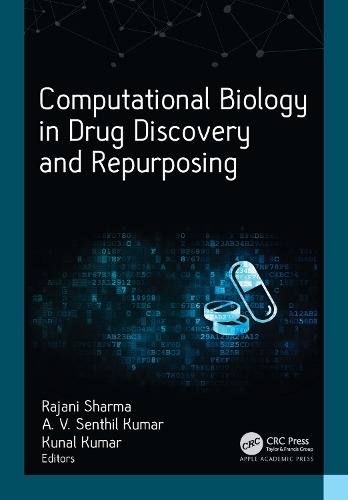
Computational biology in drug discovery and repurposing
Takes an in-depth look at the emerging and prospective field of computational biology and bioinformatics, which possesses the ability to analyze large accumulated biological data collected from sequence analysis of proteins and genes and cell population with an aim to make new predictions pertaining to drug discovery and new biology. The book explains the basic methodology associated with a bioinformatics and computational approach in drug designing. It then goes on to cover the implementation of computational programming, bioinformatics, pharmacophore modeling, biotechnological techniques, and pharmaceutical chemistry in designing drugs. The major advantage of intervention of computer language or programming is to cut down the number of steps and costs in the field of drug designing, reducing the repeating steps and saving time in screening the potent component for drug or vaccine designin
Clinical biochemistry and drug development : From fundamentals to output
Focuses on clinical biochemistry fundamentals, cell culture techniques, and drug discovery and development concepts. It deals with three different fields of clinical research: cell culture, clinical biochemistry, and drug discovery and development.
Checkpoint Responses in Cancer Therapy
This book’s distinguished panel of authors takes a close look at topics ranging from the major molecular players affecting DNA synthesis and the response to DNA damage to advances made in the identification of chemical compounds capable of inhibiting individual mitotic kinases. Illuminating and authoritative, Checkpoint Responses in Cancer Therapy offers a critical summary of findings for researchers in the pharmaceutical and biotechnology industries and a valuable resource for academic scientists in cancer research and the study of cell-cycle regulation, signal transduction and apoptosis.
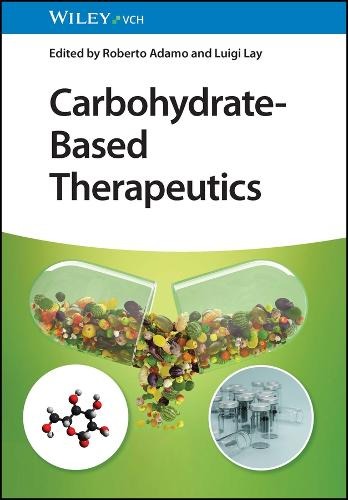
Carbohydrate-based therapeutics
Explores new frontiers in carbohydrate-based therapeutic applications, utilizing a unique approach by providing a detailed background of diseases coupled with subsequent carbohydrate-based therapies. The link between chemistry and design of novel carbohydrate-based medicines is highlighted and a broad overview of all the potential applications of carbohydrates is given. Emphasis is laid on concepts used for carbohydrate drug design, structure– activity relationship, and impact on health and diseases. The text also discusses newer topics like nanoparticles, material science, and tissue generation.
Cancer drug resistance : methods and protocols
Discusses the latest techniques used to identify cancer drug resistance determinants at the molecular, cellular, and functional levels. Chapters in this book cover up-to-date topics including tumor-microenvironment cell co-culture methods and microfluidics systems; workflows for functional assessment of drug resistance in vitro and in vivo; quantitative techniques for identifying quiescent blood-flow circulating cells; and single-cell characterization methods, such as mass cytometry.
CADD and informatics in drug discovery
Updates knowledge on recent advances in computational and bioinformatics tools/techniques and their practical applications in modern drug design and discovery programme. Also it encompasses fundamental principles, advanced methodologies and applications of various CADD approaches including several cutting-edge areas / presenting recent developments covering ongoing trends in the field of computer-aided drug discovery. Having contributions by a global team of experts, the book is expected to be an ideal resource for drug discovery scientists, medicinal chemists, pharmacologists, toxicologists, phytochemists, biochemists, biologists, RandD personnel, researchers, students, teachers and those working in the field of drug discovery. It will fill the knowledge gaps that exist in the current CADD approaches and methodologies/ protocols being widely used in both academic and research practices. Further, a special focus on current status of various computational drug design approaches (SBDD, LBDD, De-novo drug design, Pharmacophore-based search), bioinformatics tools and databases, computational screening and modeling of phytochemicals/natural products, artificial intelligence and machine learning, and network pharmacology and system biology would certainly guide researchers, students or readers to conduct their research in the emerging area(s) of interest. It is also expected to be highly beneficial to different stakeholders working in the pharmaceutical and biotechnology industries (RandD), the academic as well as research sectors. .
