



الصفحة 2
الصفحة 2

Embedded System Design : Topics, Techniques and Trends; IFIP TC10 Working Conference: International Embedded Systems Symposium (IESS), May 30 - June 1, 2007, Irvine (CA), USA
Embedded systems have gained an enormous amount of processing power and functionality. Many of the formerly external components can now be integrated into a single System-on-Chip. This tendency has resulted in a dramatic reduction in the size and cost of embedded systems. As a unique technology, the design of embedded systems is an essential element of many innovations. This book including design methodology, specification and modeling, embedded software and hardware synthesis, networks-on-chip, distributed and networked systems, and system verification and validation. Particular emphaisis is paid to automotive and medical applications. A set of actual case studies and special aspects in embedded system design are included as well.

Electronic Circuit Design and Application
This textbook for core courses in Electronic Circuit Design teaches students the design and application of a broad range of analog electronic circuits in a comprehensive and clear manner. Readers will be enabled to design complete, functional circuits or systems. The authors first provide a foundation in the theory and operation of basic electronic devices, including the diode, bipolar junction transistor, field effect transistor, operational amplifier and current feedback amplifier. They then present comprehensive instruction on the design of working, realistic electronic circuits of varying levels of complexity, including power amplifiers, regulated power supplies, filters, oscillators and waveform generators. Many examples help the reader quickly become familiar with key design parameters and design methodology for each class of circuits. Each chapter starts from fundamental circuits and develops them step-by-step into a broad range of applications of real circuits and systems.

Digital self-tuning controllers : Algorithms, implementation and applications
Digital Self-tuning Controllers presents you with a complete course in self-tuning control, beginning with a survey of adaptive control and the formulation of adaptive control problems. Modelling and identification are dealt with before passing on to algebraic design methods and particular PID and linear-quadratic forms of self-tuning control. Finally, laboratory verification and experimentation will show you how to ground your theoretical knowledge in real plant control.

Digital Removable Partial Denture Technology : From Design Analysis to Practical Skills
Introduces esthetic clasp as an innovative method that improves the appearance of clasps by changing the clasp design. It details the concept of esthetic clasp, the classification of esthetic clasp design methods, the clinical pathway of esthetic clasp techniques, many selected cases, and the logos of different kinds of esthetic clasps.

Digital Control Systems : Design, Identification and Implementation
Digital Control Systems demonstrates in detail how to design and implement high-performance model-based controllers combining system identification and control design techniques extensively tested in industrial milieux. The effective use of these techniques is illustrated in the context of various systems including: d.c. motors, flexible transmissions, air heaters, distillation columns and hot-dip galvanizing. Topics covered include: • essentials of computer-based control systems; • controller design methods (robust pole placement, long-range-predictive control, state space, digital PID, etc.); • system identification techniques; • practical aspects of system identification and digital control.

Diagnosis and Fault-Tolerant Control
The book presents effective model-based analysis and design methods for fault diagnosis and fault-tolerant control. Architectural and structural models are used to analyse the propagation of the fault throughout the process, to test the fault detectability and to find the redundancies in the process that can be used to ensure fault tolerance. Design methods for diagnostic systems and fault-tolerant controllers are presented for processes that are described by analytical models, by discrete-event models or that can be dealt with as quantised systems. Five case studies on pilot processes show the applicability of the presented methods. The theoretical results are illustrated by two running examples used throughout the book.

Designing with the wind : Climate-derived architecture
This book explores wind-adaptive architectural design blending the parametric design with digital simulations and suggests a novel approach for specific, even extreme conditions, as the first step in creating architecture that can act in response to the nature around. The chapters propose an urban and architectural design that emerges from the specific wind microclimate of the design site and responds to the changes in the ambient wind conditions. The book looks closely at A) the interdisciplinary wind-driven design method for architects, engineers, and urbanists employing open-source software for CFD analysis and B) the tensegrity-membrane adaptive building façades.

Designing landscape architectural education : Studio ecologies for unpredictable futures
Asks designers and academic practitioners to describe their own work through an ecological lens, and then to articulate design approaches for developing new practices in landscape architecture teaching. Designing Landscape Architectural Education: Studio Ecologies for Unpredictable Futures, the Landscape Architecture Design Studio Companion serves as a resource for academic practitioners in the preparation and delivery of 'design-research studios' and students seeking guidance for design methodologies as a part of their landscape architectural education. It draws on the manifold issues of the climate crisis as a set of drivers to examine the utilisation of a range of innovative design approaches to address the current and future priorities of the discipline.

Designing healthy and liveable cities : Creating sustainable urban regeneration
Aim of this book is, after the definition of the field of investigation concerning sustainable regeneration trough topics such as resilience, adaptation, health and mixed connections, to illustrate the present-day approaches to the analysis and design of healthy places, and in particular the original Healthy Pl@ce Design method, flexible and repeatable in different contexts. The method aims at: identifying sustainable urban liveability and healthy and the factors which make places liveable and healthy from the user's point of view and identifying design interventions to enhance or create both urban liveability and health. Emblematic case studies carried out in Europe, USA and China - Bordeaux, Copenhagen, Hamburg, Madrid, Newcastle, Nice, Dublin, Vancouver and Wuhan - constitute the empirical part of the Book detailed with surveys, questionnaires, images and maps.

Designing Embedded Processors : A Low Power Perspective
Designing Embedded Processors examines the many ways in which processor based systems are designed to allow low power devices. It looks at processor design methods, memory optimization, dynamic voltage scaling methods, compiler methods, and multi processor methods. Each section has an introductory chapter to give a breadth view, and have a few specialist chapters in the area to give a deeper perspective. The book provides a good starting point to engineers in the area, and to research students embarking upon the exciting area of embedded systems and architectures.

Designers' guide to EN 1997-1 Eurocode 7 : Geotechnical Design – General Rules
Designers' Guide to EN 1997-1 presents a detailed guide to the new Geotechnical Design Eurocode.As such it gives an invaluable insight into a code that, for the first time, provides a comprehensive design philosophy that is not only applicable to all forms of geotechnical problems but also shares a common philosophy with the design methodology for structures of all the commonly encountered construction materials.
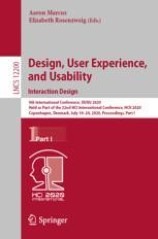
Design, user experience, and usability interaction design ; 9th International Conference, DUXU 2020, Held as Part of the 22nd HCI International Conference, HCII 2020, Copenhagen, Denmark, July 19–24, 2020, Proceedings, Part I
This book constitutes the refereed proceedings of the 9th International Conference on Design, User Experience, and Usability, DUXU 2020, held as part of the 22nd International Conference on Human-Computer Interaction, HCII 2020, in Copenhagen, Denmark, in July 2020. The conference was held virtually due to the COVID-19 pandemic. From a total of 6326 submissions, a total of 1439 papers and 238 posters has been accepted for publication in the HCII 2020 proceedings. The 40 papers included in this volume were organized in topical sections on UX design methods, tools and guidelines, interaction design and information visualization, and emotional design.

Design of steel-concrete composite structures using high-strength materials
Design of Steel-Concrete Composite Structures Using High Strength Materials provides guidance on the design of composite steel-concrete structures using combined high-strength concretes and steels. The book includes a database of over 2,500 test results on composite columns to evaluate design methods, and presents calculations to determine critical parameters affecting the strength and ductility of high-strength composite columns. Finally, the book proposes design methods for axial-moment interaction curves in composite columns. This allows a unified approach to the design of columns with normal- and high-strength steel concrete materials.

Design of residential building in Damascus
The structural form of this building contains 15 storys and one basement. In our project, the ultimate limit state design method is mainly used for the superstructure Building which is considered to be the most economical design method.

Design of Reinforced Concrete Buildings for Seismic Performance : Practical Deterministic and Probabilistic Approaches
Presents an elegant, simple and theoretically coherent design framework. Required strength is determined on the basis of an estimated yield displacement and desired limits of system ductility and drift demands. A simple deterministic approach is presented along with its elaboration into a probabilistic treatment that allows for design to limit annual probabilities of failure. The design method allows the seismic force resisting system to be designed on the basis of elastic analysis results, while nonlinear analysis is used for performance verification. Detailing requirements of ACI 318 and Eurocode 8 are presented. Students will benefit from the coverage of seismology, structural dynamics, reinforced concrete, and capacity design approaches, which allows the book to be used as a foundation text in earthquake engineering.

Design of Integrally-Attached Timber Plate Structures
Outlines a new design methodology for digitally fabricated spatial timber plate structures, presented with examples from recent construction projects. It proposes an innovative and sustainable design methodology, algorithmic geometry processing, structural optimization, and digital fabrication; technology transfer and construction are formulated and widely discussed. The methodology relies on integral mechanical attachment whereby the connection between timber plates is established solely through geometric manipulation, without additional connectors, such as nails, screws, dowels, adhesives, or welding.

Design basics
Filled with hundreds of stunning examples of successful two-dimensional design, this how-to book explains design theory and gives students the tools needed to create successful designs. DESIGN BASICS presents art fundamentals concepts in full two- to four-page spreads, making the text practical and easy for students to refer to while they work.

Decoupling Control
Decoupling or non-interactive control has attracted considerable research attention since the 1960s when control engineers started to deal with multivariable systems. The theory and design techniques for decoupling control have now, more or less matured for linear time-invariant systems, yet there is no single book which focuses on such an important topic. The present monograph fills this gap by presenting a fairly comprehensive and detailed treatment of decoupling theory and relevant design methods. Decoupling control under the framework of polynomial transfer function and frequency response settings, is included as well as the disturbance decoupling problem. The emphasis here is on special or relatively new compensation schemes such as (true and virtual) feedforward control and disturbance observers, rather than use of feedback control alone. The results are presented in a self-contained way and only the knowledge of basic linear systems theory is assumed of the reader.

Data augmented design : Embracing new data for sustainable urban planning and design
This book offers an essential introduction to a new urban planning and design methodology called Data Augmented Design (DAD) and its evolution and progresses, highlighting data driven methods, urban planning and design applications and related theories. The authors draw on many kinds of data, including big, open, and conventional data, and discuss cutting-edge technologies that illustrate DAD as a future-oriented design framework in terms of its focus on multi-data, multi-method, multi-stage and multi-scale sustainable urban planning. In four sections and ten chapters, the book presents case studies to address the core concepts of DAD, the first type of applications of DAD that emerged in redevelopment-oriented planning and design, the second type committed to the planning and design for urban expansion, and the future-oriented applications of DAD to advance sustainable technologies and the future structural form of the built environment. The book is geared towards a broad readership, ranging from researchers and students of urban planning, urban design, urban geography, urban economics, and urban sociology, to practitioners in the areas of urban planning and design.

Control of Turbulent and Magnetohydrodynamic Channel Flows : Boundary Stabilization and State Estimation
This monograph presents new constructive design methods for boundary stabilization and boundary estimation for several classes of benchmark problems in flow control, with potential applications to turbulence control, weather forecasting, and plasma control. The basis of the approach used in the work is the recently developed continuous backstepping method for parabolic partial differential equations, expanding the applicability of boundary controllers for flow systems from low Reynolds numbers to high Reynolds number conditions. Efforts in flow control over the last few years have led to a wide range of developments in many different directions, but most implementable developments thus far have been obtained using discretized versions of the plant models and finite-dimensional control techniques. In contrast, the design methods examined in this book are based on the “continuum” version of the backstepping approach, applied to the PDE model of the flow.
