



الصفحة 2
الصفحة 2

Anaesthesia, pain, intensive care and emergency medicine A.P.I.C.E. ; Proceedings of the 22nd Postgraduate Course in Critical Care Medicine Venice-Mestre, Italy — November 9–11, 2007
Improving standards of care is a real challenge in Intensive Care Medicine. Bettering clinical performance, patient safety, risk management and audit represents the cornerstone for raising the quality of care in ICU patients.
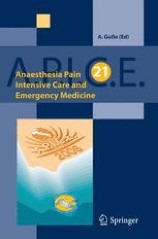
Anaesthesia, pain, intensive care and emergency medicine A.P.I.C.E. ; Proceedings of the 21st Postgraduate Course in Critical Medicine: Venice-Mestre, Italy - November 10-13, 2006
Developing sectors in the Intensive Care field – and in Critical Care Medicine in general – require specific levels of competence having a same common denominator: an in-depth knowledge of human pathophysiology. Although this volume presents plenty of topics in constant evolution, as witnessed by the collection of chapters compiled by several researchers, this edition includes, in particular, fields in which decision-making at the patient’s bedside prevails over theoretical argumentation. In other words, the first and foremost message this edition wants to provide is for the reader to focus his/her attention on evidence-based medicine.

Anaesthesia, pain, intensive care and emergency medicine - A.P.I.C.E. ; Proceedings of the 20th Postgraduate Course in Critical Care Medicine, Trieste, Italy - November 18-21, 2005
The main objective of modern medicine has been the acquisition of increased skills and highly specialised knowledge in the various disciplines. At the same time, there has been a progressive multidisciplinary and multi-professional interest in acute disease conditions that place the patient in potential or real life-threatening situations. The state of the art of intensive medicine comprises a wide range of sophisticated interventions and collaboration between different medical disciplines, both of which give the patient access to the most advanced forms of treatment that are currently available.

Anaesthesia, pain, intensive care and emergency medicine - A.P.I.C.E. ; Proceedings of the 19 th Postgraduate Course in Critical Care Medicine. Trieste, Italy - November 12-15, 2004
APICE 2004 has been organised to provide precise answers to these issues. In particular, considerable emphasis has been given to the reviews regarding the most important aspects - or the most significant clinical developments - in the sectors involving variety of functions: neurological, respiratory and cardiovascular, gastrointestinal, metabolism and perfusion; trauma infections, sepsis and organ failure; perioperative medicine and life support techniques; information technology dedicated to clinical medicine, but also as a means of information and education.
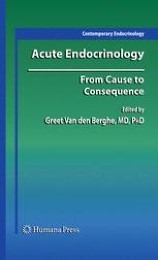
Acute Endocrinology : From Cause to Consequence
The integration of endocrinology in critical care medicine has led to new experimental and clinical data on the complex endocrine and metabolic derangements accompanying non-endocrine severe illnesses. The joining of these two disciplines has generated important novel insights with significant clinical implications. Acute Endocrinology: From Cause to Consequence compiles these new findings into an important and highly relevant new resource.

A Dictionary of Neurological Signs
The Dictionary is not a handbook for treatment of neuropathies. While many entries provide the latest treatment options, up-to-the-minute therapies are not discussed in bedside level detail. The Dictionary is not a board review book because it is not in Q&A format but could easily serve in that capacity since each entry is a fairly complete snapshot of a specific disorder or disease. The Dictionary is an alphabetical listing of commonly presenting neurological diseases and disorders designed to guide the physician toward the correct clinical diagnosis. The content is focused, problem-based, concise and practical.
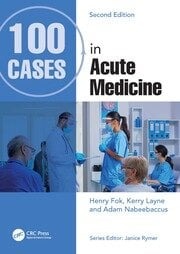
100 cases in acute medicine
A succinct summary of the patient's history, examination and initial investigations, including photographs where relevant, is followed by questions on the diagnosis and management of each case. The answer includes a detailed discussion on each topic, with further illustration where appropriate, providing an essential revision aid as well as a practical guide for students and junior doctors. Making clinical decisions and choosing the best course of action is one of the most challenging and difficult parts of training to become a doctor. Fully revised and updated for this second edition, these cases will teach students and junior doctors to recognize important clinical symptoms and signs, and to develop their diagnostic and management skills.
