


تحسين النتائح
ترتيب حسب
من
الى


The gut-brain axis refers to the network of nerve pathways that connect the myenteric plexus, the veritable "gut brain," to the central nervous system. Nearly 80% of these neurons are sensory neurons, and the afferent pathways that transmit information from the digestive tract to the central nervous system play a crucial role in the physiological regulation of digestive functions, as well as in certain pathological conditions. A large majority of these sensations remain unconscious and give rise to reflex responses. Only those requiring a conscious response reach the level of awareness in a normal state (hunger, thirst, the urge to defecate). In pathological situations, the same is true for painful sensations of digestive origin. Functional bowel disorders are a frequent reason for consultation. Their pathophysiology is now based on a model integrating the various etiological factors around the brain-gut axis. These patients frequently present with visceral hypersensitivity, which manifests as an increased perception of digestive sensations, notably the onset of pain in response to stimuli that are not painful in normal subjects. Recognizing the role of visceral hypersensitivity has made it possible to explain the mechanism of action of medications used to treat functional bowel disorders and paves the way for the development of new molecules acting on digestive afferents. In this book, we will describe the anatomical and physiological basis for understanding the concept of visceral sensitivity and the role of digestive afferents in the pathophysiology of acute and chronic abdominal pain, particularly irritable bowel syndrome.
An extensive compendium on laxatives. It covers all aspects of the clinical use of laxatives complete with physiological information related to constipation. The mechanisms of action of the main classes of laxatives are widely described. The text contains illustrations that help to understand the origins of plant laxatives and the pharmacology of the most interesting ones. Doctors, pharmacists, herbalists, nurses and students will find this volume interesting and useful.
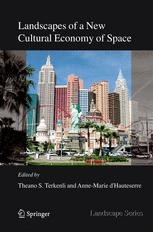
Aims to tie together various perspectives, insights and constructions pertaining to landscapes and landscape representations from different theoretical and methodological positions as well as from diverse geographical and historical contexts in order to elucidate and illustrate processes of cultural transformation inscribed in space.
Mechanical respiration is a procedure with an intensive medicine physician and specialized specialist in the discipline of general medicine if I must daily confront. The volume is described in detail and foundation of the clinical practice: starting from the basic anatomy and physiology of the mechanical respiration and the variety of forms of respiratory insufficiency. metodi alternativi and il management delle malattie specifiche dell'apparato respiratorio. We are here to discuss the latest technology for respiratory therapy and non-invasive mechanical respiration.

This volume summarizes notions of phytotherapy; the intent is to offer the doctor essential knowledge so that he can easily prescribe plant products and to stimulate the pharmacist and herbalist to use them in a more rational way.

This scientific biography commemorates the 10th anniversary of Köhler's untimely death. It describes his scientific and personal biography, based on 10 years of close personal and professional relationship between Eichmann and Köhler, as well as interviews with many colleagues and friends, including his "Doktorvater" and mentor Fritz Melchers. Köhler's scientific achievements are explained in a way to make them understandable for the general public and discussed in the historical context of the immunological research at the time.

Book has focused on the broad structural investigation of the anorectum and on the focused management of largely “functional” problems. And it has done so in style. For this is a core area of specialist practice;your more general colleagues may think twice before referring you new cases of cancer and in?ammatory bowel disease (both also central areas in colorectal surgery), but they will not hesitate in referring the patients whose inves- gation and management are described here. And they will expect you to know how to deal with them. These are some of the most challenging patients to manage. Rightly have the editors covered the physiological areas,rightly the psychological issues, rightly the medicolegal aspects: here is the making of a specialist—the sword and the shield.
Fungal comparative genomics started in 2000 by the genome sequencing of several yeast species other than the canonical Saccharomyces cerevisiae. Since then, over 30 fungal genome sequences have become available. This set represents a total evolutionary divergence comparable to that between vertebrates and arthropods, but also contains closely related genomes. This volume describes how we can use this set of genomes to trace large and small-scale events in genome evolution, to extract information about highly conserved and less conserved sequence elements, and to develop novel methods in genomics that will have an impact on genomics at large.
Describes 247 species of 9 families of medicinal plants, which are commonly used in Chinese medicine. The most important species are Adina rubella, Gardenia jasminoides, Hedyotis diffusa, Morinda officinalis, Rubia cordifolia, Uncaria hirsuta, Uncaria macrophylla, Uncaria rhynchophylla, Uncaria sessilifructus, Uncaria sinensis of Rubiaceae; Lonicera confusa, Lonicera hypoglauca, Lonicera macranthoides, Lonicera japonica of Caprifoliaceae; Patrinia scabiosaefolia, Patrinia villosa, Nardostachys jatamansi of Valerianaceae; Dipsacus asperoides of Dipsacaceae; Arctium lappa, Artemisia annua, Artemisia argyi, Artemisia capillaris, Artemisia scoparia, Atractylodes lancea, Atractylodes macrocephala, Dendranthema indicum, Dendranthema morifolium, Eupatorium chinense, Eupatorium fortunei, Inula helenium, Saussurea costus, Saussurea involucrata, Senecio scandens, Serratula chinensis, Siegesbeckia orientalis, Solidago decurrens, Taraxacum mongolicum, Tussilago farfara、Xanthium sibiricum of Compositae; Gentiana crassicaulis, Gentiana manshurica, Gentiana rigescens, Gentiana scabra, Swertia pseudochinensis of Valerianaceae; Lysimachia christinae of Primulaceae and Plantago asiatica of Plantaginaceae.
Describes 226 species of 32 families of medicinal plants, which are commonly used in Chinese medicine. The most important species are Aquilaria sinensis and Daphne genkwa of Thymelaeaceae; Benincasa hispida, Siraitia grosvenorii, Trichosanthes kirilowii and Trichosanthes rosthornii of Cucurbitaceae; Camellia sinensis of Theaceae; Cleistocalyx operculatus, Eugenia caryophyllata and Rhodomyrtus tomentosa of Myrtaceae; Osbeckia chinensis of Melastomataceae; Quisqualis indica and Terminalia chebula of Combretaceae; Hypericum japonicum of Hypericaceae; Microcos paniculata of Tiliaceae; Hibiscus mutabilis of Malvaceae; Croton crassifolius, C. lachnocarpus, C. tiglium, Euphorbia humifusa, E. lathyris, E. pekinensis, Phyllanthus emblica and Sauropus spatulifolius of Euphorbiaceae. In each specie, it introduces the scientific names, medicinal names, morphologies, habitats, distributions, acquisition and processing methods of these medicinal plants, the content of medicinal properties, therapeutic effects, usage and dosage of these medicinal plants, and attaches unedited color pictures and pictures of part herbal medicines of each species.
Describes 256 species of medicinal plants from 5 families, which are commonly used in Chinese medicine. The most important species are Agrimonia pilosa, Amygdalus persica, Armeniaca mume, Armeniaca vulgaris, Armeniaca sibirica, Chaenomeles sinensis, Eriobotrya japonica of Rosaceae; Chimonanthus praecox of Calycanthaceae;Albizia julibrissin, Archidendron clypearia, Entada phaseoloides, Bauhinia championii of Mimosoideae; Caesalpinia sappan, Cassia tora, Gleditsia sinensis of Caesalpiniaceae; Abrus cantoniensis, Astragalus membranaceus, Astragalus membranaceus, Dalbergia odorifera, Desmodium caudatum, Desmodium styracifolium, Erythrina variegata, Euchresta japonica, Flemingia prostrata, Glycyrrhiza uralensis, Glycyrrhiza inflata, Glycyrrhiza glabra, Lablab purpureus, Sophora japonica and Spatholobus suberectus of Butterflyaceae. In each specie, it introduces the scientific names, medicinal names, morphologies, habitats, distributions, acquisition and processing methods of these medicinal plants, the content of medicinal properties, therapeutic effects, usage and dosage of these medicinal plants, and attaches unedited color pictures and pictures of part herbal medicines of each species. This book series has 10 volumes in total, which covers over 2000 kinds of Chinese medicines that are commonly used. These volumes not only introduce the efficacy function and some prescriptions of the medicines, but also introduce the biological characteristics of them in detail with clear photos of the habitats, so that readers can identify them in the field. Apart from the growing environment, the books expound the distribution areas and other information to facilitate researches and other applications. The volumes are targeted at readers of general interests and it is also of high referential value for scientific researcher and teachers. It can be used as a guide to researchers, clinical doctors, and students in the department of pharmaceutics and traditional Chinese medicine.
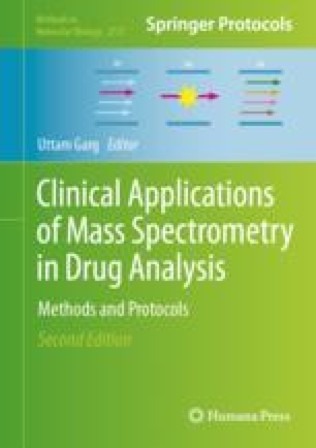
This fully updated volume describes methods and protocols for a number of drugs and toxins in a stepwise manner. Exploring the versatility and flexibility of mass spectrometry, the book covers the advantages of this technology, which typically include elimination of the need for special reagents such as antibodies, increased sensitivity and specificity, and multi-component analysis enabling the screening of tens to hundreds of compounds in a single assay run. Written for the highly successful Methods in Molecular Biology series, chapters include introductions to their respective topics, lists of the necessary materials and reagents, step-by-step and readily reproducible laboratory protocols, as well as tips on troubleshooting and avoiding known pitfalls.
Covers in detail advances in the biochemistry and physiology of several chemolithoautotrophic bacteria as well as their relationship to certain environments. Included are recent findings regarding the oxidation mechanisms of ammonia, nitrite, sulfur compounds, and ferrous iron by special bacteria. The characteristics of many cytochromes are described to further advance the understanding of bacterial oxidation systems of inorganic compounds. Applications of bacteria, such as in sewage treatment and in biohydometallurgy, among others, are detailed, and bacteria considered closest to the origins of life are discussed in the final chapter.
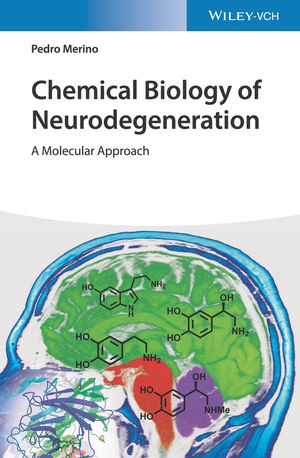
This book focuses on the main actors involved in neurodegenerative disorders at a molecular level, and places special emphasis on structural aspects and modes of action. Drawing on recent data on enzyme structure, mode of action, and inhibitor design, it describes?from a biochemical point of view?the six most important neurotransmitter systems and their constituent enzymes and receptors. Misfolding and aggregation of proteins within the brain is also covered.

Described the contents of food raw materials and products, the chemistry/biochemistry of food components, as well as the changes occurring during post-harvest storage and processing affecting the quality of foods. Discusses the role of chemical compounds in the structure of raw materials and the formation of different attributes of food quality, including nutritional value, safety, and sensory properties. It contains four new chapters: “Non-Protein Nitrogenous Compounds”; “Prooxidants and Antioxidants in Food”; “Non-Nutritive Bioactive Compounds in Food of Plant Origin”; and “Analytical Methods Used for Assessing the Quality of Food Products.”
This comprehensive volume will serve as a complete guide to the clinical application of computer assisted systems in monitoring central nervous functions both in the OR and ICU. It presents practical guidelines and therapeutic indications for computerized EEG and Somatosensory Evoked Potential (SSEP) monitoring for the experienced user and the novice. The book also describes what cerebral monitoring can do and what its limitations are.
Cell Surface Receptors: A Short Course on Theory and Methods, 3rd Edition, links theoretical insights into drug-receptor interactions described in mathematical models with the experimental strategies to characterize the biological receptor of interest.

Cancer Morbidity and mortality result from invasive and metastatic spread. Currently, no therapies are aimed at the underlying mechanisms that enable this progression due to only nascent recognition of the distinct biology which occurs only during tumor dissemination. Recent advances have highlighted the central role of cell motility during the dynamic and transient process of tumor invasion and metastasis. This book includes state-of-the-art updates by international leaders in these studies. Chapters first present the novel model systems that enable new investigations and insights. Chapters then describe in depth the key processes and molecules that may be therapeutically targeted. Finally, the role of cell motility and its signals is explored in a number of key tumor types. This compilation should be useful to researchers in basic and translational oncology as well as those developing novel agents to prevent tumor invasion and metastasis.

This book describes the recent developments in the emerging field of cancer stem cells. Their possible impact for the identification of novel treatment paradigms for cancer are discussed. The book will mainly be of interest to scientists and clinicians involved in cancer research, or to students wishing to enter into this area.
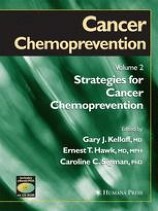
In Cancer Chemoprevention, Volume 2: Strategies for Cancer Chemoprevention, leading chemopreventives investigators comprehensively describe the exciting methodologies that are accelerating progress in the chemoprevention field and review the state of clinical development of preventive agents in the major human cancer target organs. The authors provide sound guidelines for cancer chemopreventive drug development, detailing general strategies and methods for drug discovery, preclinical efficacy, characterization of precancers, safety evaluation of clinical cohorts, and clinical trial design.

سوريا - اتستراد درعا - غباغب
+963-15 2050 - 15 860 380 /1/2/3 - 11 662 3900