



الصفحة 2
الصفحة 2

Cohesion, coherence and temporal reference from an experimental corpus pragmatics perspective
Provides new methodological and theoretical insights into temporal reference and its linguistic expression, from a cross-linguistic experimental corpus pragmatics approach. Verbal tenses, in general, and more specifically the categories of tense, grammatical and lexical aspect are treated as cohesion ties contributing to the temporal coherence of a discourse, as well as to the cognitive temporal coherence of the mental representations built in the language comprehension process. As such, it investigates the phenomenon of temporal reference at the interface between corpus linguistics, theoretical linguistics and pragmatics, experimental pragmatics, psycholinguistics, natural language processing and machine translation.

Coherent Dynamics of Complex Quantum Systems
A large number of modern problems in physics, chemistry, and quantum electronics require a consideration of population dynamics in complex multilevel quantum systems. The purpose of this book is to provide a systematic treatment of these questions and to present a number of exactly solvable problems. It considers the different dynamical problems frequently encountered in different areas of physics from the same perspective, based mainly on the fundamental ideas of group theory and on the idea of ensemble average. Also treated are concepts of complete quantum control and correction of decoherence induced errors that are complementary to the idea of ensemble average. "Coherent Dynamics of Complex Quantum Systems" is aimed at senior-level undergraduate students in the areas of Atomic, Molecular, and Laser Physics, Physical Chemistry, Quantum Optics and Quantum Informatics. It should help them put particular problems in these fields into a broader scientific context and thereby take advantage of the well-elaborated technique of the adjacent fields.

Coherence, Truth and Testimony
Coherence is a burgeoning topic of research. Diverse methodologies have been applied to shed light on the topic and its relevance to fundamental questions throughout philosophy. The collection brings together the full scope of this research in a single volume. The first group of essays attack the core topic of the book: coherence. Authors in this section take up the challenging and controversial task of measuring the coherence of an information set, while others criticize this endeavor. The second group of papers in the collection relate this foundational research to a wide array of epistemological and metaphysical challenges. For example, some papers consider the relationship between truth and coherence. Is coherence truth conducive, and if yes, under which conditions? A related issue taken up in this volume is the connection between coherence and testimony. Are we justified in believing coherent reports by independent, though only partially reliable witnesses more than a single report? If yes, under which conditions does this claim hold true? By the end of the book, the reader should have a comprehensive understanding of topic of coherence, the controversy surrounding it, and its implications across the discipline of philosophy.
Manipulating Quantum Coherence in Solid State Systems
Presents a fundamental introduction to three solid-state approaches to achieving quantum computation: semiconductor spin-based, semiconductor charge-based, and superconducting approaches.
Comprehensive mathematics for computer scientists 2 : Calculus and ODEs, splines, probability, fourier and wavelet theory, fractals and neural networks, categories and lambda calculus
This second volume of a comprehensive tour through mathematical core subjects for computer scientists completes the first volume in two - gards: Part III first adds topology, di?erential, and integral calculus to the t- ics of sets, graphs, algebra, formal logic, machines, and linear geometry, of volume 1. With this spectrum of fundamentals in mathematical e- cation, young professionals should be able to successfully attack more involved subjects, which may be relevant to the computational sciences. In a second regard, the end of part III and part IV add a selection of more advanced topics. In view of the overwhelming variety of mathematical approaches in the computational sciences, any selection, even the most empirical, requires a methodological justi?cation. Our primary criterion has been the search for harmonization and optimization of thematic - versity and logical coherence. This is why we have, for instance, bundled such seemingly distant subjects as recursive constructions, ordinary d- ferential equations, and fractals under the unifying perspective of c- traction theory.
Causation, Coherence and Concepts : A Collection of Essays
the papers cover epistemology, general philosophy of science, philosophy of language, and philosophy of mind. The section titles Belief, Causation, Laws, Coherence, and Concepts and the paper titles give a more adequate impression of the topics dealt with.
Biophotonics ; Optical science and engineering for the 21st century
Biophotonics: Optical Science and Engineering in the 21st Century serves as an ideal aid to the research and development of these areas integrating light, photonics, and biological systems.Key topics include: Fluctuation Correlation Spectroscopy in Cells: Determination of Molecular Aggregation ,Using GFP and FRET Technologies for Studying Signaling Mechanisms of Apoptosis in a Single Living Cell, Study on Protein-Protein Interaction in Single Living Cells, Functional Optical Coherence Tomography: Simultaneous In Vivo Imaging of Tissue Structure and Physiology, Imaging –Photo- and Sonodynamic Diagnosis of Cancer Mediated by Chemiluminescence Probes, Biophotonic Analysis of Spontaneous Self-Organizing Oxidative Processes in Aqueous Systems, Biophoton Emission and Defense Systems in Plants
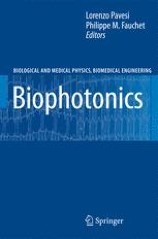
Biophotonics
More profound understanding of the nature of light and light-matter interactions in biology has enabled many applications in the biology and medical fields. So a new discipline is born, namely biophotonics. The aim of this book is to review the current state-of-the-art of the field by means of authoritative chapters written by the world leaders of the respective fields. Biosensors, biochips, optical tomography, optical microsurgery, photodynamics therapy, bioactivation of gene, photobiology of skin, and nanobiophotonics are each introduced and recent advances presented. This book will be useful not only to physicians, biologists, physicists, chemists, materials scientists, and engineers but also to graduate students who are interested in these rapidly developing fields.

Bioengineering in cell and tissue research
This book reviews the latest technological developments of bioengineering approaches in cell and tissue research. It is meant to have life and spirit, and to become a pioneer in technology and sciences, especially the life science. The chapters are written by excellent scientists on advanced, frontier technology and address scientific questions that need considerable thinking in terms of engineering.

Atlas of fundus autofluorescence imaging
During recent years, FAF (Fundus autofluorescence) imaging has been shown to be useful in various retinal diseases with regard to diagnostics, documentation of changes, identification of disease progression, and monitoring of novel therapies. Hereby, FAF imaging gives additional information above and beyond conventional imaging tools.This unique atlas provides a comprehensive and up-to-date overview of FAF imaging in retinal diseases. It also compares FAF findings with other imaging techniques such as fundus photograph, fluorescein- and ICG angiography as well as optical coherence tomography. General ophthalmologists as well as retina specialists will find this a very useful guide which illustrates typical FAF characteristics of various retinal diseases.
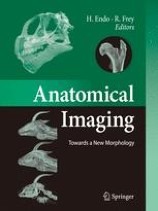
Anatomical Imaging : Towards a New Morphology
This book presents selected works of contemporary evolutionary morphologists and includes such topics as broad scale reconstructions of the brain and ear of dinosaurs, inference of locomotor habits from cancellous bone architecture in fossil primates, and a comparison of the independently evolved manipulating apparatuses in the lesser and giant pandas. Insight is provided into the application of modern noninvasive technologies, including digital imaging techniques and virtual 3D reconstruction, to the investigation of complex anatomical features and coherences. In combination with traditional methods, this allows for the formulation of improved hypotheses on coordinated function and evolution. The creation of virtual translucent specimens makes it possible to realize the age-old dream of the classical anatomists: looking through the skin into the inner organization of an organism. On full display here is the dramatic and promising impact that modern imaging techniques have on scientific progress in evolutionary morphology.
