


تحسين النتائح
ترتيب حسب
من
الى

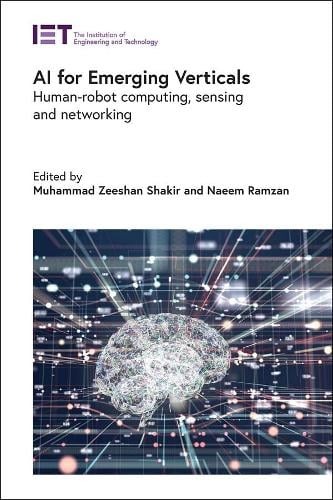
Artificial intelligence (AI) and machine learning (ML) will play a major role. By adopting AI software and services, businesses can create predictive strategies, enhance their capabilities, better interact with customers, and streamline their business processes. Explores novel concepts and cutting-edge research and developments towards designing these fully automated advanced digital systems. Fostered by technological advances in artificial intelligence and machine learning, such systems potentially have a wide range of applications in robotics, human computing, sensing and networking. The chapters focus on models and theoretical approaches to guarantee automation in large multi-scale implementations of AI and ML systems; protocol designs to ensure AI systems meet key requirements for future services such as latency; and optimisation algorithms to leverage the trusted distributed and efficient complex architectures.

Contains all the articles accepted and published in the Special Issue “Advances in Artificial Intelligence: Models, Optimization, and Machine Learning” of the MDPI Mathematics journal, which covers a wide range of topics connected to the theory and applications of artificial intelligence and its subfields. These topics include, among others, deep learning and classic machine learning algorithms, neural modelling, architectures and learning algorithms, biologically inspired optimization algorithms, algorithms for autonomous driving, probabilistic models and Bayesian reasoning, intelligent agents and multiagent systems.
Presents cybersecurity aspects of ubiquitous and growing IoT and Cyber Physical Systems. It also introduces a range of conceptual, theoretical, and foundational access control solutions. This was developed by the authors to provide an overall broader perspective and grounded approach to solve access control problems in IoT and CPS.
The book addresses ways and means of organizing computations, highlighting the relationship between algorithms and the basic mechanisms and runtime structures necessary to execute them using machines. It completely abstracts from concrete programming languages and machine architectures, taking instead the lambda calculus as the basic programming and program execution model to design various abstract machines for its correct implementation. The emphasis is on fully normalizing machines based on full-fledged beta-reductions as essential prerequisites for symbolic computations that treat functions and variables truly as first-class objects. Their weakly normalizing counterparts are shown to be functional abstract machines that sacrifice the flavors of full beta-reductions for decidedly simpler runtime structures and improved runtime efficiency. Further downgrading of the lambda calculus leads to classical imperative machines that permit side-effecting operations on the runtime environment.
The emergence of the Internet of Things (IoT), combined with greater heterogeneity not only online in cloud computing architectures but across the cloud-to-edge continuum, is introducing new challenges for managing applications and infrastructure across this continuum.
ARIS is ranked as the leading Business Process Modelling tool in the Gartner Quadrant for Business Process Analysis and Optimization. The ARIS Design Platform is being used as a business process management (BPM) tool for projects in BPM, quality management, business analysis and design, software development, implementation of service-oriented architectures and so forth. Following on from Rob Davis’ successful introductory text, ARIS Design Platform: Getting Started with BPM, this new book covers in detail some of the more advanced concepts of using ARIS Business Architect in the new ARIS 7 Design Platform. Written in a reader-friendly style, it contains detailed explanations of key concepts combined with numerous examples, hints and tips gained from many years of practical experience of using ARIS.

Architects are used to designing visually. In order to expand their basic design tools, this book explores the interactions between sound, space, hearing, and architecture. To this end, the author uses contemporary and historic buildings and projects, but also fictional, philosophical, and theoretical approaches – the idea is not only to define sound as a source, but also as an instrument of architectural space.

Reveals how designers, practitioners, scholars and architects are participating in dismantling the major canons of Western architecture. The work is both literal and figural: taking buildings apart and reconstituting them, and challenging mythologies that include drawing-as-analogue, building-as object, architect-as-hero and nature-as-other.

Draws on up-to-date research by a Europe-wide group of academic scholars and museum and gallery curators to provide a unique, intellectually-stimulating and beautifully-illustrated account of temporary architecture created for festivals of the sixteenth and seventeenth centuries, together with permanent architecture pressed into service for festival occasions across major European locations including Italian, French, Austrian, Scottish and German.

Macrocyclic Chemistry: Current Trends and Future Perspectives illustrates essential concepts in this expanding research field covering both basic and applied studies. Written by well-known experts from around the world, the topics of the chapters range from new macrocyclic architectures with different functions and self-assembly processes through to the modeling and dynamics of such systems. The content also reflects on application possibilities in analytical chemistry, separation processes, material preparation and medicine. Thus this book serves as a creative source of research strategies and methodic tools.

Chapter 1 presents the physical principles of the growth mechanism of fiber and fiber network with LMGs, as treated on the basis of the heterogeneous nucleation model. in Chaps. 2 and 3, respectively. These chapters are intended to outline useful synthetic guidelines for the generation of an ever-increasing variety of molecular architectures within these two families of gelators. Recent developments in the chemistry of nucleobase-containing LMGs are described in Chap. 4. Hydrogen-bonding within these molecular systems involves complementary base pair formation, a process relevant to DNA double-helix formation The self-assembly of chiral organo- or hydrogelators is the subject of Chap. 5. result from the orthogonal self-assembly of liquid crystals and LMGs are presented in Chap. 6. The volume concludes with Chap. 7, a review of the emerging field of dendritic gels.
This book provides detailed insights into recent works dealing with a large spectrum of issues in system-on-chip design, namely: assertion-based design, mapping on network-on-chip architectures, use of C/C++/SystemC design methodologies, hardware/software integration, mixing heterogeneous models of computation, analog/mixed-signal/mixed-technology system design and verification, UML/XML-based synthesis of analog and mixed-signal systems, UML to VHDL mapping, UML-based performance modeling, model transformation and formal verification, real-time system models, and Model Driven Architecture.
This book comprises a selection of papers from IFSA 2007 on new methods for analysis and design of hybrid intelligent systems using soft computing techniques. Soft Computing (SC) consists of several computing paradigms, including fuzzy logic, neural networks, and genetic algorithms, which can be used to produce powerful hybrid intelligent systems for solving problems in pattern recognition, time series prediction, intelligent control, robotics and automation. Hybrid intelligent systems that combine several SC techniques are needed due to the complexity and high dimensionality of real-world problems. Hybrid intelligent systems can have different architectures, which have an impact on the efficiency and accuracy of these systems, for this reason it is very important to optimize architecture design. The architectures can combine, in different ways, neural networks, fuzzy logic and genetic algorithms, to achieve the ultimate goal of pattern recognition, time series prediction, intelligent control, or other application areas.
"Analog-Baseband Architectures and Circuits reviews the fundamentals and studies the state-of-the-art multistandard transceivers before describing novel architectural and circuit techniques for implementing multimode and wideband (tens of MHz) baseband analog front-ends under low-voltage constraints. Techniques developed on architecture level for efficient system-in-package (SiP) integration, testability and multi-standardability; and on circuit level for reducing the required supply voltage, power and area are generally applicable for most wireless systems, and are somewhat independent to technology scaling. Experimental 1-V baseband building blocks (i.e., double-quadrature-downconversion filter, programmable-gain amplifier and dc-offset canceler) and a 1-V fully-integrated receiver analog-baseband chain for IEEE 802.11a/b/g WLAN validate the techniques. The implementations are all in standard-VTH CMOS process, and no voltage boosting is required at any node." "Analog-Baseband Architectures and Circuits will be relevant to system architects, circuit designers, professors and students engaged in wireless transceiver front-ends research and development."

Simple tutorial chapters introduce the reader to cutting edge technologies, such as parallel and distributed computing, object-oriented technologies, grid computing, semantic grids, agent based computing and service-oriented architectures. On such bases, a variety of EM applications is proposed: 1) parallel FDTD codes (both for antenna analysis and for metamaterial applications), 2) grid computing for computational EM (CEM) (with applications to antenna arrays, wireless and remote-sensing systems) 3) mobile agents for parametric CEM modeling 4) complex/hybrid EM software environments (with applications to planar circuits, quasi-optical systems,…) 5) semantic grids for CAE of antennas arrays.
Acollection of world class paper articles addressing the following topics: Image and Pattern Recognition: Compression, Image processing, Signal Processing Architectures, Signal Processing for Communication, Signal Processing Implementation, Speech Compression, and Video Coding Architectures. Languages and Systems: Algorithms, Databases, Embedded Systems and Applications, File Systems and I/O, Geographical Information Systems, Kernel and OS Structures, Knowledge Based Systems, Modeling and Simulation, Object Based Software Engineering, Programming Languages, and Programming Models and tools. Parallel Processing: Distributed Scheduling, Multiprocessing, Real-time Systems, Simulation Modeling and Development, and Web Applications. New trends in computing: Computers for People of Special Needs, Fuzzy Inference, Human Computer Interaction, Incremental Learning, Internet-based Computing Models, Machine Intelligence, Natural Language Processing, Neural Networks, and Online Decision Support System.
this book explores a collaborative approach by proposing novel memory hierarchies and software optimization techniques for the optimal utilization of these memory hierarchies. Linking memory architecture design with memory-architecture aware compilation results in fast, energy-efficient and timing predictable memory accesses.The evaluation of the optimization techniques using real-life benchmarks for a single processor system, a multiprocessor system-on-chip (SoC) and for a digital signal processor system, reports significant reductions in the energy consumption and performance improvement of these systems. The book presents a wide range of optimizations, progressively increasing in the complexity of analysis and of memory hierarchies. The final chapter covers optimization techniques for applications consisting of multiple processes found in most modern embedded devices.

Adaptive Techniques for Mixed Signal Sytem on Chip discusses the concept of adaptation in the context of analog and mixed signal design along with different adaptive architectures used to control any system parameter. The first part of the book gives an overview of the different elements that are normally used in adaptive designs including tunable elements as well as voltage, current, and time references with an emphasis on the circuit design of specific blocks such as voltage-controlled transconductors, offset comparators, and a novel technique for accurate implementation of on chip resistors. While the first part of the book addresses adaptive techniques at the circuit and block levels, the second part discusses adaptive equalization architectures employed to minimize the impact of ISI (Intersymbol Interference) on the quality of received data in high-speed wire line transceivers. It presents the implementation of a 125Mbps transceiver operating over a variable length of Category 5 (CAT-5) Ethernet cable as an example of adaptive equalizers.

The phenomenon of non-random spatial concentrations of firms in one or few related sectors (clusters) is intensively debated in economic theory and policy. The euphoria about successful clusters however neglects that historically, many thriving clusters did deteriorate into old industrial areas. This book studies the determinants of cluster survival by analyzing their adaptability to change in the economic environment. Linking theoretic knowledge with empirical observations, a simulation model (based in the N/K method) is developed, which explains when and why the cluster's architecture assists or hampers adaptability. It is found that architectures with intermediate degrees of division of labour and more collective governance forms foster adaptability. Cluster development is thus path dependent as architectures having evolved over time impact on the likelihood of future survival.

سوريا - اتستراد درعا - غباغب
+963-15 2050 - 15 860 380 /1/2/3 - 11 662 3900