



الصفحة 19
الصفحة 19

Codici cifrati: Arne Beurling e la crittografia nella II guerra mondiale = Cipher codes : Arne Beurling and cryptography in world war II
The story of the German codebreaking is told in detail for the first time and has all the makings of a thriller, but with elements that make it an excellent introduction to the field of cryptography, as well as a vibrant and human portrait of the society of the time: a desperate wartime situation, political and espionage intrigue, the sometimes incomprehensible yet always fascinating genius of the main architect of its success — mathematician Arne Beurling—the difficulties and tricks of the trade, but also the systematic and obscure work of a crowd of codebreakers who treat their situation as if it were a normal job. The author, Bengt Beckman, was for years, after the war, head of the cryptanalysis department of the Swedish intelligence agency.

Co-Creativity and engaged scholarship : Transformative methods in social sustainability research
This book explores creative and collaborative research methods within the social sustainability sciences. The term co-creativity is used in reference to both individual methods and overarching research approaches that, through socially inclusive forms of action and reflection, stimulate alternative understandings of why and how things are, and how they could be. Supported by a wide-ranging series of in-depth—including chapters on militant research and guerrilla narrative, decolonial participative approaches, appreciate inquiry and care-ethics, deep-mapping, photo-voice, community-arts, digital participatory mapping, and living labs—the edited collection critically reviews the potential of creative, collaborative and transdisciplinary forms of research praxis to nurture just and transformative processes of change.

Coastal architectures and politics of tourism : Leisurescapes in the global sunbelt
Offers a critical and complicated picture of how leisure tourism connected the world after the World War II, transforming coastal lands, traditional societies, and national economies in new ways. Analyzes selected case studies of architectures and landscapes around the world, contextualizing them within economic geographies of national development, the geopolitics of the Cold War, the legacies of colonialism, and the international dynamics of decolonization. Postwar leisure tourism evokes a rich array of architectural spaces and altered coastal landscapes, which is explored in this collection through discussions of tourism developments in the Mediterranean littoral, such as Greece, Turkey, and southern France, as well as compelling analyses of Soviet bloc seaside resorts along the Black Sea and Baltic coasts, and in beachscapes and tourism architectures of western and eastern hemispheres, from Southern California to Sri Lanka, South Korea, and Egypt.

Clocks in the Sky : The Story of Pulsars
In this book, Geoff McNamara explores the history, subsequent discovery and contemporary research into pulsar astronomy. The story of pulsars is brought right up to date with the announcement in 2006 of a new breed of pulsar, Rotating Radio Transients (RRATs), which emit short bursts of radio signals separated by long pauses. These may outnumber conventional radio pulsars by a ratio of four to one. Geoff McNamara ends by pointing out that, despite the enormous success of pulsar research in the second half of the twentieth century, the real discoveries are yet to be made including, perhaps, the detection of the hypothetical pulsar black hole binary system by the proposed Square Kilometre Array - the largest single radio telescope in the world.

Clinical text mining : Secondary use of electronic patient records
Describes the results of natural language processing and machine learning methods applied to clinical text from electronic patient records. It is divided into twelve chapters. Chapters 1-4 discuss the history and background of the original paper-based patient records, their purpose, and how they are written and structured. These initial chapters do not require any technical or medical background knowledge. The remaining eight chapters are more technical in nature and describe various medical classifications and terminologies such as ICD diagnosis codes, SNOMED CT, MeSH, UMLS, and ATC. Chapters 5-10 cover basic tools for natural language processing and information retrieval, and how to apply them to clinical text. The book’s closing chapters present a number of applications in clinical text mining and summarise the lessons learned from the previous chapters.

Mathematical Masterpieces : Further Chronicles by the Explorers
Experience the discovery of mathematics by reading the original work of some of the greatest minds throughout history. Here are the stories of four mathematical adventures, including the Bernoulli numbers as the passage between discrete and continuous phenomena, the search for numerical solutions to equations throughout time, the discovery of curvature and geometric space, and the quest for patterns in prime numbers. Each story is told through the words of the pioneers of mathematical thought. Particular advantages of the historical approach include providing context to mathematical inquiry, perspective to proposed conceptual solutions, and a glimpse into the direction research has taken.

Mathematical Events of the Twentieth Century
Russian mathematics (later Soviet mathematics, and Russian mathematics once again) occupies a special place in twentieth-century mathematics. In addition to its well-known achievements, Russian mathematics established a unique style of research based on the existence of prominent mathematical schools. These schools were headed by recognized leaders, who became famous due to their talents and outstanding contributions to science. The present collection is intended primarily to gather in one book the t- timonies of the participants in the development of mathematics over the past century. In their articles the authors have expressed their own points of view on the events that took place. The editors have not felt that they had a right to make any changes, other than stylistic ones, or to add any of their own commentary to the text. Naturally, the points of view of the authors should not be construed as those of the editors. The list of mathematicians invited to participate in the present edition was quite long.
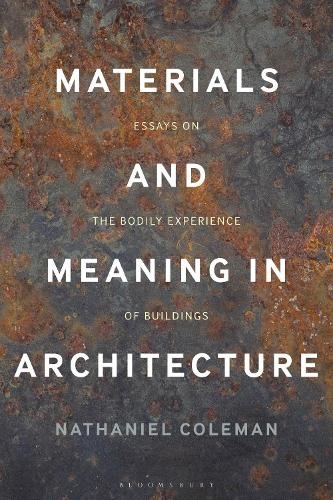
Materials and meaning in architecture : Essays on the bodily experience of buildings
Interweaving architecture, philosophy and cultural history, Materials and Meaning in Architecture develops a rich and multi-dimensional exploration of materials and materiality, in an age when architectural practice seems otherwise preoccupied with image and visual representation.
Matematica e cultura 2008 = mathematics and culture 2008
In this new book, the tenth of the series that began in Venice with the meetings "Mathematics and culture" that many have tried to imitate, we talk about all this and among others Simon Singh (author of the best seller "The last theorem di Fermat "), in her third presence in Venice, and Siobhan Roberts (author of" The king of infinite space. History of the man who saved geometry "). Venice bridge between mathematics and culture.
Matematica e cultura 2006 = Mathematics and Culture 2006
The series Matematica e cultura, through a journey that began ten years ago, in an ever new, surprising and fascinating way, tries to describe the influences and links existing between the world of mathematics and that of aeronautics, medicine, biology, but also art, cinema. , of theater, literature or history: "A tribute to Mario Merz could not be missing, following his Fibonacci numbers towards infinity. And cinema, that of Davide Ferrario who takes up that thread, those numbers that fly over Turin. film on the axiom of parallels, a Venetian film E.
Masterpieces of Swiss Entrepreneurship : Swiss SMEs Competing in Global Markets
This book focuses on Switzerland-based medium-sized companies with a longstanding export tradition and a proven dominance in global niche markets. Based upon in-depth documentation and analysis of 36 Swiss companies over their entire history, an expert team of authors presents several parallels in the pathways and success factors which allowed these firms to become dominant and operate from a high-cost location such as Switzerland.

Martin Waldseemüller’s 'Carta marina' of 1516 : Study and transcription of the long legends
This book presents the first detailed study of one of the most important masterpieces of Renaissance cartography, Martin Waldseemüller’s Carta marina of 1516. By transcribing, translating into English, and detailing the sources of all of the descriptive texts on the map, as well as the sources of many of the images, the book makes the map available to scholars in a wholly unprecedented way.

Martens and Fishers (Martes) in human-altered environments : An international perspective
Examines the conditions where humans and martens are compatible and incompatible, and promotes land use practices that allow Martes to be representatively distributed and viable. All Martes have been documented to use forested habitats and 6 species (excluding the stone marten) are generally considered to require complex mid- to late-successional forests throughout much of their geographic ranges. All species in the genus require complex horizontal and vertical structure to provide escape cover protection from predators, habitat for their prey, access to food resources, and protection from the elements. Martens and the fisher have high metabolic rates, have large spatial requirements, have high surface area to volume ratios for animals that often inhabit high latitudes, and often require among the largest home range areas per unit body weight of any group of mammals. Resulting from these unique life history characteristics, this genus is particularly sensitive to human influences on their habitats, including habitat loss, stand-scale simplification of forest structure via some forms of logging, and landscape-scale effects of habitat fragmentation. Given their strong associations with structural complexity in forests, martens and the fisher are often considered as useful barometers of forest health and have been used as ecological indicators, flagship, and umbrella species in different parts of the world. Thus, efforts to successfully conserve and manage martens and fishers are associated with the ecological fates of other forest dependent species and can greatly influence ecosystem integrity within forests that are increasingly shared among wildlife and humans.We have made great strides in our fundamental understanding of how animals with these unique life history traits perceive and utilize habitats, respond to habitat change, and how their populations function and perform under different forms of human management and mismanagement.

Marketing made simple : A step-by-step storyBrand guide for any business
You will learn: The three stages of customer relationships. How to create and implement the one marketing plan you will never regret. How to develop a sales funnel that attracts the right customers to your business. The power of email and how to create campaigns that result in customer traffic and a growth in brand awareness. The keys to wireframing a website that commands attention and generates conversions.
Marketing effectiveness and accountability in SMEs : A multimethodological approach
Sheds light on marketing effectiveness and accountability marketing in small and medium-sized enterprises (SMEs). Using a multi-method investigation, it includes a knowledge inquiry of marketing knowledge and customer knowledge, a qualitative inquiry utilizing semi structured interviews and thematic data analysis, a quantitative analysis utilizing survey and structural equations modelling, and a case study that employs both narrative (storytelling) data analysis and an accountability audit with a techno marketing SME.
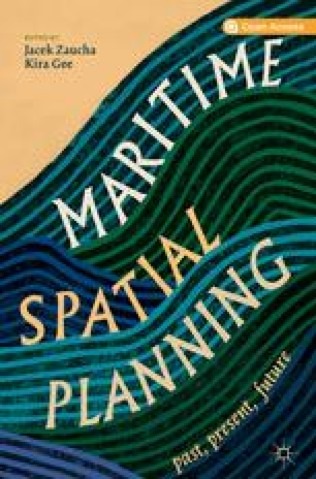
Maritime Spatial Planning : past, present, future
This book is the first comprehensive overview of maritime spatial planning. Situated at the intersection between theory and practice, the volume draws together several strands of interdisciplinary research, reflecting on the history of MSP as well as examining current practice and looking towards the future. The authors and contributors examine MSP from disciplines as diverse as geography, urban planning, political science, natural science, sociology and education; reflecting the growing critical engagement with MSP in many academic fields. This innovative and pioneering volume will be of interest and value to students and scholars of maritime spatial planning, as well as planners and practitioners.

Maple and Mathematica : A Problem Solving Approach for Mathematics
the history of mathematics there are many situations in which cal- lations were performed incorrectly for important practical applications. the history of computing the number began in Egypt and Babylon about 2000 years BC, since then many mathematicians have calculated (e. g. , Archimedes, Ptolemy, Vi` ete, etc. ). In modern mathematics there exist computers that can perform various mathematical operations for which humans are incapable. Therefore the computers can be used to verify the results obtained by humans, to discovery new results, to - prove the result sthatahumancanobtain without anytechnology

Manhattan Skyscrapers
This book, stories. The Destruction of Lower Manhattan York skyscraper, steel frames were clad in stone album by photographer Danny brick, or terra cotta and offered the illusion of Sedition, if only to place the entry on Lyons, captured the last remnants of down- monumental mass.
Making sense of work through collaborative storytelling : Building narratives in organisational change
This book focuses on the development of collaborative practices at work, and in organisations, through stories: from sharing stories to exchanging experiences and building a common narrative collectively.
Making Healthcare Safe : The Story of the Patient Safety Movement
This unique and engaging open access title provides a compelling and ground-breaking account of the patient safety movement in the United States, told from the perspective of one of its most prominent leaders, and arguably the movement’s founder, Lucian L. Leape, MD. Covering the growth of the field from the late 1980s to 2015, Dr. Leape details the developments, actors, organizations, research, and policy-making activities that marked the evolution and major advances of patient safety in this time span. In addition, and perhaps most importantly, this book not only comprehensively details how and why human and systems errors too often occur in the process of providing health care, it also promotes an in-depth understanding of the principles and practices of patient safety, including how they were influenced by today’s modern safety sciences and systems theory and design. Indeed, the book emphasizes how the growing awareness of systems-design thinking and the self-education and commitment to improving patient safety, by not only Dr. Leape but a wide range of other clinicians and health executives from both the private and public sectors, all converged to drive forward the patient safety movement in the US.
