



الصفحة 187
الصفحة 187

An Introduction to Quantum and Vassiliev Knot Invariants
Provides an accessible introduction to knot theory, focussing on Vassiliev invariants, quantum knot invariants constructed via representations of quantum groups, and how these two apparently distinct theories come together through the Kontsevich invariant. Consisting of four parts, the book opens with an introduction to the fundamentals of knot theory, and to knot invariants such as the Jones polynomial. The second part introduces quantum invariants of knots, working constructively from first principles towards the construction of Reshetikhin-Turaev invariants and a description of how these arise through Drinfeld and Jimbo's quantum groups. Its third part offers an introduction to Vassiliev invariants, providing a careful account of how chord diagrams and Jacobi diagrams arise in the theory, and the role that Lie algebras play. The final part of the book introduces the Konstevich invariant. This is a universal quantum invariant and a universal Vassiliev invariant, and brings together these two seemingly different families of knot invariants. The book provides a detailed account of the construction of the Jones polynomial via the quantum groups attached to sl(2), the Vassiliev weight system arising from sl(2), and how these invariants come together through the Kontsevich invariant.
An Introduction to Programming and Numerical Methods in MATLAB
The book covers numerical methods for solving a wide range of problems, from integration to the numerical solution of differential equations or the stimulation of random processes. Examples of programmes that solve problems directly, as well as those that use MATLAB’s high-level commands are given. Each chapter includes extensive examples and tasks, at varying levels of complexity. For practice, the early chapters include programmes that require debugging by the reader, while full solutions are given for all the tasks. The book also includes: A glossary of MATLAB commands / Aappendices of mathematical techniques used in numerical methods / Designed as a text for a first course in programming and algorithm design, as well as in numerical methods courses, the book will be of benefit to a wide range of students from mathematics and engineering, to commerce."

An introduction to pharmacovigilance ; 2nd ed.
Designed to aid the rapid understanding of the key principles of pharmacovigilance. Packed full of examples illustrating drug safety issues it not only covers the processes involved, but the regulatory aspects and ethical and societal considerations of pharmacovigilance. Covering the basics step-by-step, this book is perfect for beginners and is essential reading for those new to drug safety departments and pharmaceutical medicine students. The second edition is thoroughly revised and updated throughout and includes a new chapter on clinical aspects of pharmacovigilance.

An introduction to orthodontics
This is the essential orthodontics text for all staff involved in orthodontic treatment, whether they are dental students, orthodontic therapists, postgraduate students at the beginning of their career, or more experienced clinicians wanting an evidence-based, concise update on the foundations of contemporary orthodontic care.

An Introduction to Ordinary Differential Equations
This textbook provides a rigorous and lucid introduction to the theory of ordinary differential equations (ODEs), which serve as mathematical models for many exciting real-world problems in science, engineering, and other disciplines.
An Introduction to Optical Wireless Mobile Communications
Discusses existing conventional radio frequency (RF)-based wireless access technology and presents the challenges that can impact the requirements of the future wave of new wireless services in the context of artificial intelligence (AI) driven autonomous systems and machine-type communications. The relationship between visible light communications (VLC) and light fidelity (LiFi), is explored, and the major advantages of VLC and LiFi such as security and data density, and discuss existing research challenges are also introduced. Channel modeling techniques are provided for mobile multiuser scenarios, and will introduce key building blocks to achieve LiFi cellular networks achieving orders of magnitude improvements of area spectral efficiency compared to state-of-the-art. Challenges that arise from moving from a static point-to-point visible light link to a LiFi network that is capable of serving hundreds of mobile and fixed nodes are discussed. An overview of recent standardization activities and the commercialization challenges of this disruptive technology is also provided.
An Introduction to Operators on the Hardy-Hilbert Space
The subject of this book is operator theory on the Hardy space H2, also called the Hardy-Hilbert space. The goal is to provide an elementary and engaging introduction to this subject that will be readable by everyone who has understood introductory courses in complex analysis and in functional analysis.

An introduction to ontology engineering
Provides the reader with a comprehensive introductory overview of ontology engineering. A secondary aim is to provide hands-on experience in ontology development that illustrate the theory. The book is divided into three blocks: Block I: logic foundations for ontologies both regarding the languages (mainly First Order predicate Logic, Description Logics, and OWL) and automated reasoning. Block II: developing good ontologies with methods and methodologies, the top-down approach with foundational ontologies, and the bottom-up approach to extract as much useful content as possible from legacy material. Block III: advanced topics with a selection of areas of specialisation, including Ontology-Based Data Access, the interaction between ontologies and natural languages (multilingual ontologies, controlled natural language), and advanced modelling with additional language features (fuzzy and temporal ontologies)
An Introduction to Number Theory
An Introduction to Number Theory provides an introduction to the main streams of number theory. Starting with the unique factorization property of the integers, the theme of factorization is revisited several times throughout the book to illustrate how the ideas handed down from Euclid continue to reverberate through the subject. In particular, the book shows how the Fundamental Theorem of Arithmetic, handed down from antiquity, informs much of the teaching of modern number theory. The result is that number theory will be understood, not as a collection of tricks and isolated results, but as a coherent and interconnected theory. A number of different approaches to number theory are presented, and the different streams in the book are brought together in a chapter that describes the class number formula for quadratic fields and the famous conjectures of Birch and Swinnerton-Dyer. The final chapter introduces some of the main ideas behind modern computational number theory and its applications in cryptography.
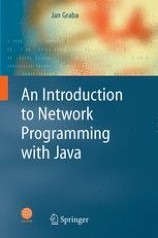
An Introduction to Network Programming with Java
This book provides an overview of Java … . Each chapter is supplemented with practical programming exercises.The combination of code templates with good supporting discussions allows a competent Java programmer to rapidly expand his or her skill base to include network programming.

An Introduction to Navier-Stokes Equation and Oceanography
The Introduction to Navier-Stokes Equation and Oceanography corresponds to a graduate course in mathematics, taught at Carnegie Mellon University in the spring of 1999. Comments were added to the lecture notes distributed to the students, as well as short biographical information for all scientists mentioned in the text, the purpose being to show that the creation of scientific knowledge is an international enterprise, and who contributed to it, from where, and when. The goal of the course is to teach a critical point of view concerning the partial differential equations of continuum mechanics, and to show the need for developing new adapted mathematical tools.
An Introduction to Meshfree Methods and Their Programming
This book aims to present meshfree methods in a friendly and straightforward manner, so that beginners can very easily understand, comprehend, program, implement, apply and extend these methods. It provides first the fundamentals of numerical analysis that are particularly important to meshfree methods. Typical meshfree methods, such as EFG, RPIM, MLPG, LRPIM, MWS and collocation methods are then introduced systematically detailing the formulation, numerical implementation and programming. Many well-tested computer source codes developed by the authors are attached with useful descriptions. The application of the codes can be readily performed using the examples with input and output files given in table form. These codes consist of most of the basic meshfree techniques, and can be easily extended to other variations of more complex procedures of meshfree methods. Readers can easily practice with the codes provided to effective learn and comprehend the basics of meshfree methods.

An introduction to medicinal chemistry
Providing an introduction to medicinal chemistry, this resource covers basic principles and background, and describes the general tactics and strategies involved in developing an effective drug
An Introduction to Mathematics of Emerging Biomedical Imaging
Biomedical imaging is a fascinating research area to applied mathematicians. Challenging imaging problems arise and they often trigger the investigation of fundamental problems in various branches of mathematics. This is the first book to highlight the most recent mathematical developments in emerging biomedical imaging techniques. The main focus is on emerging multi-physics and multi-scales imaging approaches. For such promising techniques, it provides the basic mathematical concepts and tools for image reconstruction. Further improvements in these exciting imaging techniques require continued research in the mathematical sciences, a field that has contributed greatly to biomedical imaging and will continue to do so.
An Introduction to Mathematical Cryptography
This self-contained introduction to modern cryptography emphasizes the mathematics behind the theory of public key cryptosystems and digital signature schemes. The book focuses on these key topics while developing the mathematical tools needed for the construction and security analysis of diverse cryptosystems. Only basic linear algebra is required of the reader; techniques from algebra, number theory, and probability are introduced and developed as required.
An Introduction to Markov Processes
Provides a more accessible introduction than other books on Markov processes by emphasizing the structure of the subject and avoiding sophisticated measure theoryLeads the reader to a rigorous understanding of basic theory

An Introduction to Manifolds
Manifolds, the higher-dimensional analogs of smooth curves and surfaces, are fundamental objects in modern mathematics. Combining aspects of algebra, topology, and analysis, manifolds have also been applied to classical mechanics, general relativity, and quantum field theory. In this streamlined introduction to the subject, the theory of manifolds is presented with the aim of helping the reader achieve a rapid mastery of the essential topics. By the end of the book the reader should be able to compute, at least for simple spaces, one of the most basic topological invariants of a manifold, its de Rham cohomology. Along the way the reader acquires the knowledge and skills necessary for further study of geometry and topology.

An introduction to law
this book addresses the ways in which rules and the structures of law respond to and impact upon changes in economic and political life. The title has been extensively updated and explores recent high profile developments such as the Civil Partnership Act 2005 and the Racial and Religious Hatred Bill.
An Introduction to Language Processing with Perl and Prolog : An Outline of Theories, Implementation, and Application with Special Consideration of English, French, and German
This book teaches the principles of natural language processing, first covering linguistics issues such as encoding, entropy, and annotation schemes; defining words, tokens and parts of speech; and morphology. It then details the language-processing functions involved, including part-of-speech tagging using rules and stochastic techniques; using Prolog to write phase-structure grammars; parsing techniques and syntactic formalisms; semantics, predicate logic and lexical semantics; and analysis of discourse, and applications in dialog systems. The key feature of the book is the author's hands-on approach throughout, with extensive exercises, sample code in Prolog and Perl, and a detailed introduction to Prolog. The reader is supported with a companion website that contains teaching slides, programs, and additional material.
An Introduction to Kolmogorov Complexity and Its Applications
Written by two experts in the field, this book is ideal for advanced undergraduate students, graduate students, and researchers in all fields of science. It is self-contained: it contains the basic requirements from mathematics, probability theory, statistics, information theory, and computer science. Included are history, theory, new developments, a wide range of applications, numerous (new) problem sets, comments, source references, and hints to solutions of problems. This is the only comprehensive treatment of the central ideas of Kolmogorov complexity and their applications.
