


تحسين النتائح
ترتيب حسب
من
الى

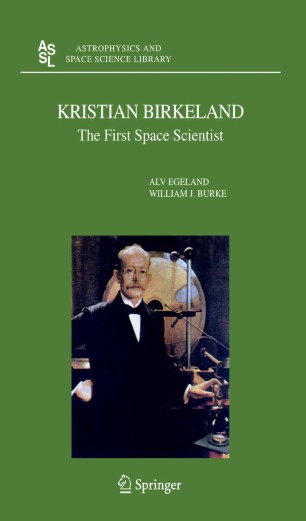
PREFACEThisscientific biography of Kristian Birkeland (1867–1917) was written to bring the story ofa Norwegian national hero to the attention ofthe English-speaking world. Birkeland’sheroic stature was established not on a field of military battle,but in the bitter cold of the Artic wilderness ashe sought to answer basic questions abouthow the Sun controlled northern lights andmag-netic storms. He was also afather of Norsk Hydro one ofNorway’s largest industries. Birkel and died before reaching the age of 50.Because Birkel and never kept adiary, documented information about his family and private life is sparse. Before he died, Olaf Devik, the last of Birke-ffland’s close friends, gave along interview and graciously transferred his personal archive to A.E. Birkeland’s 82 scientific papers and three book-length publications map the progress of his investigations. addressed this book questions that had vexed European scientists for centuries. Why do the northern lights appear overhead when the Earth’s magnetic field is disturbed? How are magnetic storms connected to disturbances on the Sun? To answer these questions Birkeland interpreted his advance laboratory simulations and daring campaigns in the Arctic wilderness in the light of Maxwell’s newly discovered laws of electricity and magnetism. Birkeland’s ideas were dismissed for decades, only to be vindicated when satellites could fly above the Earth’s atmosphere.
This is the first one-volume work to provide a thorough and comprehensive description of the physical background, rigorous theory and applications of Kramers-Kronig relations in the fields of linear and nonlinear optical spectroscopy. Currently, Kramers-Kronig relations have become basic tools in the investigation of the optical properties of materials. A brief presentation of the related data-retrieval technique, the maximum entropy method, is also given. The contents and style potentially make this a standard text for physicists, chemists and engineers interested in optical-materials research and development.
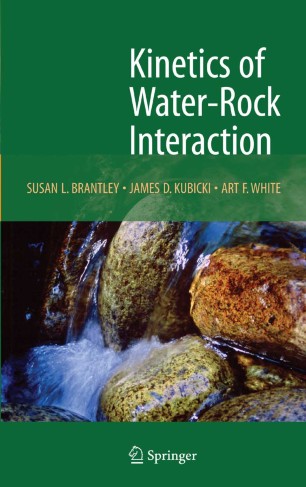
Systems at the surface of the Earth are continually responding to energy inputs derived from solar radiation or from the radiogenic heat in the interior. These energy inputs drive plate movements and erosion, exposing metastable mineral phases at the Earth’s surface. In addition, these energy fluxes are harvested and transformed by living organisms. As long as these processes persist, chemical disequilibrium at the Earth’s surface will be perpetuated. Chemical disequilibrium is also driven by human activities related to production of food, extraction of water and energy resources, and burial of wastes. To understand how the surface of the Earth will change over time, we must understand the rates at which reactions occur and the chemical feedbacks that relate these reactions across extreme temporal and spatial scales. This book addresses fundamental and applied questions concerning the rates of water-rock interactions driven by tectonic, climatic, and anthropogenic forcings.
This textbook contains all the information needed for graduate students or industrial researchers to design kinetic experiments involving heterogeneous catalysts, to characterize these catalysts, to acquire valid rate data, to verify the absence of mass (and heat) transfer limitations, to propose reaction models, to derive rate expressions based on these models and, finally, to assess the consistency of these rate equations.The most recent technique to calculate heats of adsorption and activation barriers on metal surfaces, the BOC-MP approach, is discussed in detail. Methods to measure metal surface areas and crystallite sizes using x-ray diffraction, transmission electron microscopy and various chemisorption techniques are discussed. Different experimental techniques to determine the influence of mass transfer limitations, especially within the pores of a catalyst, are reviewed in detail, with a particular emphasis on liquid-phase reactions.
This textbook contains all the information needed for graduate students or industrial researchers to design kinetic experiments involving heterogeneous catalysts, to characterize these catalysts, to acquire valid rate data, to verify the absence of mass (and heat) transfer limitations, to propose reaction models, to derive rate expressions based on these models and, finally, to assess the consistency of these rate equations.Many illustrations of these and other topics are provided along with numerous problems and a Solutions Manual for instructors. This book will be applicable to any graduate course in chemical engineering, chemistry or materials science that involves kinetics of catalytic reactions, including those catalyzed by enzymes.

Journeys to a Graveyard examines the descriptions provided by eight Russian writers of journeys made to western European countries between 1697 and 1880. The descriptions reveal the mentality and preoccupations of the Russian social and intellectual elites during this period. The travellers' perceptions of western European countries are treated here as an ambivalent response to a civilization with which Russia was belatedly coming into close contact as a result of the imperial ambition of the Russian state and the westernization of the Russian elites. The travellers perceived the most advanced European countries as superior to Russia in terms of material achievement and the maturity and refinement of their cultures, but they also promoted a view of Russia as in other respects superior to the western nations. Heavily influenced from the late eighteenth century by Romanticism and by the rise of nationalism in the west, they tended to depict European civilization as moribund. By this means they managed to define their own emergent nation in a contrastive way as having youth and promising futurity.
This volume contains the edited lecture notes of the Second JETSET School on Jets from Young Stars: Clues from High Angular Resolution Observations organised by the Marie Curie Research Training Network JETSET: Jet Simulations, Experiments and Theory. After the opening two chapters on jet emission, readers can learn the fundamental background of modern high-spatial-resolution techniques, and how such methods have impacted on our understanding of young stars.

This volume is devoted to both instrumentation and computation aspects of EPR, while addressing applications such as spin relaxation time measurements, the measurement of hyperfine interaction parameters, and the recovery of Mn(II) spin Hamiltonian parameters via spectral simulation.

This book introduces the harmless handling/recycling of magnesium slag , the process of magnesium silicothermic reduction (Pidgeon process)which the slag was produced, and . the magnesium resources, layout of the industry of the world. Examples and experimental data in this book are from the author group’s research programs, as well as the rencent researches in China. The book could provide precious reference to scientists and engineers in the field of recycling and environment friendly use of the industrial solid wastes. It could also be used for researchers and students who are interested in relevant field.
The book contains atomistic and continuum numerical methods and experimental validation for composite materials reinforced with particles or fibres, porous materials, homogenization and other important topics for research in this field.
This book deals with the mechanical and physical behavior of composites as influenced by composite geometry. This monograph provides a comprehensive introduction for researchers and students to modern composite materials research with a special emphasis on the influence of geometry to materials properties. Composite Materials enables the reader to a better understanding of the behavior of natural composites, improvement of such materials, and design of new materials with prescribed properties.

Talks about how the regulatory agencies and courts in the United States, European Union and India are dealing with the rising allegations of anti-competitive behaviour by standard essential patent (SEP) holders. It also discusses the role of standards setting organizations / standards developing organizations (SSO/SDO) and the various players involved in implementing the standards that influence practices and internal dynamics in the ICT sector. The book includes discussions on fair, reasonable and non-discriminatory (FRAND) licensing terms and the complexities that arise when both licensors and licensees of SEPs differ on what they mean by “fair”, “reasonable” and “non-discriminatory” terms. It also addresses topics such as the appropriate royalty base, calculation of FRAND rates and concerns related to FRAND commitments and the role of Federal Trade Commission (FTC) in collaborative standard setting process.
This book, written by an international team of experts, introduces the reader to various aspects of complexity theory and its applications. It illustrates the latest trends in science to go beyond the mechanistic Newtonian view of the world by shifting the focus to self-organization, adaptation, and emergent phenomena. The authors discuss these properties of complex systems in biology, ecology and chemistry along with the structure and interconnectedness of the "layers" of complexity. The qualitative description is complemented by a discussion of methods for complexity quantification. Networks are covered in detail as a universal language of the complex world.

One the key aspects of this volume is to cut across the traditional taxonomy of disciplines in the study of alloys. Hence there has been a deliberate attempt to integrate the different approaches taken towards alloys as a class of materials in different fields, ranging from geology to metallurgical engineering. The emphasis of this book is to highlight commonalities between different fields with respect to how alloys are studied. The topics in this book fall into several themes, which suggest a number of different classification schemes. We have chosen a scheme that classifies the papers in the volume into the categories Microstructural Considerations, Ordering, Kinetics and Diffusion, Magnetic Considerations and Elastic Considerations. The book has juxtaposed apparently disparate approaches to similar physical processes, in the hope of revealing a more dynamic character of the processes under consideration. This monograph will invigorate new kinds of discussion and reveal challenges and new avenues to the description and prediction of properties of materials in the solid state and the conditions that produce them

In This book, Compendium of Chemical Warfare Agents, author Steven L. Hoenig provides all the necessary information that First Responders, Hospitals, HazMat Teams, Fire and Rescue Services, and other First Responders need to know when dealing with dangerous chemical agents.Coverage includes health effects, physical characteristics, hazards from reactivity, protection of personnel, and general first aid for each agent. The book provides quick and easy access to critical data on chemical warfare agents, both at the scene of release and in the laboratory.

Presents main concepts of mobile communication systems, both analog and digitalIntroduces concepts of probability, random variables and stochastic processes and their applications to the analysis of linear systemsIncludes five appendices covering Fourier series and transforms, GSM cellular systems and more
Addresses the engagement between science and society from multiple viewpoints. At a time when trust in experts is being questioned, misinformation is rife and scientific and technological development show growing social impact, the volume examines the challenges in involving the public in scientific debates and decisions. It takes into account societal needs and concerns in research, and analyses the interface between the roles of institutions and individuals. From environmental challenges to science communication, participatory technological design to animal experimentation, and transdisciplinarity to norms and values in science, the volume brings together research on areas in which scientists and citizens interact, across diverse, often understudied, socio-cultural contexts in Europe.
Each of the main parts is subdivided into two sections, Guidelines and Genres, with entries arranged in alphabetical order. The guidelines are devoted to entries such as acronyms, active or passive voice, body language, figures and captions, introduction, irony, and taking the floor. Within genres, all possible media of communicating science are treated, e.g. the after-dinner speech, conference presentation, keynote lecture, magazine article, research proposal, and teleconference.

This book asks just how climate-smart our food really is. It follows an average day's worth of food and drink to see where it comes from, how far it travels, and the carbon price we all pay for it. From our breakfast tea and toast, through breaktime chocolate bar, to take-away supper, Dave Reay explores the weather extremes the world’s farmers are already dealing with, and what new threats climate change will bring. Readers will encounter heat waves and hurricanes, wildfires and deadly toxins, as well as some truly climate-smart solutions. In every case there are responses that could cut emissions while boosting resilience and livelihoods. Ultimately we are all in this together, our decisions on what food we buy and how we consume it send life-changing ripples right through the global web that is our food supply.

Nucleation is the initial step of every first-order phase transition, and most phase transitions encountered both in everyday life and industrial processes are of the first-order. Using an elegant classical theory based on thermodynamics and kinetics, this book provides a fully detailed picture of multi-component nucleation. As many of the issues concerning multi-component nucleation theory have been solved during the last 10-15 years, it also thoroughly integrates both fundamental theory with recent advances presented in the literature. It covered are: the basic relevant thermodynamics and statistical physics; modelling a molecular cluster as a spherical liquid droplet; predicting the size and composition of the nucleating critical clusters; kinetic models for cluster growth and decay; calculating nucleation rates; and a full derivation and application of nucleation theorems that can be used to extract microscopic cluster properties from nucleation rate measurements.

سوريا - اتستراد درعا - غباغب
+963-15 2050 - 15 860 380 /1/2/3 - 11 662 3900