



الصفحة 18
الصفحة 18

Foundations of software science and computation structures ; 22nd International conference, FOSSACS 2019, Held as part of the European joint conferences on theory and practice of software, ETAPS 2019, Prague, Czech Republic, April 6–11, 2019, proceedings
This book constitutes the proceedings of the 22nd International Conference on Foundations of Software Science and Computational Structures, FOSSACS 2019, which took place in Prague, Czech Republic, in April 2019, held as part of the European Joint Conference on Theory and Practice of Software, ETAPS 2019. The 29 papers presented in this volume were carefully reviewed and selected from 85 submissions. They deal with foundational research with a clear significance for software science.

Foundations of software science and computation structures ; 11th International conference, FOSSACS 2008, Held as part of the joint European conferences on theory and practice of software, ETAPS 2008, Budapest, Hungary, March 29 - April 6, 2008. proceedings
The fve main conferences received 571 submissions, 147 of which were accepted, giving an overall acceptance rate of less than 26%, with each conference below 27%.Congratulations there foretoall the authorswhomadeittothe fnalprogramme! I hope that most of the other authors will still have found a way of participating in this exciting event, and that you will all continue submitting to ETAPS and contributing to make of it the best conference in the area. The events that comprise ETAPS address various aspects of the system velopment process, including specifcation, design, implementation, analysis and improvement

Foundations of Quantum Theory : From Classical Concepts to Operator Algebras
This book studies the foundations of quantum theory through its relationship to classical physics. This idea goes back to the Copenhagen Interpretation (in the original version due to Bohr and Heisenberg), which the author relates to the mathematical formalism of operator algebras originally created by von Neumann. The book therefore includes comprehensive appendices on functional analysis and C*-algebras, as well as a briefer one on logic, category theory, and topos theory. Matters of foundational as well as mathematical interest that are covered in detail include symmetry (and its "spontaneous" breaking), the measurement problem, the Kochen-Specker, Free Will, and Bell Theorems, the Kadison-Singer conjecture, quantization, indistinguishable particles, the quantum theory of large systems, and quantum logic, the latter in connection with the topos approach to quantum theory.

Foundations of Quantum Physics
Intended to be used as a textbook for an introductory course in quantum mechanics at the undergraduate level, Foundations of Quantum Physics is also meant to be retained by the student for later use as a reference. The presentation begins with the solution of some basic quantum mechanical problems. The emphasis is on those features of the solutions that are unique to quantum physics. It is only after these aspects of quantum physics are thoroughly discussed that the mathematical formalism of quantum mechanics is presented and related to the previous chapters. Throughout the book, the emphasis is on understanding the concepts and relating them to known phenomena.

Foundations of information and knowledge systems ; 4th International Symposium, FoIKS 2006, Budapest, Hungary, February 14-17, 2006, Proceedings
This book constitutes the refereed proceedings of the 4th International Symposium on Foundations of Information and Knowledge Systems, held in February 2006. The 14 revised full papers presented together with three revised short papers and one invited paper were carefully reviewed and selected from 54 submissions. Among the topics covered are the theoretical foundations of information and knowledge systems, as well as mathematical fields such as discrete mathematics, combinatorics, logics and finite model theory, and applications thereof for research on database and knowledge base theory.

Forward-backward stochastic differential equations and their applications
This volume is a survey/monograph on the recently developed theory of forward-backward stochastic differential equations (FBSDEs). Basic techniques such as the method of optimal control, the "Four Step Scheme", and the method of continuation are presented in full. Related topics such as backward stochastic PDEs and many applications of FBSDEs are also discussed in detail. The volume is suitable for readers with basic knowledge of stochastic differential equations, and some exposure to the stochastic control theory and PDEs. It can be used for researchers and/or senior graduate students in the areas of probability, control theory, mathematical finance, and other related fields.

Formal Methods and Software Engineering ; 10th International Conference on Formal Engineering Methods, ICFEM 2008, Kitakyushu-City, Japan, October 27-31, 2008. Proceedings
This book constitutes the refereed proceedings of the 10th International Conference on Formal Engineering Methods, ICFEM 2008, held in Kitakyushu-City, Japan, October 2008.The 20 revised full papers together with 3 invited talks presented were carefully reviewed and selected from 62 submissions. The papers address all current issues in formal methods and their applications in software engineering. They are organized in topical sections on specification and verification; testing; verification; model checking and analysis; tools; application of formal methods; semantics.

Formal Concept Analysis ; 6th International Conference, ICFCA 2008, Montreal, Canada, February 25-28, 2008. Proceedings
Formal Concept Analysis (FCA) is a mathematical theory of concepts and c- ceptual hierarchyleadingto methods for conceptually analyzing data and kno- edge. The theory itselfstronglyreliesonorder and lattice theory,whichhasbeen studied by mathematicians over decades. FCA proved itself highly relevant in several applications from the beginning , and, over the last years, the range of application shaskept growing. The mainreasonfor this comesfromthe fact that our modern society has turned into an “information” society. After years and years of using computers, companies realized they had stored gigantic amounts of data.

Formal approaches to software testing ; Vol. 3395 ; 4th International workshop, FATES 2004, Linz, Austria, September 21, 2004, Revised Selected Papers
Testing often accounts for more than 50% of the required e?ort during system development.Thechallengeforresearchistoreducethesecostsbyprovidingnew methods for the speci?cation and generation of high-quality tests. Experience has shown that the use of formal methods in testing represents a very important means for improving the testing process. Formal methods allow for the analysis andinterpretationofmodelsinarigorousandprecisemathematicalmanner.The use of formal methods is not restricted to system models only. Test models may alsobeexamined.Analyzingsystemmodelsprovidesthepossibilityofgenerating complete test suites in a systematic and possibly automated manner whereas examining test models allows for the detection of design errors in test suites and their optimization with respect to readability or compilation and execution time. Due to the numerous possibilities for their application, formal methods have become more and more popular in recent years. The Formal Approaches in Software Testing (FATES) workshop series also bene?ts from the growing popularity of formal methods. After the workshops in Aalborg (Denmark, 2001), Brno (Czech Republic, 2002) and Montr´ eal (Canada, 2003), FATES 2004 in Linz (Austria) was the fourth workshop of this series. Similar to the workshop in 2003, FATES 2004 was organized in a?liation with the IEEE/ACM Conference on Automated Software Engineering (ASE 2004). FATES 2004 received 41 submissions. Each submission was reviewed by at least three independent reviewers from the Program Committee with the help of some additional reviewers. Based on their evaluations, 14 full papers and one wo- in-progress paper from 11 di?erent countries were selected for presentation.

Forest Inventory : Methodology and Applications
This book has been developed as a forest inventory textbook for students and can also serve as a handbook for practical foresters. The book is divided into four sections. The first section deals mostly with sampling issues. First, we present the basic sampling designs at a fairly non-technical mathematical level. In addition, we present some more advanced sampling issues often needed in forest inventory. Those include for instance problems with systematic sampling, and methods for sampling vegetation or rare populations. Forest inventory also includes issues that are unique to forestry, like problems in measuring sample plots in the field, or utilising sample tree measurements. These issues include highly sophisticated methodology, but we try to present these also such that forestry students can grasp the ideas behind them. Each method is presented with examples. For foresters who need more details, references are given to more advanced scientific papers and books in the fields of statistics and biometrics.

FM 2005: Formal Methods ; International Symposium of Formal Methods Europe, Newcastle, UK, July 18-22, 2005, Proceedings
This volume contains the proceedings of Formal Methods 2005, the 13th InternationalSymposiumonFormalMethodsheldinNewcastleuponTyne,UK, during July 18–22, 2005. Formal Methods Europe (FME, www.fmeurope.org) is an independent association which aims to stimulate the use of, and research on, formal methods for system development. FME conferences began with a VDM Europe symposium in 1987. Since then, the meetings have grown and have been held about once every 18 months. Throughout the years the symposia have been notablysuccessfulinbringingtogetherresearchers,tooldevelopers,vendors,and users, both from academia and from industry. Formal Methods 2005 con?rms this success. We received 130 submissions to the main conference, from all over the world. Each submission was carefully refereed by at least three reviewers. Then, after an intensive, in-depth discussion, the Program Committee selected 31 papers for presentation at the conference. They form the bulk of this volume.

Flux-corrected transport : Principles, algorithms, and applications
Addressing students and researchers as well as CFD practitioners, this book describes the state of the art in the development of high-resolution schemes based on the Flux-Corrected Transport (FCT) paradigm. Intended for readers who have a solid background in Computational Fluid Dynamics, the book begins with historical notes by J.P. Boris and D.L. Book. Review articles that follow describe recent advances in the design of FCT algorithms as well as various algorithmic aspects. The topics addressed in the book and its main highlights include: the derivation and analysis of classical FCT schemes with special emphasis on the underlying physical and mathematical constraints; flux limiting for hyperbolic systems; generalization of FCT to implicit time-stepping and finite element discretizations on unstructured meshes and its role as a subgrid scale model for Monotonically Integrated Large Eddy Simulation (MILES) of turbulent flows. The proposed enhancements of the FCT methodology also comprise the prelimiting and 'failsafe' adjustment of antidiffusive fluxes, the use of characteristic variables, and iterative flux correction. The cause and cure of detrimental clipping/terracing effects are discussed. Many numerical examples are presented for academic test problems and large-scale applications alike.
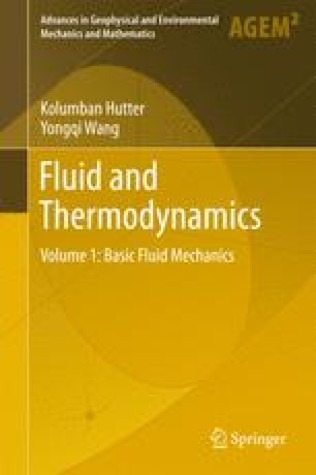
Fluid and thermodynamics ; Vol.1 : Basic fluid mechanics
Simple, yet precise solutions to special flows are also constructed, namely Blasius boundary layer flows, matched asymptotics of the Navier-Stokes equations, global laws of steady and unsteady boundary layer flows and laminar and turbulent pipe flows
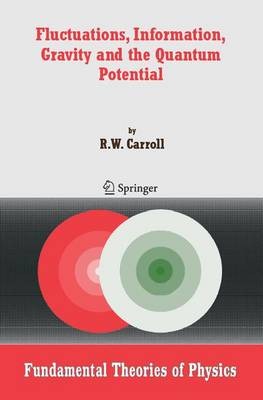
Fluctuations, Information, Gravity and the Quantum Potential
A main theme of the book outlines the role of the quantum potential in quantum mechanics and general relativity and one of its origins via fluctuations formulated in terms of Fisher information. Another theme is the description of various approaches to Bohmian mechanics and their role in quantum mechanics and general relativity. Along the way various approaches to, for instance, the Dirac equation, the Einstein equations, the Klein-Gordon equation, the Maxwell equations and the Schr?dinger equations are described. Statistics and geometry are intertwined in various ways and, among other matters, the aether, cosmology, entropy, fractals, quantum Kaehler geometry, the vacuum and the zero point field are discussed. There is also some speculative material and some original work along with material extracted from over 1000 references and the work is current up to April 2005.

Flow Shop Lot Streaming Problems
Lot streaming is a process of breaking a batch of jobs into smaller lots, and then processing these in an overlapping fashion on the machines. This important concept can significantly improve the overall performance of a production process, and thereby make the operation of a manufacturing system lean. Flow Shop Lot Streaming introduces the reader to this significant production process, presents various analysis techniques, and allows the reader to quickly become conversant with the state-of-the-art techniques necessary to embark on new research directions. This text begins with an introduction to and a brief historical perspective of the lot streaming problem, and continues with generic mathematical models for this problem. Flow Shop Lot Streaming presents systematic analysis, algorithms, key ideas and illustrative examples using 2-machine, 3-machine, and the general m-machine flow shop lot streaming problems.

Finite Zeros in discrete time control systems
The book starts with definition of invariant zeros and goes as far as a general characterization of output-zeroing inputs and the corresponding solutions, explicit formulas for maximal output-nulling invariant subspaces and for the zero dynamics. The objective of this book is to render the reader familiar with a certain method of analysis of multivariable zeros (which goes beyond the classical approach) and related problems. The minimal mathematical background that is required from the reader is a working knowledge of linear algebra and difference equations.

Finite Element Methods in Civil and Mechanical Engineering : A Mathematical Introduction
The finite element method is widely employed for numerical simulations in engineering and science due to its accuracy and efficiency. This concise introduction to the mathematical theory of the finite element method presents a selection of applications in civil and mechanical engineering including beams, elastic membranes, the wave equation, heat transfer, seepage in embankment, soil consolidation, incompressible fluids, and linear elasticity.

Finite Element Methods for Engineering Sciences : Theoretical Approach and Problem Solving Techniques
This self-tutorial offers a concise yet thorough grounding in the mathematics necessary for successfully applying FEMs to practical problems in science and engineering. The enlarged English-language edition, based on the original French, also contains a chapter on the approximation steps derived from the description of nature with differential equations and then applied to the specific model to be used.
Finite Difference Computing with PDEs : A Modern Software Approach
This easy-to-read book introduces the basics of solving partial differential equations by means of finite difference methods. Unlike many of the traditional academic works on the topic, this book was written for practitioners. Accordingly, it especially addresses: the construction of finite difference schemes, formulation and implementation of algorithms, verification of implementations, analyses of physical behavior as implied by the numerical solutions, and how to apply the methods and software to solve problems in the fields of physics and biology.

Finite Difference Computing with Exponential Decay Models
This text provides a very simple, initial introduction to the complete scientific computing pipeline: models, discretization, algorithms, programming, verification, and visualization. The pedagogical strategy is to use one case study – an ordinary differential equation describing exponential decay processes – to illustrate fundamental concepts in mathematics and computer science. The book is easy to read and only requires a command of one-variable calculus and some very basic knowledge about computer programming. Contrary to similar texts on numerical methods and programming, this text has a much stronger focus on implementation and teaches testing and software engineering in particular.
