



الصفحة 18
الصفحة 18

Control of Redundant Robot Manipulators : Theory and Experiments
This monograph provides a comprehensive and thorough treatment of the problem of controlling a redundant robot manipulator. It presents the latest research from the field with a good balance between theory and practice. All theoretical developments are verified both via simulation and experimental work on an actual prototype redundant robot manipulator

Continental Scientific Drilling : A Decade of Progress, and Challenges for the Future
Scientific drilling is an indispensable tool of modern Earth science - search, as it provides the only means of obtaining direct information on processes operating at depth. Drilling allows for the determination of - situ properties of solid materials and fluids and permits testing of hypot- ses and models derived from surface observations. In addition, drill holes may be used as a natural laboratory for experiments and as observatories for long-term monitoring of on-going active processes. Earth drilling, therefore, plays a critical role in scientific research directed towards - proved understanding of the workings of our planet and has a key role in solving urgent socio-economic problems. As a rule, drilling projects are an integral component of major geosci- tific research programs, comprising comprehensive pre-site investigations, accompanying laboratory studies, the drilling phase itself, and consecutive measurements and tests in the drill hole. Such drilling programs are costly and thus only realizable to a limited extent. International cost sharing, the optimal utilization of all available resources, the incorporation of inter- tional leading experts, and the application of the existing know-how, as well as the selection of an optimal drilling location (“World Geological Site”), are thus essential elements of an international scientific drilling p- gram.
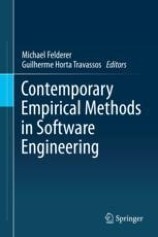
Contemporary Empirical Methods in Software Engineering
This book presents contemporary empirical methods in software engineering related to the plurality of research methodologies, human factors, data collection and processing, aggregation and synthesis of evidence, and impact of software engineering research. The individual chapters discuss methods that impact the current evolution of empirical software engineering and form the backbone of future research.

Consumer perception of product risks and benefits
Reflects the current thinking and research on how consumers’ perception of product risks and benefits affects their behavior. It provides the scientific, regulatory and industrial research community with a conceptual and methodological reference point for studies on consumer behavior and marketing. The contributions address various aspects of consumer psychology and behavior, risk perception and communication, marketing research strategies, as well as consumer product regulation. The book is divided into 4 parts: Product risks; Perception of product risks and benefits; Consumer behavior; Regulation and responsibility.

Conservation in the 21st century : Gorillas as a case study
this book is essential reading for primatologists, biologists, and conservationists searching for both a current assessment of the gorilla’s conservation status and, importantly, for ideas and tools that show promise of halting or reversing population declines and putting us on a path to achieving a stable, long-term co-existence of human and wildlife populations.

Conceptual Ecology and Invasion Biology : Reciprocal Approaches to Nature
In this edited volume, global experts in ecology and evolutionary biology explore how theories in ecology elucidate the invasion processes while also examining how specific invasions informs ecological theory. This reciprocal benefit is highlighted in a number of scales of organization: population, community and biogeographic, while employing example invaders in all major groups of organisms and from a number of regions around the globe. The chapters in this volume utilize many of the cutting edge observational, experimental, analytical and computational methods used in modern ecology. Through merging conceptual ecology and invasion biology we can obtain a better understanding of the invasion process while also developing a better understanding of how ecological systems function.

Concepts, Frames and Cascades in Semantics, Cognition and Ontology
This book presents novel theoretical, empirical and experimental work exploring the nature of mental representations that support natural language production and understanding, and other manifestations of cognition. One fundamental question raised in the text is whether requisite knowledge structures can be adequately modeled by means of a uniform representational format, and if so, what exactly is its nature. Frames are a key topic covered which have had a strong impact on the exploration of knowledge representations in artificial intelligence, psychology and linguistics; cascades are a novel development in frame theory. Other key subject areas explored are: concepts and categorization, the experimental investigation of mental representation, as well as cognitive analysis in semantics. This book is of interest to students, researchers, and professionals working on cognition in the fields of linguistics, philosophy, and psychology.

Concepts in action : Representation, learning, and application
This book is a timely contribution in presenting recent issues, approaches, and results that are not only central to the highly interdisciplinary field of concept research but also particularly important to newly emergent paradigms and challenges. The contributors present a unique, holistic picture for the understanding and use of concepts from a wide range of fields including cognitive science, linguistics, philosophy, psychology, artificial intelligence, and computer science. The chapters focus on three distinct points of view that lie at the core of concept research: representation, learning, and application. The contributions present a combination of theoretical, experimental, computational, and applied methods that appeal to students and researchers working in these fields.

Concepts and Results in Chaotic Dynamics : A Short Course
The book is a good introduction to the field of dynamical systems with a particular emphasis on statistical properties and applications. In particular, the relations both with real experiments with numerical simulations are discussed. The book contains many figures that really help the understanding of the text. The book can be used as a text for an introductory course in dynamical systems

Computer Simulations of Liquid Crystals and Polymers ; Proceedings of the NATO Advanced Research Workshop on Computational Methods for Polymers and Liquid Crystalline Polymers, Erice, Italy. 16-22 July 2003
Liquid crystals, polymers and polymer liquid crystals are soft condensed matter systems of major technological and scientific interest. An understanding of the macroscopic properties of these complex systems and of their many and interesting peculiarities at the molecular level can nowadays only be attained using computer simulations and statistical mechanical theories. Both in the Liquid Crystal and Polymer fields a considerable amount of simulation work has been done in the last few years with various classes of models at different special resolutions, ranging from atomistic to molecular and coarse-grained lattice models. Each of the two fields has developed its own set of tools and specialized procedures and the book aims to provide a state of the art review of the computer simulation studies of polymers and liquid crystals. This is of great importance in view of a potential cross-fertilization between these connected areas which is particularly apparent for a number of experimental systems like, e.g. polymer liquid crystals and anisotropic gels where the different fields necessarily merge. An effort has been made to assess the possibilities of a coherent description of the themes that have developed independently, and to compare and extend the theoretical and computational techniques put forward in the different areas.

Computer simulations in condensed matter : From materials to chemical biology ; Vol.2
This extensive and comprehensive collection of lectures by world-leading experts in the field introduces and reviews all relevant computer simulation methods and their applications in condensed matter systems. Volume 1, published as LNP 703 (ISBN 3-540-35270-8) is an in-depth introduction to a vast spectrum of computational techniques for statistical mechanical systems of condensed matter. It will enable the graduate student and both the specialist and nonspecialist researcher to get acquainted with the tools necessary to carry out numerical simulations at an advanced level. The present volume is a state-of-the-art survey on numerical experiments carried out for a great number of systems, ranging from materials sciences to chemical biology, such as supercooled liquids, spin glasses, colloids, polymers, liquid crystals, biological membranes and folding proteins.

Computer simulations in condensed matter : From materials to chemical biology ; Vol.1
This extensive and comprehensive collection of lectures by world-leading experts in the field introduces and reviews all relevant computer simulation methods and their applications in condensed matter systems. Volume 1 is an in-depth introduction to a vast spectrum of computational techniques for statistical mechanical systems of condensed matter. It will enable the graduate student and both the specialist and nonspecialist researcher to get acquainted with the tools necessary to carry out numerical simulations at an advanced level. Volume 2 published as LNP 704 (ISBN 3-540-35283-X) is a collection of state-of-the-art surveys on numerical experiments carried out for a great number of systems, ranging from materials sciences to chemical biology.

Computer Aided Pharmaceutics and Drug Delivery : An Application Guide for Students and Researchers of Pharmaceutical Sciences
Examines the role of computer-assisted techniques for discovering, designing, optimizing and manufacturing new, effective, and safe pharmaceutical formulations and drug delivery systems. The book discusses computational approaches, statistical modeling and molecular modeling for the development and safe delivery of drugs in humans. The application of concepts of QbD (Quality by Design), DoE (Design of Experiments), artificial intelligence and in silico pharmacokinetic assessment/simulation have been made a lot easier with the help of commercial software and expert systems. This title provides in-depth knowledge of such useful software with illustrations from the latest researches. The book also fills in the gap between pharmaceutics and molecular modeling at micro, meso and maro scale by covering topics such as advancements in computer-aided Drug Design (CADD), drug-polymer interactions in drug delivery systems, molecular modeling of nanoparticles and pharmaceutics/bioinformatics.

Computational Methods in Transport : Verification and Validation
The focus of this book deals with a cross cutting issue affecting all particle transport algorithms and applications; verification and validation (V&V). In other words, are the equations being solved correctly and are the correct equations being solved? Verification and validation assures a scientist, engineer or mathematician that a simulation code is a mirror of reality and not just an expensive computer game. In this book, we will learn what the astrophysicist, atmospheric scientist, mathematician or nuclear engineer do to assess the accuracy of their code. What convergence studies, what error analysis, what problems do each field use to benchmark and ascertain the accuracy of their transport simulations.

Computational methods in systems biology ; 18th International Conference, CMSB 2020, Konstanz, Germany, September 23–25, 2020, Proceedings
This book constitutes the refereed proceedings of the 18th International Conference on Computational Methods in Systems Biology, CMSB 2020, held in Konstanz, Germany, in September 2020.* The 17 full papers and 5 tool papers were carefully reviewed and selected from 30 submissions. In addition 3 abstracts of invited talks and 2 tutorials have been included in this volume. Topics of interest include formalisms for modeling biological processes; models and their biological applications; frameworks for model verification, validation, analysis, and simulation of biological systems; high-performance computational systems biology and parallel implementations; model inference from experimental data; model integration from biological databases; multi-scale modeling and analysis methods; computational approaches for synthetic biology; and case studies in systems and synthetic biology.

Computational logic in multi-agent systems ; 4th International Workshop, CLIMA IV, Fort Lauderdale, FL, USA, January 6-7, 2004, Revised Selected and Invited Papers
Though multiagent systems (MASs) are being increasingly used, few methods exist to ensure survivability of MASs. All existing methods suffer from two flaws. First, a centralized survivability algorithm (CSA) ensures survivability of the MAS – unfortunately, if the node on which the CSA exists goes down, the survivability of the MAS is questionable. Second, no mechanism exists to change how the MAS is deployed when external factors trigger a re-evaluation of the survivability of the MAS. In this paper, we present three algorithms to address these two important problems. Our algorithms can be built on top of any CSA. Our algorithms are completely distributed and can handle external triggers to compute a new deployment. We report on experiments assessing the efficiency of these algorithms.

Computational intelligence in time series forecasting : Theory and engineering applications
Deals with the power of intelligent technologies individually and in combination. This book includes examples of the particular systems and processes susceptible to each technique. It is suitable for industrial training purposes, as well as serving as a useful reference material for experimental researchers.

Computational Ergodic Theory
Ergodic theory is hard to study because it is based on measure theory, which is a technically difficult subject to master for ordinary students, especially for physics majors. Many of the examples are introduced from a different perspective than in other books and theoretical ideas can be gradually absorbed while doing computer experiments. Theoretically less prepared students can appreciate the deep theorems by doing various simulations. The computer experiments are simple but they have close ties with theoretical implications. The last chapter explains the relation between entropy and data compression, which belongs to information theory and not to ergodic theory.

Computational earthquake physics ; Part II
Exciting developments in earthquake science have benefited from new observations, improved computational technologies, and improved modeling capabilities. Designing realistic supercomputer simulation models for the complete earthquake generation process is a grand scientific challenge due to the complexity of phenomena and range of scales involved from microscopic to global. The present volume - Part II - incorporates computational environment and algorithms, data assimilation and understanding, model applications and iSERVO. Topics covered range from iSERVO and QuakeSim: implementing the international solid earth research virtual observatory by integrating computational grid and geographical information web services; LURR (Load-Unload Response Ratio) described in six papers involving this promising earthquake forecasting model; pattern informatics and phase dynamics and their applications, which was also a highlight in the Workshop; computational algorithms, including continuum damage models and visualization and analysis of geophysical datasets; evolution of mantle material; the state vector approach; and assimilation of data such as geodetic data, GPS data, and seismicity and laboratory experimental data.

Computational Discovery of Scientific Knowledge : Introduction, Techniques, and Applications in Environmental and Life Sciences
Advances in technology have enabled the collection of data from scientific observations, simulations, and experiments at an ever-increasing pace. For the scientist and engineer to benefit from these enhanced data collecting capabilities, it is becoming clear that semi-automated data analysis techniques must be applied to find the useful information in the data. Computational scientific discovery methods can be used to this end: they focus on applying computational methods to automate scientific activities, such as finding laws from observational data. In contrast to mining scientific data, which focuses on building highly predictive models, computational scientific discovery puts a strong emphasis on discovering knowledge represented in formalisms used by scientists and engineers, such as numeric equations and reaction pathways. This state-of-the-art survey provides an introduction to computational approaches to the discovery of scientific knowledge and gives an overview of recent advances in this area, including techniques and applications in environmental and life sciences.
