



الصفحة 17
الصفحة 17
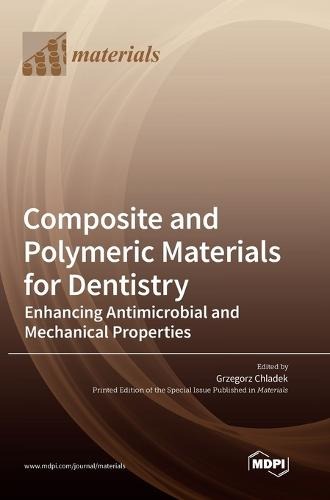
Composite and polymeric materials for dentistry: enhancing antimicrobial and mechanical properties
Focuses on enhancing antimicrobial and mechanical properties of polymeric materials and composites for dentistry. In recent years, special attention has been focused on the possibility of giving materials new or improved properties by the introduction of nano or submicron size additives, fibers or whiskers. Another area of research is the application of antibacterial monomers, which can be copolymerized in resins to kill oral pathogenic microflora. In addition, we are currently looking for new data regarding colonization of dental materials by pathogenic microbes and their influence on the other properties. Further, there are many new commercially available materials which should be investigated to verify their properties, which is important from the point of view of clinical practice. Original new research and reviews related to any of the topics mentioned above indicate the current directions of development of dental materials.
Complications in Endodontic Surgery : Prevention, Identification and Management
Presents up-to-date recommendations for the prevention, diagnosis, and management of complications in endodontic surgical procedures, based on the best available scientific evidence.
Complications in Cranio-Maxillofacial and Oral Surgery
This superbly illustrated book equips readers with a detailed, up-to-date understanding of the surgical and nonsurgical complications that may arise during cranio-maxillofacial and oral surgery for a range of conditions, including malformations, infections, trauma, and tumors.

Complications following surgery of maxillary impacted canine and their management
Investigates the impaction of maxillary canines, a dental condition where the canines fail to erupt within the expected timeframe despite complete root formation. The research highlights various contributory factors, including genetic predispositions, lack of space due to early loss of deciduous molars, follicular cysts, and the presence of supernumerary teeth. The study explores the etiology of both palatal and buccal impactions, noting the significant role of genetic factors, tooth size, arch length discrepancies, and abnormal tooth development. Treatment options, including orthodontic interventions and surgical extractions, are discussed in the context of the impacted tooth's position and associated complications.
Complex dental implant complications
This book offers up-to-date guidance in the diagnosis and management of the various complex complications that may be encountered during or after the placement of dental implants. The aim is to raise the awareness of clinicians regarding such complications and to equip them with the knowledge needed in order to deal with complications promptly and effectively.

Complete dentures : Ffrom planning to problem solving
Deals with the planning, construction and review of complete dentures and examines the role of osseointegrated prostheses in the management of edentulism.
Complete denture prosthodontics : Planning and decision-making
Equips dental students and practitioners with all the information and guidance required in order to ensure successful implementation of complete denture treatment in edentulous patients following appropriate treatment planning.

Comparison of traditional and computerized alveolar block in children using articaine 4% (randomized controlled trial)
Pediatric dental anxiety frequently centers around needle procedures, particularly for mandibular anesthesia. This study compares pain perception, efficacy, and physiological responses between computerized (CCLAD) and traditional syringe administration of articaine 4% for inferior alveolar nerve blocks (IANB) during pulpotomies.

Comparison of scalpel and lasers technique in the treatment of gingival melanin pigmentation
Gingival hyperpigmentation is a common esthetical concern in patients with gummy smile or excessive gingival display. Laser ablation has been recognized recently as the most effective, pleasant and reliable technique. It has the advantage of easy handling, short treatment time, hemostasis, decontamination, and sterilization effect. The objective of this study is to evaluate and compare scalpel and lasers techniques for gingival depigmentation and to evaluate their effect on re pigmentation.

Comparison of digital anesthesia using articaine vs. lidocaine for mandibular infiltration in pediatric patients : Aged 4-5 vs. 6-8 years
Articaine and lidocaine exhibit equivalent efficacy for mandibular infiltration via computerized systems in children aged 4–8 years. While articaine may marginally improve injection comfort, both agents provide reliable anesthesia with minimal complications. Computerized delivery enhances patient experience, supporting its adoption to reduce dental anxiety.This investigation aims to : determine whether articaine's theoretical advantages translate to clinically significant improvements in young children, identify optimal anesthetic protocols for different pediatric age groups, validate the effectiveness of digital delivery systems in pediatric mandibular anesthesia and provide robust data to replace current adult-derived guidelines with pediatric-specific evidence.

Comparative evaluation of conservative versus conventional fixed dental bridges in prosthodontics
Dental bridges are essential in restorative dentistry, evolving from conventional full-coverage designs to modern conservative approaches that preserve natural tooth structure. This study theoretically compares conventional and conservative bridges in terms of materials, preparation, biomechanics, biological impact, and patient-centered outcomes. Findings highlight the trade-offs between durability and tooth preservation, emphasizing the importance of tailored clinical decision-making. Conservative principles increasingly guide restorative practice, promoting minimally invasive solutions without compromising clinical effectiveness.

Comparative analysis of failure mods in fiber posts, ever-x, ribboned fiber and natural teeth (control)
This randomized controlled trial aims to compare the failure modes of different restorative materials, including fiber posts, Ever-X, ribboned fiber, and natural teeth, under mechanical stress. Understanding the failure behavior of these materials will guide clinicians in selecting the most durable and repairable options for dental restorations.
Community Oral Health Practice for the Dental Hygienist
Describes the role of the public health professional in improving the oral health care of people throughout the community. It discusses key topics such as access to care, the assessment needed for program planning, social responsibility and government policy, cultural diversity, and career options in public health. Written by respected dental educator Christine French Beatty, this book helps you prepare for the National Board Dental Hygiene Examination (NBDHE) and to develop the core competencies needed in the practice setting.
Common complications in endodontics : Prevention and management
Describes the most commonly encountered endodontic complications and provides up-to-date information on their prevention and management. The opening chapters explain the importance of accurate diagnosis and treatment planning, outline the role of digital radiography and CBCT in managing complications, and highlight the need for close attention to anatomic landmarks in order to avoid damage to neurovascular anatomy. Endodontic problems associated with different procedural errors are then discussed in detail, covering a wide variety of access- and instrumentation-related complications and the difficulties that may arise when using obturation techniques. Readers will also find information on the endodontic–periodontal relationship, special issues in geriatric patients, and the potential medical emergencies and precautions in specific patient subsets.
Clinical oral medicine and pathology
The book has been well received internationally by a wide audience of clinicians, including general dentists, oral surgeons, otolaryngologists, primary care physicians, nurse practitioners, dental hygienists, physician assistants, and dermatologists, and sales have been strong among students and post-graduate residents training in medical, dental, and allied health fields, supporting the versatility of this work and serving as testimony to its value in both the academic and private practice arenas. Several key updates and improvements have been made to the second edition. All informational content has been updated to ensure accuracy and relevance, particularly in the rapidly evolving fields of oncology and pharmacology. A new chapter has been added entitled "Oral Sequelae of Cancer and Cancer Therapy" which better organizes and consolidates previous content while expanding on topics such as targeted therapies and hematopoietic stem cell transplantation. Additional clinical images have been included throughout the book so that the full clinical spectrum of any given condition is well-represented. Furthermore, the print quality, as well as the positioning and layout of the clinical images has been improved for optimal utility. Lastly, the summary boxes that follow each condition have been reconfigured with color-coded icons for improved definition, ease of use and cross-referencing.
Clinical oral anatomy : A comprehensive review for dental practitioners and researchers
Presents the most current and comprehensive review of oral anatomy for clinicians and researchers alike. In 26 chapters, the reader is taken on a unique anatomical journey, starting with the oral fissure, continuing via the maxilla and mandible to the tongue and floor of the mouth, and concluding with the temporomandibular joint and masticatory muscles. Each chapter offers a detailed description of the relevant anatomical structures and their spatial relationships, provides quantitative morphological assessments, and explains the relevance of the region for clinical dentistry. All dental health care professionals require a sound knowledge of anatomy for the purposes of diagnostics, treatment planning, and therapeutic intervention. A full understanding of the relationship between anatomy and clinical practice is the ultimate objective, and this book will enable the reader to achieve such understanding as the basis for provision of the best possible treatment for each individual patient as well as recognition and comprehension of unexpected clinical findings.

Clinical Maxillary Sinus Elevation Surgery
Dr. Kao and a team of experts begin by discussing anatomy, radiographic image applications and limitations, and then provide step-by-step clinical procedures for the lateral window technique, including piezosurgery, and the trans-alveolar methods, including balloon and controlled hydostatic sinus elevation. Also included are chapters on post-operative care and complication management.
Clinical management of salivary gland disorders
Serves as a complete reference guide for the totality of salivary gland (SG) disease. Focusing on the clues available to the practitioner during the patient examination, it will completely review and update the available data concerning all manner of SG conditions. Looking beyond the perspectives of surgery, imaging, pathology, or sialendoscopy in diagnosis and therapy, this book will provide all professionals interested in the head and neck extensive and detailed diagnostic information about each SG entity.
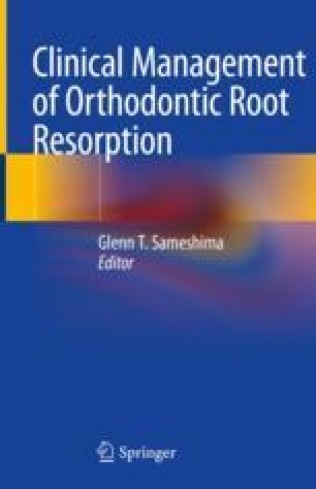
Clinical Management of Orthodontic Root Resorption
This book in being dedicated solely to root resorption caused by orthodontic tooth movement. While the core content is based on scientific evidence, the book is intended as a practical aid for the clinician who performs orthodontics.
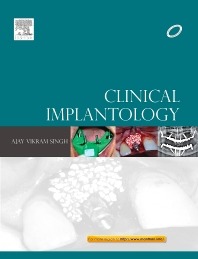
Clinical Implantology
Provides all the new and relevant information of basic to advanced implantology for the undergraduate as well as postgraduate dental students. Current concepts of implantology are beautifully presented with illustrations and clinical cases making this book a complete literature for the dentists to learn the basic science and various advanced techniques of implantology like sinus grafting, nasal floor grafting, block grafting, ridge splitting, distraction osteogenesis, soft tissue grafting, ‘all-on-4’/‘all-on-6’ techniques and many more.
