



الصفحة 17
الصفحة 17

Stochastic Optimization Methods ; 1st ed.
Optimization problems arising in practice involve random parameters. For the computation of robust optimal solutions, i.e., optimal solutions being insensitive with respect to random parameter variations, deterministic substitute problems are needed. Based on the distribution of the random data, and using decision theoretical concepts, optimization problems under stochastic uncertainty are converted into deterministic substitute problems. Due to the occurring probabilities and expectations, approximative solution techniques must be applied. Deterministic and stochastic approximation methods and their analytical properties are provided: Taylor expansion, regression and response surface methods, probability inequalities, First Order Reliability Methods, convex approximation/deterministic descent directions/efficient points, stochastic approximation methods, differentiation of probability and mean value functions. Convergence results of the resulting iterative solution procedures are given.

Stochastic Optimization Methods ; 2nd ed.
Optimization problems arising in practice involve random model parameters. For the computation of robust optimal solutions, i.e., optimal solutions being insensitive with respect to random parameter variations, appropriate deterministic substitute problems are needed. Based on the probability distribution of the random data, and using decision theoretical concepts, optimization problems under stochastic uncertainty are converted into appropriate deterministic substitute problems. Due to the occurring probabilities and expectations, approximative solution techniques must be applied. Several deterministic and stochastic approximation methods are provided: Taylor expansion methods, regression and response surface methods (RSM), probability inequalities, multiple linearization of survival/failure domains, discretization methods, convex approximation/deterministic descent directions/efficient points, stochastic approximation and gradient procedures, differentiation formulas for probabilities and expectations.

Stochastic Linear Programming : Models, Theory, and Computation
STOCHASTIC LINEAR PROGRAMMING: Models, Theory, and Computation is a definitive presentation and discussion of the theoretical properties of the models, the conceptual algorithmic approaches, and the computational issues relating to the implementation of these methods to solve problems that are stochastic in nature. The application area of stochastic programming includes portfolio analysis, financial optimization, energy problems, random yields in manufacturing, risk analysis, etc. In this book models in financial optimization and risk analysis are discussed as examples, including solution methods and their implementation.

Stepping into Virtual Reality
Reviews the basic theoretical and practical concepts involved in the visual aspect of virtual environments. Part 2 provides more details on the components, structure and types of virtual worlds that can be created, including detailed explanations of the main modeling and animation techniques for virtual characters - one of the most important aspects in a virtual world. A review and discussion of the main types of VR system architectures defines the different alternatives for organizing and designing a VR application. The final part covers the main principles of Virtual Reality hardware using a generic classification of interaction devices based on a human-centered approach (via the five human senses: vision, sound, touch, smell and taste). The book closes with an overview of successful VR systems and applications and gives a glimpse of what lies in the future.

Stem Cells : From Hydra to Man
“Stem Cells: From Hydra to Man” illustrates that there is more than human and mouse stem cells to learn from. Reflecting an enormous growth in the knowledge of stem cells in various organisms, the book presents the conceptual language and the nature of questions, as well as a summary of the advances in our understanding of stem cells from a comparative point of view that has resulted from the development of new technology and the development of novel model organisms over the past few decades. As such this book is largely a horizon analysis of a frontier rather than a retrospective. It presents an integrative approach to animal stem cells and covers the major contributions, tools and trends in a newly emerging field: comparative stem cell biology.

Statsitical Genetics of Quantitative Traits : Linkage, Map, and QTL
Introduces the basic concepts and methods that are useful in the statistical analysis and modeling of DNA-based marker and phenotypic data that arise in agriculture, forrestry, experimental biology, and other fields. It concentrates on the linkage analysis of markers, map construction and quantitative trait locus (QTL) mapping and assumes a background in regression analysis and maximum likelihood approaches. The strengths of this book lie in the construction of general models and algorithms for linkage analysis and QTL mapping in any kind of crossed pedigrees initiated with inbred lines of crops and plant and animal model systems or outbred lines in forest trees and wildlife species.
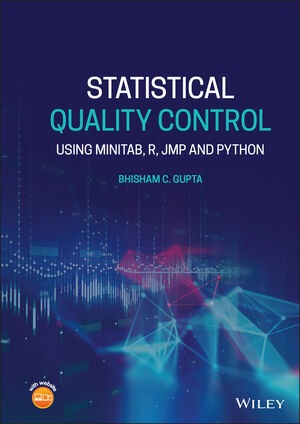
Statistical Quality Control : Using MINITAB, R, JMP and Python
Introduces Statistical Quality Control and the elements of Six Sigma Methodology, illustrating the widespread applications that both have for a multitude of areas, including manufacturing, finance, transportation, and more. It places emphasis on both the theory and application of various SQC techniques and offers a large number of examples using data encountered in real life situations to support each theoretical concept.

Statistical Population Genomics
Presents state-of-the-art inference methods in population genomics, focusing on data analysis based on rigorous statistical techniques. After introducing general concepts related to the biology of genomes and their evolution, the book covers state-of-the-art methods for the analysis of genomes in populations, including demography inference, population structure analysis and detection of selection, using both model-based inference and simulation procedures

Statistical Physics for Cosmic Structures
The physics of scale-invariant and complex systems is a novel interdisciplinary field. Its ideas allow us to look at natural phenomena in a radically new and original way, eventually leading to unifying concepts independent of the detailed structure of the systems. The objective is the study of complex, scale-invariant, and more general stochastic structures that appear both in space and time in a vast variety of natural phenomena, which exhibit new types of collective behaviors, and the fostering of their understanding. This book has been conceived as a methodological monograph in which the main methods of modern statistical physics for cosmological structures and density fields (galaxies, Cosmic Microwave Background Radiation, etc.) are presented in detail. The main purpose is to present clearly, to a workable level, these methods, with a certain mathematical accuracy, providing also some paradigmatic examples of applications.

Statistical Mechanics
The completely revised new edition of the classical book on Statistical Mechanics covers the basic concepts of equilibrium and non-equilibrium statistical physics. In addition to a deductive approach to equilibrium statistics and thermodynamics based on a single hypothesis - the form of the microcanonical density matrix - this book treats the most important elements of non-equilibrium phenomena. Intermediate calculations are presented in complete detail. Problems at the end of each chapter help students to consolidate their understanding of the material. Beyond the fundamentals, this text demonstrates the breadth of the field and its great variety of applications.

States of Consciousness : Models for Psychology and Psychotherapy
Consciousness has always been a particularly elusive concept and one vigorously argued in the scientific community. This new volume takes on the task of defining normal and altered consciousness in their most relevant clinical terms. In States of Consciousness, Andrzej Kokoszka expands on the pioneering work of J.H. Jackson, offering contemporary models for studying consciousness as it applies to both pathology and normal altered states, e.g., relaxation, sleep, meditation, and hypnosis. He makes clear distinctions between the neuroscientific and psychiatric components of consciousness; at the same time, his theories are rooted firmly in the biopsychosocial approach.

Standard Monomial Theory : Invariant Theoretic Approach
This book is mainly a detailed account of a particularly interesting instance of their occurrence: namely, in relation to classical invariant theory. More precisely, it is about the connection between the first and second fundamental theorems of classical invariant theory on the one hand and standard monomial theory for Schubert varieties in certain special flag varieties - the ordinary, orthogonal, and symplectic Grassmannians - on the other. Historically, this connection was the prime motivation for the development of standard monomial theory. Determinantal varieties and basic concepts of geometric invariant theory arise naturally in establishing the connection. The book also treats, in the last chapter, some other applications of standard monomial theory, e.g., to the study of certain naturally occurring affine algebraic varieties that, like determinantal varieties, can be realized as open parts of Schubert varieties.

Stable Isotope Ecology
The book approaches the use of isotopes from the perspective of ecological and biological research, but its concepts can be applied within other disciplines as well. In order to enable scientists to establish source-sink connections in ecological settings, Stable Isotope Ecology begins by reviewing fundamental topics of tracer fractionation and mixing. Several mini-reviews profile problems and successes encountered with isotope tracing in particular focus areas, while emphasizing the role that humans increasingly play in changing our planetary ecosphere. A novel, step-by-step spreadsheet modeling approach is also presented for circulating tracers in any ecological system, including any favorite system an ecologist might dream up while sitting at a computer. Just type in values and watch the isotope action unfold in the dynamic models.

Stabilità funzionale e controllo neuroumorale = Functional stability and neurohumoral control
Stability of function has been the guiding concept from C. Bernard to the present, both for biology and clinical medicine. Only recently, however, have two illustrious physicists, Grégoire Nicolis and Ilya Prigogine, winners of the 1978 Nobel Prize in Physics, offered a comprehensive description of the stability of a variable, and therefore of a functional state, in terms so clear, precise, and comprehensive that it can also be applied to the biological field. The previously confused concepts on which we based our thinking now arrange themselves in an acceptable manner, and from their newly acquired meaning, they already draw attention to the potential emergent order. This volume offers a multidisciplinary approach to a biological topic: from systems theory and far-from-equilibrium thermodynamics to the functional states of sleep, wakefulness, and muscular exercise. Simple descriptions, precise definitions, and abundant illustrations will facilitate the reader's study of the stability of complex systems and understanding how the autonomic nervous system controls this stability.

SSP 2004 ; Proceedings of the 8th International Conference on Solid State Physics, SSP 2004, Workshop "Mössbauer Spectroscopy of Lacally Heterogeneous Systems", held in Almaty, Kazakhstan, 23-26 August, 2004
Contains papers presented at the 8th International Conference on Solid State Physics (SSP 2004), Workshop "Mössbauer Spectroscopy of Locally Heterogeneous Systems", held in Almaty, Kazakhstan, 23–26 August 2004. It should be of interest to researchers and PhD students working or interested in recent results in the locally inhomogeneous system investigations by Mössbauer Spectroscopy and the new concepts of data evaluation of complex Mössbauer spectra.

Squeak : Learn Programming with Robots
Squeak: Learn Programming with Robots will teach you core programming concepts based on simple, visual problems that involve manipulation of robots, or "turtles." You will learn basic programming concepts like loops, abstractions, composition, and conditionals. Each chapter is structured so that it can be turned into a one- or two-hour lab session. And while the structured content explains solid principles of object-oriented programming, you'll just have fun going through the sequence of easy examples with the turtle.

SQL Server 2005 T-SQL Recipes : A Problem-Solution Approach
This no-fluff desk reference offers direct access to the information you need to get the job done. It covers basic T-SQL data manipulation, the use of stored procedures, triggers and UDFs, and advanced T-SQL techniques for database security and maintenance. It also provides hundreds of practical recipes that describe the utilities of features and functions, with a minimim of background theory. Additionally, this book provides how-to answers to common SQL Server T-SQL questions, conceptual overviews, and highlights of new features introduced in SQL Server 2005. It also features concise T-SQL syntax examples, and you can use the book to prepare for a SQL Server-related job interview or certification test.

Sports Leagues Scheduling : Models, Combinatorial Properties, and Optimization Algorithms
In the context of sports leagues scheduling (SLS) several groups' interests must be taken into account. This book treats requirements for sport leagues schedules to be realizable from an operational and a security point of view, attractive for spectators and tv channels, and fair for the conampeting teams. Formal problem definitions as well as integer programming models are presented and analyzed. Additionally, several fairness concepts are developed and their operability is investigated by means of graph theory. Moreover, this book presents algorithmic concepts that can be drawn upon to construct suitable schedules. This volume provides a deep understanding of problems arising in the context of SLS as well as approaches for dealing with these problems, being relevant for both theoreticians and practitioners.

Spillovers and Innovations : Space, Environment, and the Economy
Innovation processes and related spillovers are of eminent importance in a modern economy. How do they relate to spatial structures and environmental factors? The papers analyse innovation processes and spillovers in the economy from various angles, focussing mainly on regional and environmental aspects. Among others they touch issues on university spillovers, urban tourism, highway investments, industry clusters, and econometrics. An introductory chapter sets the stage for the following discussion, and a concluding chapter evaluates the achievements. Contributors from Austria, other European countries and from the U.S.A. discuss this question from various angles: among others universities, urban tourism, highway investments, and industry clusters. The volume demonstrates the relevance of the concept of spillovers, particularly in the context of innovations, and stimulates future work in this area.

Spatially structured evolutionary algorithms : Artificial evolution in space and time
Evolutionary algorithms (EAs) is now a mature problem-solving family of heuristics that has found its way into many important real-life problems and into leading-edge scientific research. Spatially structured EAs have different properties than standard, mixing EAs. By virtue of the structured disposition of the population members they bring about new dynamical features that can be harnessed to solve difficult problems faster and more efficiently. This book describes the state of the art in spatially structured EAs by using graph concepts as a unifying theme. The models, their analysis, and their empirical behavior are presented in detail. Moreover, there is new material on non-standard networked population structures such as small-world networks.
