



الصفحة 17
الصفحة 17

FM 2005: Formal Methods ; International Symposium of Formal Methods Europe, Newcastle, UK, July 18-22, 2005, Proceedings
This volume contains the proceedings of Formal Methods 2005, the 13th InternationalSymposiumonFormalMethodsheldinNewcastleuponTyne,UK, during July 18–22, 2005. Formal Methods Europe (FME, www.fmeurope.org) is an independent association which aims to stimulate the use of, and research on, formal methods for system development. FME conferences began with a VDM Europe symposium in 1987. Since then, the meetings have grown and have been held about once every 18 months. Throughout the years the symposia have been notablysuccessfulinbringingtogetherresearchers,tooldevelopers,vendors,and users, both from academia and from industry. Formal Methods 2005 con?rms this success. We received 130 submissions to the main conference, from all over the world. Each submission was carefully refereed by at least three reviewers. Then, after an intensive, in-depth discussion, the Program Committee selected 31 papers for presentation at the conference. They form the bulk of this volume.

Flexible and Efficient Information Handling ; 23rd British National Conference on Databases, BNCOD 23, Belfast, Northern Ireland, UK, July 18-20, 2006, Proceedings
This book constitutes the refereed proceedings of the 23rd British National Conference on Databases, BNCOD 23, held in Belfast, Northern Ireland, July 2006. The volume presents 12 revised full papers and 6 revised short papers, together with 2 invited lectures and 13 poster papers. Topical sections include data modelling and architectures and transaction management, data integration and interoperability and information retrieval, query processing and optimisation, data mining, data warehousing and more.

Finite element design of concrete structures : Practical problems and their solutions
In Finite Element Design of Concrete Structures: practical problems and their solutions the author addresses this 'blind belief' in computer results by offering a useful critique that 'important details are overlooked due to the flood of information' from the output of computer calculations. Indeed, errors in the numerical model may lead in extreme cases to structural failures as the collapse of the so-called Sleipner platform has demonstrated.

Fine- and Coarse-Grain Reconfigurable Computing
The FPGA technology is defined, which includes architecture, logic block structure, interconnect, and configuration methods and existing fine-grain reconfigurable architectures emerged from both academia and industry. Additionally, the implementation techniques and CAD tools developed to facilitate the implementation of a system in reconfigurable hardware by the industry and academia are provided.

Finding Lost Space : Theories of Urban Design
Offers a comprehensive and systematic examination of the crisis of the contemporary city and the means by which this crisis can be addressed. Finding Lost Space traces leading urban spatial design theories that have emerged over the past eighty years: the principles of Sitte and Howard; the impact of and reactions to the Functionalist movement; and designs developed by Team 10, Robert Venturi, the Krier brothers, and Fumihiko Maki, to name a few. In addition to discussions of historic precedents, contemporary approaches to urban spatial design are explored.

Feasibility studies : An architect's guide
Details the benefits of a feasibility study. Once you’ve secured the commission, how do you ensure you’re following current best practice? Aimed at architects, it identifies the pitfalls involved in undertaking a feasibility study and explains how to set boundaries, organise the process and manage clients’ aspirations. By featuring recent live projects, alongside advice from successful architectural practices, it illustrates how a feasibility study can help achieve positive outcomes and avoid the dangers of a poorly defined brief and service proposal. Presenting the client’s, as well as the architect’s, perspective, this publication highlights why a feasibility study is a sensible way of establishing viability prior to committing to a full-service commission. It underlines the significance of ‘adding value’ as an architect.

Fault-Tolerance Techniques for SRAM-Based FPGAs
This book discusses fault-tolerance techniques for SRAM-based Field Programmable Gate Arrays (FPGAs). It starts by showing the model of the problem and the upset effects in the programmable architecture. In the sequence, it shows the main fault tolerance techniques used nowadays to protect integrated circuits against errors. A large set of methods for designing fault tolerance systems in SRAM-based FPGAs is described. Some presented techniques are based on developing a new fault-tolerant architecture with new robustness FPGA elements. Other techniques are based on protecting the high-level hardware description before the synthesis in the FPGA.

Fault Diagnosis and Tolerance in Cryptography ; 3rd International Workshop, FDTC 2006, Yokohama, Japan, October 10, 2006, Proceedings
The sophistication of the underlying cryptographic algorithms, the high complexity of the implementations, and the easy access and low cost of cryptographic devices resulted in increased concerns regarding the reliability and security of crypto-devices. The effectiveness of side channel attacks on cryptographic devices, like timing and power-based attacks, has been known for some time. Several recent investigations have demonstrated the need to develop methodologies and techniques for designing robust cryptographic systems (both hardware and software) to protect them against both accidental faults and maliciously injected faults with the purpose of extracting the secret key. This trend has been particularly motivated by the fact that the equipment needed to carry out a successful side channel attack based on fault injection is easily accessible at a relatively low cost (for example, laser beam technology), and that the skills needed to use it are quite common.

Fast, Efficient and Predictable Memory Accesses : Optimization Algorithms for Memory Architecture Aware Compilation
Fast, Efficient and Predictable Memory Accesses presents techniques for designing fast, energy-efficient and timing predictable memory systems. By using a careful combination of compiler optimizations and architectural improvements, we can achieve more than what would be feasible at one of the levels in isolation. The described optimization algorithms achieve the goals of high performance and low energy consumption. In addition to these benefits, the use of scratchpad memories significantly improves the timing predictability of the entire system, leading to tighter worst case execution time bounds (WCET). The WCET is a relevant design parameter for all timing critical systems. In addition, the book covers algorithms to exploit the power down modes of main memories in SDRAM technology, as well as the execute-in-place feature of Flash memories. The final chapter considers the impact of the register file, which is also part of the memory hierarchy.

Fashionable Technology
The interplay of electronic textiles and wearable technology, wearables for short, and fashion, design and science is a highly promising and topical subject. Offered here is a compact survey of the theory involved and an explanation of the role technology plays in a fabric or article of clothing. The practical application is explained in detail and numerous illustrations serve as clarification. Over 50 well-known designers, research institutes, companies and artists, among them Philips, Burton, MIT Media Lab, XS Labs, New York University, Hussein Chalayan, Cute Circuit or International Fashion Machines are introduced by means of their latest, often still unpublished, project, and a survey of their work to date. Given for the first time is a list of all the relevant information on research institutes, materials, publications etc. A must for all those wishing to know everything about fashionable technology.

Facade Construction Manual : Construction Manuals ; 2nd ed.
In recent years, facades have become more important in architectural practice and in public perception. As well as functioning as a protective shell and visible 'face' and supplying heat and electricity, a building's exterior interacts directly with the surrounding public space. This revised and expanded new edition of the Facade Construction Manual offers readers technical and design planning fundamentals in a compact reference work.
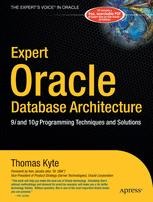
Expert Oracle Database Architecture : 9i and 10g Programming Techniques and Solutions
This is a defining book on the Oracle database for any developer or database administrator who works with Oracle-driven database applications. Tom Kyte has a simple philosophy: you can treat Oracle as a black box and just stick data into it or you can understand how it works and exploit it as a powerful computing environment. If you choose the latter, then you will find that there are few information management problems that you cannot solve quickly and elegantly. Expert Oracle Database Architecture is the first of a three-book series that completely explores and defines the Oracle database. It covers all of the most important Oracle architecture features, including: Files, memory structures and processes / Locking and latching / Transactions, concurrency and multi-versioning / Tables and Indexes / Datatypes / Partitioning and parallelism Each feature is taught in a proof-by-example manner, not only discussing what it is, but also how it works, how to implement software using it, and the common pitfalls associated with it.

Expert Network Time Protocol : An Experience in Time with NTP
Have you ever tried to figure out why your computer clock is off, or why your emails somehow have the wrong timestamp? Most likely, it's due to an incorrect network time synchronization, which can be reset using the Network Time Protocol. Until now, most network administrators have been too paranoid to work with this, afraid that they would make the problem even worse. However, Expert Network Time Protocol: An Experience in Time with NTP takes the mystery out of time, and shows the network administrator how to regain the upper hand. This book is a fascinating look into NTP, and the stories behind the science. Written by Peter Rybaczyk, one of the foremost experts on NTP, this book will show the network administrator how to become more comfortable working with time.

Experience-Based Communication
Experience-based Communication is a powerful tool. Companies can use it to bring their values to life and to make their messages accessible and credible. By communicating in a way that can be both sensed and felt, companies can increase their influence on internal and external stakeholders - and existing and potential customers. This book teaches you how to architect the way your company is experienced at every real-life touchpoint. How to use physical meetings and locations to create an affinity with a given market segment. And how to engage your audience mentally, physically and socially in order to transform them into loyal customers and willing ambassadors.

Exit-architecture design between war and peace : With a foreword by Heiner Mühlmann and a project by Exit Ltd.
A oeFirst we shape things, then they shape usa, was Churchilla (TM)s view. What kind of architecture can be said to shape? Who does it shape? And by what means does it shape? The authora (TM)s answers to these questions are a surprise. Through war and proximity to stress. After a tour da (TM)horizon through Roman temples, Washingtona (TM)s corridors of power and Meccaa (TM)s anti-panic architecture it becomes clear that architecture is anything but in the background. Instead it is situated in the hot spot of transmission dynamics and is capable of altering cultures, empires and even religions.

Exercises in Architecture : Learning to Think as an Architect
It involves awakening abilities that remain dormant in most people. It is like learning language for the first time; a task made more mystifying by the fact that architecture deals not in words but in places: places to stand, to walk, to sit, to hide, to sleep, to cook, to eat, to work, to play, to worship… Written for those who want to be architects. It suggests a basis for early experiences in a school of architecture; but it could also be used in secondary schools and colleges, or as self-directed preparation for students in the months before entering professional education.

Evolvable systems : From biology to hardware ; 6th International Conference, ICES 2005, Sitges, Spain, September 12-14, 2005, Proceedings
The flying machines proposed by Leonardo da Vinci in the fifteenth century, the se- reproducing automata theory proposed by John von Neumann in the middle of the twentieth century and the current possibility of designing electronic and mechanical systems using evolutionary principles are all examples of the efforts made by humans to explore the mechanisms present in biological systems that permit them to tackle complex tasks. These initiatives have recently given rise to the emergent field of b- inspired systems and evolvable hardware. The inaugural workshop, Towards Evolvable Hardware, took place in Lausanne in October 1995, followed by the successive events of the International Conference on Evolvable Systems: From Biology to Hardware, held in Tsukuba (Japan) in October 1996, in Lausanne (Switzerland) in September 1998, in Edinburgh (UK) in April 2000, in Tokyo (Japan) in October 2001, and in Trondheim (Norway) in March 2003. Following the success of these past events the sixth international conference was aimed at presenting the latest developments in the field, bringing together researchers who use biologically inspired concepts to implement real systems in artificial intelligence, artificial life, robotics, VLSI design, and related domains. The sixth conference consolidated this biennial event as a reference meeting for the community involved in bio-inspired systems research. All the papers received were reviewed by at least three independent reviewers, thus guaranteeing a high-quality bundle for ICES 2005.

Evolutionary Genomics : Statistical and Computational Methods
This book addresses the challenge of analyzing and understanding the evolutionary dynamics of complex biological systems at the genomic level, and elaborates on some promising strategies that would bring us closer to uncovering of the vital relationships between genotype and phenotype. After a few educational primers, the book continues with sections on sequence homology and alignment, phylogenetic methods to study genome evolution, methodologies for evaluating selective pressures on genomic sequences as well as genomic evolution in light of protein domain architecture and transposable elements, population genomics and other omics, and discussions of current bottlenecks in handling and analyzing genomic data. Written for the highly successful Methods in Molecular Biology series, chapters include the kind of detail and expert implementation advice that lead to the best results.

Evolutionary cell biology : The origins of cellular architecture
Establishes the foundations of the emerging field of evolutionary cell biology. Includes a wide range of comparative data and examples from both prokaryotes and eukaryotes, integrating such observations with biophysical/biochemical principles and evolutionary theory. Provides a deep and broad coverage of the literature, with many ideas synthesised and presented for the first time
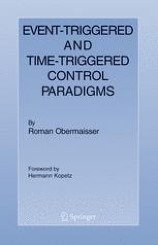
Event-Triggered and Time-Triggered Control Paradigms
Event-Triggered and Time-Triggered Control Paradigms presents a valuable survey about existing architectures for safety-critical applications and discusses the issues that must be considered when moving from a federated to an integrated architecture. The book focuses on one key topic--the amalgamation of the event-triggered and the time-triggered control paradigm into a coherent integrated architecture. The architecture provides for the integration of independent distributed application subsystems by introducing multi-criticality nodes and virtual networks of known temporal properties.
